The Last IndyCar Death Explained: The Legacy of Justin Wilson and the Evolution of Safety
The last fatality in the NTT IndyCar Series was Justin Wilson, who died on August 24, 2015, following an accident at Pocono Raceway the previous day. Wilson was struck by a stray nose cone from a crashed car, a tragic event that fundam...
The last fatality in the NTT IndyCar Series was Justin Wilson, who died on August 24, 2015, following an accident at Pocono Raceway the previous day. Wilson was struck by a stray nose cone from a crashed car, a tragic event that fundamentally changed cockpit safety and led to the mandatory implementation of the Aeroscreen.
Contents
The death of Justin Wilson remains a pivotal moment in the history of open-wheel racing. While the sport has always inherent risks, the nature of Wilson’s accident—a "freak" occurrence where a driver was struck by debris from a separate incident—exposed a critical vulnerability in the open-cockpit design. Since that day in 2015, the racing world, and specifically IndyCar, has undergone a technical revolution to ensure that such a tragedy never occurs again. As of 2026, the safety protocols established in the wake of Wilson’s passing continue to define the engineering standards of the series.
The Incident at Pocono: August 23, 2015
The accident occurred during the ABC Supply 500 at Pocono Raceway, often referred to as the "Tricky Triangle." Pocono is a high-speed, 2.5-mile oval where IndyCars reach speeds exceeding 220 mph. On lap 179 of the 200-lap race, rookie driver Sage Karam lost control of his car while leading, spinning into the outside wall of Turn 1.
The impact was severe, causing Karam’s car to disintegrate as designed to dissipate energy. However, the nose cone of Karam’s car—a large, heavy piece of carbon fiber—became detached and was launched into the air. Justin Wilson, who was driving for Andretti Autosport and was positioned several rows behind the crash, was unable to avoid the falling debris. The nose cone struck Wilson directly in the helmet as he drove through the debris field.
Wilson was rendered unconscious immediately. His car veered toward the internal wall, coming to a stop after a secondary impact. He was airlifted to Lehigh Valley Health Network-Cedar Crest in Allentown, Pennsylvania, where he remained in a coma in critical condition. He passed away the following day, August 24, 2015, at the age of 37.
The Technical Vulnerability of Open-Cockpit Racing
To understand why this accident was so significant, one must look at the technical architecture of IndyCars prior to 2016. For over a century, open-wheel racing was defined by the driver’s head being exposed. While helmets provided protection against direct impacts with the ground or the car's roll hoop, they were not designed to withstand the kinetic energy of heavy car parts traveling at high velocities.
The nose cone that struck Wilson was estimated to weigh approximately 15 to 20 pounds. When combined with the closing speed of Wilson’s car, the force of the impact was catastrophic. This incident followed several other high-profile head-injury events in global motorsport, including the 2009 injury to Felipe Massa in Formula 1 (struck by a spring) and the 2009 death of Henry Surtees in Formula 2 (struck by a wheel).
The IndyCar community realized that while the Dallara DW12 chassis (introduced in 2012) had significantly improved side-impact and rear-impact safety, the frontal exposure of the driver’s head remained an "unsolved" safety gap.
The Humanitarian Legacy: A "Gentle Giant"
Justin Wilson was one of the most respected figures in the paddock. Standing at 6'4", he was known as the "Gentle Giant" and was a tireless advocate for driver safety. His death resonated deeply because of his character and his role as a mentor to younger drivers.
In the aftermath of his death, it was revealed that Wilson was a registered organ donor. His decision ultimately saved the lives of six people. This act of selflessness spurred the "Justin Wilson Memorial" and increased awareness of organ donation within the motorsports community. His brother, Stefan Wilson, and his widow, Julia Wilson, have since worked to ensure his legacy is one of progress and life-saving measures.
The Evolution of the Aeroscreen
The primary technical response to Wilson’s death was the development of cockpit protection. While Formula 1 opted for the "Halo" (a titanium bar), IndyCar sought a solution that would also protect against smaller pieces of debris, which are more common on high-speed ovals.
- Advanced Frontal Protection (AFP): Initially, IndyCar introduced a small vertical titanium fin in front of the cockpit in 2019. This was designed to deflect large debris away from the driver.
- The Aeroscreen Project: Partnering with Red Bull Advanced Technologies, IndyCar developed the Aeroscreen, which was implemented for the 2020 season.
- Construction: The Aeroscreen consists of a ballistic polycarbonate screen anchored by a titanium framework. It is designed to withstand a load of 150 kilonewtons (roughly 34,000 lbs), which is equivalent to the weight of a semi-truck.
- Performance: The screen features an anti-reflective coating and an internal heating element to prevent fogging.
Engineers have confirmed that had the Aeroscreen been in place during the 2015 Pocono race, the nose cone from Karam’s car would have been deflected over the cockpit, and Wilson likely would have walked away from the incident.
Comparing Safety Milestones in IndyCar History
The following table outlines the major safety shifts in the sport that led to the current 2026 standards.
| Era/Year | Key Event/Driver | Primary Safety Innovation | Long-term Impact |
|---|---|---|---|
| 2002 | Adoption of SAFER Barrier | Steel and Foam Energy Reduction barriers | Drastically reduced wall-impact fatalities on ovals. |
| 2003 | HANS Device Mandatory | Head and Neck Support system | Eliminated basal skull fractures from sudden deceleration. |
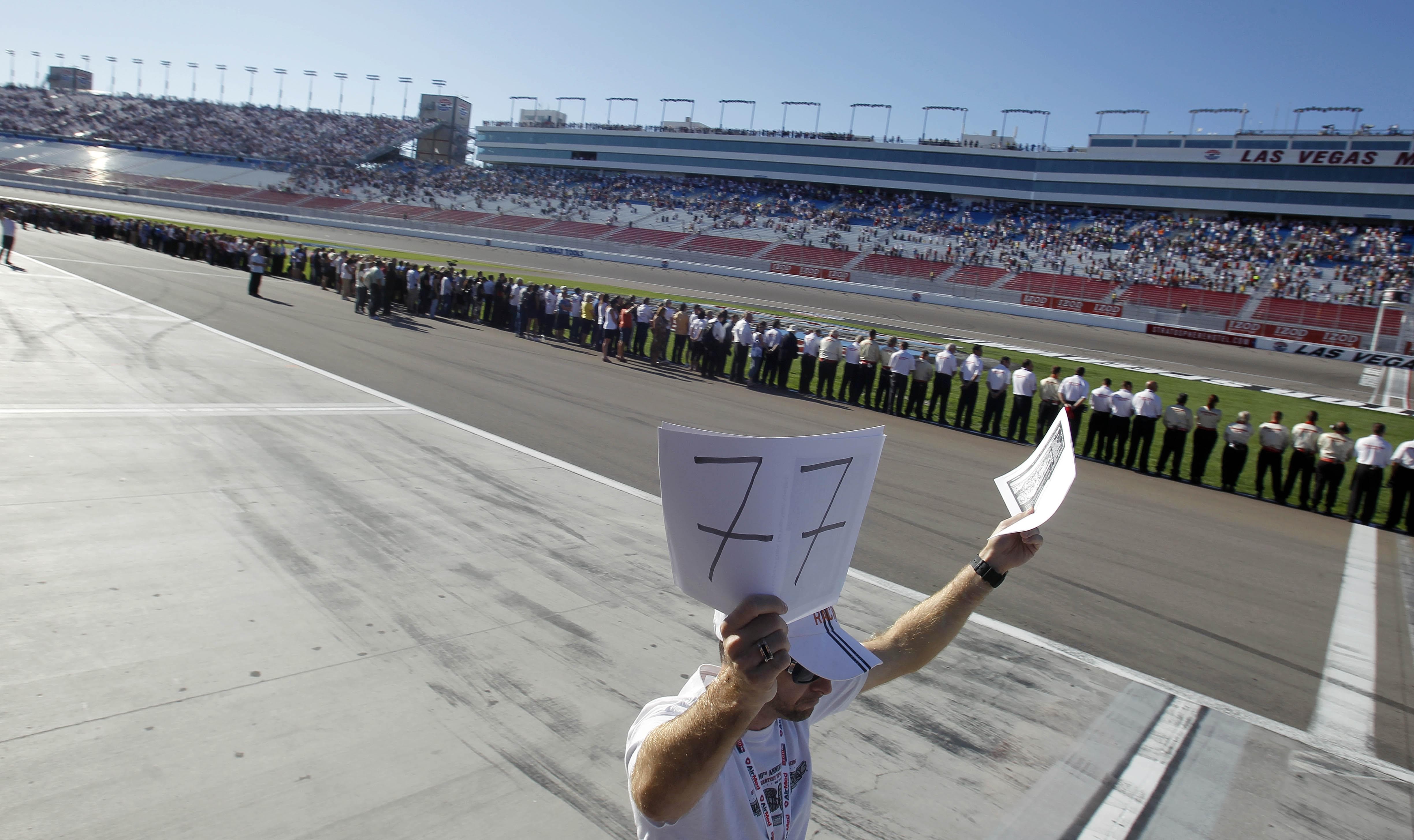
| 2011 | Dan Wheldon (Las Vegas) | Introduction of the DW12 Chassis | Better energy dissipation and "bumpers" to prevent interlocking wheels. |
| 2015 | Justin Wilson (Pocono) | Development of the Aeroscreen | Total protection of the driver's head from external debris. |
| 2020+ | Ongoing Refinements | Ballistic Protection & Cockpit Cooling | Standardization of cockpit environment safety in all conditions. |
The Role of the SAFER Barrier and Chassis Design
While Wilson's death focused on cockpit protection, it also reinforced the importance of the SAFER (Steel and Foam Energy Reduction) barrier. Sage Karam's initial crash was survivable because the SAFER barrier absorbed the energy of the impact. The tragedy was not the wall impact itself, but the subsequent failure of the nose cone attachment and the trajectory of the debris.
Modern IndyCar chassis (the IR-18 used through the early 2020s and its subsequent iterations) now feature tethering systems for many bodywork components. Much like wheel tethers (which prevent tires from flying off during a crash), certain aerodynamic components are now engineered to stay attached to the car or break down into much smaller, less lethal fragments.
Frequently Asked Questions
Who was the last driver to die in IndyCar?
The last driver to die from injuries sustained during an NTT IndyCar Series race was Justin Wilson in August 2015. Since then, the series has implemented the Aeroscreen and other chassis reinforcements that have prevented similar fatalities, despite several high-speed incidents on ovals.
How does the Aeroscreen differ from the F1 Halo?
The F1 Halo is a titanium structure that provides structural protection but is open between the bars. The IndyCar Aeroscreen combines a similar titanium structure with a ballistic polycarbonate shield. This provides comprehensive protection against both large objects (like cars or tires) and smaller debris (like bolts or nose cone fragments), which is critical for the high-speed oval racing unique to IndyCar.
Why did it take five years to implement the Aeroscreen after Wilson's death?
Developing the Aeroscreen was a massive engineering challenge. Unlike Formula 1, IndyCar races on ovals where drivers must look "up" through the top of the screen in banked turns. Engineers had to ensure there was no visual distortion, no fogging issues, and that the cockpit did not become dangerously hot for the driver. It required extensive testing by Red Bull Advanced Technologies and Dallara.
Has the Aeroscreen saved anyone since its introduction?
Yes. There have been several incidents where the Aeroscreen has been struck by debris or another car's tire—most notably during the 2020 season opener at Texas and during various Indianapolis 500 practices. In these cases, the drivers involved credited the device with preventing serious injury or death.
What is the "Wilson Rule" regarding organ donation?
While not a formal "rule" in the sporting regulations, Justin Wilson’s death led to a massive cultural shift in the paddock. Many drivers and team members now prominently display their donor status, and the series often partners with organizations like "Indiana Donor Network" to promote the cause, inspired by Wilson’s final gift.
Practical Recommendation: Supporting Motorsport Safety
For fans and participants of the sport in 2026, the best way to honor the legacy of fallen drivers like Justin Wilson is to support the continued evolution of safety technology. Racing is inherently dangerous, but the transition from the "open-cockpit" era to the "protected-cockpit" era proves that engineering can mitigate even the most unpredictable risks.
Fans should look toward organizations that support retired drivers and safety research, such as the Checkered Flag Foundation or the International Council of Motorsport Sciences (ICMS). Furthermore, considering registration as an organ donor is a direct way to honor the specific legacy Justin Wilson left behind.
Image Gallery