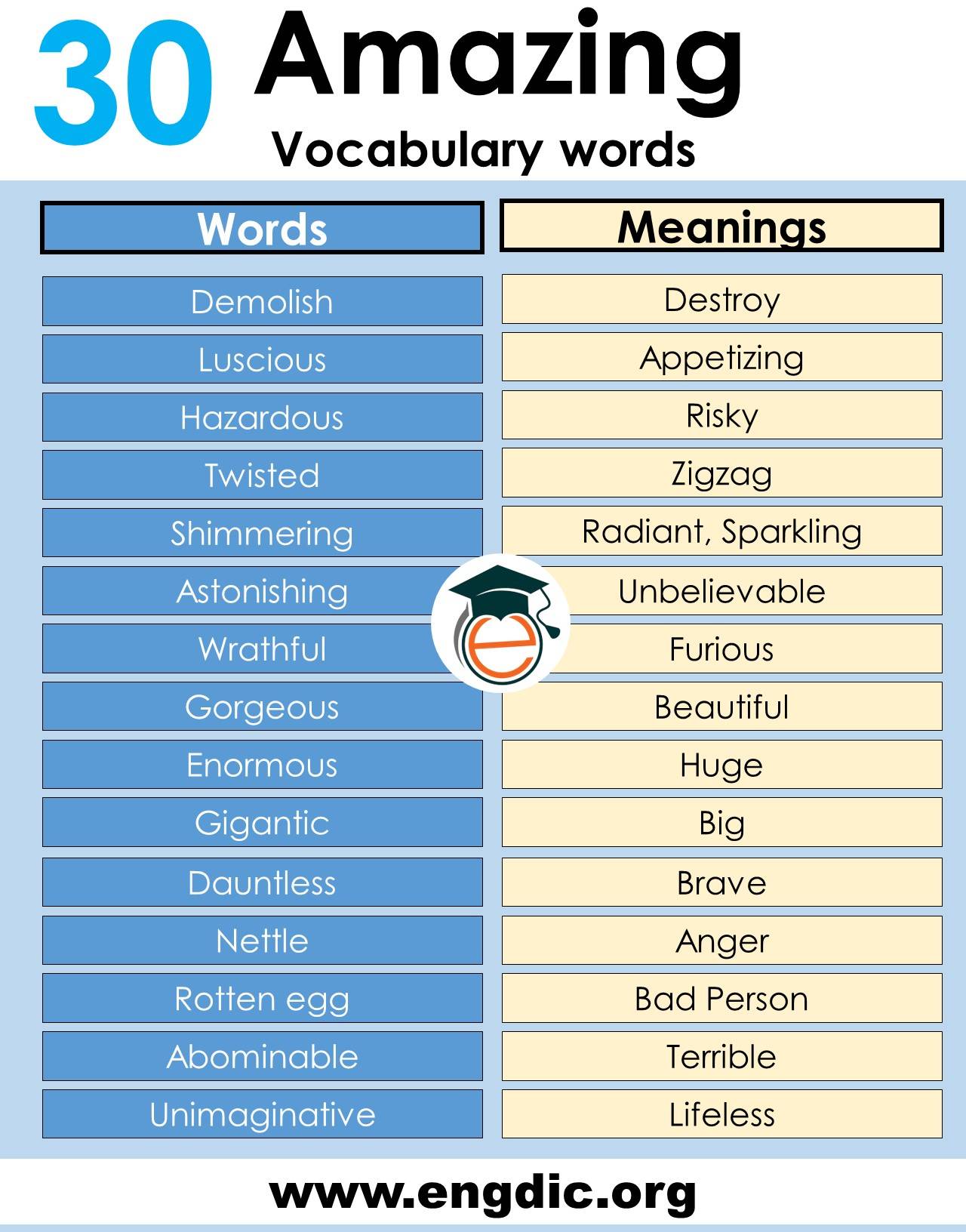
Understanding the Concept of Word Meaning Image: Linguistic and Visual Semantics
The term "word meaning image" refers to the intersection of linguistics, semiotics, and cognitive psychology, specifically how humans bridge the gap between abstract lexical tokens (words) and mental or physical representations (images...
The term "word meaning image" refers to the intersection of linguistics, semiotics, and cognitive psychology, specifically how humans bridge the gap between abstract lexical tokens (words) and mental or physical representations (images). It explores the associative process where language acts as a catalyst for visual reconstruction in the mind or, conversely, how images are encoded into linguistic definitions to provide context and clarity to concepts.
Contents
Defining the Relationship Between Language and Imagery
To understand the concept of "word meaning image," one must first distinguish between the signifier (the word) and the signified (the concept or image). In linguistics, Ferdinand de Saussure’s structuralist theory suggests that the link between a sound-image (a word) and a concept is arbitrary. However, the human brain consistently attempts to bridge this gap by creating internal visualizations.
When you read a word, your brain does not merely register its definition in a dictionary sense; it often undergoes a "dual-coding" process. Proposed by psychologist Allan Paivio, the Dual Coding Theory posits that humans process information through both verbal and non-verbal (imagery) systems. This is why concrete nouns—such as "apple" or "house"—are processed more rapidly and remembered more effectively than abstract concepts like "justice" or "entropy." The "image" associated with the "word" provides a mental anchor, making the meaning more accessible and durable in long-term memory.
The Role of Semantics in Visual Representation
Semantics is the study of meaning in language. When discussing "word meaning image," we must look at how semantic fields—clusters of related words—map onto visual domains.
- Denotation: This is the literal, dictionary definition of a word. The "image" associated here is often a generic, objective representation (e.g., the word "dog" triggers a prototypical four-legged canine).
- Connotation: This involves the emotional or cultural associations attached to a word. The "image" here is subjective and highly variable based on an individual’s experiences (e.g., the word "dog" might trigger an image of a specific childhood pet, carrying with it feelings of warmth or perhaps fear).
- Prototype Theory: Cognitive scientist Eleanor Rosch argued that human categorization relies on "prototypes." When we hear a word, we rarely visualize every possible variation of that object. Instead, we visualize the most typical member of that category. This "prototypical image" serves as the primary meaning for the word in daily communication.
Digital Context: Image-Text Interdependence in 2026
In the modern digital landscape of 2026, the relationship between word and image has become increasingly technical. With the rise of advanced machine learning models and large language models (LLMs) that incorporate multimodal capabilities, the way machines "understand" the meaning of an image through text has become a critical area of study.
In computer vision and natural language processing (NLP), researchers use "image-text embeddings." By mapping words and image features into the same high-dimensional vector space, computers can now determine the probability that a specific word describes a specific image. This is effectively a digital version of the cognitive process humans use: the model learns that the word "sunset" is statistically and spatially related to specific pixel color gradients, such as oranges, purples, and low-horizon light sources.
Comparative Framework: Processing Words vs. Images
The following table outlines the fundamental differences and intersection points between how the brain interprets words and how it creates or recalls images based on those words.
| Attribute | Word Processing (Linguistic) | Image Processing (Visual) |
|---|---|---|
| Cognitive Load | High (Requires symbolic decoding) | Low (Instantaneous recognition) |
| Processing Speed | Sequential/Linear | Parallel/Holistic |
| Abstraction Level | Highly abstract | Highly concrete |
| Primary Function | Logical structure and syntax | Emotional and spatial context |
| Recall Method | Semantic associations | Pattern recognition |
Barriers to Visual-Linguistic Association
While the brain is efficient at linking word meanings to images, several factors can inhibit this process. Understanding these barriers is essential for those working in communications, education, or user experience (UX) design.
- Ambiguity and Polysemy: Words with multiple meanings (polysemes) create "visual conflict." If a word has several disparate meanings, the brain may hesitate while selecting the appropriate imagery, leading to increased cognitive load.
- Cultural Displacement: Since images are often culturally specific, a word that triggers a clear image in one culture may result in a "blank" or incorrect mental image in another. For example, the word "pavement" triggers the image of a sidewalk in the U.S. but an asphalt road in the U.K.
- Abstract Terminology: Concepts lacking a physical presence (e.g., "sustainability," "efficiency") are notoriously difficult to link to singular, stable images. In professional communications, this is why icons are often paired with descriptive text; the image clarifies the intent of the word, while the word clarifies the scope of the image.
Practical Applications of Word-Image Synergy
The concept of "word meaning image" is applied across various industries to improve clarity and engagement.
1. Instructional Design and UX In interface design, we rarely rely on words or images alone. By combining them—a practice known as "signposting"—we leverage the speed of visual processing to help users identify functions, while using words to disambiguate those functions. This is why navigation bars often feature both an icon and a label.
2. Advertising and Branding Brands utilize the "image-word" connection to influence consumer behavior. A brand name (the word) is carefully paired with a logo (the image) to create a "mnemonic anchor." Over time, the word begins to trigger the emotional response of the image, and the image triggers the recall of the brand values associated with the word.
3. Accessibility Standards The importance of alt-text (alternative text) in web accessibility is a direct application of translating image meaning into words. For users who rely on screen readers, the "meaning" of an image must be converted into a descriptive linguistic format that mimics the cognitive process of visual observation.
Frequently Asked Questions
Why do we find it easier to remember words paired with images? This is attributed to the Picture Superiority Effect. Because the human brain has distinct pathways for processing visual and verbal information, pairing them creates two separate memory traces. This "redundancy" makes it much easier to retrieve the information later compared to relying on one modality alone.
Can an image ever replace the need for a word? In specific contexts, yes, through semiotics—the study of signs and symbols. Universal icons (like the symbol for "no smoking") bypass the need for translation. However, for complex or nuanced arguments, images are almost always insufficient on their own because they lack the ability to convey logical operators like "if," "because," or "although."
How do AI models determine the "meaning" of an image? AI models do not "see" images like humans do. Instead, they process images as vast arrays of numerical data. Through training on millions of image-text pairs, the model learns the mathematical relationship between the pixel patterns (the image) and the linguistic patterns (the words), allowing it to translate between the two.
What happens when the "word meaning" and "image" conflict? This is known as cognitive dissonance. If you see an image of a red apple but the word displayed is "Blue," your brain experiences a delay in processing as it attempts to reconcile the conflicting data. This is often used in experimental psychology to measure reaction times and attentional focus.
How can I improve my ability to communicate concepts visually? Focus on "prototyping." When you have a concept you want to visualize, identify the most literal, concrete object that represents the core essence of that concept. Strip away decorative elements and focus on the symbolic weight of the image, ensuring it aligns perfectly with the primary definition of the word you are using.
Recommendation for Further Action
If you are working to refine how your audience interprets your content, audit your communication materials for "semantic-visual alignment." Review your headers, signage, or documentation to ensure that the images selected represent the most common, non-ambiguous prototype of the words used. Where you encounter abstract concepts, prioritize using illustrative metaphors or diagrams that provide a stable "visual definition" to support the written text, rather than relying on abstract, decorative graphics that may confuse the reader.
Image Gallery