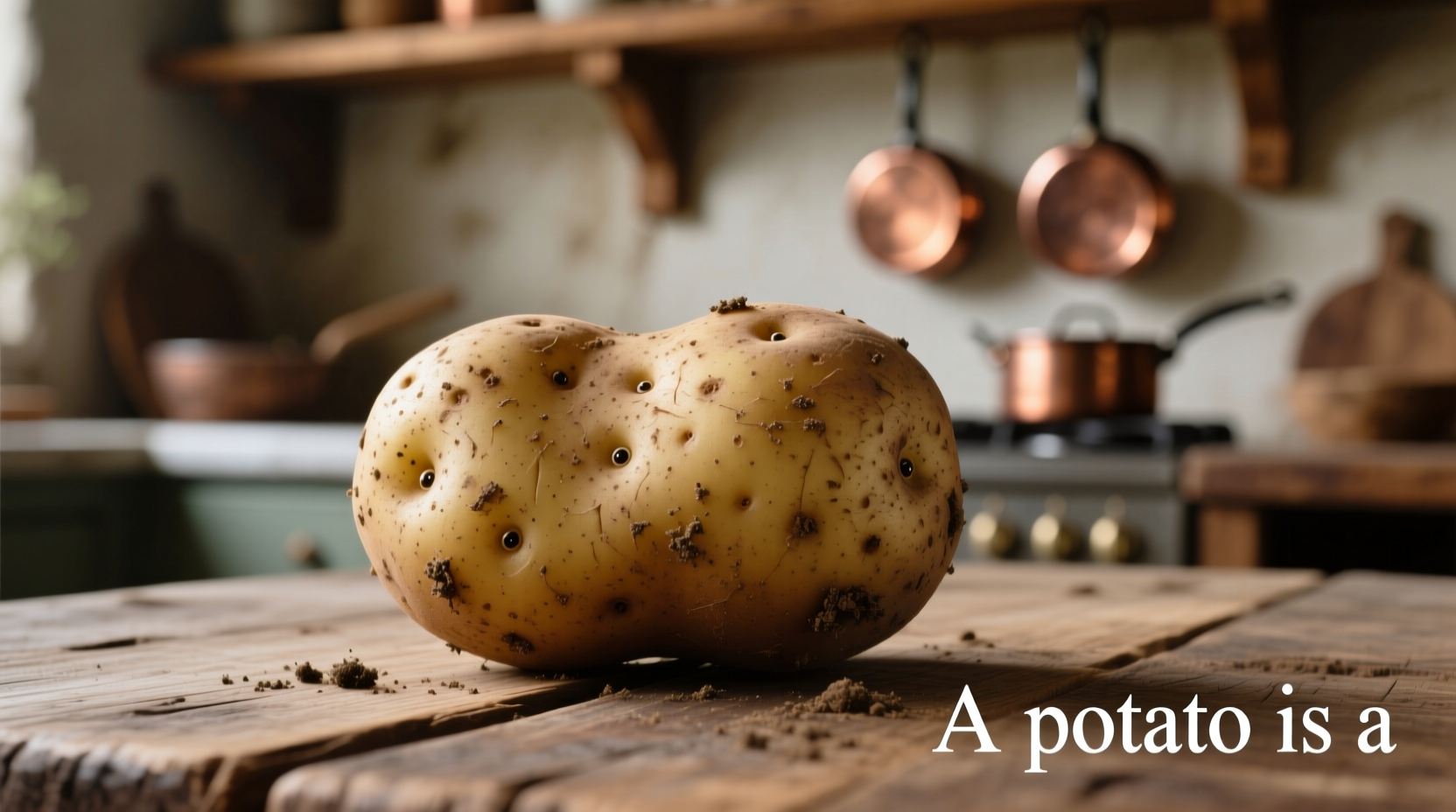
Understanding What Tubers Are: Botanical Definitions, Types, and Growth Science
A tuber is a specialized, enlarged plant structure that stores nutrients, water, and energy underground to help plants survive dormancy, extreme weather, and winter freezes. Derived from modified stem or root tissue, tubers allow plant...
A tuber is a specialized, enlarged plant structure that stores nutrients, water, and energy underground to help plants survive dormancy, extreme weather, and winter freezes. Derived from modified stem or root tissue, tubers allow plants to regrow annually through vegetative propagation without requiring seeds.
Contents
Defining the Tuber: Botanical Purpose and Biological Function
In plant biology, a tuber serves primarily as an organ of perennation and storage. Perennation refers to the ability of perennial plants to survive from one growing season to the next, particularly through harsh periods such as winter cold or summer drought. During favorable environmental conditions, the plant uses photosynthesis to generate excess carbohydrates, which it converts into complex starches or inulin and transports into specialized underground tissues.
When the above-ground foliage dies back at the end of the growing season, the tuber remains dormant under the soil. Packed with starch, protein, minerals, and water within its enlarged parenchyma cells, the tuber provides the energy needed to drive rapid shoot growth when temperature and moisture conditions improve in the spring.
Beyond simple energy storage, tubers play a vital role in asexual (vegetative) reproduction. Because tubers can develop shoots from buds located on their surfaces or crowns, a single parent plant can generate multiple cloned plants in subsequent seasons. This evolutionary strategy allows plant species to colonize local environments efficiently without relying on pollinators, seed dispersal, or flower production.
Stem Tubers vs. Root Tubers: Structural Differences
Not all tubers develop from the same plant anatomy. Botanists divide tubers into two distinct structural categories: stem tubers and root tubers (also known as tuberous roots). Understanding the anatomical distinction is critical for plant propagation, identification, and garden management.
- Underground Storage Organs
- Stem Tubers (Modified Stems)
- Possess nodes ("eyes")
- Can be cut into sections
- Example: Potato
- Root Tubers (Modified Roots)
- Lack nodes/internodes
- Buds located at stem crown
- Example: Sweet Potato
- Stem Tubers (Modified Stems)
Stem Tubers
A stem tuber forms from thickened underground stems, known horticulturally as stolons or rhizomes. Because stem tubers are modified stem tissue, they retain standard stem features, including nodes, internodes, lateral buds, and apical buds.
- Nodes and "Eyes": The small dimples or indentations on a stem tuber (most noticeably seen on domestic potatoes) are nodes, commonly referred to as "eyes." Each eye contains one or more buds capability of sprouting shoots.
- Scale Leaves: Microscopic scale-like leaves or leaf scars frame each eye, marking the node location.
- Propagation Flexibility: Because stem tubers contain nodes distributed across their surface, a single stem tuber can be cut into multiple pieces—provided each piece contains at least one viable eye—to produce independent plants.
Root Tubers
A root tuber, or tuberous root, forms when lateral or adventitious roots swell to function as storage organs. Unlike stem tubers, root tubers consist of modified root tissue rather than stem tissue.
- Absence of Nodes: Root tubers lack true nodes, internodes, scale leaves, and lateral buds along the body of the root.
- Crown-Dependent Sprouting: Growth buds do not exist across the surface of a root tuber. Instead, new shoots emerge from the "crown"—the junction where the root connects to the main plant stem—or through adventitious bud formation.
- Propagation Requirements: Dividing root tubers requires keeping a section of the stem crown attached to the root. A root tuber severed entirely from its stem crown typically cannot produce new shoots, even if the root itself remains healthy and intact.
Structural Comparison of Underground Storage Organs
Gardeners and students frequently confuse tubers with other modified underground structures such as bulbs, corms, and rhizomes. The following matrix illustrates the primary structural characteristics of each storage type:
| Storage Type | Origin Tissue | Distinguishing Features | Representative Plant Examples |
|---|---|---|---|
| Stem Tuber | Underground Stem / Stolon | Possesses outer nodes ("eyes") and lateral buds; no protective tunic scales. | Irish Potato (Solanum tuberosum), Jerusalem Artichoke (Helianthus tuberosus) |
| Root Tuber | Modified Lateral Root | Lacks surface nodes; buds form at the stem crown; stores nutrients in root parenchyma. | Sweet Potato (Ipomoea batatas), Dahlia (Dahlia species), Cassava (Manihot esculenta) |
| Bulb | Reduced Stem with Fleshy Leaves | Concentric layers of swollen, fleshy leaf bases surrounding a central basal plate stem. | Yellow Onion (Allium cepa), Tulip (Tulipa species), Garlic (Allium sativum) |
| Corm | Solid Swollen Stem Base | Solid interior stem tissue covered by thin papery tunic skins; lacks leaf layers. | Gladiolus (Gladiolus species), Crocus (Crocus species), Taro (Colocasia esculenta) |
| Rhizome | Horizontal Stem | Grows horizontally along or just below soil surface; produces shoots from upper nodes and roots from lower nodes. | Ginger (Zingiber officinale), Iris (Iris species), Turmeric (Curcuma longa) |
Major Categories and Notable Examples of Tubers
Tubers are present across diverse plant families worldwide, spanning major agricultural staples and ornamental garden flora.
Irish Potato (Solanum tuberosum)
The Irish potato is the world's most widely cultivated stem tuber and a member of the Solanaceae (nightshade) family. Originating in the South American Andes, potato tubers develop from underground stolons. As the plant matures, stolon tips expand through rapid cell division, creating starch-rich stem tubers. Potatoes store energy primarily as amylose and amylopectin starches.
Sweet Potato (Ipomoea batatas)
Despite its name, the sweet potato is not closely related to the Irish potato. It belongs to the Convolvulaceae (morning glory) family and produces root tubers rather than stem tubers. The enlarged storage root accumulates complex carbohydrates, sucrose, beta-carotene (in orange-fleshed varieties), and dietary fiber.
True Yams (Dioscorea species)
In North American grocery stores, orange sweet potatoes are frequently mislabeled as "yams." However, true yams belong to the genus Dioscorea within the monocot family Dioscoreaceae. True yams produce large stem tubers with thick, rough, dark brown bark-like skin and white, yellow, or purple flesh. Yams are native to tropical regions of Africa and Asia and are rich in complex starches and unique saponin compounds.
Jerusalem Artichoke (Helianthus tuberosum)
Also known as the sunchoke, this plant is a species of sunflower native to North America. It forms knobby stem tubers attached to underground rhizomes. Unlike potatoes, which store energy as starch, Jerusalem artichokes store energy as inulin, a soluble prebiotic fiber composed of fructose chains that does not trigger sharp blood glucose spikes in human digestion.
Dahlia (Dahlia species)
Dahlias are popular flowering perennials in the Asteraceae family that form clusters of root tubers. Growers lift and store these root tubers in cold climates during winter. Because they are root tubers, each tuberous root must remain attached to a piece of the previous year's stem collar containing a growth bud to produce new stems in spring.
The Biological Process of Tuberization
Tuberization is the physiological transformation of stem stolons or root tissues into swollen, starch-filled storage organs. This process relies on a complex interaction between environmental stimuli and endogenous plant hormones.
- Environmental Signals (Short days, cooler soil, high sucrose)
- Hormonal Regulation Shifts (Decreased Gibberellins, Increased Jasmonic Acid & Auxin)
- Cellular Expansion & Starch Accumulation (Parenchyma enlargement, amyloplast starch deposition)
- Fully Formed Tuber
Environmental Triggers
Environmental conditions dictate when a plant transitions from vegetative leaf growth to tuber formation:
- Photoperiod (Day Length): Many tuberous species, including traditional potato cultivars and wild Dioscorea, respond to shortening day lengths (photoperiodism). Declining daylight signals that autumn is approaching, inducing the plant to shift metabolic resources into underground storage.
- Soil Temperature: Soil temperature plays a direct role in tuber induction. For potatoes, optimal tuberization occurs at soil temperatures between 15°C and 20°C (59°F–68°F). When soil temperatures exceed 25°C (77°F), tuber initiation slows down significantly or ceases entirely, as the plant prioritizes heat stress management over storage accumulation.
Hormonal Regulation
Plant hormones act as chemical messengers that control cell division and expansion at the stolon tip or lateral root:
- Gibberellins (GA): High levels of active gibberellins promote upward shoot elongation and inhibit tuber development. Tuberization requires a suppression of gibberellin synthesis.
- Jasmonic Acid and Auxins: Jasmonates, along with indole-3-acetic acid (IAA), encourage transverse cell division and cell enlargement at stolon tips, causing the stem tissue to swell laterally rather than growing straight forward.
- Sucrose Signaling: High concentrations of leaf-generated sucrose transported down to the underground stolon act as a primary metabolic signal, triggering the expression of genes responsible for starch synthesis enzymes.
Starch Deposition
Once tuberization begins, specialized non-pigmented plastids called amyloplasts rapidly accumulate within the parenchyma cells of the stem or root tissue. Amyloplasts convert glucose units into insoluble starch granules, filling the expanding cells and giving the tuber its firm texture and high caloric density.
Cultivation, Propagation, and Soil Management
Successfully growing and managing tuberous crops requires specific horticultural practices tailored to underground storage development.
- Selection & Preparation
- Select disease-free tubers
- Chit (sprout) stem tubers
- Divide roots with stem crown
- Planting & Hilling
- Loose, well-draining soil (pH 5.5-6.5)
- Hill stems to protect
- Growth & Maintenance
- Balanced N-P-K
- Consistent moisture
- Monitor for blight/
- Harvest & Curing
- Dig carefully at dry foliage dieback
- Cure skins to prevent
Vegetative Propagation Methods
Tubers allow growers to propagate exact genetic clones of desirable parent plants without seed variation:
- Chitting (Pre-sprouting): For stem tubers like potatoes, growers often subject seed tubers to light and moderate temperatures (10°C–15°C / 50°F–59°F) several weeks before planting. This process, called "chitting," encourages sturdy green sprouts to form from the eyes, accelerating field establishment after planting.
- Cutting Seed Tubers: Large potato seed tubers can be sliced into smaller segments. Each segment must measure roughly 40–60 grams and contain at least one healthy eye. Slices should dry for 24–48 hours to allow a protective suberized cork layer (callus) to form over cut surfaces before planting, reducing the risk of soil-borne fungal infections.
- Crown Division: For root tubers like dahlias, tubers are separated during dormant periods using a sterile knife. Every divided root must retain a piece of the original central stem crown containing an exposed shoot node.
Soil and Nutrient Requirements
Tuberous plants demand specific soil structures to allow underground expansion without physical restriction:
- Soil Texture and Drainage: Loose, well-draining sandy loam or silt loam soils provide ideal conditions. Dense, compacted clay soils restrict tuber expansion, resulting in stunted or deformed growth, and hold excess water that promotes soft rot pathogens.
- Soil pH: Most stem and root tubers thrive in slightly acidic soils. For potatoes, maintaining a soil pH between 5.0 and 6.0 helps suppress potato scab (Streptomyces scabies), a bacterial infection that forms unsightly corky lesions on tuber skin.
- Nutrient Balance: Tuber development requires elevated levels of potassium (K) and phosphorus (P), which facilitate sugar transport and energy transfer. Excessively high nitrogen (N) applications should be avoided; surplus nitrogen encourages lush leaf growth at the expense of underground tuber expansion.
Pests and Disease Management
Because tubers are underground organs packed with moisture and starches, they attract numerous specialized pests and pathogens:
- Late Blight (Phytophthora infestans): A destructive oomycete plant pathogen that attacks foliage and stem tubers, causing dark water-soaked lesions on leaves and brownish, firm rot within the tuber tissue. Plant disease forecasting networks like the USDA Agricultural Research Service publish regular surveillance updates on regional pathogen strains.
- Potato Cyst Nematodes (Globodera species): Microscopic soil-dwelling roundworms that attack plant root systems, severely reducing tuber yields and triggering regulatory quarantines in commercial agricultural zones.
- Wireworms (Click beetle larvae): Slender, hard-bodied larvae that tunnel through soil into tubers, creating entry wounds for secondary bacterial and fungal rots.
- Greening and Solanine Toxicity: When stem tubers are exposed to sunlight during growth or storage, their epidermal cells synthesize chlorophyll, turning the skin green. Sunlight exposure simultaneously induces the production of toxic glycoalkaloids, primarily solanine and chaconine. Ingesting greened potato tissue can cause bitter tastes, gastrointestinal distress, and neurological symptoms. Growers prevent greening by "hilling"—mounding soil up around the growing stems to block light exposure.
WARNING: SOLAR RADIATION & SOLANINE ACCUMULATION
- Direct Sunlight Exposure on Stem Tubers
- Synthesis of Chlorophyll (Green Pigmentation)
- Accumulation of Glycoalkaloids (Solanine & Chaconine)
- Risk: Ingestion of green potato skin leads to toxic reactions.
- Mitigation: Hill growing stems with soil; store in darkness.
Frequently Asked Questions
What is the main difference between a potato and a sweet potato botanically?
A potato (Solanum tuberosum) is a stem tuber formed from underground stolons, featuring eyes (nodes) across its body that can sprout shoots. A sweet potato (Ipomoea batatas) is a root tuber formed from swollen lateral roots, lacking body nodes and relying on its upper stem crown to produce new shoots.
Can you plant a store-bought tuber to grow new plants?
Yes, store-bought tubers like organic potatoes or ginger can sprout and grow. However, commercially sold grocery store tubers are often treated with chemical sprout inhibitors (such as chlorpropham) to extend shelf life, which delays or prevents germination. Additionally, store-bought tubers may harbor uncertified pathogens that can contaminate garden soil.
Why do potatoes turn green, and are they safe to eat?
Potatoes turn green when exposed to natural or artificial light, which triggers chlorophyll production in the tuber skin. Light exposure also stimulates the formation of toxic glycoalkaloids, mainly solanine. Because cooking does not destroy solanine, green portions and sprouts should be cut away entirely, or the affected potato should be discarded if the greening extends deep into the flesh.
What is the primary functional difference between a tuber and a bulb?
A tuber consists of solid swollen tissue (either stem or root tissue) without protective layered scale leaves. A bulb (such as an onion) consists of a small, flattened central basal stem surrounded by thick, fleshy scale leaves that store moisture and nutrients in layered rings.
How should tubers be harvested and stored over winter?
Harvest tubers during dry weather after the top foliage naturally yellow and dies back. Allow harvested tubers to cure in a warm (15°C–20°C / 50°F–68°F), dark, ventilated environment for 7 to 14 days to thicken their skins and heal surface wounds. After curing, store tubers in complete darkness at temperatures between 4°C and 10°C (39°F–50°F) with moderate humidity to maintain dormancy and prevent shriveling.
Operational Guidance for Gardeners and Agriculturalists
To maximize health and yield when cultivating tuberous crops:
- Source Certified Clean Stock: Always purchase certified disease-free seed tubers or root divisions from accredited nurseries to prevent introducing viruses, bacterial wilt, or nematodes into your soil.
- Practice Crop Rotation: Rotate tuber crops on a 3- to 4-year cycle. Avoid planting Solanaceae family members (potatoes, tomatoes, eggplants) in the same soil plot continuously to break pest and pathogen life cycles.
- Maintain Consistent Moisture: Provide consistent, moderate irrigation throughout the tuber expansion phase. Irregular watering—alternating between dry soil and heavy soaking—causes uneven tuber growth, leading to hollow heart defects, knobby malformations, and skin cracking.
- Enforce Dark Storage Conditions: Store harvested eating tubers in dark, cool, dry cellars or bins. Exposure to ambient indoor light accelerates sprouting and toxic solanine production.
Image Gallery