Comprehensive Guide to Accessing Warren County Blotter Records in 2026
Accessing the Warren County blotter involves reviewing official law enforcement logs, arrest records, and incident reports maintained by the Sheriff’s Office or local municipal police departments. In 2026, most jurisdictions provide th...
Accessing the Warren County blotter involves reviewing official law enforcement logs, arrest records, and incident reports maintained by the Sheriff’s Office or local municipal police departments. In 2026, most jurisdictions provide these public records through digital transparency portals, mobile applications, or official county websites to ensure community awareness and public safety. This guide focuses on the primary Warren County jurisdictions in New York and Ohio, which represent the highest search volume for these public safety records.
Contents
Understanding the Role of the Police Blotter in Public Safety
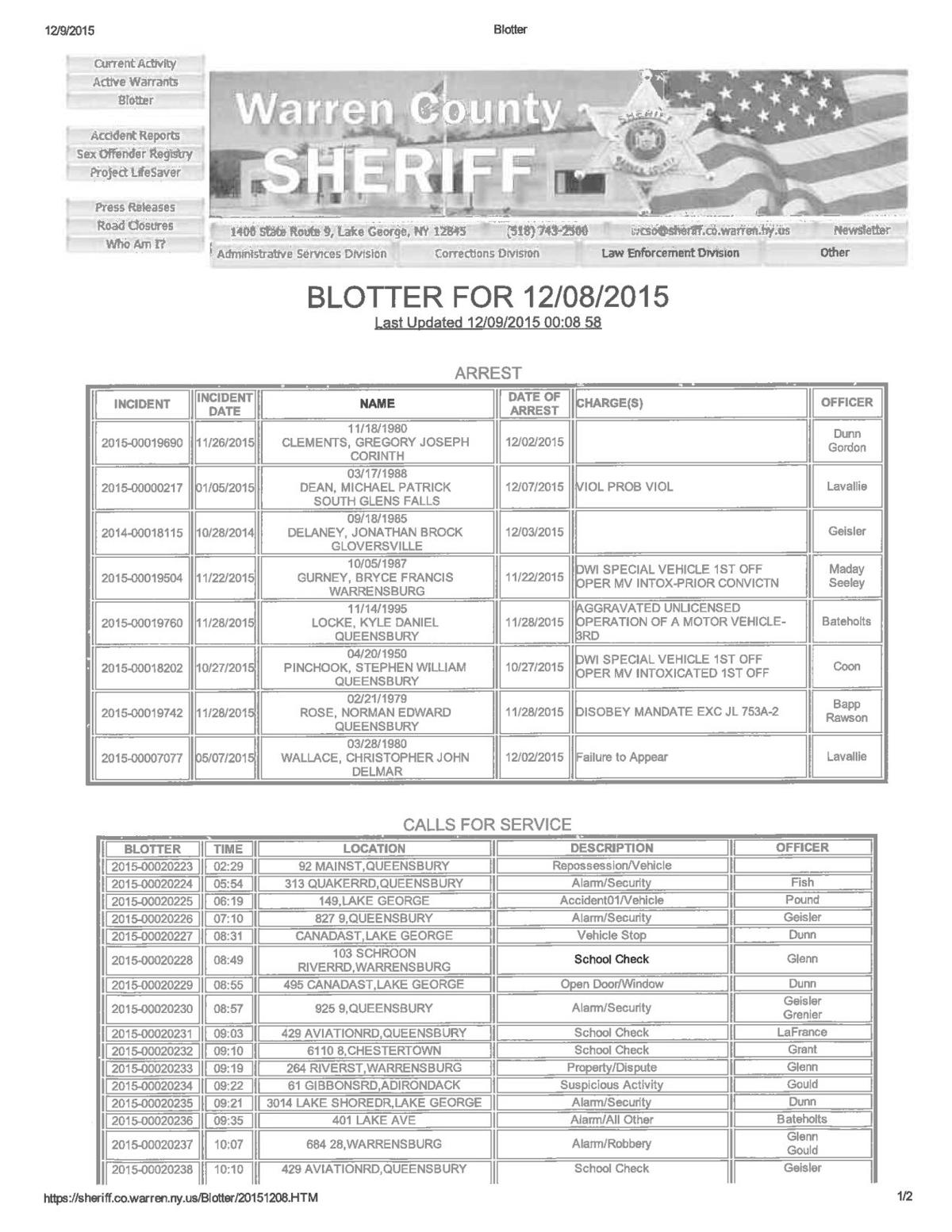
A police blotter serves as a chronological record of all reports, arrests, and significant calls for service handled by a law enforcement agency. Unlike a formal criminal history report, the blotter is a "snapshot" of daily activity. It provides transparency into how tax dollars are utilized for public safety and allows residents to remain informed about incidents occurring in their immediate neighborhoods.
As of 2026, the definition of a "blotter" has evolved from physical ledger books to dynamic, searchable databases. These records typically include the name of the individual involved (if an arrest was made), the nature of the charge or incident, the location of the occurrence, and the responding officer’s identification. It is important to remember that information in a blotter represents allegations; all individuals are presumed innocent until proven guilty in a court of law.
Public access to these records is protected under state-specific statutes, such as the Freedom of Information Law (FOIL) in New York and the Open Records Act in Ohio. These laws mandate that law enforcement agencies make non-sensitive information available to the public, though certain details—such as the names of minors, victims of sensitive crimes, or information pertaining to ongoing investigations—may be redacted to protect privacy and judicial integrity.
Accessing the Warren County, New York Blotter
In Warren County, NY, the Sheriff’s Office and the Glens Falls Police Department are the primary custodians of blotter information. The county has modernized its reporting system in 2026, making it easier for residents in Queensbury, Glens Falls, and Lake George to track local law enforcement activity.
The Warren County Sheriff’s Office Digital Portal
The Sheriff’s Office remains the lead agency for the majority of the county's geography. To access their records, citizens can utilize the official Warren County Government website or the dedicated Sheriff’s mobile app, which has seen significant updates this year to include real-time incident mapping.
- Direct Web Access: Navigate to the official Warren County NY Sheriff’s page and select the "Police Activity" or "Arrest Records" tab.
- Mobile Application: The Warren County Sheriff’s app provides push notifications for high-priority incidents and a searchable "Inmate Population" tool for those looking for recent booking information.
- Physical Requests: For certified copies of reports for insurance or legal purposes, the Records Division at the Law Enforcement Center in Municipal Center, NY, handles FOIL requests.
Municipal Police Records: Glens Falls and Lake George
If an incident occurs within the city limits of Glens Falls, the Glens Falls Police Department maintains its own blotter. As of 2026, they publish a weekly summary of arrests and significant calls. These are often shared with local news outlets such as The Post-Star, which maintains a dedicated "Police Blotter" section for the greater Adirondack region.
Accessing the Warren County, Ohio Blotter and Jail Records
Warren County, Ohio, located between Cincinnati and Dayton, operates one of the most technologically advanced public record systems in the state. The Warren County Sheriff’s Office (WCSO) provides several avenues for accessing blotter data, ranging from active jail rosters to historical incident reports.
The WCSO Online Information Center
The Ohio-based Warren County Sheriff’s Office utilizes a comprehensive online management system. For those searching for "Warren County Blotter" information in 2026, the following tools are the most effective:
- Jail Booking Records: The SOMS (Sheriff's Office Management System) allows users to search for current inmates, recent bookings, and release dates. This is the most common destination for those looking for recent arrest data.
- Offense Reports: The Records Division provides an online portal where individuals can search for incident reports by date, location, or report number.
- The "Sheriff’s App": Similar to its New York counterpart, the WCSO Ohio app includes a "Recent Arrests" feature that is updated every four hours.
City-Level Blotters: Lebanon, Mason, and Springboro
Large municipalities within Warren County, OH, such as Mason and Lebanon, maintain independent police departments. If you are looking for a blotter entry regarding a traffic stop or a local ordinance violation in these cities, you must contact their respective records divisions. Mason, in particular, offers an interactive "Crime Map" through its city portal that visualizes blotter data for the previous 90 days.
Comparison of Access Methods Across Jurisdictions
The following table compares the primary methods and transparency levels for accessing blotter records in the two most prominent Warren Counties as of 2026.
| Feature | Warren County, NY | Warren County, OH |
|---|---|---|
| Primary Online Tool | Sheriff’s Mobile App / FOIL Portal | Jail Tracker (SOMS) / Online Records |
| Update Frequency | Daily (Arrests); Real-time (Alerts) | Real-time (Jail); 24-48 Hours (Reports) |
| Searchable by Name | Yes (Inmate/Arrest Search) | Yes (Inmate/Incident Search) |
| Historical Depth | 3-5 Years Online | 7-10 Years Online |
| Fee for Digital View | Free | Free |
| Official FOIA/Open Records | FOIL Request (NY State Standard) | Public Records Request (Ohio Sunshine) |
| Mugshot Availability | Restricted (NY Civil Rights Law § 50-f) | Publicly Available (Ohio Law) |
Step-by-Step Guide to Conducting a Criminal Record Search
If you are attempting to locate a specific entry in a Warren County blotter for legal, professional, or personal reasons, follow this standardized procedure to ensure you find the most accurate data.
Step 1: Identify the Specific Jurisdiction
Determine if the incident occurred within a city's limits or in a township patrolled by the Sheriff. For example, an arrest in the City of Lebanon (OH) will be processed differently than one in Deerfield Township.
Step 2: Utilize the Official Agency Website
Always start with the primary law enforcement agency. Avoid third-party "background check" sites initially, as they often lag behind official records or charge unnecessary fees for information that is free at the source.
- For NY: Warren County NY Sheriff
- For OH: Warren County OH Sheriff
Step 3: Formal Public Records Request
If the information is not available on the public dashboard, you may need to file a formal request. In 2026, most agencies have transitioned to "GovQA" or similar digital request platforms. You will need to provide:
- Date and approximate time of the incident.
- Location (Address or intersection).
- Names of parties involved (if known).
- Type of report (Accident, Arrest, or Incident).
Step 4: Verify the Disposition
A blotter entry only shows the arrest. To see the outcome of the case, you must transition your search to the Warren County Clerk of Courts (for Ohio) or the Unified Court System (for New York). The blotter tells you what happened; the court record tells you the result.
Common Abbreviations Found in Blotter Reports
Law enforcement logs frequently use technical shorthand. Understanding these codes is essential for accurately interpreting the Warren County blotter.
Legal and Operational Terminology
UCR (Uniform Crime Reporting): A standardized system used by the FBI that local agencies use to classify crimes for statistical purposes.
|
OVI / DWI: Operating a Vehicle Impaired (common in Ohio) or Driving While Intoxicated (common in New York). Both indicate alcohol or drug-related driving offenses.
|
FTA / FTP: Failure to Appear or Failure to Pay. These are often the basis for "Bench Warrants" listed in the blotter.
|
ROR (Released on Own Recognizance): Indicates that an individual was processed and released without needing to post bail, usually for non-violent misdemeanors.
|
POM / POCS: Possession of Marijuana or Possession of a Controlled Substance. These entries will typically include the "degree" of the felony or misdemeanor.
Ethical Considerations and Information Accuracy
While the blotter is a public resource, it carries significant weight. In 2026, many jurisdictions have implemented "Right to be Forgotten" or automated expungement policies for certain non-violent offenses.
The Impact of Mugshots
In New York, legislation (Civil Rights Law § 50-f) significantly limits the public release of mugshots by law enforcement unless they serve a specific law enforcement purpose (e.g., finding a fugitive). In contrast, Ohio remains a state where mugshots are generally considered public record and are readily available on jail rosters.
Data Verification and Corrections
Errors in the blotter can occur due to clerical mistakes or misinformation provided at the scene. If you find an error in a Warren County blotter entry:
- Contact the Originating Agency: Reach out to the Records Division of the specific police department or Sheriff's Office.
- Provide Documentation: You must provide court-certified proof (such as a dismissal or an expungement order) to have a digital record amended or removed.
- Third-Party Aggregators: Law enforcement agencies have no control over third-party "mugshot" websites. Once a record is corrected at the official source, you may need to contact those sites individually, though many 2026 search engine algorithms have deprioritized these predatory sites.
Frequently Asked Questions
How often is the Warren County arrest blotter updated?
Most Warren County agencies update their digital jail rosters every 2 to 4 hours. General incident blotters (non-arrest calls) are typically updated once every 24 hours on business days. On weekends or holidays, updates may be delayed until the following business morning.
Can I see why someone was arrested in Warren County today?
Yes, by visiting the Sheriff’s Office "Current Inmates" or "Recent Bookings" page. These logs list the specific charges, the arresting agency, and the bond amount. Note that details regarding the specific narrative of the crime are usually not available until the official police report is finalized and requested.
Are juvenile records included in the public blotter?
No. In both New York and Ohio, records involving minors are strictly protected. While an incident might be mentioned (e.g., "An 11-year-old was detained for shoplifting"), the name and identifying details of the juvenile are redacted from public-facing blotters.
Is there a fee to access the Warren County blotter?
Viewing the blotter online through official Sheriff or Police portals is free. However, if you require a physical, certified copy of a full police report (typically for insurance claims or court proceedings), a nominal fee (usually $0.05 to $0.25 per page) may apply.
What is the difference between a blotter and a criminal background check?
A blotter is a record of a specific interaction or arrest at a single point in time. A criminal background check is a cumulative report that includes all convictions, sentences, and dispositions across multiple jurisdictions. The blotter is for current events; the background check is for historical verification.
Can I find traffic tickets in the Warren County blotter?
Traffic citations are generally not listed in the "Arrest Blotter" unless the citation led to a physical arrest (such as a DWI or reckless driving). Standard speeding tickets or equipment violations are typically handled through the Traffic Division of the local court and may not appear in daily police logs.
Leveraging Public Records for Community Awareness
Monitoring the Warren County blotter is a proactive way for residents to stay informed about local safety trends. Whether you are a property owner in Mason, OH, or a business owner in Queensbury, NY, understanding the patterns of local law enforcement activity helps in making informed decisions about home security and community involvement.
In 2026, the shift toward mobile-first, real-time data ensures that the barrier between the public and their safety information is lower than ever. When using these tools, always prioritize official government sources to ensure the data you are reviewing is current, accurate, and legally verified. For those requiring legal advice or comprehensive background checks for employment, it is recommended to consult with a licensed professional or utilize the official state-level criminal justice services.
Image Gallery