Inside the CDC Inspection of Cruise Ships
When a massive cruise ship prepares to welcome thousands of passengers, its behind-the-scenes public health readiness undergoes an unannounced, hyper-rigorous evaluation by public health officers. Managed by the Vessel Sanitation Progr...
When a massive cruise ship prepares to welcome thousands of passengers, its behind-the-scenes public health readiness undergoes an unannounced, hyper-rigorous evaluation by public health officers. Managed by the Vessel Sanitation Program (VSP) under the oversight of the Centers for Disease Control and Prevention (CDC), these surprise inspections serve as the primary defensive barrier against gastrointestinal outbreaks and waterborne illnesses at sea.
Contents
The Vessel Sanitation Program operates under the umbrella of the National Center for Environmental Health, a division of the CDC. Established in the early 1970s at the request of the cruise industry, the program was designed to curtail the spread of communicable diseases—most notably Norovirus—on ships carrying passengers from foreign ports to U.S. jurisdictions. Although participation was initially voluntary, federal regulations enacted in the late 1980s made unannounced operational inspections mandatory for any passenger vessel carrying 13 or more passengers and calling on U.S. ports.
Understanding what happens inside a CDC cruise ship inspection requires examining the legal mandate, the specific operational domains evaluated during an audit, the scoring methodology, and the immediate consequences for ships that fail to meet federal standards.
The Mandate and Scope of the Vessel Sanitation Program
The primary search intent surrounding CDC ship inspections often revolves around compliance, safety records, and how these evaluations are conducted. Under U.S. federal law, ships operating international itineraries that include stops at U.S. ports must undergo unannounced sanitation inspections twice a year.
These inspections apply to foreign-flagged vessels as well as U.S.-flagged ships, provided they meet the passenger capacity threshold. The VSP jurisdiction covers passenger vessels of 100 gross tons or larger. Ships undergoing these evaluations do not receive advance notice; VSP environmental health officers typically board the vessel while it is docked during a turnaround day or occasionally during a short coastal voyage.
The operational scope is sweeping. Inspectors do not just look at restaurant kitchens; they examine the entire ship as a closed, floating municipality. This includes analyzing complex marine engineering systems, potable water bunkering, recreational water facilities, medical centers, ventilation networks, and waste management systems.
Key Operational Areas Examined During an Inspection
A comprehensive VSP inspection evaluates multiple interrelated departments. Officers use a standardized operations manual that outlines exact parameters for temperature control, sanitation practices, equipment design, and employee hygiene.
1. Potable Water Systems and Management
Water safety represents the single most critical component of a cruise ship inspection. A ship must produce, store, and distribute safe drinking water for thousands of people while navigating international waters.
- Bunkering and Production: Inspectors check where the ship takes on potable water from port shoreside facilities or how it manufactures water via reverse osmosis and evaporation systems.
- Disinfection Protocols: Continuous monitoring logs for chlorine or other approved disinfectants are cross-examined against physical water samples drawn from various points across the vessel, including crew quarters, passenger cabins, and galley sinks.
- Storage and Distribution: Cross-connection prevention is a major focus. Inspectors verify that gray water or black water lines cannot contaminate potable water tanks.
2. Swimming Pools and Recreational Water Facilities
Whirlpools, swimming pools, and splash pads are notoriously difficult to maintain due to high bather loads and warm water temperatures, which facilitate bacterial growth like Legionella and Pseudomonas.
- Chemical Residuals: Officers test public and crew pools for free chlorine, bromine, and pH levels on-site.
- Circulation and Filtration: The turnover rate of pool water and the functionality of ultraviolet (UV) or ozone secondary disinfection systems are rigorously audited.
- Deck Surrounding Areas: Drainage, foot baths, and deck hygiene are evaluated to prevent slip hazards and contamination pooling.
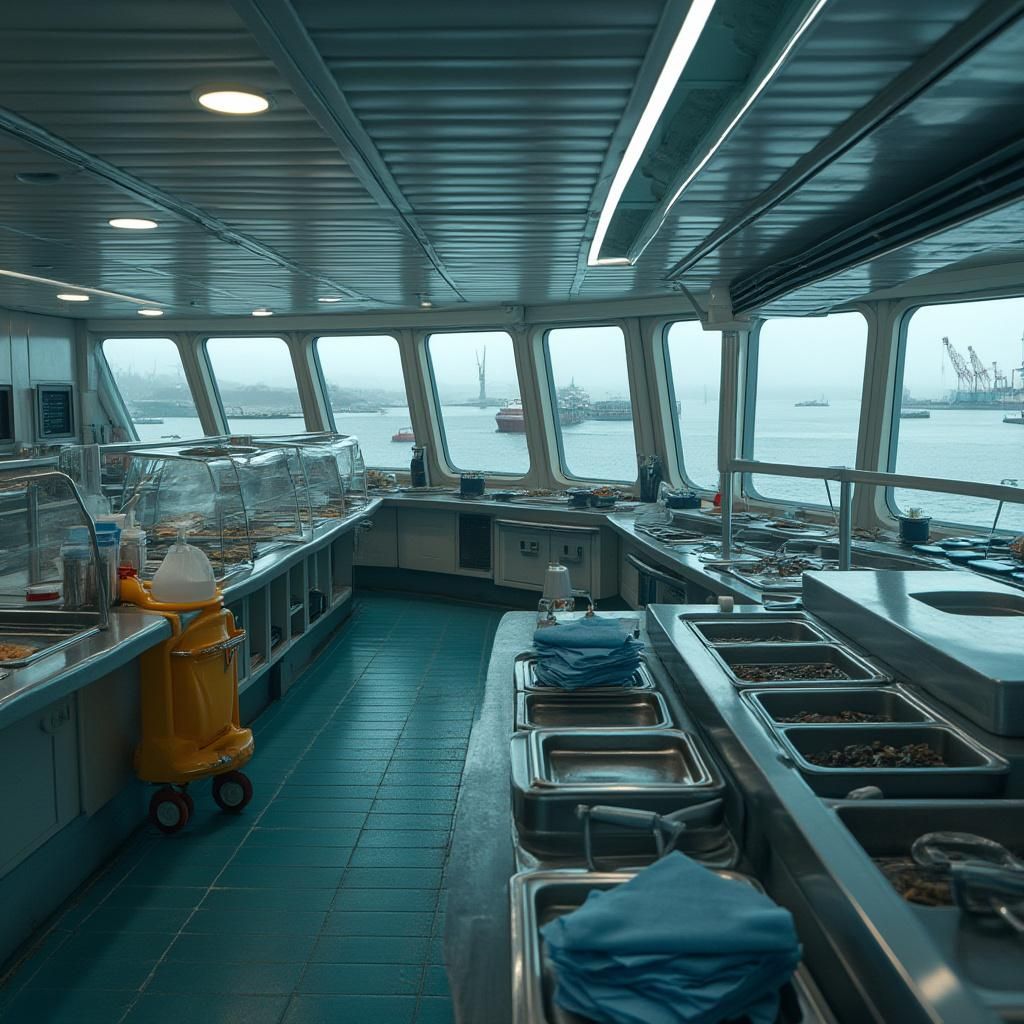
3. Galley and Food Service Operations
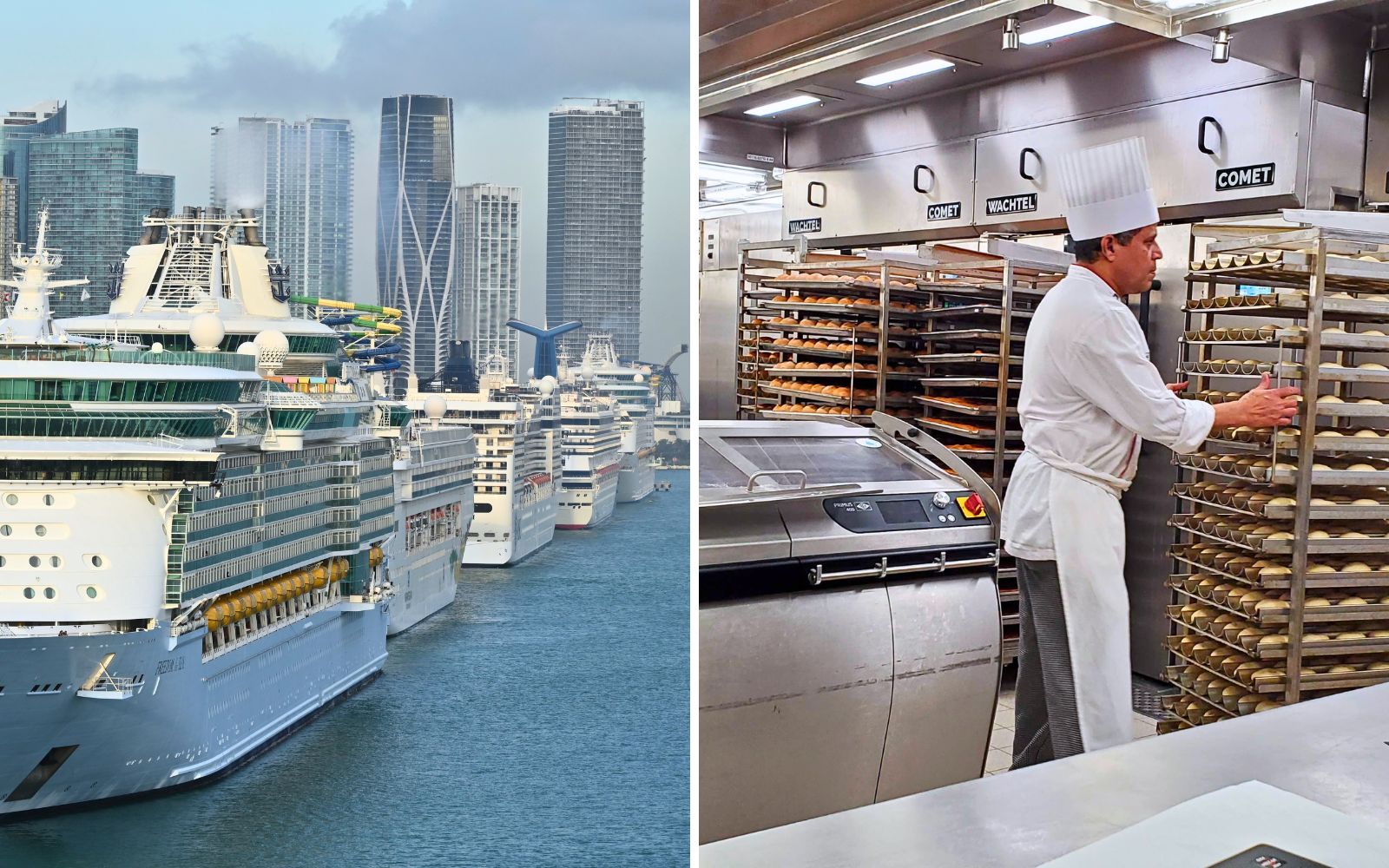
Food preparation areas are scrutinized from the moment raw ingredients arrive on the ship to the final plating of meals.
- Temperature Controls: Walk-in refrigerators, freezers, blast chillers, and hot-holding units must maintain precise temperatures to inhibit bacterial multiplication. Inspectors review automated and manual temperature logs.
- Cross-Contamination Prevention: Separation of raw meats from ready-to-eat foods, proper sanitization of cutting boards, and the correct operation of commercial dishwashing machines (checking rinse cycle temperatures and chemical concentrations) are mandatory checks.
- Employee Hygiene: Handwashing stations must be fully stocked, touchless where possible, and actively utilized by galley staff.
4. Integrated Pest Management
Because cruise ships travel globally and carry large quantities of dry goods, pest control is essential.
- Vessel Integrity: Inspectors check for gaps in doors, unsealed pipe penetrations, and structural defects that could allow rodents or insects to enter food storage spaces.
- Monitoring and Eradication: Traps, bait stations, and pesticide application logs are reviewed to ensure safe, compliant pest management practices that do not risk food contamination.
The Inspection Scoring System and Compliance Thresholds
VSP inspections use a 100-point scoring scale. Starting from a perfect score of 100, inspectors deduct points based on the severity and frequency of violations observed throughout the ship.
| Inspection Score Range | Classification | Operational Consequence |
|---|---|---|
| 86 to 100 | Satisfactory | The vessel passes. No immediate administrative action required; routine oversight continues. |
| 85 or Below | Unsatisfactory | The vessel fails. A reinspection is mandated, and public notifications are issued. |
Violations are categorized into different levels of severity. A critical violation—such as raw sewage contaminating a food prep area or a total failure of potable water chlorination—results in heavy point deductions and requires immediate on-the-spot correction.
If a ship scores 85 or below, the CDC immediately publishes the failure on its official public vessel sanitation inspection database. Furthermore, the ship must undergo a reinspection within 30 to 45 days, during which it must correct all identified deficiencies. Repeated failures can lead to severe operational restrictions, including denial of entry to U.S. ports or judicial action under federal public health statutes.
Common Deficiencies and Troubleshooting Operational Challenges
Achieving and maintaining a passing score requires constant vigilance from the ship's hotel and engineering teams. During inspections, environmental health officers frequently encounter recurring operational pitfalls across the global fleet.
Temperature Abuse in Galleys
One of the most common infractions involves improper food holding temperatures. During peak service hours, buffet lines and galley prep stations can experience temperature fluctuations. Cruise lines combat this by utilizing digital, real-time temperature monitoring sensors tied to automated alert systems that notify galley supervisors before food enters the danger zone (between 41°F and 135°F / 5°C and 57°C).
Potable Water Backflow
Cross-connections between non-potable and potable water systems remain a major technical hurdle. Marine engineers must routinely test double check valve assemblies and air gaps. Any unapproved modification made during routine maintenance at sea can result in a severe deduction during a surprise port inspection.
Documentation Gaps
Inspectors rely heavily on verifiable logs. If a chlorination log, temperature chart, or medical logbook has missing entries or shows inconsistent monitoring, inspectors view the process as unreliable. Modern ships increasingly transition to electronic logbooks to prevent gaps and ensure accountability across multiple shifts.
Frequently Asked Questions
How often does the CDC inspect cruise ships?
The CDC inspects qualifying passenger vessels twice a year. These inspections are completely unannounced and take place when the ship calls on a U.S. port, regardless of the cruise line's flag of registry.
What happens if a cruise ship fails a CDC inspection?
If a ship scores 85 or lower, it fails the inspection. The ship's management must submit a corrective action plan, and the CDC schedules an unannounced reinspection within 30 to 45 days. Inspection scores and detailed reports are made publicly available on the CDC website.
Are all cruise ships operating in the U.S. subject to these inspections?
Yes, any passenger vessel that carries 13 or more passengers, has international itineraries touching U.S. ports, and measures 100 gross tons or larger is subject to the jurisdiction of the Vessel Sanitation Program.
Where can the public view past inspection reports?
The CDC maintains an online search portal on its official Vessel Sanitation Program website. Travelers can view historical inspection scores, detailed violation reports, and corrective actions taken by specific cruise ships and lines dating back several years.
Do crew members receive special training for these inspections?
Yes. Cruise lines employ specialized public health officers on board who conduct daily internal audits mimicking VSP standards. Crew members across all departments undergo continuous training regarding hand hygiene, chemical handling, and temperature monitoring.
Conclusion and Next Actions
A CDC cruise ship inspection is a meticulous, multi-departmental audit designed to protect millions of travelers annually. For prospective passengers, reviewing the public VSP inspection reports prior to booking offers a transparent look into a ship's sanitation standards. Travelers interested in verifying a specific vessel's public health record can access the searchable database directly through the official Centers for Disease Control and Prevention Vessel Sanitation Program web portal.
Image Gallery