Accurate Iftaar Time 2026: The Essential Guide to Sunset Calculations and Fast-Breaking Traditions
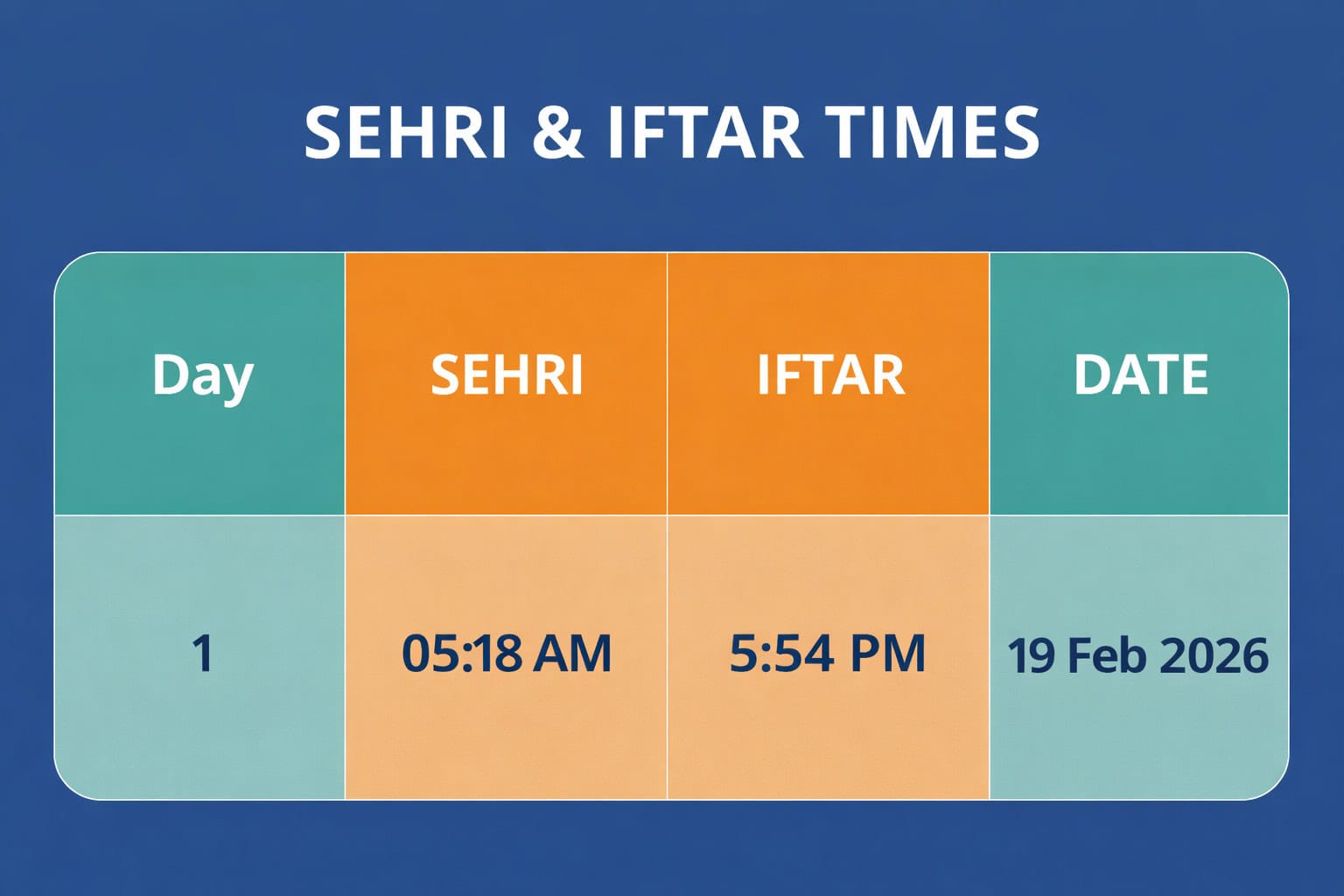
Iftaar time refers to the precise moment of sunset when Muslims conclude their daily fast during the month of Ramadan. In 2026, Ramadan is projected to begin on or around February 18, with Iftaar occurring daily at the start of the Mag...
Iftaar time refers to the precise moment of sunset when Muslims conclude their daily fast during the month of Ramadan. In 2026, Ramadan is projected to begin on or around February 18, with Iftaar occurring daily at the start of the Maghrib prayer. The exact timing fluctuates based on geographic coordinates, atmospheric refraction, and the specific calculation method adopted by local religious authorities.
Contents
Determining the exact Iftaar time is both a spiritual necessity and a technical exercise. As the lunar calendar shifts approximately 10 to 11 days earlier each year, the 2026 fasting season falls during the transition from late winter to early spring in the Northern Hemisphere. This shift significantly impacts the duration of the fast and the specific clock time for breaking it compared to previous years.
The Technical Science of Calculating Iftaar Time
While the spiritual definition of Iftaar is "breaking the fast at sunset," the technical determination involves complex astronomical calculations. Sunset, or Ghurub, is defined as the moment when the trailing edge of the sun's disk disappears below the horizon. However, several factors can influence the perceived and calculated time of this event.
Astronomical Sunset vs. Visual Observation
The primary method for determining Iftaar time in 2026 involves calculating the sun's position relative to the horizon. Astronomical algorithms, such as those provided by the U.S. Naval Observatory, account for the observer's latitude, longitude, and elevation.
Atmospheric Refraction Considerations The Earth's atmosphere bends light, which often makes the sun appear above the horizon even after it has physically dipped below it. Standard Iftaar calendars include a 1-to-2-minute safety buffer to ensure that the sun has completely set before the fast is broken.
The Impact of Elevation For those living in high-rise buildings, such as the Burj Khalifa in Dubai or skyscrapers in New York City, Iftaar time is delayed. This occurs because a higher altitude allows a person to see the sun for a longer period than someone at ground level. In extreme cases, residents on higher floors may break their fast several minutes later than those on the ground.
Major Calculation Authorities and Methods
Different regions follow specific conventions for calculating prayer times, including Maghrib (Iftaar). These variations usually stem from the calculation of dawn (Fajr) and dusk (Isha), but the sunset time is generally consistent across most methods, with slight variations in the "safety buffer."
- University of Islamic Sciences, Karachi: Widely used in the Indian subcontinent.
- Islamic Society of North America (ISNA): Common in the United States and Canada.
- Muslim World League (MWL): Predominant in Europe and parts of the Middle East.
- Umm al-Qura University: The official standard for Saudi Arabia.
Projected Iftaar Times for Major Cities in Ramadan 2026
As Ramadan 2026 progresses from mid-February to mid-March, the days gradually lengthen in the Northern Hemisphere and shorten in the Southern Hemisphere. The following table provides estimated Iftaar times for the middle of Ramadan (approximately March 5, 2026) across various global hubs.
| City | Country | Estimated Iftaar Time (March 5, 2026) | Avg. Fast Duration |
|---|---|---|---|
| Mecca | Saudi Arabia | 6:24 PM | 13 Hours 15 Mins |
| London | United Kingdom | 5:51 PM | 14 Hours 10 Mins |
| New York | USA | 5:53 PM | 13 Hours 45 Mins |
| Dubai | UAE | 6:22 PM | 13 Hours 10 Mins |
| Jakarta | Indonesia | 6:12 PM | 13 Hours 5 Mins |
| Sydney | Australia | 7:28 PM | 14 Hours 20 Mins |
| Cape Town | South Africa | 7:14 PM | 14 Hours 5 Mins |
| Toronto | Canada | 6:11 PM | 13 Hours 50 Mins |
Spiritual and Sunnah Practices at Iftaar Time
The moment of Iftaar is considered one of the most sacred times of the day for a fasting person. According to Islamic tradition, there is a specific etiquette (Adab) and set of recommended actions (Sunnah) to follow when the sun sets.
The Supplication (Dua)
It is highly recommended to make a personal supplication just before and at the moment of breaking the fast. A commonly recited prayer is: “Dhahaba al-zamau’ wa’btallat al-‘uruqu wa thabata al-ajru in sha Allah” (The thirst is gone, the veins are moistened, and the reward is certain, if Allah wills).
Immediate Breaking of the Fast
Unlike the pre-dawn meal (Suhoor), which is recommended to be delayed as late as possible, Iftaar should be taken as soon as the sunset is confirmed. Delaying the Iftaar unnecessarily is discouraged in prophetic tradition.
The Traditional Menu: Dates and Water
The Sunnah suggests breaking the fast with an odd number of fresh dates (Rutab) or dry dates (Tamr). If dates are unavailable, water is the preferred alternative. This practice is not only spiritual but also scientifically sound, as dates provide a rapid burst of natural sugars to restore blood glucose levels.
Health and Nutrition: Managing Your Iftaar in 2026
Breaking a fast of 13 to 15 hours requires a strategic approach to nutrition to avoid digestive distress and lethargy. The transition from a state of ketosis (fat burning) or low blood sugar back to digestion should be handled with care.
The Three-Stage Iftaar Strategy
- Immediate Rehydration: Start with 1-2 glasses of water and 3 dates. Avoid ice-cold water, as it can cause stomach cramps in an empty belly.
- The Prayer Break: Perform the Maghrib prayer after the initial snack. This 10-15 minute break allows the stomach to wake up and the brain to register the arrival of glucose, reducing the likelihood of overeating during the main meal.
- Balanced Main Meal: Focus on a mix of complex carbohydrates, lean protein, and healthy fats.
Foods to Prioritize and Avoid
Recommended Nutritional Balance Incorporate soups (like lentil or vegetable) to further hydrate and provide electrolytes. Fiber-rich foods like whole grains and fresh vegetables help maintain digestive regularity during the month.
Items to Limit Highly processed sugars and deep-fried foods (like samosas or pakoras) should be consumed in moderation. These cause rapid insulin spikes followed by crashes, leading to fatigue during the evening prayers (Taraweeh).
Modern Tools for Tracking Iftaar Time
In 2026, technology has made it easier than ever to track prayer times with precision. Reliance on physical calendars is now supplemented by real-time GPS-based applications.
Mobile Applications and Smart Devices
Most Muslims utilize apps like Muslim Pro, Athan, or IslamicFinder. These apps use your phone's GPS to calculate the exact sunset for your specific location rather than a general city-wide average. In 2026, integration with wearable technology (smartwatches) allows for haptic alerts at the exact second of Iftaar.
Mosque Broadcasts and Radio
In many Muslim-majority countries, the Adhan (call to prayer) is broadcast through minarets or via national radio and television. In Western countries, many local Masjids provide downloadable PDF schedules tailored to their specific "safety buffer" preferences.
Navigating Iftaar in Extreme Latitudes
For Muslims living in northern regions (such as parts of Scandinavia, Canada, or Scotland), the 2026 Ramadan timeframe in February and March offers relatively "normal" fasting hours compared to the 20-hour fasts experienced during summer months.
However, if Ramadan were to fall in a period where the sun does not set (midnight sun) or the day is extremely short, scholars typically recommend one of two options:
- Following the timings of the nearest city where sunset is distinguishable.
- Following the timings of Mecca (Makkah Time).
Fortunately, for 2026, the global distribution of daylight is relatively balanced, with most regions experiencing fasts between 12 and 15 hours.
Frequently Asked Questions
What happens if I break my fast a few minutes before Iftaar time by mistake? If the fast is broken prematurely based on an incorrect clock or a mistaken announcement, most schools of Islamic jurisprudence require the individual to make up that day of fasting after Ramadan. However, the person should continue fasting until sunset once they realize the error.
Does Iftaar time change every day? Yes. Because the sun sets at a different time each day as the Earth orbits the sun, Iftaar time typically shifts by 1 or 2 minutes daily. During the spring transition in 2026, the sunset will generally occur later each day in the Northern Hemisphere.
Is it permissible to break the fast while traveling? If you are on a flight during Iftaar time, you must break your fast based on the sunset as seen from the aircraft's current position, not the time of the city you departed from or your destination. Many airlines provide Iftaar announcements based on cockpit navigation data.
Can I rely on my phone's weather app for Iftaar time? While weather apps provide sunset times, it is safer to use a dedicated Islamic prayer time app or a local mosque calendar. These sources often include the necessary 1-2 minute buffer to ensure the sun's disk has completely disappeared.
What is the "safety buffer" in Iftaar calendars? A safety buffer is a period of 1 to 5 minutes added to the calculated astronomical sunset. This ensures that even with slight variations in elevation or atmospheric conditions, the fast is not broken while the sun is still partially visible.
Conclusion and Preparation for Ramadan 2026
As you prepare for Ramadan 2026, staying informed about accurate Iftaar times is crucial for both religious compliance and personal planning. By utilizing GPS-accurate tools and understanding the astronomical factors at play, you can ensure your fasts are started and ended with precision. Focus on a balanced approach to the Iftaar meal—prioritizing hydration and Sunnah-inspired nutrition—to maintain your energy for the nightly prayers and the spiritual demands of the holy month. For the most accurate local schedules, consult your nearest Islamic center or a verified astronomical timing service as the month of February 2026 approaches.
Image Gallery