Who Are the Top Miami Hurricanes Football Players
The top Miami Hurricanes football players represent a legacy of dominance that spans five national championships and a record-setting pipeline to the NFL. Legendary figures such as Ed Reed, Ray Lewis, Sean Taylor, Michael Irvin, and Wa...
The top Miami Hurricanes football players represent a legacy of dominance that spans five national championships and a record-setting pipeline to the NFL. Legendary figures such as Ed Reed, Ray Lewis, Sean Taylor, Michael Irvin, and Warren Sapp define the program’s "swagger," combining elite athleticism with a transformative impact on the culture of college football.
Contents
The Defensive Architects: Ed Reed and Sean Taylor
When discussing the greatest to ever wear the orange and green, the conversation inevitably begins with the secondary. Ed Reed is widely regarded not only as the greatest Hurricane but arguably the greatest safety in the history of football. Playing for Miami from 1997 to 2001, Reed was the heartbeat of the 2001 National Championship team, often cited as the greatest college football team ever assembled. Reed holds the school record for career interceptions (21) and interception return yards (389). His ability to diagnose plays before they happened and his lateral speed made him a nightmare for opposing quarterbacks.
Following in Reed’s footsteps was Sean Taylor, a player whose physical gifts were almost supernatural. At 6'2" and 230 pounds, Taylor possessed the size of a linebacker and the speed of a sprinter. During the 2003 season, he recorded 10 interceptions, returning three for touchdowns. Taylor’s legacy at "The U" is cemented by his legendary work ethic and his role in maintaining Miami’s defensive intimidation through the early 2000s. Even in 2026, his highlight reels remain required viewing for any aspiring defensive back in the Coral Gables program.
The Linebacker Pipeline: Ray Lewis and Dan Morgan
The University of Miami earned the nickname "Linebacker U" in the 1990s, largely due to the arrival of Ray Lewis. Although he was considered "undersized" by some scouts at the time, Lewis's sideline-to-sideline speed and explosive tackling changed the geometry of the field. From 1993 to 1995, Lewis was a tackling machine, finishing his career with 388 total tackles. His intensity on the field and in the locker room set a standard for leadership that the program still strives to emulate under the current coaching staff in 2026.
While Lewis provided the fire, Dan Morgan provided the volume. Morgan remains the most prolific tackler in Miami history, recording a staggering 532 career tackles between 1997 and 2000. Morgan was a pioneer, becoming the first player in NCAA history to win the Butkus Award (top linebacker), the Nagurski Trophy (top defensive player), and the Bednarik Award (top defensive player) in the same season. His 2000 campaign is often used by modern analysts as the gold standard for linebacker play in a 4-3 defensive scheme.
Quarterback U: From Jim Kelly to Ken Dorsey
Miami’s rise to national prominence in the early 1980s was fueled by a string of elite quarterbacks who revolutionized the passing game. Jim Kelly is often credited with starting the "Quarterback U" tradition. Kelly’s toughness and ability to run the pro-style offense under Howard Schnellenberger laid the foundation for the 1983 National Championship.
Following Kelly were Heisman Trophy winners Vinny Testaverde and Gino Torretta. Testaverde, the 1986 Heisman winner, possessed a "cannon" for an arm and was the first Hurricanes player to be selected No. 1 overall in the NFL Draft. Torretta, who led the team to the 1991 National Championship and won the Heisman in 1992, was known for his cerebral approach and efficiency.
However, if "top" is measured by winning percentage and leadership, Ken Dorsey stands alone. Between 1999 and 2002, Dorsey amassed a 38-2 record as a starter. While he lacked the elite arm strength of Testaverde, his mastery of the offense and his ability to distribute the ball to a roster full of future NFL stars resulted in a 34-game winning streak and the 2001 National Title.
Offensive Weapons: Michael Irvin and Andre Johnson
The Hurricanes' identity has always been tied to "The Playmaker" mentality, a term coined by Michael Irvin. Irvin was the emotional leader of the late 1980s teams, helping the program secure the 1987 National Championship. He set then-school records for receiving yards and touchdowns, but his true value was his competitive spirit, which forced every teammate to play at a higher level.
In the early 2000s, Andre Johnson redefined what a Miami wide receiver looked like. Standing 6'3" and weighing 230 pounds with sub-4.4 speed, Johnson was physically dominant. His performance in the 2002 Rose Bowl, where he shared Co-MVP honors with Ken Dorsey, showcased his ability to take over a game on the biggest stage. Johnson’s professional success further validated his status as one of the program's elite talents.
Defensive Line Dominance: Jerome Brown and Warren Sapp
Miami’s defensive success has always been built from the inside out. Jerome Brown was the face of the 1980s defense—loud, aggressive, and nearly impossible to block one-on-one. His performance in the 1987 Orange Bowl against Oklahoma remains one of the most dominant displays by a defensive tackle in college football history.
A decade later, Warren Sapp brought a different level of athleticism to the position. Sapp was so fast that he often beat offensive linemen off the ball before they could even get into their stance. In 1994, he won the Lombardi Award and the Nagurski Trophy, cementing his place as a generational talent. Sapp’s "trash-talking" and high-energy style became the blueprint for the modern defensive tackle.
Comparative Snapshot of Miami Hurricanes Legends
The following table compares key accolades and historical impact for the consensus top players in program history.
| Player | Position | Era | Primary Accolade | Impact on Program |
|---|---|---|---|---|
| Ed Reed | Safety | 1997–2001 | Big East DPOTY, All-American | School record 21 INTs; 2001 Title leader. |
| Ray Lewis | Linebacker | 1993–1995 | 2x All-American | Established the modern standard for UM linebackers. |
| Sean Taylor | Safety | 2001–2003 | Big East DPOTY (2003) | Legendary physicality; 10 INTs in a single season. |
| Michael Irvin | Wide Receiver | 1985–1987 | National Champion (1987) | Defined the "Playmaker" persona and swagger. |
| Warren Sapp | Defensive Tackle | 1992–1994 | Lombardi Award (1994) | Unmatched interior speed and disruption. |
| Ken Dorsey | Quarterback | 1999–2002 | 38-2 Record as Starter | Winningest QB in Miami history. |
| Vinny Testaverde | Quarterback | 1982–1986 | Heisman Trophy (1986) | First UM Heisman winner; NFL #1 overall pick. |
| Dan Morgan | Linebacker | 1997–2000 | Butkus & Bednarik Awards | All-time leading tackler (532). |
The 2026 Perspective: Modern Stars and Recent History
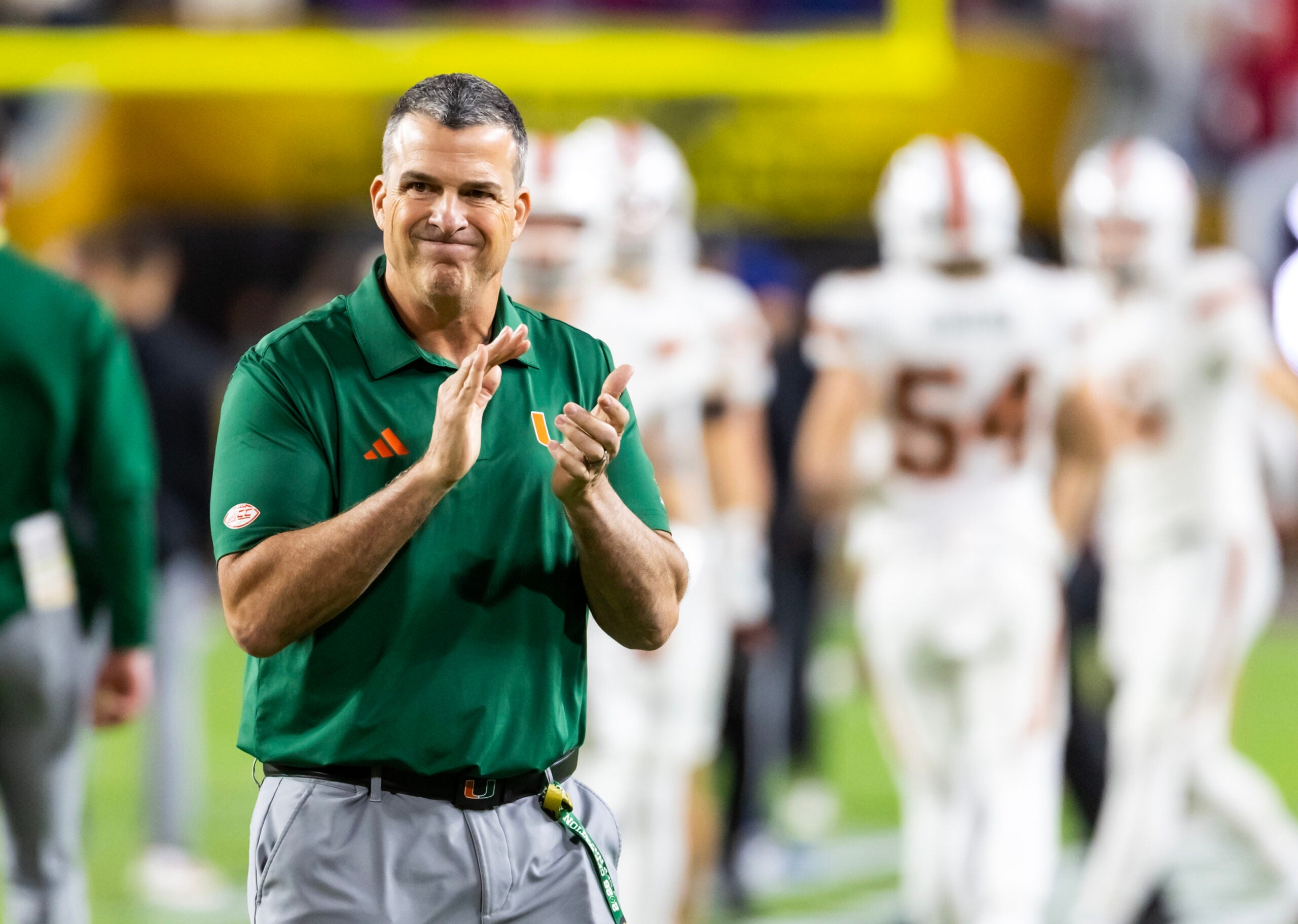
As of 2026, the Miami Hurricanes have undergone a significant transformation under the leadership of Mario Cristobal. The focus has returned to "winning in the trenches," a philosophy that mirrors the great teams of the 80s and 90s. While historical legends dominate the "top" lists, recent years have produced high-caliber talent that has revitalized the program’s NFL pipeline.
Players like Rueben Bain Jr., who emerged as a dominant force on the defensive line in the mid-2020s, have drawn comparisons to legends like Greg Rousseau and even Jerome Brown. The program has also seen a resurgence at the skill positions, with a renewed emphasis on keeping local South Florida talent at home. In the 2025 season, the Hurricanes' offense was characterized by an explosive vertical passing game, reminding many fans of the "Air Miami" days of old.
The evaluation of a "top" player in 2026 also includes their impact on the community and their success in the Name, Image, and Likeness (NIL) era. Modern stars are now measured not just by their Saturday performances, but by how they leverage their platform to elevate the "U" brand globally.
Frequently Asked Questions
Who is the only Miami Hurricane to win the Heisman Trophy?
Actually, two Miami Hurricanes have won the Heisman Trophy. Vinny Testaverde won the award in 1986 as a quarterback, and Gino Torretta won it in 1992, also as a quarterback. While many other players, such as Ken Dorsey and Steve Walsh, were finalists, Testaverde and Torretta remain the only two to take home the bronze statue.
How many Miami Hurricanes players are in the Pro Football Hall of Fame?
The University of Miami is consistently among the top schools for Pro Football Hall of Fame inductees. As of 2026, the list includes legends like Jim Otto, Ted Hendricks, Jim Kelly, Michael Irvin, Cortez Kennedy, Warren Sapp, Ed Reed, Ray Lewis, and Edgerrin James. This high number of inductees is a testament to the "pro-ready" nature of the Hurricanes' development system.
Which Miami team is considered the greatest of all time?
The 2001 Miami Hurricanes are widely considered not only the best team in school history but the best in college football history. This team featured 38 players who would eventually be drafted into the NFL, including 17 first-round picks. They finished the season 12-0, capped by a 37-14 victory over Nebraska in the Rose Bowl to secure the national championship.
Why is Miami often called "The U"?
The nickname "The U" refers to the university’s distinctive logo—a split-U design. In the early 1970s, the school wanted a logo that was unique and didn't rely on the letter "M," which was already used by schools like Michigan and Minnesota. The "U" became a symbol of the program's unique identity, swagger, and South Florida roots, particularly during their dominant run in the 1980s.
Who is the all-time leading rusher for the Hurricanes?
Duke Johnson holds the record for the most career rushing yards in Miami history, with 3,519 yards accumulated between 2012 and 2014. He surpassed legendary names like Ottis Anderson, Edgerrin James, and Frank Gore. Johnson’s versatility as a runner and receiver made him one of the most dynamic offensive threats in the program's history.
Recommendations for Fans and Researchers
To truly understand the greatness of the top Miami Hurricanes players, one should look beyond basic box scores. We recommend visiting the University of Miami Sports Hall of Fame located on the Coral Gables campus. This facility houses memorabilia and detailed records of the athletes mentioned above.
For those interested in the tactical evolution of the game, studying the game film of the 2001 Hurricanes provides a masterclass in modern defensive schemes. Additionally, following official sources like Hurricane Sports ensures you stay updated on current players who are rising through the ranks to join the pantheon of Miami legends. Whether you are a lifelong fan or a new observer in 2026, the history of Miami football offers an unparalleled look at how individual greatness can build a lasting collective legacy.
Image Gallery