Why Are My Teeth Grey? Causes, Treatments, and Modern Solutions in 2026
Grey teeth typically result from intrinsic factors such as dental trauma, past antibiotic use (specifically tetracycline), or aging dental restorations like silver amalgams. Unlike surface stains from coffee or smoking, grey discolorat...
Grey teeth typically result from intrinsic factors such as dental trauma, past antibiotic use (specifically tetracycline), or aging dental restorations like silver amalgams. Unlike surface stains from coffee or smoking, grey discoloration often originates within the tooth structure, requiring professional intervention such as internal bleaching, porcelain veneers, or crowns to restore a natural appearance.
Contents
Understanding Grey Tooth Discoloration
While yellowing is the most common form of tooth discoloration, grey or blue-grey hues present a unique diagnostic challenge. In the dental field, we categorize tooth staining into two primary types: extrinsic and intrinsic. Extrinsic stains sit on the surface of the enamel and are usually the result of lifestyle habits. Grey teeth, however, are almost exclusively intrinsic, meaning the discoloration is located deep within the dentin or the pulp chamber of the tooth.
Because the grey color comes from the inside out, traditional whitening strips, charcoal toothpastes, and over-the-counter bleaching kits are largely ineffective. To resolve grey discoloration in 2026, dental professionals look beyond the enamel to identify the underlying physiological or chemical cause.
Primary Causes of Grey Teeth
Identifying the cause of grey teeth is the first step toward effective treatment. The causes range from localized injuries to systemic issues during childhood development.
1. Dental Trauma and Nerve Death
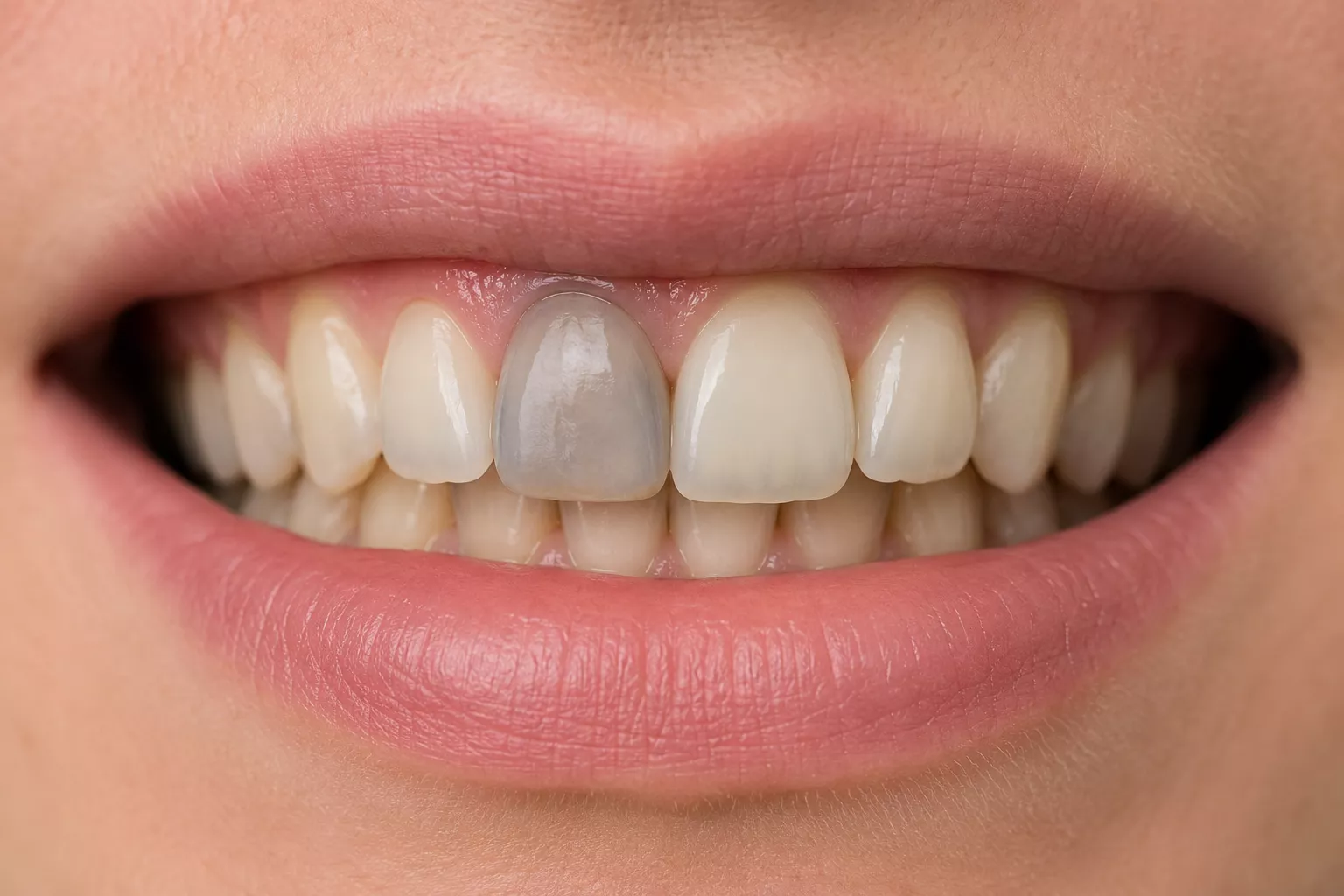
If a single tooth turns grey, the most common culprit is physical trauma. This might be the result of a fall, a sports injury, or a heavy impact that occurred years ago. When a tooth is traumatized, the blood vessels in the pulp (the living center of the tooth) can rupture.
This process is similar to a bruise on your skin. As the blood breaks down, iron from the hemoglobin infiltrates the dentinal tubules. If the tooth's nerve dies (necrosis), the tooth loses its vitality and progressively darkens to a slate grey or even blackish hue. In 2026, dentists use vitality testing and digital imaging to determine if the grey color signals an active infection or a "dead" tooth that requires a root canal.
2. Tetracycline Antibiotic Exposure
One of the most persistent causes of generalized grey teeth is exposure to tetracycline antibiotics. This typically occurs if the mother took the medication during the second half of pregnancy or if the child took it before the age of eight.
Tetracycline has a high affinity for calcium. When permanent teeth are still forming (calcifying), the antibiotic binds to the calcium phosphate in the dentin. Upon eruption and exposure to light, these teeth undergo a chemical reaction that turns them a distinct grey, blue-grey, or even brown-banded color. This staining is permanent and deep-seated, making it one of the most difficult cosmetic issues to treat without restorative materials.
3. Silver Amalgam Fillings
Silver amalgam fillings have been a staple of restorative dentistry for decades. While durable, they contain a mixture of silver, tin, copper, and mercury. Over time, these metals can corrode and leach into the surrounding dentin.
This creates what is often called an "amalgam tattoo" on the tooth structure. The tooth may appear grey or even metallic blue near the filling site. As we move through 2026, many patients are choosing to replace these older restorations with composite resins or ceramics, though the grey staining in the tooth structure itself may remain even after the filling is removed.
4. Dentinogenesis Imperfecta
This is a rare, hereditary developmental disorder affecting the structure of the dentin. It causes teeth to appear translucent and take on an opalescent grey, blue, or brown color. Because the dentin is weaker than normal, the enamel often flakes away, leaving the teeth prone to rapid wear and breakage. This condition requires comprehensive restorative care, often involving crowns on all affected teeth to preserve the bite and aesthetics.
Professional Diagnostic Procedures
If you notice your teeth turning grey, a professional consultation is mandatory. A dentist will perform a series of tests to distinguish between cosmetic issues and structural failure.
- Visual Inspection and Transillumination: Dentists use high-intensity light to look through the tooth. A healthy tooth allows light to pass through, while a necrotic or "dead" tooth often blocks light or shows internal shadowing.
- Radiographic Imaging: Modern 3D imaging or digital X-rays can reveal if there is an abscess or bone loss at the root of a grey tooth, which indicates a dead nerve.
- Pulp Vitality Testing: This involves applying a cold stimulus or a mild electric current to the tooth to see if the nerve responds. A lack of sensation usually confirms that the tooth is non-vital.
Comparing Causes and Recommended Treatments
The following table outlines the most common reasons for grey teeth and the current 2026 standard for treatment.
| Cause | Scope | Primary Mechanism | Best Treatment Option |
|---|---|---|---|
| Dental Trauma | Single Tooth | Nerve death & blood breakdown | Internal bleaching or Root Canal + Crown |
| Tetracycline | Full Mouth | Chemical bonding in dentin | Porcelain veneers or deep internal whitening |
| Amalgam Leaching | Specific Teeth | Metal corrosion into dentin | Composite bonding or Porcelain crowns |
| Aging | Full Mouth | Enamel thinning + Dentin changes | Professional external whitening or Veneers |
| Incipient Decay | Localized | Bacterial demineralization | Removal of decay and white filling |
Modern Treatment Solutions for Grey Teeth
Treating grey teeth requires masking the dark color from within or covering it entirely. Here are the most effective options available in 2026.
Internal Bleaching (The "Walking Bleach")
For a single grey tooth that has already undergone a root canal, internal bleaching is the most conservative and effective option. A dentist creates a small access hole in the back of the tooth and places a specialized whitening agent (usually sodium perborate or a high-concentration carbamide peroxide) directly into the pulp chamber. The agent is left inside for several days to "bleach" the tooth from the inside out. This process may be repeated until the tooth matches its neighbors.
Porcelain Veneers
Veneers are the gold standard for treating tetracycline staining or systemic grey discoloration. These thin shells of high-strength ceramic are bonded to the front of the teeth. Because grey is a difficult color to hide, "opaque" cements or specialized porcelain layering techniques are used to prevent the dark underlying tooth from "showing through" the veneer. Digital Smile Design (DSD) technology in 2026 allows patients to preview these results before any tooth structure is removed.
Dental Crowns
When a grey tooth is also structurally compromised—such as a tooth that has become brittle after a root canal—a crown is the best choice. A crown covers the entire tooth, providing both a complete aesthetic transformation and functional reinforcement. Lithium disilicate (E-max) or Zirconia are the preferred materials in 2026 for their ability to block dark colors while maintaining a lifelike translucency.
Dental Bonding
For minor grey spots or localized discoloration from an old filling, composite bonding offers a cost-effective solution. A tooth-colored resin is layered over the grey area. While less durable than porcelain, modern composites offer excellent polishability and can be completed in a single visit.
Preventing Further Discoloration
While many causes of grey teeth are unavoidable (like childhood medication or accidents), certain steps can prevent the worsening of the condition:
- Immediate Trauma Care: If you experience an impact to your mouth, see a dentist immediately. Prompt treatment of a traumatized tooth can sometimes prevent the nerve from dying and the tooth from turning grey.
- Mouthguards: For athletes, a custom-fitted mouthguard is the best defense against the dental trauma that leads to "dead" grey teeth.
- Filling Replacement: If you have old silver fillings that are showing signs of wear or marginal leakage, talk to your dentist about replacing them with modern, non-metallic materials before they stain the surrounding dentin.
Frequently Asked Questions
Can charcoal toothpaste whiten grey teeth?
No. Charcoal toothpaste is an abrasive designed to remove surface stains like those from tea or coffee. Since grey discoloration is intrinsic (inside the tooth), charcoal will not reach the source of the color. In fact, overusing abrasives can wear down your enamel, making the grey dentin even more visible.
Is a grey tooth a dental emergency?
While a grey tooth is rarely a "life-threatening" emergency, it is a clinical sign of a potential problem. If the grey color is accompanied by a pimple-like bump on the gums (fistula), swelling, or pain, it indicates an infection that requires immediate attention to avoid tooth loss or systemic spread.
Why did my tooth turn grey years after an injury?
Nerve death is not always immediate. Sometimes a tooth survives an initial impact but slowly loses its blood supply over several years. The grey color appears as the internal tissues slowly degrade and mineralize within the tooth.
Can I whiten tetracycline-stained teeth at home?
Standard at-home kits are generally ineffective for tetracycline staining. However, some 2026 professional-grade take-home systems, when used under the supervision of a dentist for extended periods (often several months), can achieve a moderate lightening of the grey hue.
Are grey teeth permanent?
The color is permanent if left untreated, but it is not "uncurable." With modern cosmetic dentistry, even the most severe grey discoloration can be masked or corrected to match a bright, natural-looking smile.
Practical Recommendation
If you are concerned about grey teeth, your first action should be to schedule a comprehensive oral examination including vitality testing. If the discoloration is in a single tooth, it is likely a sign of nerve death that may require a root canal to prevent infection. If the discoloration is widespread, consult with a cosmetic dentist specializing in porcelain restorations. In 2026, the focus has shifted toward minimally invasive procedures that preserve as much natural tooth structure as possible while utilizing opaque bonding agents to neutralize grey tones.
Image Gallery