Do Bugs Have Eyes? How Insect and Arthropod Vision Works
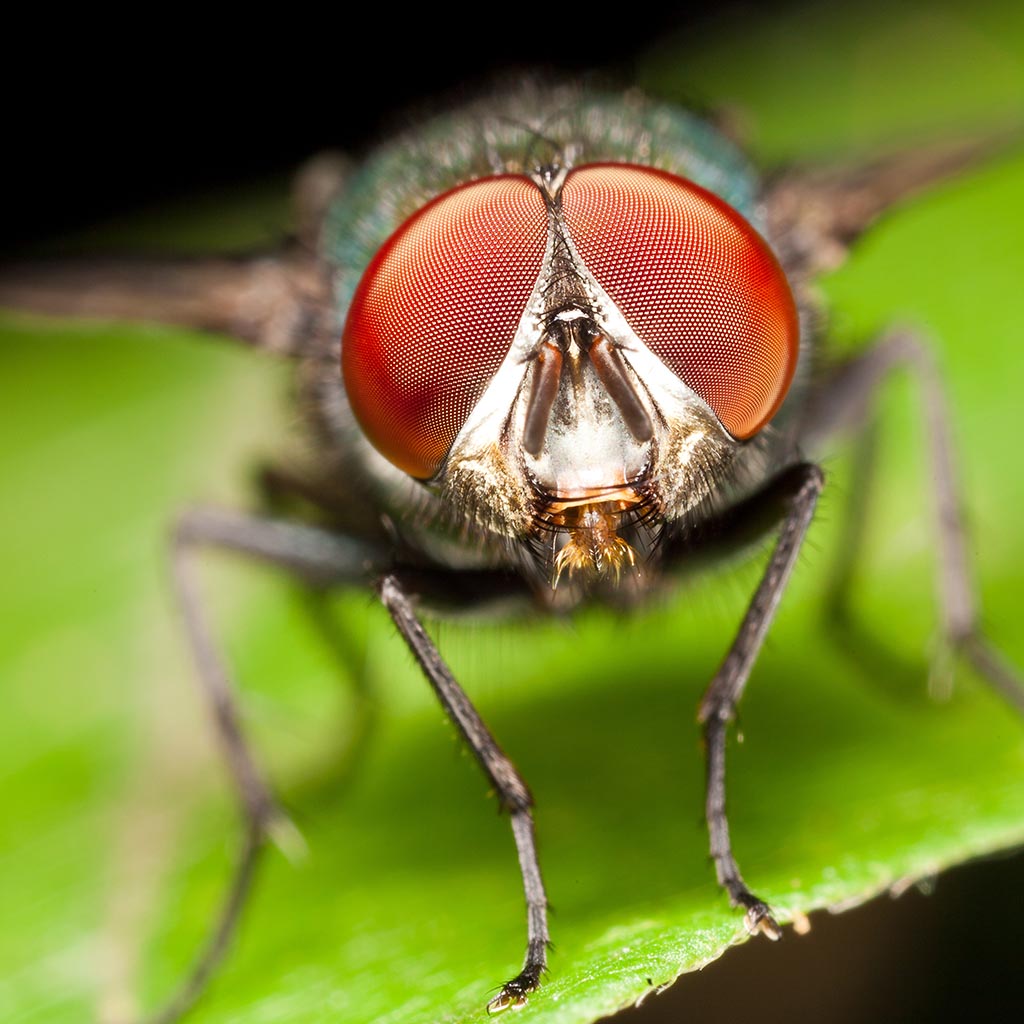
Yes, almost all bugs have eyes, but their structure and visual capabilities differ dramatically from human vision. Most insects feature two compound eyes composed of thousands of individual light-sensing units called ommatidia, often p...
Yes, almost all bugs have eyes, but their structure and visual capabilities differ dramatically from human vision. Most insects feature two compound eyes composed of thousands of individual light-sensing units called ommatidia, often paired with three small simple eyes called ocelli. Other arthropods, such as spiders, possess multiple simple eyes designed for depth perception and movement tracking.
Contents
Understanding "Bugs": Insects, True Bugs, and Arthropods
To answer how bugs see, it helps to define what qualifies as a "bug." In casual conversation, people use the word "bug" to describe almost any small crawling or flying creature, including insects, spiders, centipedes, and pillbugs. In scientific classification, however, "true bugs" belong specifically to the order Hemiptera, which includes cicadas, aphids, shield bugs, and bed bugs.
Despite these taxonomic distinctions, virtually all terrestrial arthropods possess some form of visual system. Over hundreds of millions of years of evolution, arthropods have developed specialized visual organs tailored to their specific ecological niches. A dragon fly hunting mid-air requires vastly different visual machinery than a beetle boring through rotting timber or a spider ambushing prey on a leaf.
While human eyes rely on a single lens that projects a single inverted image onto a retina, bugs utilize modular visual systems. These structures allow them to detect rapid movement, perceive ultraviolet light, and navigate using polarized sky patterns, even if their image resolution is significantly lower than human sight.
The Two Primary Types of Eyes Found in Bugs
Insects and many other arthropods rely on two distinct structures for vision: compound eyes and simple eyes (ocelli). Many species possess both simultaneously, using each system for dedicated sensory tasks.
1. Compound Eyes: Ommatidia and Motion Detection
The compound eye is the primary visual organ of most adult insects. Instead of a single lens, a compound eye consists of hundreds to tens of thousands of individual optical units called ommatidia (singular: ommatidium). Each ommatidium functions as an independent light-receptive unit, complete with its own cornea, crystalline cone, and photoreceptor cells.
Insects process visual information through two main structural types of compound eyes:
- Apposition Eyes: Typical of diurnal (day-active) insects like bees, butterflies, and dragonflies. In apposition eyes, each ommatidium is isolated from its neighbors by pigment cells. Light entering an ommatidium reaches only its dedicated photoreceptors, creating a crisp, high-contrast mosaic image ideal for bright daylight conditions.
- Superposition Eyes: Common in nocturnal insects such as moths and nocturnal beetles. In these eyes, the insulating pigment can retract, allowing light entering multiple adjacent lenses to concentrate onto a single photoreceptor array. This dramatically improves light sensitivity in low-light environments, though at a slight cost to spatial acuity.
Because compound eyes gather light across thousands of angles simultaneously, they are exceptionally effective at detecting flicker fusion and motion. While humans process around 50 to 60 visual frames per second, fast-flying insects like houseflies can perceive over 200 frames per second. This high temporal resolution makes it nearly impossible to swat a fly with a slow-moving hand.
2. Ocelli: Simple Eyes for Light Level and Flight Stabilization
In addition to large compound eyes, most flying insects have three small, single-lensed structures on top of their head called ocelli (singular: ocellus). Unlike compound eyes, ocelli do not form detailed visual images. Instead, they feature broad lenses and highly responsive nerve pathways designed to measure ambient light intensity and changes in light level.
Ocelli serve critical functional roles:
- Flight Horizon Stabilization: Ocelli allow flying insects to detect rapid changes in the horizon's brightness. If an insect tilts during flight, the shift in light across its ocelli triggers instant neurological signals to adjust its wings, maintaining stability faster than the brain could process compound eye imagery.
- Diurnal Rhythm Regulation: Ocelli track changes in natural light throughout the day, helping regulate sleep, feeding, and reproductive cycles.
- Phototaxis Assistance: Ocelli reinforce light detection, assisting insects in determining whether they are in open space or hidden beneath foliage.
How Visual Systems Differ Across Bug Groups
Visual capability varies extensively across different arthropod classes and orders. Evolutionary pressures have driven distinct structural adaptations based on habitat, diet, and hunting strategies.
- Arthropod Visual Systems
- Insects (Hexapoda)
- Compound Eyes
- Ocelli (3 typical)
- Chelicerates (Arachnids)
- Principal Eyes
- Secondary Eyes
- Insects (Hexapoda)
True Bugs (Order Hemiptera)
True bugs—such as stink bugs, assassin bugs, and cicadas—typically possess two medium-to-large compound eyes located on the sides of their head, accompanied by two ocelli positioned between them. Predators within this group, like the wheel bug or water strider, rely heavily on binocular overlap between their compound eyes to judge distances when striking prey. Plant-feeding true bugs use their vision to locate specific leaf colors and patterns before landing.
Flies, Bees, and Wasps (Diptera and Hymenoptera)
Flies (Diptera) and Hymenopterans (bees, ants, and wasps) possess some of the most sophisticated visual systems in the animal kingdom. Dragonflies, while belonging to Odonata, represent the absolute peak of compound eye development, boasting up to 30,000 ommatidia per eye and nearly 360-degree vision.
Bees and wasps utilize compound eyes capable of detecting ultraviolet (UV) light patterns on flowers—invisible to humans—which act as nectar guides pointing directly to pollen reserves. Research documented in the Journal of Comparative Physiology A demonstrates how hymenopteran visual systems integrate polarized light cues to navigate kilometers away from their hives and return with precise orientation.
Arachnids: Spiders and Scorpions
Spiders and scorpions are arachnids, not insects, and their eye layout is fundamentally different. Arachnids do not have compound eyes; instead, they feature multiple simple eyes called stemma or single-lensed eyes arranged in patterns across their cephalothorax.
- Jumping Spiders (Salticidae): Possess eight eyes, dominated by two massive forward-facing principal eyes. These principal eyes provide high-resolution visual acuity, color vision (including UV), and telephoto magnification, allowing them to track and pounce on prey with remarkable precision.
- Wolf Spiders (Lycosidae): Feature large secondary eyes equipped with a reflective membrane called a tapetum lucidum. This layer reflects light back through the retina, enhancing night vision and causing their eyes to glow bright yellow or green when struck by a flashlight at night.
- Scorpions: Typically feature one central pair of median eyes on top of their carapace and two to five pairs of lateral eyes along the front corners. Despite having up to 12 eyes, scorpions have poor spatial vision and rely primarily on light detection alongside specialized sensory hairs on their legs.
Eyeless Bugs: Cave and Subterranean Adaptations
While vision is widespread, eyes are energetically expensive to build and maintain. In subterranean environments, deep caves, or leaf litter where sunlight never penetrates, many bug species have evolved partial or complete loss of sight—a process known as troglomorphic adaptation.
Examples of eyeless or functionally blind bugs include:
- Cave-dwelling Ground Beetles (Anophthalmus species): Totally lack eyes, relying entirely on extended sensory setae (hairs) and chemical receptors.
- Worker Termites: Living underground or inside wooden galleries, worker and soldier termites are typically eyeless and blind. Only reproductive alates (swarmers) develop functional compound eyes for their brief nuptial flight in daylight.
- Subterranean Ants: Many ant species that nest exclusively underground have reduced compound eyes consisting of only a single ommatidium, or lack eyes completely.
What Do Bugs Actually See? Spectrum, Polarization, and Resolution
Human visual experience is defined by sharp focus, rich trichromatic color (red, green, blue), and limited temporal speed. Bug vision operates under an entirely different set of sensory rules.
Color Perception Beyond Human Range
Most insects are dichromatic or trichromatic, but their color sensitivity is shifted toward shorter wavelengths compared to humans.
- Ultraviolet Light (300–400 nm): Most insects see UV light effortlessly. Flowers have evolved striking UV patterns that attract pollinators, while night-flying insects use celestial UV light to orient themselves.
- Blue and Green Light: Insects readily perceive blue and green spectrums.
- Red Light Blindness: Most insects—with notable exceptions like certain butterflies and dragonflies—are blind to red light. To a standard honeybee, a bright red flower appears dark or black, attracting the bee via its UV reflections rather than its red pigments.
Polarized Light Navigation
The Earth's atmosphere scatters sunlight in a predictable pattern, creating a field of polarized light across the sky. While humans cannot see this polarization without specialized filters, many insects have specialized photoreceptors at the top of their compound eyes designed to detect the angle of polarization.
Ants, bees, and migratory beetles use this atmospheric polarized light pattern as an internal compass. Even when the sun is completely hidden behind thick clouds, an insect can read a small patch of open sky to determine its exact orientation relative to position and cardinal directions.
Resolution vs. Field of View
The trade-off of the compound eye is spatial resolution (sharpness). A human eye has a visual acuity of roughly 1 arcminute, allowing us to distinguish fine detail at a distance. In contrast, even the sharpest insect compound eye (found in dragonflies) has a resolution of roughly 60 arcminutes (1 degree), making their vision roughly 60 times blurrier than human sight.
However, what bugs lose in image sharpness, they gain in field of view and temporal processing. Compound eyes wrap around the head, offering a panoramic view of their surroundings without needing to turn their neck.
Comparing Visual Systems Across Common Arthropods
The table below outlines the structural diversity, eye counts, and visual traits of major arthropod groups.
| Arthropod Group | Dominant Eye Type | Typical Eye Count | Primary Visual Strengths | Key Limitations |
|---|---|---|---|---|
| Dragonflies & Damselflies | Compound Eyes + Ocelli | 2 Large Compound (up to 30,000 ommatidia), 3 Ocelli | Nearly 360° field of view, extreme motion detection, UV & polarized light | Low static image resolution compared to vertebrates |
| Honeybees & Wasps | Compound Eyes + Ocelli | 2 Compound, 3 Ocelli | UV pattern detection, polarization navigation, rapid color processing | Blind to true red wavelengths |
| Flies (Diptera) | Compound Eyes + Ocelli | 2 Compound, 3 Ocelli | High temporal resolution (>200 Hz), instant motion detection | Poor spatial clarity at long distances |
| Jumping Spiders | Simple Eyes (Stemma) | 8 Simple Eyes (2 large principal, 6 secondary) | Exceptional spatial resolution, telephoto zoom, depth perception | Narrow principal field of view; requires head movement |
| Nocturnal Moths | Superposition Compound Eyes | 2 Compound, 0-2 Ocelli | Extreme low-light sensitivity, light gathering capabilities | Reduced visual contrast in bright sunlight |
| Subterranean Termites | Eyeless / Vestigial | 0 (Workers/Soldiers) | N/A (Compensated by tactile & chemical senses) | Complete absence of vision |
How Insect Vision Affects Behavior and Human Interaction
Understanding insect vision provides practical insights into pest management, photography, and outdoor outdoor activities.
Why Bugs Are Attracted to Outdoor Lights
A widespread misconception is that nocturnal bugs "like" light. In reality, night-flying insects use natural light sources—such as the moon and stars—to navigate. Because celestial light sources are infinitely far away, light rays strike the insect's eyes at a constant parallel angle, allowing it to fly in a straight line by keeping the light at a fixed angle relative to its eye.
Artificial light sources, such as porch lights, throw off this system. Light rays radiate outward in all directions. As an insect attempts to fly past a light bulb while keeping the light at a constant angle to its compound eye, it gets forced into a spiraling path, eventually trapping it near the bulb. Replacing traditional white incandescent or fluorescent bulbs with yellow LED lighting—which emits minimal UV and short-wavelength light—significantly reduces insect attraction.
How Motion-Based Evasion Works
Because insects prioritize motion detection over high-resolution details, fast, jerky movements instantly trigger an escape response. If you try to swat a fly or wasp quickly, the air displacement combined with the rapid movement across hundreds of ommatidia activates its giant fiber neural pathway, triggering a jump reflex in milliseconds.
To approach or observe an insect closely without disturbing it:
- Move slowly and steadily: Avoid fast hand motions that trigger flicker-fusion responses.
- Avoid casting shadows: A sudden drop in ambient light registered by an insect's ocelli is interpreted as an approaching predator overhead.
- Use red light for night observation: Since most insects cannot perceive red wavelengths, using a red-filtered flashlight allows you to observe nocturnal species without alerting them or disrupting their behavior.
Frequently Asked Questions
Do all bugs have eyes?
No, not all bugs have eyes. While the vast majority of adult insects and arthropods possess compound or simple eyes, species that live exclusively underground, inside deep caves, or within dark wood galleries (such as worker termites and cave beetles) have evolved to be completely eyeless.
How many eyes does a bug have?
It depends on the species. Most adult flying insects have five eyes: two large compound eyes and three simple eyes (ocelli) on their forehead. Spiders typically have eight simple eyes, though some families have six, four, or zero.
Can bugs see in the dark?
Many nocturnal bugs can see remarkably well in low light. Moths and nocturnal beetles possess superposition compound eyes, which aggregate light from multiple lenses onto single photoreceptors. Spiders like wolf spiders feature a reflective tapetum lucidum layer behind their retinas to maximize ambient light capture at night.
Do insects see color the same way humans do?
No. Most insects cannot see red light, but they can see ultraviolet (UV) light, which is invisible to humans. Insects use UV vision to locate hidden nectar markings on flowers, identify mates, and navigate via sky polarization.
Why is it so hard to swat a fly?
Flies process visual information much faster than humans. Their compound eyes detect changes in motion at speeds exceeding 200 frames per second (compared to human vision at ~60 frames per second). To a fly, human movements appear to happen in slow motion.
Practical Takeaways for Observing and Managing Insects
- Optimize Property Lighting: To keep nocturnal bugs away from entryways, replace bright white or blue outdoor bulbs with warm yellow LEDs ( wavelengths above 550 nanometers) that fall outside the primary visual range of most flying insects.
- Field Observation Techniques: When viewing wildlife, use a flashlight equipped with a red lens filter. This allows you to navigate and illuminate nocturnal species without blinding them or triggering flight responses.
- Pest Traps and Monitoring: Many commercial insect traps exploit visual spectrums by utilizing specific UV wavelengths (blacklight) to draw in flying pests like midges, flies, and moths.
- Approaching Insects for Photography: Approach insects slowly and laterally. Keep your shadow behind you to prevent triggering the shadow-drop reflex monitored by their ocelli.
Image Gallery