Lisa French: Navigating the Future of Autonomous Cars and Strategic Innovation
Lisa French is a pivotal figure in the autonomous vehicle (AV) industry, currently serving as a strategic leader who bridges the gap between complex engineering and commercial scalability. Her work focuses on navigating the regulatory,...
Lisa French is a pivotal figure in the autonomous vehicle (AV) industry, currently serving as a strategic leader who bridges the gap between complex engineering and commercial scalability. Her work focuses on navigating the regulatory, safety, and operational hurdles required to move self-driving technology from experimental pilots to integrated, large-scale commercial deployments in 2026.
Contents
The Evolution of Autonomous Mobility: A Strategic Perspective
The journey toward fully autonomous transportation has transitioned from a period of unbridled optimism to one of rigorous, safety-first engineering. Lisa French has been at the forefront of this shift. Having held influential roles at organizations such as Uber’s Advanced Technologies Group (ATG) and subsequently Aurora Innovation, French has navigated the industry through its most volatile phases.
In 2026, the primary challenge is no longer just "making the car drive itself." Instead, the focus has shifted toward the "Safety Case"—a comprehensive evidentiary demonstration that an autonomous system is safer than a human driver across a defined set of conditions. French’s approach emphasizes that technical capability means little without a robust operational framework. This involves coordinating hardware reliability, software redundancy, and the infrastructure required to support a fleet of vehicles that never tire and never lose focus.
The industry has moved away from the "move fast and break things" mantra of the early 2010s. Under the guidance of leaders like French, the 2026 landscape is defined by "Operational Design Domains" (ODDs). These are specific conditions—such as weather, time of day, and geography—where the vehicle is authorized to operate. By narrowing the scope, companies can guarantee higher safety standards, a strategy French has long advocated for as the most viable path to public trust.
Bridging the Gap Between Technology and Policy
One of the most complex aspects of navigating the future of autonomous cars is the intersection of high-level code and low-level legislation. Lisa French has been instrumental in translating technical milestones into language that regulators and stakeholders can act upon. In 2026, the regulatory environment is a patchwork of international standards and local ordinances, requiring a sophisticated understanding of both technical limitations and legal requirements.
The Shift to Safety-Centric Metrics
For years, the industry relied on "disengagements"—how often a human driver had to take over—as the primary metric of success. French and her contemporaries have pushed for more meaningful data. In 2026, the focus is on:
- Simulation Fidelity: Using advanced digital twins to test millions of "edge cases" that are too dangerous to test on public roads.
- Collision Avoidance Probability: Statistical modeling that proves the system can navigate high-risk scenarios more effectively than a sober, alert human.
- System Integrity: Ensuring that the vehicle can reach a "minimal risk condition" (pulling over safely) even if a primary sensor or compute stack fails.
This strategic pivot has been essential for securing the billion-dollar investments necessary to sustain AV development. Investors in 2026 are less interested in flashy demos and more interested in the "Aurora Driver" model—integrated stacks that can be deployed across different vehicle platforms, from Class 8 trucks to passenger sedans.
Navigating the 2026 Landscape: SAE Level 4 and Commercial Reality
As we navigate 2026, the distinction between different levels of autonomy is clearer than ever. Lisa French’s work often centers on SAE Level 4—High Automation. Unlike Level 5, which implies a vehicle can go anywhere at any time, Level 4 is the sweet spot for commercialization because it operates within defined parameters.
Middle-Mile Logistics vs. Last-Mile Delivery
French has been a proponent of prioritizing middle-mile logistics (highway driving between distribution centers) over the chaotic environment of urban robotaxis. The reasoning is purely strategic: highways are more predictable, have fewer pedestrians, and offer a more immediate return on investment for the freight industry.
By focusing on "terminal-to-terminal" autonomous trucking, the industry has found a way to alleviate the chronic driver shortages that plagued the early 2020s. This "navigating" of the market has allowed AV companies to generate revenue while continuing to refine the much more difficult task of navigating dense city centers like San Francisco or New York.
| Feature/Metric | Level 2+ (Advanced ADAS) | Level 4 (Autonomous) |
|---|---|---|
| Driver Requirement | Constant supervision required | No driver needed within ODD |
| Primary Use Case | Consumer safety/comfort | Freight, Hub-to-Hub, Robotaxis |
| System Responsibility | Human driver | The Autonomous System |
| 2026 Market Status | Standard in new vehicles | Scaling in commercial sectors |
| Regulatory Focus | Safety features/Alerts | Liability and Operating Permits |
Technical and Operational Hurdles in 2026
Despite the progress, several "unsolved" problems remain that demand the kind of strategic navigation Lisa French is known for. The foremost among these is the "Long Tail" of edge cases. These are the one-in-a-million events—a low-flying bird, a strangely shaped construction vehicle, or a sinkhole—that a human handles through intuition but a computer must be taught to recognize.
Sensor Fusion and Redundancy
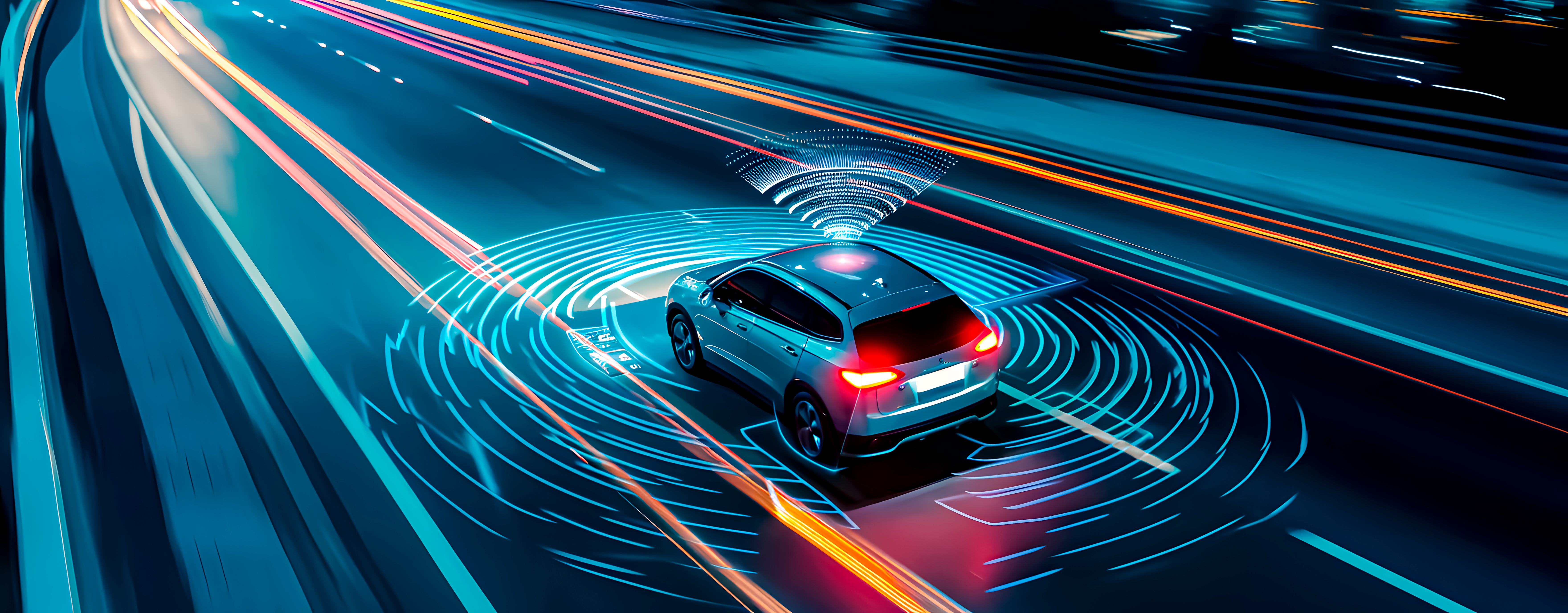
In 2026, the debate over "vision-only" versus "sensor fusion" (LiDAR, Radar, and Cameras) has largely been settled in favor of fusion for commercial applications. Navigating the cost of these sensors has been a major hurdle.
- LiDAR Evolution: The transition to solid-state LiDAR has significantly reduced costs and increased durability, making it viable for mass-market commercial fleets.
- Edge Computing: Vehicles now process terabytes of data locally to ensure near-zero latency, only uploading critical "learned" data to the cloud to update the rest of the fleet.
- V2X Communication: "Vehicle-to-Everything" communication allows cars to "talk" to traffic lights and other vehicles, providing a layer of awareness that sensors alone cannot achieve.
French’s role involves ensuring these technical components work in harmony with the operational side of the business. This includes everything from remote assistance (where a human provides high-level guidance to a stalled AV) to the physical maintenance of sensor suites, which must be kept perfectly clean to function.
The Economic Impact of Autonomous Fleet Deployment
The economic narrative of autonomous cars has shifted from job replacement to job transformation. Lisa French has participated in numerous industry forums discussing how AVs will change the labor market. In 2026, we see the rise of the "Fleet Technician" and the "Remote Vehicle Operator"—roles that didn't exist a decade ago.
The deployment of autonomous trucks has stabilized supply chains, reducing the cost of shipping by approximately 30% on key corridors. This efficiency is a result of vehicles that can operate 20 hours a day, only stopping for fuel and maintenance. Navigating the transition for the current workforce remains a priority, with French advocating for upskilling programs that transition drivers into logistics management and fleet oversight roles.
Practical Guidance for Stakeholders and Investors
For those looking to understand the trajectory of the AV industry as navigated by leaders like Lisa French, several key indicators should be monitored. The success of an AV firm in 2026 is no longer measured by the number of miles driven, but by the density of its commercial partnerships.
- OEM Integration: Look for deep partnerships with original equipment manufacturers (OEMs) like Volvo, PACCAR, or Toyota. An AV stack is only as good as the vehicle it is built into.
- Regulatory Milestones: Pay attention to "driverless" permits issued by state and federal authorities. These are the ultimate validation of a company's safety case.
- Route Density: Companies that dominate specific high-volume corridors (e.g., the "Sun Belt" in the US) are more likely to achieve profitability than those trying to launch globally at once.
Common Mistakes in AV Strategy
Navigating this space requires avoiding the "hype trap." Common mistakes include overestimating the speed of urban deployment and underestimating the complexity of weather-related sensor degradation. Success requires a balanced approach that respects the laws of physics and the slow pace of legislative change.
Frequently Asked Questions
What is Lisa French’s specific contribution to the autonomous vehicle industry?
Lisa French is recognized for her strategic operations leadership, particularly in scaling autonomous technology from the R&D phase to real-world commercial application. Her expertise lies in managing the complex ecosystem of hardware, software, and regulatory compliance, ensuring that AV systems are not only functional but also commercially viable and safe.
How has the definition of "safety" changed in the AV space by 2026?
By 2026, safety is defined by the "Safety Case" framework. Instead of simply measuring miles between accidents, companies must provide a structured argument, backed by evidence from simulation and closed-track testing, that the system can safely handle all foreseeable challenges within its Operational Design Domain (ODD).
Why is autonomous trucking moving faster than passenger robotaxis?
Trucking primarily involves highway driving, which is significantly less complex than urban navigation. Highways lack pedestrians, cyclists, and complex intersections, making it easier for the "Aurora Driver" and similar systems to achieve a high safety rating. Additionally, the economic incentive is higher due to the persistent shortage of long-haul truck drivers.
What are the main technical barriers remaining in 2026?
The "Long Tail" of edge cases remains the primary barrier. This involves the system's ability to interpret and react correctly to rare, unpredictable events. Additionally, maintaining sensor performance in extreme weather (heavy snow, dust storms) and reducing the power consumption of onboard computers are ongoing technical challenges.
How does "Remote Assistance" work in 2026?
Remote assistance does not involve a human "driving" the car with a joystick. Instead, when a vehicle encounters a situation it doesn't understand (like a police officer using hand signals), it sends a request to a remote operator. The human provides a "path" or "permission" to proceed, and the vehicle executes the maneuver autonomously.
Strategic Recommendation
To successfully navigate the future of autonomous cars, stakeholders must prioritize system transparency and incremental scaling. Following the model set by leaders like Lisa French, the most successful path involves perfecting autonomous operation in controlled, high-value environments (like freight corridors) before attempting to solve the complexities of unstructured urban environments. Organizations should invest heavily in simulation-based verification and foster deep partnerships with traditional automotive manufacturers to ensure hardware-software parity.
Image Gallery