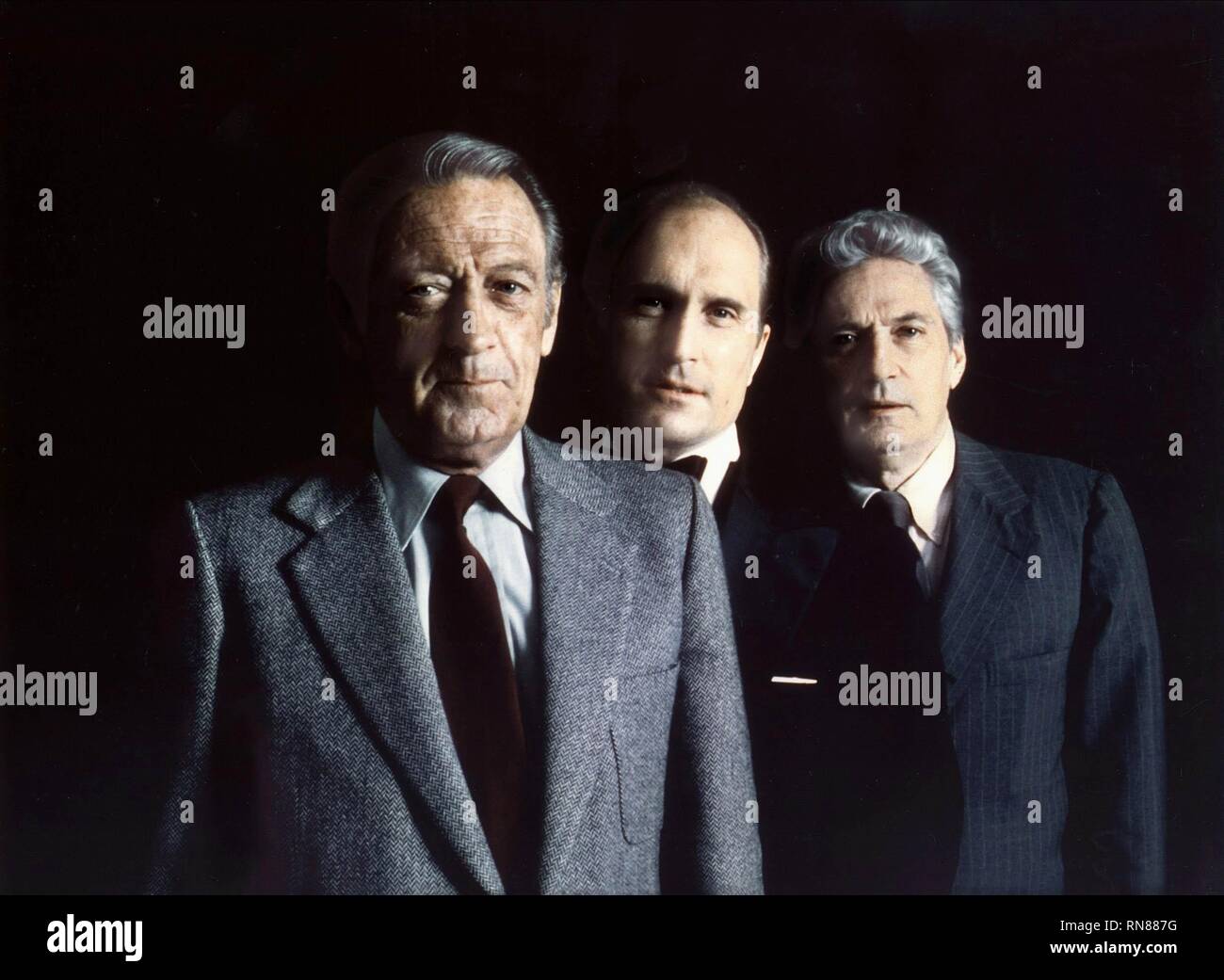
Sidney Lumet and Network: The 1976 Landmark That Defined Modern Media
The 1976 film Network, directed by Sidney Lumet and written by Paddy Chayefsky, is a landmark satirical masterpiece that predicted the trajectory of sensationalist, ratings-driven media. Fifty years since its release, it remains the de...
The 1976 film Network, directed by Sidney Lumet and written by Paddy Chayefsky, is a landmark satirical masterpiece that predicted the trajectory of sensationalist, ratings-driven media. Fifty years since its release, it remains the definitive critique of how the television industry—and by extension, modern digital platforms—commodifies outrage and populist anger for corporate profit.
Contents
The Architect of the Landmark: Sidney Lumet
To understand the impact of Network, one must first understand its director, Sidney Lumet. By 1976, Lumet had already established himself as a master of social realism and "New York" cinema. Having cut his teeth in the "Golden Age" of live television in the 1950s, Lumet possessed an intimate, almost forensic knowledge of how a broadcast studio operated. This background was essential for grounding Paddy Chayefsky’s heightened, operatic screenplay in a believable, gritty reality.
Lumet was known for his "invisible" directorial style, prioritizing performance and narrative over flashy camera work. However, in Network, his technical choices were deeply intentional. He utilized a strategy he called "the visual breakdown." As the film progresses and the characters become more morally compromised, the lighting transitions from naturalistic, soft tones to the flat, high-contrast, and artificial aesthetic of a television commercial. This subtle shift mirrors the way the characters’ humanity is swallowed by the medium they serve.
In the context of 2026, Lumet’s body of work—including 12 Angry Men (1957) and Dog Day Afternoon (1975)—is still studied for its focus on the individual trapped within failing institutional systems. Network stands as the pinnacle of this theme, showcasing a world where the institution (the network) doesn't just fail the individual, but actively consumes them.
The Prophetic Vision of Paddy Chayefsky
While Lumet provided the structure, the soul of the 1976 landmark belongs to screenwriter Paddy Chayefsky. Often described as a "writer's film," Network is famous for its dense, rhythmic monologues that sound more like sermons than traditional dialogue. Chayefsky was famously protective of his script, ensuring that every word was delivered exactly as written.
The film follows Howard Beale (played by Peter Finch), an aging news anchor who, upon learning of his impending termination due to low ratings, announces he will commit suicide on live television. Instead of pulling him off the air, the network—led by the ambitious and soulless programming executive Diana Christensen (Faye Dunaway)—realizes that Beale’s breakdown is a ratings goldmine. They rebrand him as the "Mad Prophet of the Airwaves," a populist figure who encourages viewers to lean out their windows and scream, "I’m as mad as hell, and I’m not going to take this anymore!"
Chayefsky’s genius lay in his ability to see the "outrage economy" decades before the term existed. He didn't just predict reality television; he predicted a world where news and entertainment would become indistinguishable, and where the truth would be sacrificed for the sake of an engaging narrative.
A Performance Powerhouse: The Academy Award Impact
The significance of Network is cemented in its unprecedented success at the 49th Academy Awards. It is one of the few films in history to win three out of the four acting categories, a testament to Lumet’s ability to draw raw, visceral performances from his cast.
- Peter Finch (Best Actor): Finch’s portrayal of Howard Beale remains the only posthumous Best Actor win in Oscar history (until Heath Ledger’s later win in a different category). His performance balances the tragic vulnerability of a man losing his mind with the terrifying charisma of a demagogue.
- Faye Dunaway (Best Actress): As Diana Christensen, Dunaway created the archetype of the "corporate shark." Her character is devoid of traditional human emotion, viewing every interaction—even her romantic life—through the lens of shares and demographics.
- Beatrice Straight (Best Supporting Actress): In one of the most remarkable feats in cinema, Straight won an Oscar for just over five minutes of screen time. Her single scene, a devastating confrontation with her unfaithful husband (played by William Holden), provides the film's only grounded, human emotional anchor.
William Holden’s performance as Max Schumacher should not be overlooked. As the "old guard" of news, Schumacher represents the dying gasp of journalistic integrity, serving as the moral witness to the madness unfolding around him.
Analyzing the "Visual Breakdown" and Technical Mastery
Director Sidney Lumet and cinematographer Owen Roizman meticulously planned the film’s look to reflect the narrative’s descent into artifice. This technical depth is often missed upon first viewing but is crucial to the film’s lasting power.
- The First Act: The lighting is natural, the cameras are often handheld, and the sets look like real, cluttered offices. The focus is on the human relationships between Max and Howard.
- The Second Act: As the "Howard Beale Show" becomes a hit, the sets become more organized and the lighting becomes more professional. The "news" starts to look like a "show."
- The Third Act: By the end of the film, the lighting is harsh and electronic. The characters are framed in tight, claustrophobic close-ups that mimic the television screen. The "real world" has been entirely replaced by the televised world.
This progression illustrates Lumet’s belief that television was a corrupting force that flattened the complexity of human experience into two-dimensional caricatures.
Comparison: 1976 Prophecy vs. 2026 Reality
To understand why this 1976 landmark is still discussed in 2026, we can compare Chayefsky’s "satirical" predictions with the current state of global media.
| Feature of Network (1976) | Real-World Equivalent in 2026 | Impact and Consequence |
|---|---|---|
| The "Mad as Hell" Speech | Viral Outrage and "Cancel Culture" | Anger is the most sharable emotion, driving engagement and ad revenue. |
| Diana Christensen’s Programming | Algorithmic Content Curation | AI-driven feeds prioritize sensationalism over factual accuracy to keep users logged in. |
| The Death of News Integrity | Infotainment and Punditry | The boundary between objective reporting and opinion-based entertainment has vanished. |
| Corporate Overlords (CCA) | Global Tech Conglomerates | Media is no longer a public service but a subsidiary of massive, diversified corporate interests. |
| Commodifying Insanity | Exploitative Reality/Social Media | Mental health struggles and personal tragedies are frequently broadcast for "clout" and views. |
The Enduring Legacy of Arthur Jensen’s Speech
Perhaps the most chilling moment in the film is the speech delivered by Ned Beatty, playing the corporate chairman Arthur Jensen. After Howard Beale attempts to block a corporate merger, Jensen brings him into a dark boardroom and explains the true nature of the world.
Jensen famously bellows, "There are no nations. There are no peoples... There is only IBM and ITT and AT&T and DuPont, RCA, and Exxon. Those are the nations of the world today." This monologue shifted the film from a satire of television to a critique of globalism and the erosion of the nation-state in favor of corporate interests. In 2026, as we witness the immense power of trillion-dollar tech entities, Jensen’s speech feels less like a cinematic flourish and more like a historical document.
Why Network Still Matters in 2026
Fifty years after its release, Network is no longer seen as a satire; it is viewed as a documentary that arrived early. The film’s primary search intent—understanding the intersection of a visionary director and a landmark script—reveals a timeless lesson about the dangers of surrendering the "truth" to the "audience."
Sidney Lumet’s direction ensured that the film didn't just feel like a lecture. By focusing on the actors and the technical evolution of the image, he created an immersive experience that forced the audience to reckon with their own role as viewers. We are the ones who turned the dial; we are the ones who gave Howard Beale his power.
FAQs
Who directed the 1976 film Network?
The film was directed by Sidney Lumet. Lumet was a prolific American filmmaker known for his ability to handle complex social themes and for his collaboration with high-caliber actors. Network is widely considered one of his most significant works alongside 12 Angry Men and Serpico.
What did the movie Network predict about the future?
Network predicted the rise of reality television, the dominance of ratings over journalistic ethics, the blurring of news and entertainment (infotainment), and the consolidation of media outlets by massive multinational corporations. It also foresaw how populist anger could be harnessed and monetized by media entities.
Did Peter Finch win an Oscar for Network?
Yes, Peter Finch won the Academy Award for Best Actor for his role as Howard Beale. Tragically, he passed away from a heart attack before the ceremony, making him the first performer to receive a posthumous Academy Award in an acting category.
Why is the "Mad as Hell" speech so famous?
The speech, written by Paddy Chayefsky, captured a universal sense of frustration with modern life and institutional failure. It has become a cultural shorthand for the moment an individual reaches their breaking point with societal decay.
How many Academy Awards did Network win?
The film won four Academy Awards in 1977: Best Actor (Peter Finch), Best Actress (Faye Dunaway), Best Supporting Actress (Beatrice Straight), and Best Original Screenplay (Paddy Chayefsky). It was also nominated for Best Picture, Best Director, and several other categories.
Recommendation for Further Exploration
For those looking to deepen their understanding of this 1976 landmark, the following actions are recommended:
- Watch the "Visual Breakdown": Re-watch the film specifically focusing on the lighting and camera angles to see how Lumet transitionally "televises" the movie.
- Read the Screenplay: Paddy Chayefsky’s script is a masterclass in rhythm and rhetoric; reading it provides a different appreciation for the linguistic complexity of the film.
- Explore Lumet’s "Making Movies": Sidney Lumet’s book, Making Movies, offers a first-hand account of his directorial philosophy and provides specific anecdotes about the filming of Network.
Image Gallery