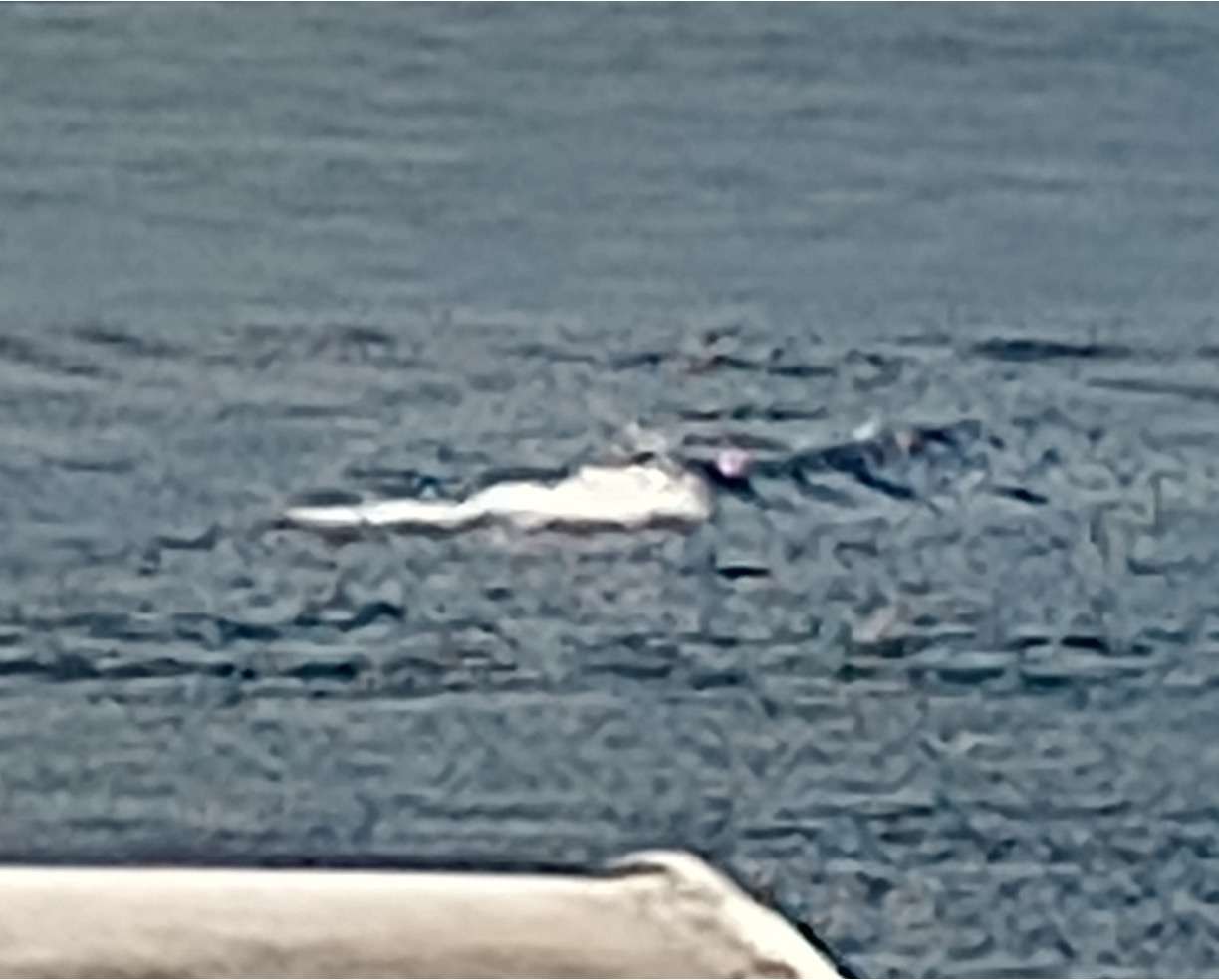
New Pictures of the Loch Ness Monster Spark Fresh Debate
Recent photographs and surface imagery from Loch Ness have re-ignited public and scientific debate regarding the existence of an unidentified creature in the Scottish Highlands. While cryptozoology enthusiasts argue these images show a...
Recent photographs and surface imagery from Loch Ness have re-ignited public and scientific debate regarding the existence of an unidentified creature in the Scottish Highlands. While cryptozoology enthusiasts argue these images show anomalous biological movement, marine biologists and photographic forensic experts contend that atmospheric refraction, wake turbulence, organic debris, and optical illusions explain the visual evidence.
Contents
The debate surrounding the Loch Ness Monster—famously nicknamed "Nessie"—remains one of the world's most enduring modern folklore phenomena. Whenever new photographs, thermal drone footage, or hydrographic scans emerge from the Great Glen, they trigger renewed scrutiny from both believers and mainstream scientific institutions. Analyzing these images requires a multi-disciplinary approach that combines optics, limnology, marine biology, and digital image forensics.
The New Photographic Evidence: Features and Initial Claims
The latest photographs sparking public interest show dark, elongated structures breaking the surface of the loch, accompanied by localized water disturbance. Captures made by visitors, local observers, and automated surface cameras frequently display shapes interpreted by some as a long neck, a arched back, or multiple humps moving against prevailing surface currents.
Visual Profile of Common Surface Claims:
- Camera Lens
- Distant Water Surface
- Anomalous Dark Shape
- Biological Interpretation
- Plesiosaur/Reptile Neck
- Giant Eel / Large Fish
- Swimming Seal or Deer
- Physical Interpretation
- Wave Interference / Wake
- Waterlogged Log (Peat)
- Mirages & Refraction
- Biological Interpretation
In recent years, the nature of submitted evidence has evolved. Historical photographic debates relied almost entirely on static, black-and-white grain prints—most notably the famous 1934 "Surgeon's Photograph," which was proven decades later to be a toy submarine fitted with a sculpted head. Today's imagery includes high-resolution digital frames, continuous burst photography, and thermal drone video captured during organized lake surveys.
Proponents of the biological hypothesis emphasize several recurring features in these newer captures:
- Distinct Surface Disruption: Ripples and V-shaped wakes that appear without an obvious motorized vessel nearby.
- Thermal Signatures: Isolated heat anomalies recorded near the water's edge or just below the surface temperature layer.
- Size Estimates: Interpretations placing the surface object between 2 and 6 meters in length based on surrounding wave scales.
However, photo analysts caution that high-resolution digital sensors introduce their own set of visual artifacts, particularly when telephoto lenses shoot across large expanses of water subject to atmospheric heat shimmer and wind distortion.
The Scientific Counter-Arguments: Natural Explanation Spectrum
Mainstream limnologists and marine scientists maintain that Loch Ness does not possess the ecological capacity to support a population of large, unknown marine reptiles. When new photographs surface, researchers analyze them against known physical and biological phenomena native to the Scottish Highlands.
1. Boat Wakes and Internal Waves
Loch Ness is a long, narrow body of water bound by steep, mountainous terrain. Vessels traveling through the loch generate surface wakes that reflect off the rocky shorelines, creating standing waves and interfering wave crests long after the boat has passed out of view. These wake crests can travel miles, producing dark, hump-like shapes that appear to move independently against the current.
Furthermore, Loch Ness experiences seiches—internal underwater waves driven by wind pressure across its density layers (thermoclines). When an internal wave forces deep, cold water toward the surface, it can disturb surface silt and create sudden, localized churning without any biological cause.
2. Native Wildlife Misidentification
Several species native to or visiting the Loch Ness ecosystem routinely cause misidentifications:
- Grey Seals (Halichoerus grypus): Seals frequently travel up the River Ness from the Beauly Firth into the loch to hunt salmon. A seal swimming with its head raised or surfacing along a wave crest closely resembles a small neck or hump.
- Eurasian Otters (Lutra lutra): Otters swimming in line or playing near the surface produce multi-humped wake patterns.
- Red Deer (Cervus elaphus): Deer are strong swimmers and regularly cross the loch. From a distance, a swimming deer's head and antlers appear as an ambiguous, dark object trailing a significant water wake.
- Large Fish: Atlantic salmon (Salmo salar) and European eels (Anguilla anguilla) rising near the surface generate localized splashes and dark shapes.
3. Floating Debris and Waterlogged Timber
The hills surrounding Loch Ness are dense with Scots pine, birch, and peat bog. Trees that fall into feeding rivers drift into the loch, eventually becoming waterlogged. Due to unequal saturation, a submerged log often floats vertically, with one branch protruding like a slender neck before shifting ballast and sinking beneath the waves.
Forensic Image Analysis and Photogrammetry
To separate authentic phenomena from optical tricks or hoaxes, forensic photo analysts employ photogrammetry—the science of taking reliable measurements from photographs. Evaluating alleged monster photographs involves several technical steps.
Image Forensic Evaluation Steps:
- Step 1: EXIF & Metadata Integrity Check
- Verify timestamp, sensor specs, and editing traces.
- Step 2: Atmospheric & Optical Refraction Assessment
- Analyze distance, light scattering, and mirages.
- Step 3: Spatial Scale & Hydrodynamic Wave Calculation
- Estimate size using ripple wavelength standards.
- Step 4: Biological Feature Comparison
- Match outline against seals, deer, logs, and wakes.
EXIF Metadata and Sensor Artifacts
Modern digital files contain Exchangeable Image File Format (EXIF) data, detailing camera settings, exposure time, focal length, sensor size, and digital post-processing history. Analysts examine EXIF data to confirm that an image has not undergone digital compositing, brush retouching, or generative AI enhancement.
When images are captured at maximum digital zoom, camera sensors rely on interpolation algorithms that smooth pixel edges. This processing can distort simple wave patterns or floating debris into smooth, curved shapes resembling animal skin or limbs.
Scale, Distance, and Pareidolia
Estimating scale across water is notoriously difficult without fixed reference points. Because Loch Ness spans up to 2.7 kilometers across, a object that appears large to the human eye may measure under 1 meter when calculated mathematically using camera sensor dimensions, focal length, and distance to the shoreline.
Human vision is highly susceptible to pareidolia—the psychological tendency to perceive meaningful images or shapes in ambiguous visual patterns. Dark, reflective water patterns, shadow patches cast by clouds, and low-contrast surface ripples naturally lead observers to interpret random visual input as a recognized anatomical shape, such as a neck or flipper.
Empirical Research: Environmental DNA and Underwater Acoustics
While photographs stir public interest, empirical scientific studies provide the definitive baseline for evaluating biodiversity in Loch Ness.
Environmental DNA (eDNA) Analysis
In 2018–2019, an international research team led by Professor Neil Gemmell of the University of Otago conducted a comprehensive environmental DNA (eDNA) survey of Loch Ness. Researchers collected over 250 water samples across various depths and locations, extracting genetic material shed by organisms living in the water column (skin, scales, mucus, and waste).
The findings, published in late 2019, established several clear biological realities:
- No Reptilian DNA: The study detected zero reptile DNA, definitively refuting the hypothesis that a surviving population of prehistoric marine reptiles, such as plesiosaurs, resides in the loch.
- No Large Shark or Catfish DNA: Hypotheses proposing giant Greenland sharks or Wels catfish were similarly unsupported by genetic evidence.
- Abundant Eel DNA: European eel (Anguilla anguilla) DNA was detected at virtually every sampling station. While eDNA cannot determine the physical size of an individual organism, the sheer volume of eel genetic material kept open the theoretical possibility of unusually large giant eels, though marine biologists remain skeptical that eels could reach multi-meter lengths.
2019 eDNA Survey Genetic Profile Profile:
- Reptilian / Plesiosaur DNA: NONE DETECTED
- Giant Shark / Catfish DNA: NONE DETECTED
- Mammalian (Seal/Deer/Dog): HIGH FREQUENCY
- European Eel (A. anguilla): EXTENSIVE PRESENCE
Acoustic and Thermal Surveys
Hydrophone arrays dropped during large-scale monitoring efforts routinely record acoustic profiles within the loch. While mysterious low-frequency thumps and clicks are occasionally logged, acoustics experts attribute these to thermal expansion and contraction of bedrock, boat engines, sub-surface gas vents, and fish movements. Thermal drone sweeps conducted during surface searches have similarly shown that perceived "heat signatures" usually represent warm surface water pockets or resting water birds.
Comparative Evaluation of Loch Ness Hypotheses
To understand how new photographic evidence compares with established scientific facts, the table below outlines the primary hypotheses evaluated by researchers and photo analysts:
| Hypothesis | Proposed Mechanism | Visual Evidence Features | Scientific Objections | Overall Feasibility |
|---|---|---|---|---|
| Plesiosaur / Prehistoric Reptile | Relict population of air-breathing marine reptiles surviving since the Cretaceous. | Elongated neck shapes, large surface humps, vertical projections. | Cold water temperature; zero reptilian eDNA; air-breathers would require hundreds of daily surface visits. | Extremely Low |
| Giant European Eel (Anguilla anguilla) | Unusually oversized eels experiencing extreme gigantism. | Snake-like surface motion, dark rolling wakes, continuous slender silhouettes. | Eels rarely exceed 1.5 meters; genetic testing confirms species presence but cannot prove giant sizes. | Low to Moderate |
| Transient Mammals (Seals, Deer, Otters) | Native Highlands wildlife swimming in open water. | Rounded humps, V-shaped wake trails, heads held briefly above water. | Distinct swimming profiles can be recognized upon high-magnification analysis; short-term presence. | High |
| Hydrodynamic Artifacts (Wakes & Logs) | Reflected boat wakes, wave interference, and waterlogged timber. | Stationary humps, multi-wave crests, stationary vertical shapes. | Explains physical mechanics without requiring biological assumptions; fully supported by physics. | Very High |
The Geography and Ecology of Loch Ness
Understanding why Loch Ness continues to yield ambiguous photographs requires examining its unique geological and environmental characteristics.
Loch Ness Environmental Constraints: • Length: ~36 km (22.5 miles) • Depth: Up to 230 meters (755 feet) • Water Volume: 7.45 km³ (More water than all English/Welsh lakes combined) • Underwater Line-of-Sight: Under 1–2 meters (High peat suspension) • Water Temperature: ~5–6 °C (41 °C) year-round below surface layer
- Extreme Turbidity and Peat Density: The loch contains a high concentration of suspended peat particles washed down from surrounding peat bogs. This restricts underwater visual visibility to less than 1 to 2 meters, rendering underwater photography ineffective beyond immediate distances and causing deep objects to appear as distorted, shadowy masses.
- Massive Water Volume: Holding approximately 7.45 cubic kilometers of fresh water, Loch Ness contains more water than all lakes in England and Wales combined. Its vast depth (over 230 meters) provides ample space for objects or aquatic life to remain unobserved from the shore.
- Food Chain Limits: Loch Ness is an oligotrophic body of water, meaning it contains low nutrient levels and limited plant growth. The total biomass of biomass-supporting species (salmon, trout, eels) is insufficient to support a stable breeding population of large, top-tier predatory carnivores requiring tons of meat annually.
Step-by-Step Framework for Evaluating Alleged Monster Imagery
When reviewing new photographs or video clips claiming to show anomalous aquatic life, readers and researchers can apply a critical evaluation protocol:
Step 1: Examine Metadata and Provenance
Verify whether the raw image file (RAW format) or uncompressed original video is available. Check for consistent timestamps, exposure settings, and potential editing software tags. Images distributed solely as low-resolution screenshots on social media lack the data integrity required for technical analysis.
Step 2: Analyze Surface Hydrodynamics
Look at the wake pattern surrounding the object. A self-propelled animal creates a distinct propulsion wake, characterized by outward-spreading angle waves originating from a trailing tail or flippers. Conversely, a passing boat wake or wind wave displays uniform crest spacing without localized propulsion turbulence.
Step 3: Establish Spatial Context
Identify static reference points in the frame, such as shoreline rocks, navigation buoys, or known vegetation. If no fixed references exist, use wave ripple frequency to estimate dimensions. In standard weather conditions, small surface ripples on Loch Ness maintain a predictable wavelength of 10 to 30 centimeters, providing a baseline grid to gauge the object's real size.
Step 4: Compare with Local Wildlife and Boating Logs
Cross-reference the time and GPS location of the image with local vessel tracking records (Automatic Identification System / AIS data for commercial boats) and known wildlife patterns. A seal or otter surfacing near a boat wake frequently creates a composite visual image that mimics a single large entity.
Frequently Asked Questions
What did the definitive Loch Ness eDNA study discover?
The 2019 eDNA study led by the University of Otago found no evidence of reptilian, dinosaur, shark, or catfish DNA in Loch Ness. However, it detected extensive levels of European eel DNA alongside normal native species such as salmon, trout, mammals, and birds.
Why do new photographs of the Loch Ness Monster keep emerging?
Loch Ness attracts hundreds of thousands of visitors every year, many equipped with telephoto cameras, smartphones, and drones. The loch's unique geography—combining dark peat water, complex wave patterns, reflection illusions, and occasional visiting seals—frequently creates visual anomalies that look like biological entities from a distance.
Could a plesiosaur survive in Loch Ness today?
No. Plesiosaurs were air-breathing reptiles that died out approximately 66 million years ago. Loch Ness was completely carved out by glaciers during the last Ice Age around 10,000 years ago, meaning it was frozen solid and inaccessible during prehistoric times. Additionally, an air-breathing reptile population would need to surface hundreds of times daily, making them continuously visible.
How do scientists tell the difference between a boat wake and a creature?
Scientists and forensic analysts use photogrammetry to measure wave crest spacing, wave angle, and decay rates. Boat wakes linger for long distances in narrow valleys and reflect off shorelines, creating stationary wave intersections that mimic animal humps. Living creatures create localized propulsion wakes that differ mathematically from fluid wake dynamics.
What is the giant eel hypothesis?
Proposed as a plausible biological explanation following the 2019 eDNA findings, the giant eel hypothesis suggests that sightings of long, dark, snake-like surface objects might be unusually large European eels (Anguilla anguilla). However, while eels are abundant in the loch, mainstream biologists note that an eel would need to grow to uncharacteristic lengths (3 to 5 meters) to account for major sightings, which remains unverified by captured specimens.
Critical Takeaways and Next Actions
When evaluating fresh imagery from Loch Ness, maintain an evidence-based approach grounded in physical law and biology:
- Treat Surface Imagery Critically: Always look for raw metadata, focal length details, and spatial reference points before accepting initial scale claims.
- Consider Environmental Factors: Wave reflection, atmospheric mirages, floating Scots pine timber, and visiting grey seals account for the vast majority of unexplained visual phenomena.
- Rely on Multi-Modal Proof: High-resolution photographs must be corroborated by physical evidence, such as hydroacoustic recordings, video burst sequences, or environmental DNA, to establish a credible scientific claim.
For further scientific study on aquatic ecology and image analysis, consult published peer-reviewed limnology papers or review official survey documentation provided by marine research institutes monitoring Scottish freshwater systems.
Image Gallery