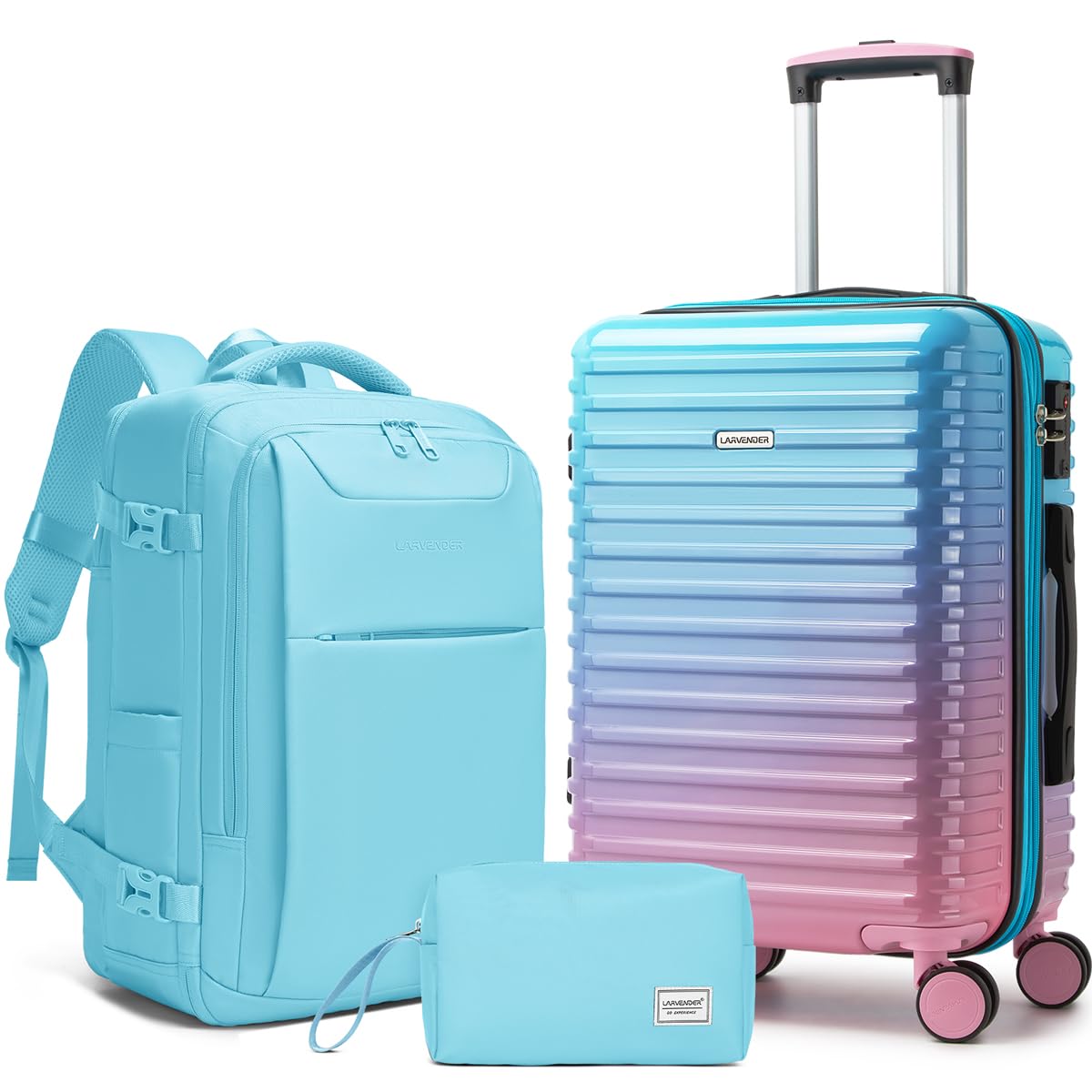
Comprehensive Guide to Managing Oversized Carry On Luggage in 2026
Oversized carry-on luggage refers to any cabin bag that exceeds the specific dimensional or weight limits set by an airline, typically surpassing the standard 22 x 14 x 9 inches (56 x 36 x 23 cm). In 2026, these limits are strictly enf...
Oversized carry-on luggage refers to any cabin bag that exceeds the specific dimensional or weight limits set by an airline, typically surpassing the standard 22 x 14 x 9 inches (56 x 36 x 23 cm). In 2026, these limits are strictly enforced via automated gate sizers and AI-integrated boarding systems. If a bag is deemed oversized, it must be gate-checked, usually resulting in additional fees and potential delays at your destination.
Contents
Understanding the "Oversized" Definition in 2026
The definition of "oversized" is not universal; it is a moving target that depends entirely on the aircraft type, the airline’s specific contract of carriage, and the class of service. While many travelers assume a standard "roll-aboard" bag is safe, the inclusion of wheels, top handles, and side grips often pushes a bag from "compliant" to "oversized."
By 2026, most major carriers have synchronized their hardware with the International Air Transport Association (IATA) guidelines, though significant discrepancies remain between US domestic carriers and international budget airlines. An oversized bag is generally any piece of luggage that cannot fit into the overhead bin comfortably or prevents the bin door from latching securely. Security regulations from the Federal Aviation Administration (FAA) mandate that all items in the cabin must be properly stowed to prevent injury during turbulence or emergencies, making size enforcement a safety requirement rather than just a revenue tactic.
The Evolution of Airline Enforcement and Technology
The year 2026 has seen a shift toward "frictionless" enforcement. Historically, gate agents would manually ask passengers to place bags in metal sizers. Today, many Tier-1 airports utilize 3D optical sensors at the boarding gate. As you walk through the jet bridge or scan your boarding pass, these sensors calculate the volume of your luggage in real-time.
If the sensors detect that your bag’s linear dimensions exceed the allowance, the gate agent is automatically notified. This precision has reduced the "luck factor" that travelers relied on for years. Consequently, understanding the exact measurements of your luggage—including the protrusions—is more critical than ever.
Linear Inches vs. Dimensional Measurements
Airlines often use two different methods to categorize oversized bags:
- Dimensional (L x W x H): The most common method, where each side must be under a specific limit (e.g., 22" tall, 14" wide, 9" deep).
- Linear Dimensions: Some carriers combine the total length, width, and height. A common limit is 45 linear inches (115 cm). If your bag is 24 x 12 x 9, it equals 45 inches and might pass a linear test even if it fails a dimensional one. However, the dimensional test usually takes precedence because of the physical shape of overhead bins.
Why Even One Inch Matters: The Physics of the Overhead Bin
It may seem pedantic for an airline to reject a bag that is 23 inches tall instead of 22, but the architecture of modern aircraft like the Boeing 737 MAX or the Airbus A321neo is designed for "space-bins." These bins allow bags to be stored on their sides (like books on a shelf) rather than flat.
When a bag is oversized by even half an inch, the bin door cannot close. In the high-efficiency environment of 2026 air travel, a single non-compliant bag can delay a flight's departure by several minutes as the crew searches for alternative space or processes a gate-check. This operational pressure is why airlines have become uncompromising regarding oversized carry-ons.
Comparison of Carry-On Requirements by Major Carrier (2026)
The following table outlines the 2026 standards for major global airlines. Note that "Personal Items" must fit under the seat in front of you and have even stricter limits.
| Airline | Max Dimensions (Inches) | Max Dimensions (cm) | Weight Limit |
|---|---|---|---|
| Delta Air Lines | 22 x 14 x 9 | 56 x 35 x 23 | No limit (mostly) |
| United Airlines | 22 x 14 x 9 | 56 x 35 x 23 | No limit |
| American Airlines | 22 x 14 x 9 | 56 x 36 x 23 | No limit |
| Southwest Airlines | 24 x 16 x 10 | 60 x 40 x 25 | No limit |
| Ryanair | 21.6 x 15.7 x 7.8 | 55 x 40 x 20 | 10 kg (22 lbs) |
| Lufthansa | 21.6 x 15.7 x 9 | 55 x 40 x 23 | 8 kg (17.6 lbs) |
| Air France / KLM | 21.6 x 13.7 x 9.8 | 55 x 35 x 25 | 12 kg (26 lbs) |
Note: Always verify with the International Air Transport Association (IATA) or your specific carrier 24 hours before departure, as regional aircraft (puddle jumpers) may have significantly smaller bin capacities.
Risks and Costs of Bringing Oversized Luggage
Attempting to board with an oversized carry-on in 2026 is a high-risk strategy that rarely results in a "win" for the traveler. There are three primary consequences to consider:
1. Mandatory Gate-Check Fees
In 2026, "at-gate" luggage fees are significantly higher than "at-counter" fees. If your bag is flagged as oversized during boarding, you may be charged a premium fee, often ranging from $50 to $100 per bag, regardless of whether you have a free checked bag allowance in your ticket class. This is considered a service fee for the manual handling required by ground crews at the last minute.
2. Physical Damage and Security
Carry-on luggage is typically designed with less structural reinforcement than dedicated checked luggage (which is built to withstand being stacked under hundreds of pounds of other bags). If an oversized carry-on is forced into the cargo hold at the last minute, it is at higher risk for wheel breakage or shell cracking. Furthermore, you may have packed lithium batteries, power banks, or medication in your carry-on; these must be removed before the bag is placed in the hold due to fire safety regulations.
3. Loss of Accessibility
The primary benefit of a carry-on is having your items with you. If your oversized bag is gate-checked, you lose access to your laptop, change of clothes, and toiletries for the duration of the flight and the subsequent wait at the luggage carousel. In tight connection scenarios, a gate-checked bag is also more likely to be delayed if the ground crew cannot transfer it to the next aircraft in time.
How to Measure Your Bag Like a Pro
To ensure your bag is not classified as oversized, you must measure it as the airline will. Follow these steps for an accurate reading:
- Pack the Bag Fully: A bag that is compliant when empty may bulge and become oversized when full. Pack your gear and zip all expansions.
- Use a Hard Surface: Place the bag against a wall on a flat floor.
- The Height Measurement: Measure from the floor to the very top of the highest handle (retracted). Do not stop at the top of the fabric.
- The Depth Measurement: This is where most people fail. Measure from the back of the bag to the furthest point on the front, including any exterior pockets filled with items.
- Check the "Sizer" Tolerance: If your bag is 22.1 inches, it may not fit in a rigid metal sizer. In 2026, soft-sided bags are often preferred because they can be slightly compressed to fit, whereas hard-sided polycarbonate bags have zero "give."
Strategies to Avoid Oversized Luggage Penalties
If you are concerned that your luggage might be borderline, or if you simply must carry more items, consider these professional travel tactics:
Use the "Personal Item" Loophole
Most airlines allow one carry-on and one personal item (like a backpack or laptop bag). If your carry-on is slightly oversized, move heavy or bulky items (like a heavy jacket or camera gear) into your personal item or wear them. As long as your personal item fits under the seat, it is rarely measured as strictly as the overhead bag.
Invest in a Global-Sized Bag
Many US-based travelers buy bags labeled "Domestic Carry-On," which are often 22 inches tall. However, international carriers often require 21.5 inches (55 cm). To be safe everywhere, purchase a "Global" or "International" sized bag. You lose a small amount of volume, but you gain immunity from gate-checks on almost all airlines.
Expansion Zippers: Use with Caution
Expansion zippers are a common feature in modern luggage. While they are great for bringing souvenirs home in a checked bag, using the expansion feature almost always renders a carry-on "oversized." If you must use the expansion, plan to check the bag.
Priority Boarding
While priority boarding doesn't make an oversized bag legal, it does ensure that bin space is available. If you are in the last boarding group and the bins are full, even a perfectly sized bag might be gate-checked. However, if your bag is truly oversized, no amount of priority boarding will help if the automated sensors flag it.
Frequently Asked Questions
What happens if my carry-on is oversized but the flight is empty?
Even if the flight is half-empty, airline policy usually requires oversized bags to be checked. This is for safety and standardization. In 2026, gate agents have less discretion than they used to because automated systems log bag dimensions against passenger records for weight and balance calculations.
Do wheels count in the carry-on dimensions?
Yes, wheels and handles must be included in the total measurements. This is the most common reason bags are flagged as oversized. If your bag is 22 inches of fabric plus 2 inches of wheels, it is a 24-inch bag and is oversized.
Can I use a duffel bag as a carry-on if it's slightly oversized?
Soft-sided duffel bags are more likely to be accepted because they can be squished into sizers or bins. However, if the duffel is packed so tightly that it cannot be compressed, it will be treated the same as a hard-sided suitcase.
Are "International" carry-ons smaller than "Domestic" ones?
Yes. Generally, international carry-on limits (specifically for European and Asian carriers) are slightly narrower and shorter than those for US domestic airlines. If you frequently travel abroad, always use the international standard (55 x 35 x 20 cm) to avoid issues.
How do airlines in 2026 handle overweight carry-ons?
In 2026, many international airlines use scales embedded in the floor at check-in or boarding. If your bag is within size limits but over the weight limit (often 7kg to 10kg), it may still be classified as oversized for the purpose of safety and must be checked.
Final Recommendations for 2026 Travelers
To navigate the 2026 travel landscape successfully, prioritize precision over volume. Before your next trip, use a digital luggage scale and a physical measuring tape to verify your bag’s dimensions against your airline’s specific 2026 contract. If your bag is borderline, the most cost-effective move is to check it at the ticket counter or switch to a slightly smaller, compliant bag. The peace of mind of walking through the gate without the fear of a $100 fee is well worth the sacrifice of a few cubic inches of packing space.
Image Gallery