What Is Hide and Seek? Rules, Variations, and Developmental Benefits
Hide and seek is a foundational recreational game where one player, designated as the "seeker," closes their eyes and counts to a predetermined number while other players, the "hiders," conceal themselves within a defined area. The see...
Hide and seek is a foundational recreational game where one player, designated as the "seeker," closes their eyes and counts to a predetermined number while other players, the "hiders," conceal themselves within a defined area. The seeker’s goal is to locate all hidden participants, while hiders aim to remain undiscovered or reach a "home base" safely.
Contents
As of 2026, hide and seek remains one of the most culturally significant and universally recognized games in existence. Its simplicity requires no specialized equipment, making it accessible across diverse socioeconomic and geographic boundaries. Beyond its role as a leisure activity, the game serves as a critical tool for early childhood development, fostering cognitive skills such as spatial awareness, impulse control, and strategic thinking. While the basic premise is straightforward, the game has evolved into numerous specialized variations, some of which are played at competitive or professional levels in urban environments.
The Fundamental Mechanics of Standard Play
At its core, hide and seek is a game of stealth, observation, and patience. The standard version of the game follows a specific sequence of events that ensures fairness and maintains the "tension" necessary for an engaging experience.
Determining the Roles
Before play begins, participants must select the first "seeker." This is often done through random selection methods such as "rock-paper-scissors" or counting-out rhymes. In some competitive formats, the seeker role is assigned to the player who was found first in the previous round, or conversely, the player who won the previous round.
Defining the Boundaries
Establishing clear boundaries is essential for safety and game flow. In an indoor setting, this might involve excluding certain rooms (like home offices or bathrooms). In outdoor settings, boundaries prevent players from wandering too far or entering dangerous areas like busy roads or dense, unmonitored woods. Defining a "home base"—an object like a tree, a wall, or a porch—is also common in many versions, providing hiders with a target to reach to secure their "safety."
The Counting Phase
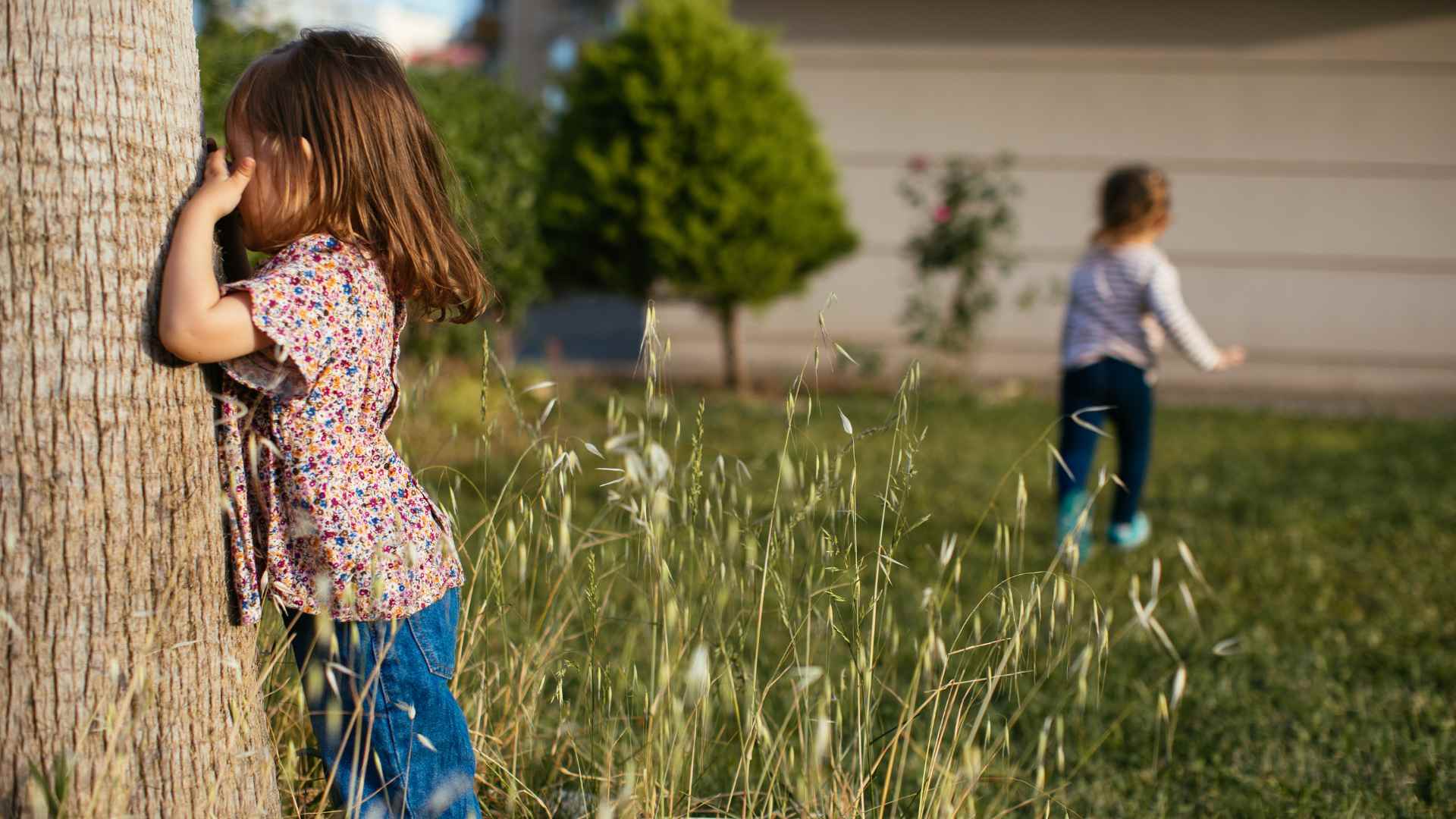
The seeker stands at the home base, closes their eyes (often leaning against their arm to prevent "peeking"), and counts aloud. The count typically ranges from 20 to 100, depending on the size of the play area. Counting serves two purposes: it provides the hiders with a specific window of time to find concealment, and the auditory cue informs hiders of how much time they have left before the search begins.
The Search and Discovery
Once the count is complete, the seeker announces "Ready or not, here I come!" and begins the search. To "catch" a hider, the seeker usually must either physically see them and call out their name and location or, in some versions, physically tag them. If a "home base" is in play, the game becomes a race; hiders attempt to run to the base and touch it before the seeker can tag them or "count them out" at the base.
Essential Requirements for Play
One reason for the enduring popularity of hide and seek is its minimal barrier to entry. However, to facilitate a high-quality game, several environmental and social prerequisites must be met.
- Participants: A minimum of two players is required (one seeker, one hider), though the game is generally more dynamic with four to ten participants. Large groups may require multiple seekers to keep the game pace brisk.
- A Defined "Field": The environment must offer sufficient "cover." Open fields are unsuitable unless the game is played at night or with artificial obstacles. Ideal environments include parks with shrubbery, playgrounds with equipment, or multi-room indoor dwellings.
- Lighting Conditions: Visibility significantly impacts difficulty. Daylight play relies on physical concealment, while "Night Hide and Seek" or "Flashlight Tag" (a hybrid variation) relies on shadows and the misuse of light sources.
- Age Appropriateness: While children as young as three can play, they often lack the "theory of mind" to understand that if they cannot see the seeker, the seeker might still see them. The game becomes most strategic for children aged six and up.
Popular Variations of Hide and Seek
The flexibility of the hide-and-seek template has led to dozens of regional and specialized variations. These versions modify the win conditions, the role of the seeker, or the physical mechanics of the game.
| Variation Name | Key Mechanic Change | Primary Objective |
|---|---|---|
| Sardines | Inverted roles: One hides, everyone seeks. | When a seeker finds the hider, they join them in the hiding spot until everyone is "packed in like sardines." |
| Manhunt | Played outdoors, often over large areas at night. | A team-based version where seekers must tag hiders to eliminate them. |
| Ghost in the Graveyard | "The Ghost" hides; seekers look together. | When the Ghost is found, they try to tag seekers before they return to base. |
| Kick the Can | Integration of a physical object (the can). | Hiders can "free" captured players by kicking a can located at the home base. |
| Hide and Seek Tag | Hybrid of two games. | Finding a player isn't enough; the seeker must physically chase and tag them. |
Sardines: The Inverse Strategy
Sardines is perhaps the most popular alternative. In this version, the solitary hider has a significant advantage initially, but as more seekers find the spot and squeeze in, the hiding place becomes increasingly obvious. The last person to find the group is typically the loser or the next person to hide. This version emphasizes quiet cooperation and spatial efficiency.
Manhunt and Urban Exploration
Manhunt is a more intense, often adolescent or adult version of the game. It is frequently played across entire neighborhoods or college campuses. Because the "field" is so large, hiders often move from one spot to another, making it a game of patrol and evasion rather than static concealment. In 2026, many organized Manhunt leagues use GPS-restricted zones to ensure players stay within safe, legal bounds.
The Cognitive and Developmental Impact
Pediatricians and child psychologists have long praised hide and seek for its role in developing "Executive Function"—the mental skills that include working memory, flexible thinking, and self-control.
Object Permanence and Theory of Mind
For very young children, hide and seek is a practical lesson in object permanence—the understanding that objects continue to exist even when they cannot be seen. As children age, they develop "Theory of Mind," which allows them to imagine what the seeker is thinking. A successful hider must ask, "Where would the seeker look first?" and "Can the seeker see my feet from that angle?" This represents a sophisticated level of perspective-taking.
Emotional Regulation and Impulse Control
The game requires hiders to remain perfectly still and quiet, even when they are excited or anxious about being found. This practice of "inhibitory control" is a vital component of emotional regulation. Learning to manage the "adrenaline rush" of a seeker approaching their hiding spot helps children develop composure under pressure.
Spatial Reasoning and Navigation
Navigating an environment to find the "perfect" spot requires a player to map the area mentally. They must evaluate the dimensions of their own body relative to the environment—a skill known as proprioception. They also learn to use "line of sight" to their advantage, which is a fundamental concept in geometry and physics.
Safety and Ethical Guidelines
While hide and seek is generally safe, certain precautions are necessary to prevent injury or legal issues, especially in 2026's urban landscapes.
- Avoid "Danger Zones": Players should be strictly forbidden from hiding in airtight containers (like old refrigerators or chests), high-voltage areas, or places where they might become physically stuck.
- The "Safe Word" or Signal: If a game needs to end immediately due to an emergency or a player getting lost, a pre-agreed signal (like a whistle or a specific shout) should be established.
- Respecting Private Property: In urban variations like Manhunt, players must be reminded not to trespass on private property, which can lead to legal complications or dangerous misunderstandings with property owners.
- Supervision for Minors: For younger children, an adult should always be present to monitor the boundaries and ensure no one has left the designated play area.
Competitive Hide and Seek: The Modern Era
By 2026, the concept of hide and seek has moved beyond the backyard. "Professional" hide and seek, often referred to as competitive "Evasion and Pursuit," has gained traction. Events like the Nasu Hide and Seek Championship in Japan have inspired similar tournaments globally. These competitions use sophisticated sensors to detect when a hider has been "spotted," and they are held in specialized arenas designed with complex verticality and lighting. These professional formats emphasize athletic agility and high-level psychological warfare, proving that the game's core appeal translates across all age groups.
Frequently Asked Questions
What is the best strategy for winning as a hider?
The most effective strategy is "the second look" principle. Seekers often scan a room and move on if they don't see someone immediately. Hiding in a spot that requires the seeker to turn around or look behind them after they have already "cleared" a space is often successful. Additionally, choosing a spot that is uncomfortable (like crouching low) is better than a comfortable one, as seekers assume hiders will choose the easiest path.
How do you play hide and seek with only two people?
In a two-player game, roles simply swap each round. To keep it engaging, use a timer. If the seeker doesn't find the hider within five minutes, the hider wins that round. This adds a "pressure" element that compensates for the lack of other players.
What is the "Home Base" rule?
The "Home Base" rule adds an element of Tag to the game. Once a seeker spots a hider, both players race to the home base. If the hider touches it first, they are "safe" and may be allowed to hide again in the next round. If the seeker touches it first and calls out the hider's name, the hider is caught.
At what age can children start playing?
Most children can begin playing simplified versions around age three. However, younger children may experience "separation anxiety" if they hide alone, so "buddy hiding" (hiding with an older sibling or parent) is recommended for toddlers.
Can hide and seek be played virtually?
Yes, hide and seek has been a popular "mod" in video games for decades. In 2026, many virtual reality (VR) platforms offer hyper-realistic hide-and-seek simulations that allow players from around the world to compete in digital environments, using spatial audio to track movements.
Practical Recommendation
To organize a successful game of hide and seek, start by clearly defining the physical boundaries and the "Home Base." Ensure all players understand the counting limit and the specific "discovery" rule (e.g., whether a verbal call-out or a physical tag is required). For groups with varying ages, consider giving younger children a "head start" in counting or allowing them to have "safe zones" where they cannot be caught for the first minute of the search.
Image Gallery