Tim Ferriss Net Worth: How He Built a $50 Million Portfolio and Beyond
As of 2026, Tim Ferriss’s net worth is estimated to be between $100 million and $150 million, though his initial $50 million portfolio was established primarily through early-stage angel investing and a revolutionary series of best-sel...
As of 2026, Tim Ferriss’s net worth is estimated to be between $100 million and $150 million, though his initial $50 million portfolio was established primarily through early-stage angel investing and a revolutionary series of best-selling books. By leveraging "lifestyle design" and asymmetric risk, Ferriss transitioned from a stressed supplement business owner into one of the most influential venture investors and media figures of the 21st century.
Contents
Early Entrepreneurship: The BrainQUICKEN Sale
Before becoming a household name in productivity, Tim Ferriss was a practitioner of the very methods he would later preach. His wealth accumulation began with BrainQUICKEN, a nutritional supplement company he founded in 2001. Unlike traditional businesses that required 80-hour work weeks, Ferriss automated the operations of BrainQUICKEN, outsourcing manufacturing, shipping, and customer service.
This business served as the laboratory for the concepts in his first book. By 2007, the company was generating significant monthly profits with minimal oversight. When Ferriss eventually sold the company to a private equity firm, it provided the liquid capital—often estimated in the low seven figures—that allowed him to pivot into angel investing and full-time writing. This sale was the "seed" for the $50 million portfolio, proving that cash flow and high-margin products were the most reliable way to fund larger investment ambitions.
The Power of Intellectual Property: The "4-Hour" Series
While the sale of BrainQUICKEN provided capital, the "4-Hour" book series provided the platform and ongoing royalty streams. The 4-Hour Workweek spent years on the New York Times bestseller list and has been translated into over 40 languages.
In the publishing industry, a bestseller of this magnitude generates millions in royalties. However, Ferriss did not stop at one book. He followed up with:
- The 4-Hour Body: A data-driven approach to physical performance.
- The 4-Hour Chef: An exploration of "meta-learning" through the lens of cooking.
- Tools of Titans and Tribe of Mentors: Curated wisdom from his podcast guests.
By 2026, these titles continue to sell consistently as "evergreen" content. Ferriss’s approach to publishing is unique because he views books as "multi-generational assets." Rather than focusing on a quick launch, he builds deep communities around his work, ensuring that his intellectual property continues to pay dividends long after the initial publication date. This steady stream of high-margin income allowed him to take significant risks in the startup world without endangering his lifestyle.
Angel Investing: The Engine of Exponential Wealth
The most substantial growth in Tim Ferriss’s net worth came from his activities as an angel investor in Silicon Valley. Ferriss did not just invest money; he invested his "platform." By offering to promote companies to his massive audience of early adopters, he gained access to exclusive investment rounds that were typically closed to outsiders.
The Silicon Valley Move and Early Wins
Ferriss moved to the San Francisco Bay Area specifically to be near the "deal flow." His early portfolio reads like a "Who’s Who" of tech giants. He was an early investor in:
- Uber: One of the most successful venture investments in history.
- Shopify: An early bet on the democratization of e-commerce.
- Facebook (Meta): Acquired shares through secondary markets and early networking.
- Twitter (X): An early adopter and investor.
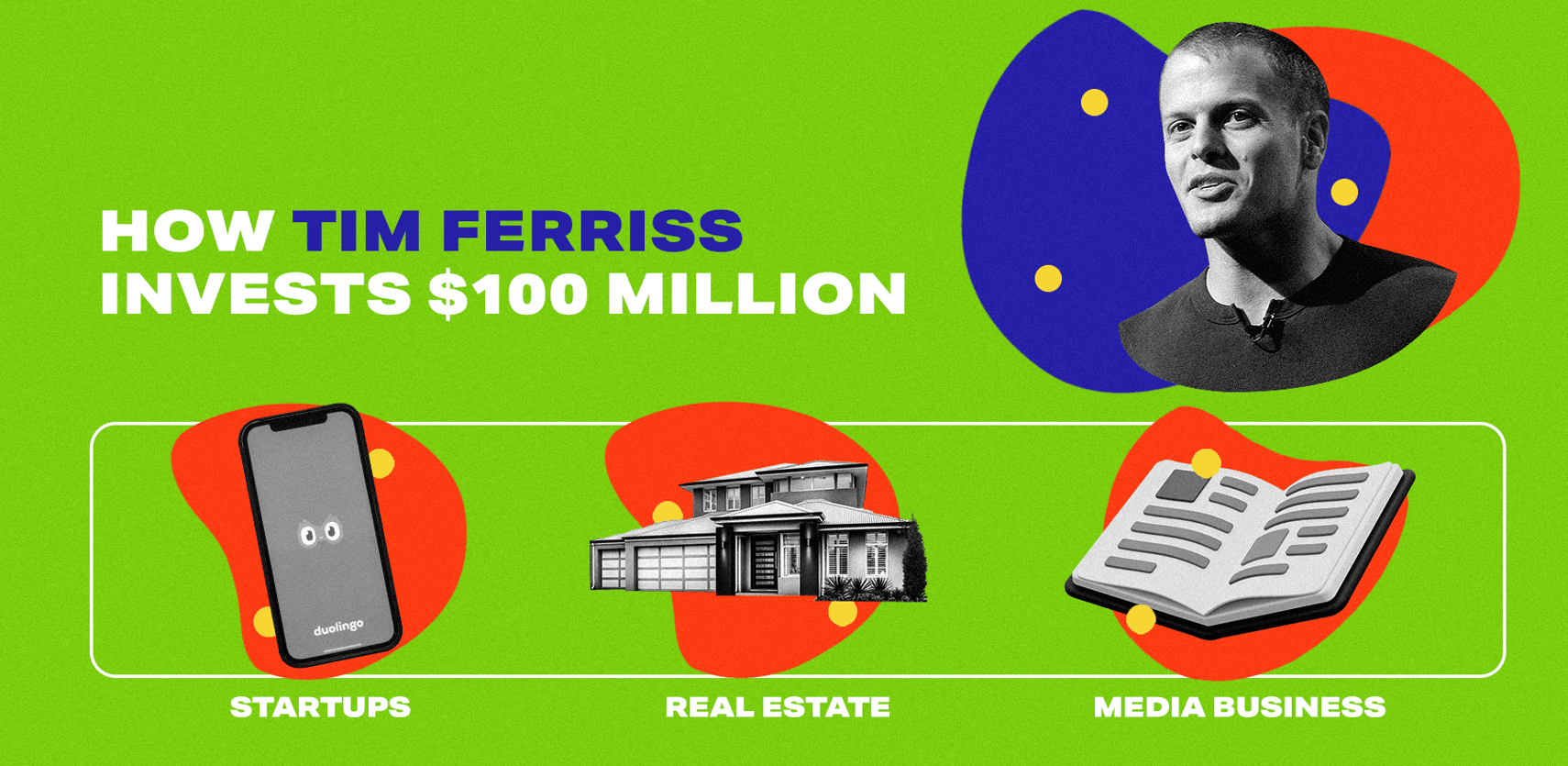
- Duolingo: Betting on the gamification of education.
Strategic Exits and "Pre-IPO" Logic
Ferriss’s $50 million portfolio milestone was largely reached when these "unicorns" went public or were acquired. Angel investing is inherently risky, but Ferriss mitigated this by focusing on companies where he could personally influence the outcome. If he mentioned a startup on his blog or social media, it often resulted in a "Ferriss Effect"—a massive spike in users or sales that improved the company's valuation.
In 2015, Ferriss famously announced a "vacation" from active angel investing to focus on his own projects, citing the psychological toll of managing dozens of startup relationships. However, the equity he retained in companies like Shopify and Uber continued to appreciate, contributing the bulk of his liquid wealth during the 2020-2026 period.
Modern Revenue Streams: The Tim Ferriss Show and Digital Assets
In 2026, the Tim Ferriss Show remains one of the top-performing business podcasts globally. With over 900 million downloads, the podcast is a massive revenue generator.
The economics of the podcast are significant. Top-tier podcasts often command a CPM (cost per mille/thousand listeners) of $25 to $50. With millions of listeners per episode and 3-4 sponsors, a single episode can generate $50,000 to $100,000 in gross revenue. Given the low overhead of podcasting—even with a professional editing team—the profit margins are exceptionally high.
Furthermore, Ferriss has ventured into the world of digital assets and decentralized finance. He was an early proponent of Bitcoin and Ethereum, often hosting experts like Nick Szabo and Vitalik Buterin. While he maintains a diversified portfolio, his early exposure to cryptocurrency has acted as a "force multiplier" for his net worth, particularly during the market maturation seen leading up to 2026.
Investment Philosophy: Asymmetric Risk and the Barbell Strategy
Ferriss attributes his financial success to the Barbell Strategy, a concept popularized by Nassim Nicholas Taleb. This philosophy suggests that one should avoid the "middle" of the risk spectrum.
| Portfolio Segment | Asset Type | Strategic Objective |
|---|---|---|
| High Security (90%) | Cash, T-Bills, Municipal Bonds, Index Funds | Protect against total loss and ensure "lifestyle insurance." |
| High Risk (10%) | Angel Investing, Crypto, High-Upside Startups | Capture 10x to 100x returns with limited downside. |
| Intellectual Property | Books, Podcast, Newsletters | Generate high-margin cash flow to fund the Barbell. |
By keeping 90% of his assets in safe, boring investments and 10% in "moonshots," Ferriss ensured that no single failure could ruin him, while any single success could dramatically increase his wealth. This approach allowed him to hold his Uber and Shopify shares through years of volatility, leading to the massive payouts that defined his $50 million+ portfolio growth.
Key Lessons for Modern Investors
Analyzing Tim Ferriss’s wealth reveals three critical lessons for the 2026 investor:
- Platform as Equity: Ferriss proved that a loyal audience is more valuable than cash. He traded his influence for equity in startups, a model now followed by many "creator-investors."
- Saying No to the "Middle": He avoided moderately risky investments (like picking individual mid-cap stocks) in favor of the extremes—ultra-safe or ultra-aggressive.
- Optimization of Time: Ferriss views wealth not as a number, but as "the ability to do what you want, when you want." He frequently turns down high-paying opportunities (like speaking engagements) to protect his time, which he considers his most valuable asset.
FAQs
How did Tim Ferriss start his investment journey?
Tim Ferriss started by using the profits from his first business, BrainQUICKEN, to fund small angel investments. He moved to Silicon Valley to network with founders and eventually traded his marketing expertise for the opportunity to invest in early-stage tech companies.
Does Tim Ferriss still invest in startups in 2026?
While Ferriss significantly scaled back his active angel investing in the mid-2010s to focus on "human experimentation" and mental health advocacy, he still maintains a portfolio of legacy investments and occasionally participates in late-stage or strategic rounds for companies aligned with his interests in longevity and biotechnology.
How much does Tim Ferriss make from his podcast?
While exact figures are private, industry standards suggest that a podcast of his scale (millions of downloads per episode) generates between $5 million and $10 million annually in sponsorship revenue alone, excluding affiliate deals and book sales driven by the platform.
What is the "Ferriss Effect"?
The "Ferriss Effect" refers to the massive surge in sales, web traffic, and brand recognition a company experiences after being featured on Tim Ferriss’s blog or podcast. This influence allowed Ferriss to negotiate better terms for his investments.
What are Tim Ferriss’s views on cryptocurrency?
Ferriss has been a long-term "HODLer" of Bitcoin and Ethereum. He views them as part of the "high-risk/high-reward" side of his barbell strategy and has been instrumental in bringing technical crypto-economic discussions to a mainstream audience.
Practical Recommendation
To build a portfolio inspired by Tim Ferriss, focus first on increasing your primary cash flow through a scalable business or high-value skill. Once you have a surplus, adopt a barbell strategy: protect your downside with low-cost index funds while allocating a small percentage to high-upside "asymmetric" bets where you have a specific knowledge advantage. Most importantly, focus on building a "platform"—whether a newsletter, a professional network, or a social following—that can be leveraged as non-cash capital.
Image Gallery