The Best Shopping Streets in Florence for Every Style: A 2026 Guide
Florence offers a diverse retail landscape ranging from the high-fashion boutiques of Via de' Tornabuoni to the traditional artisan workshops in the Oltrarno. Whether you seek luxury Italian labels, handcrafted leather, or unique vinta...
Florence offers a diverse retail landscape ranging from the high-fashion boutiques of Via de' Tornabuoni to the traditional artisan workshops in the Oltrarno. Whether you seek luxury Italian labels, handcrafted leather, or unique vintage finds, the city’s compact historic center provides specialized districts tailored to every aesthetic preference and budget.
Contents
Florence remains one of the world's most significant fashion capitals, not merely because of its modern retail presence but because of its deep-rooted history in craftsmanship. In 2026, the city continues to balance the influx of global luxury brands with a fierce protection of its local "botteghe"—the small workshops that have defined Florentine style since the Renaissance. To navigate this city effectively, one must understand that shopping here is categorized by specific neighborhoods, each serving a distinct sartorial or lifestyle purpose.
The Pinnacle of Luxury: Via de' Tornabuoni and Via della Vigna Nuova
For those seeking the "Made in Italy" gold standard, Via de' Tornabuoni is the undisputed center of gravity. This street is more than a commercial thoroughfare; it is an architectural museum housing the flagships of the world’s most prestigious fashion houses.
Via de' Tornabuoni: The Heritage of High Fashion
Walking down Via de' Tornabuoni, you are surrounded by the palazzi of Florence’s historical aristocracy. The street is the ancestral home of Gucci and Salvatore Ferragamo. The Ferragamo flagship, located in the Palazzo Spini Feroni, even houses a museum dedicated to the brand’s history in footwear. In 2026, this area remains the primary destination for haute couture, fine jewelry (including Bulgari and Tiffany & Co.), and high-end leather goods. The shopping experience here is characterized by personalized service, private viewing rooms, and a quiet, sophisticated atmosphere that contrasts with the bustling tourist paths near the Duomo.
Via della Vigna Nuova: Understated Elegance
Intersecting with Tornabuoni, Via della Vigna Nuova offers a slightly more intimate luxury experience. While it still hosts major names, it is known for high-end Italian labels that lean toward "quiet luxury"—brands that prioritize material quality and tailoring over loud logos. It is an excellent destination for bespoke menswear and high-quality silk products. The street is narrower and less crowded than Tornabuoni, making it a favorite for seasoned shoppers who prefer a more curated selection of boutiques.
The High Street Pulse: Via dei Calzaiuoli and Via Roma
If your style is contemporary, fast-paced, and influenced by global trends, the central axis of the city provides the highest density of recognizable brands. These pedestrianized streets connect the religious heart of the city (the Piazza del Duomo) with its political heart (Piazza della Signoria).
Via dei Calzaiuoli: The Commercial Mainline
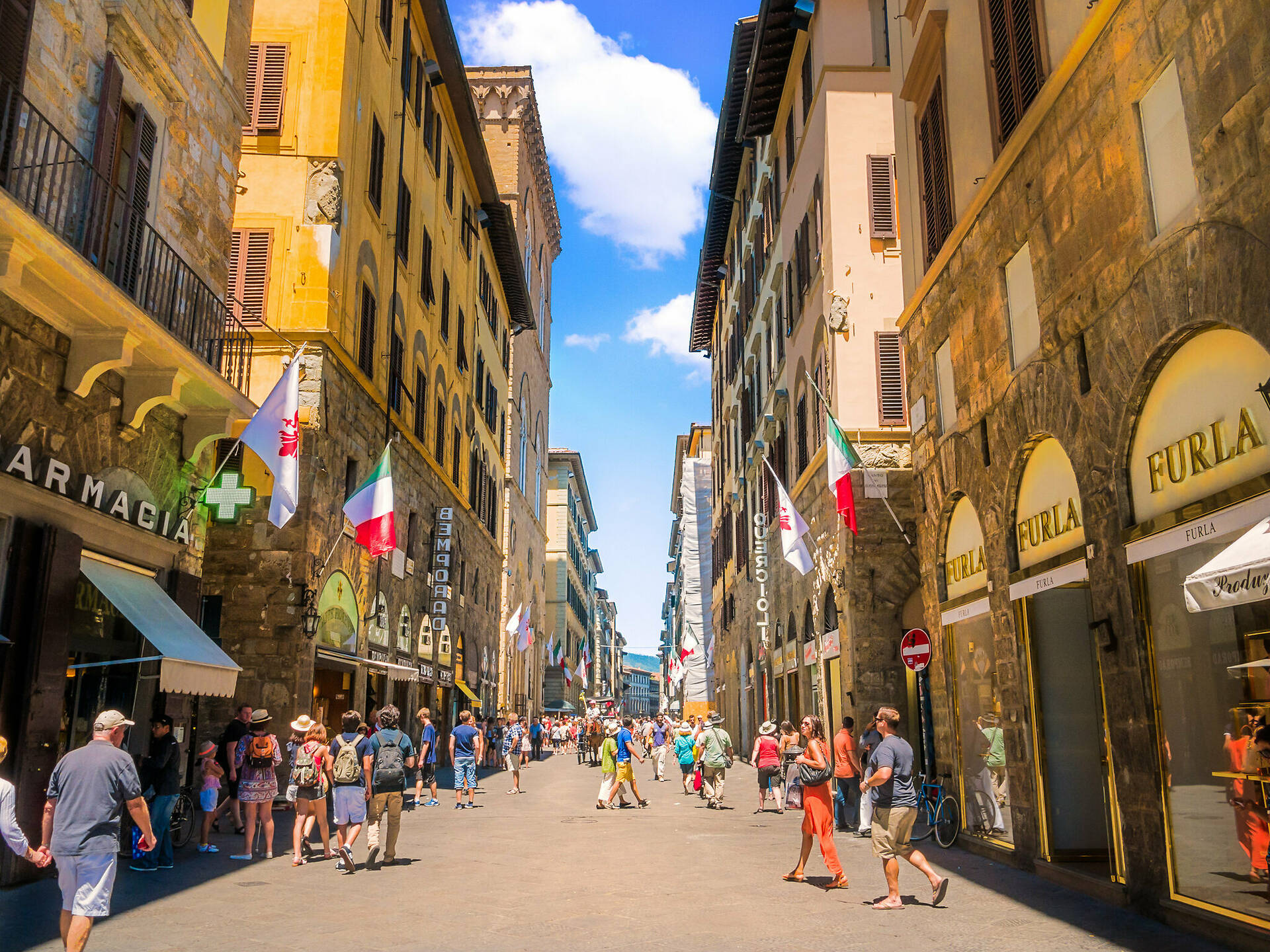
Via dei Calzaiuoli is the busiest shopping street in Florence. It caters to a broad audience, featuring international giants like Zara and H&M alongside Italian stalwarts such as Furla and Falconeri. Because it is a primary thoroughfare for tourists, the shops here maintain the longest opening hours, often remaining open until 8:00 PM or later. In 2026, this street has seen an increase in "concept stores" that blend digital interfaces with physical retail, allowing shoppers to customize items in-store.
Via Roma and Piazza della Repubblica
Parallel to Calzaiuoli, Via Roma offers a more "bridge" luxury experience. Here, you will find the historic LuisaViaRoma, one of the world’s most influential luxury retailers. Known for its avant-garde window displays and exclusive collaborations, it serves as a bridge between the classic luxury of Tornabuoni and the modern high street. The surrounding Piazza della Repubblica is home to the high-end department store Rinascente, which features a rooftop café and a basement dedicated to Italian design and homewares.
The Artisan Heart: The Oltrarno District
Across the Arno River lies the Oltrarno, a district that feels worlds away from the polished marble of the city center. This is the realm of the "Oltrarno style"—a mix of bohemian flair, traditional craftsmanship, and antique elegance.
Via Maggio: Antiques and Contemporary Art
Historically known as the "Via Maggiore" (The Main Street), Via Maggio was once lined with the homes of the Medici family’s courtiers. Today, it is the center of Florence’s antique trade. If your style is defined by interior design, rare textiles, or 18th-century jewelry, this is your destination. However, the street has evolved; alongside the dusty antique shops are contemporary art galleries and boutiques selling modern furniture.
Via dello Sprone and San Frediano: The Modern Artisan
The side streets surrounding the Pitti Palace and Piazza Santo Spirito are where you will find the next generation of Florentine makers. This area is essential for those who value unique, one-of-a-kind items. You will find:
- Custom Shoemakers: Artisans who still measure your feet by hand.
- Bookbinders: Workshops using traditional "marbled paper" techniques to create modern stationery.
- Contemporary Jewelers: Designers working with "lost wax" casting to create sculptural, wearable art.
The style here is less about the brand name and more about the "story" of the object. It is the best place to find gifts and personal pieces that cannot be replicated elsewhere.
The Leather Tradition: San Lorenzo and Santa Croce
Florence is synonymous with leather, but the shopping experience varies wildly depending on where you go. Understanding the geography of the leather trade is crucial to finding quality.
The San Lorenzo Market (Mercato Centrale)
The streets surrounding the Basilica of San Lorenzo are packed with outdoor stalls selling jackets, bags, and belts. This is the place for "bargain hunters" and those looking for a lively, chaotic shopping environment. While you can find genuine leather here, the quality varies. In 2026, visitors are encouraged to look for the "Genuine Italian Leather" certification marks and to check the stitching and linings of garments before purchasing.
The Santa Croce District: Technical Mastery
For higher-end leather and a more educational experience, the area around the Piazza Santa Croce is superior. This district is home to the Scuola del Cuoio (Leather School), located inside a monastery. Here, you can watch apprentices at work and purchase items that are technically superior to those found in the street markets. The style here is classic—timeless trench coats, structured handbags, and durable wallets that are built to last decades.
Comparison of Shopping Districts in Florence
| Street / District | Primary Style | Price Point | Key Items / Brands |
|---|---|---|---|
| Via de' Tornabuoni | Ultra-Luxury | Very High | Gucci, Ferragamo, Fine Jewelry |
| Via dei Calzaiuoli | High Street / Global | Moderate | Zara, Falconeri, Disney Store |
| Oltrarno (Via Maggio) | Antique / Artisan | Mid to High | Antiques, Bespoke Jewelry, Art |
| Via Roma | Bridge Luxury | High | LuisaViaRoma, Rinascente |
| San Lorenzo Market | Casual Leather | Low to Mid | Leather Jackets, Belts, Souvenirs |
| Via della Vigna Nuova | Quiet Luxury / Menswear | High | Ermenegildo Zegna, Boutique Labels |
Strategic Shopping: Practical Logistics for 2026
To maximize a shopping trip in Florence, one must account for the specific rhythms of Italian retail. Unlike many North American or Asian cities, Florence still observes traditional schedules in many sectors.
- Opening Hours: While major stores on Via dei Calzaiuoli remain open all day, many smaller boutiques in the Oltrarno or San Frediano may close for "pausa" (lunch break) between 1:00 PM and 3:30 PM. Plan your artisan visits for the morning or late afternoon.
- Tax-Free Shopping: For non-EU residents, the VAT (Value Added Tax) refund is a significant incentive. In 2026, most major boutiques use digital tax-free systems (like Global Blue or Planet). Ensure you carry your passport (or a high-quality digital scan) as it is required to generate the tax-refund forms at the point of sale. The minimum spend for a refund in Italy has been lowered in recent years to encourage tourism, often starting around €70.
- Payment Methods: Contactless payment is the standard across Florence. While small market stalls in San Lorenzo still appreciate cash (Euro), almost every "permanent" shop is legally required to accept card payments.
- Shipping Services: For large purchases, particularly antiques from Via Maggio or leather goods, most reputable shops offer insured international shipping via DHL or FedEx. Given the narrow streets of Florence, it is often more convenient to ship items home than to carry them back to a hotel.
Frequently Asked Questions
Are shops in Florence open on Sundays?
Yes, most major retailers on Via dei Calzaiuoli, Via Roma, and Via de' Tornabuoni are open on Sundays, typically starting from 10:30 AM or 11:00 AM. However, many independent artisan workshops in the Oltrarno and antique shops on Via Maggio remain closed on Sundays and sometimes on Monday mornings. If you are targeting a specific small maker, it is best to visit Tuesday through Saturday.
How can I tell if leather is genuinely "Made in Florence"?
Check for the quality of the edges; high-quality Florentine leather usually has painted or burnished edges rather than plastic-coated ones. Smell is also a factor—genuine vegetable-tanned leather has a distinct, earthy scent, whereas cheap imports often smell of chemicals or glue. Finally, look for the "Pelle Conciata al Vegetale in Toscana" (Tuscan Vegetable-Tanned Leather) trademark, which guarantees the leather was tanned using traditional methods in the region.
When are the "Saldi" (Seasonal Sales) in Florence?
In Italy, sales periods are strictly regulated by the government. The winter sales (Saldi Invernali) typically begin in the first week of January and last through February. The summer sales (Saldi Estivi) begin in early July and run through August. During these periods, even luxury boutiques on Via de' Tornabuoni offer significant discounts, often starting at 30% and reaching 70% toward the end of the season.
Is bargaining acceptable in Florence shops?
Bargaining is expected at the outdoor stalls of the San Lorenzo Market or the Mercato Nuovo (the "Straw Market"). However, it is not acceptable in permanent boutiques, department stores, or luxury shops. In artisan workshops, while you shouldn't "haggle," asking if there is a discount for purchasing multiple items is considered polite and is often successful.
Where is the best place for vintage clothing?
The San Frediano neighborhood and the area around Via dei Servi are the hubs for vintage. Look for shops labeled "Second-hand" or "Vintage" near Piazza Santo Spirito. Florence has a high concentration of high-end vintage, where you can find well-preserved designer pieces from the 1970s and 80s, reflecting the city’s deep fashion archives.
Recommendation for a Perfect Shopping Day
To experience the full spectrum of Florentine style, start your morning at the Duomo and walk down Via dei Calzaiuoli for modern essentials. By mid-morning, transition to Via de' Tornabuoni to admire the luxury displays and visit the Ferragamo Museum. Cross the Ponte Santa Trinita (avoiding the crowded Ponte Vecchio) and spend your afternoon getting lost in the narrow streets of the Oltrarno. This route takes you from the globalized "High Street" into the heart of authentic Italian craftsmanship, ensuring you see every facet of Florence’s retail identity.
Image Gallery