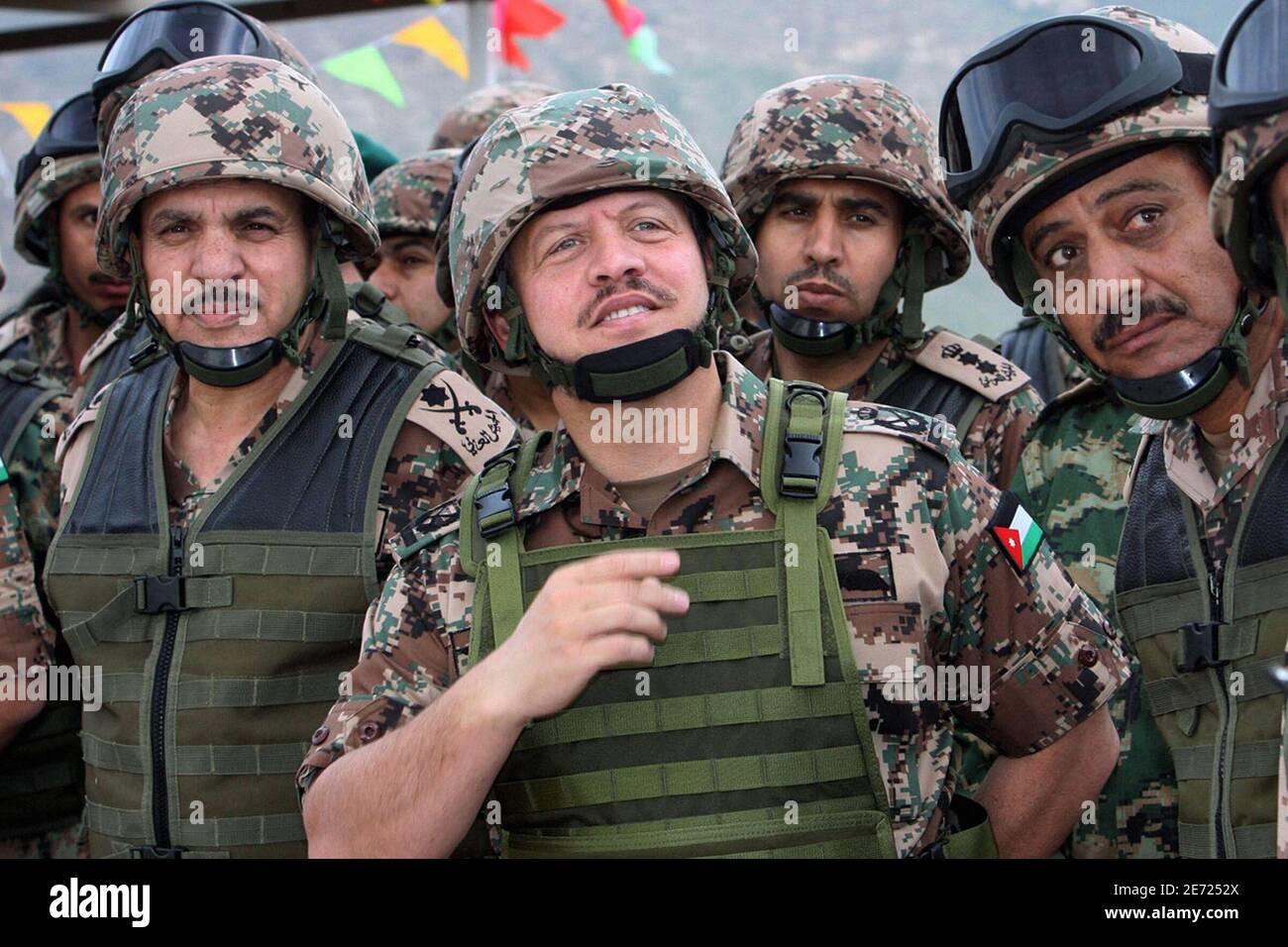
King of Jordan Height: Comprehensive Facts and Profile of King Abdullah II
King Abdullah II of Jordan stands approximately 5 feet 7 inches (170 cm) tall. While his physical stature is considered average for men globally, it is often a point of public curiosity due to his frequent appearances alongside taller...
King Abdullah II of Jordan stands approximately 5 feet 7 inches (170 cm) tall. While his physical stature is considered average for men globally, it is often a point of public curiosity due to his frequent appearances alongside taller world leaders and his active background in the Royal Jordanian Special Forces.
Contents
The Physical Profile of King Abdullah II bin Al-Hussein
In the realm of global diplomacy, physical presence is often scrutinized, yet King Abdullah II has consistently demonstrated that leadership is defined by influence rather than inches. Standing at roughly 1.70 meters, the King possesses a sturdy, athletic build—a legacy of his rigorous military training and his lifelong passion for active sports.
Public records and photographic evidence from state visits suggest a height range between 5'6" and 5'7". When appearing with his wife, Queen Rania, who is approximately 5 feet 6 inches tall, the couple often appears similar in height, though the Queen’s choice of footwear can frequently make her appear taller than the monarch. This has never detracted from the King's authoritative presence, which is rooted in a command-oriented posture developed during his years at the Royal Military Academy Sandhurst.
The Hashemite dynasty, which claims direct descent from the Prophet Muhammad, has historically seen leaders of modest to average height. King Abdullah’s father, the late King Hussein bin Talal, was also of a similar stature, often cited at around 5 feet 6 inches. Despite this, King Hussein was known as "The Lion of Jordan," proving that the Hashemite presence is built on a foundation of charismatic authority and military pedigree.
Comparative Height: The King Among World Leaders
To provide context to King Abdullah II's height, it is helpful to compare him with other regional and global figures. In the Middle East, heights vary significantly among heads of state, and King Abdullah often finds himself among the shorter leaders when standing next to figures from the Gulf or Western nations.
| Figure | Estimated Height (cm) | Estimated Height (ft/in) |
|---|---|---|
| King Abdullah II (Jordan) | 170 cm | 5'7" |
| King Hussein (Late King of Jordan) | 168 cm | 5'6" |
| Crown Prince Hussein (Jordan) | 175 cm | 5'9" |
| Queen Rania (Jordan) | 167 cm | 5'6" |
| Joe Biden (U.S. President) | 182 cm | 6'0" |
| Emmanuel Macron (France) | 173 cm | 5'8" |
| Mohammed bin Salman (Saudi Arabia) | 183 cm | 6'0" |
| King Felipe VI (Spain) | 197 cm | 6'5" |
As seen in the table, King Abdullah II is shorter than contemporary leaders like King Felipe VI of Spain, who is exceptionally tall. However, he is comparable in height to French President Emmanuel Macron. These physical differences are most notable during "family photos" at international summits like the UN General Assembly or the World Economic Forum. In these settings, the King’s tailored suits and upright military bearing are designed to project stability and confidence, mitigating any perceived height disadvantage.
The Military Influence on Stature and Presence
One cannot discuss the King of Jordan's physical profile without addressing his military career. King Abdullah II did not merely serve in a ceremonial role; he was a career officer. His training at Sandhurst and his subsequent service in the British Army (13th/18th Royal Hussars) and the Jordanian Armed Forces shaped his physical demeanor.
As the former commander of Jordan’s Special Operations, the King developed a compact, powerful physique suitable for the demands of elite soldiering. In special forces operations, extreme height can sometimes be a disadvantage in cramped armored vehicles or aircraft cockpits. The King’s stature was perfectly suited for his roles as a tank commander and a pilot of the AH-1 Cobra attack helicopter.
His "presence" is often described by diplomats as "commanding" and "approachable." This duality is a hallmark of his leadership style. By maintaining a high level of physical fitness—engaging in skydiving, scuba diving, and rally racing—he projects an image of a "warrior-king" that resonates deeply with the Jordanian military and the broader population, regardless of his actual height in feet and inches.
The Role of Queen Rania and the Royal Image
The public perception of the King's height is also influenced by his frequent public appearances with Queen Rania Al-Abdullah. The Queen is a global fashion icon known for her elegance. Because she is nearly the same height as the King, her use of high-heeled shoes in formal settings often places her eye-level with or slightly above her husband.
In the Jordanian cultural context, this is viewed with modern sensibility. The Royal Court's photography often manages these proportions through careful blocking and positioning, ensuring the King remains the central focus of the image. The dynamic between the two emphasizes a partnership of intellect and reform rather than a traditional obsession with physical dominance.
Furthermore, the King’s eldest son and heir, Crown Prince Hussein, appears to be slightly taller than his father, standing approximately 5'9". This progression in height is common in many families due to changes in nutrition and healthcare over generations. As the Crown Prince takes on more domestic and international responsibilities, the visual transition of the monarchy continues to emphasize continuity over physical change.
Perception vs. Reality: Why Height Matters in Geopolitics
In the history of political science, the "height premium" suggests that taller leaders are often perceived as more powerful. However, King Abdullah II serves as a significant counter-example. Since ascending the throne in 1999, he has navigated Jordan through the Iraq War, the Arab Spring, the Syrian Civil War, and various economic crises.
His influence in the Middle East is rooted in his role as the Custodian of the Holy Sites in Jerusalem and his status as a key Western ally in the fight against extremism. In these arenas, his "height" is measured by the depth of his diplomatic ties and the stability of his kingdom in a volatile region.
World leaders who have met the King often remark on his directness and his deep technical knowledge of military and economic affairs. These attributes create a "psychological height" that far exceeds his physical 170 cm. For a monarch in the Middle East, lineage (being a 41st-generation direct descendant of the Prophet) carries significantly more weight than physical stature.
Common Misconceptions About the King's Height
There are several reasons why the King's height is frequently debated or misstated online:
- Camera Angles: In video footage where he is surrounded by his Special Forces bodyguards (who are selected for their imposing size), the King can appear shorter than he actually is.
- Footwear: Like many leaders, the King occasionally wears boots or dress shoes with a slight heel for formal military ceremonies, which can fluctuate his perceived height by an inch or two.
- Posture: The King's tendency to lean in during conversations—a sign of active listening—can sometimes make him appear shorter in candid photography compared to when he is standing at attention.
Despite these variations, the consensus among observers and biographical records remains steady at the 5'7" mark.
FAQ: Frequently Asked Questions About King Abdullah II
How tall is King Abdullah II of Jordan?
King Abdullah II is approximately 5 feet 7 inches tall (170 cm). This measurement is based on comparative analysis with other world leaders and historical biographical data from his military service.
Is the King of Jordan shorter than his wife?
King Abdullah and Queen Rania are very similar in height, with the Queen being approximately 5'6". When the Queen wears heels, she often appears taller than the King, but they are nearly equal in barefoot stature.
How does the King's height compare to his father, King Hussein?
King Abdullah II is roughly the same height as his father, the late King Hussein, who was also around 5'6" to 5'7". The Hashemite monarchs have traditionally been of average physical height but are known for their strong presence and military backgrounds.
Does the King of Jordan's height affect his military role?
No. In fact, his compact stature was an asset during his career as a tank commander and attack helicopter pilot. He remains a highly respected figure in the Jordanian Armed Forces and still participates in military exercises.
Who is the tallest member of the Jordanian Royal Family?
Currently, Crown Prince Hussein is one of the taller members of the immediate family, standing at approximately 5'9" (175 cm). Several of the King's extended cousins and relatives also vary in height, but the direct line has remained relatively consistent.
What is the average height in Jordan?
The average height for an adult male in Jordan is approximately 171 cm (5'7.3"). This places King Abdullah II exactly at the national average for his country, making him a relatable figure to his subjects.
Summary Recommendation
When researching the height of public figures like the King of Jordan, it is essential to look beyond the raw numbers and consider the context of their public image. King Abdullah II’s height of 5'7" is a minor detail in a life defined by high-stakes diplomacy and military leadership. For those interested in the Hashemite monarchy, focusing on the King's military reforms and his role in Middle Eastern stability provides a much more comprehensive understanding of his "stature" on the world stage.
Image Gallery