When Index Options Settle in Practice: A Guide to Timing and Mechanics
Index options settle in practice either at the market open (AM settlement) or the market close (PM settlement) on their expiration date, depending on the specific contract type. Standard monthly index options typically settle on Friday...
Index options settle in practice either at the market open (AM settlement) or the market close (PM settlement) on their expiration date, depending on the specific contract type. Standard monthly index options typically settle on Friday morning based on the opening prices of the index’s constituent stocks, while weekly and daily (0DTE) options usually settle based on the index’s closing price on the day of expiration.
Contents
Understanding the nuances of index option settlement is critical for traders because, unlike stock or ETF options, index options are cash-settled. This means no physical shares change hands; instead, the difference between the option's strike price and the final settlement value is exchanged in cash. In the high-speed trading environment of 2026, where 0DTE (zero days to expiration) volume dominates the landscape, the distinction between AM and PM settlement has never been more relevant to risk management.
The Core Distinction: AM vs. PM Settlement
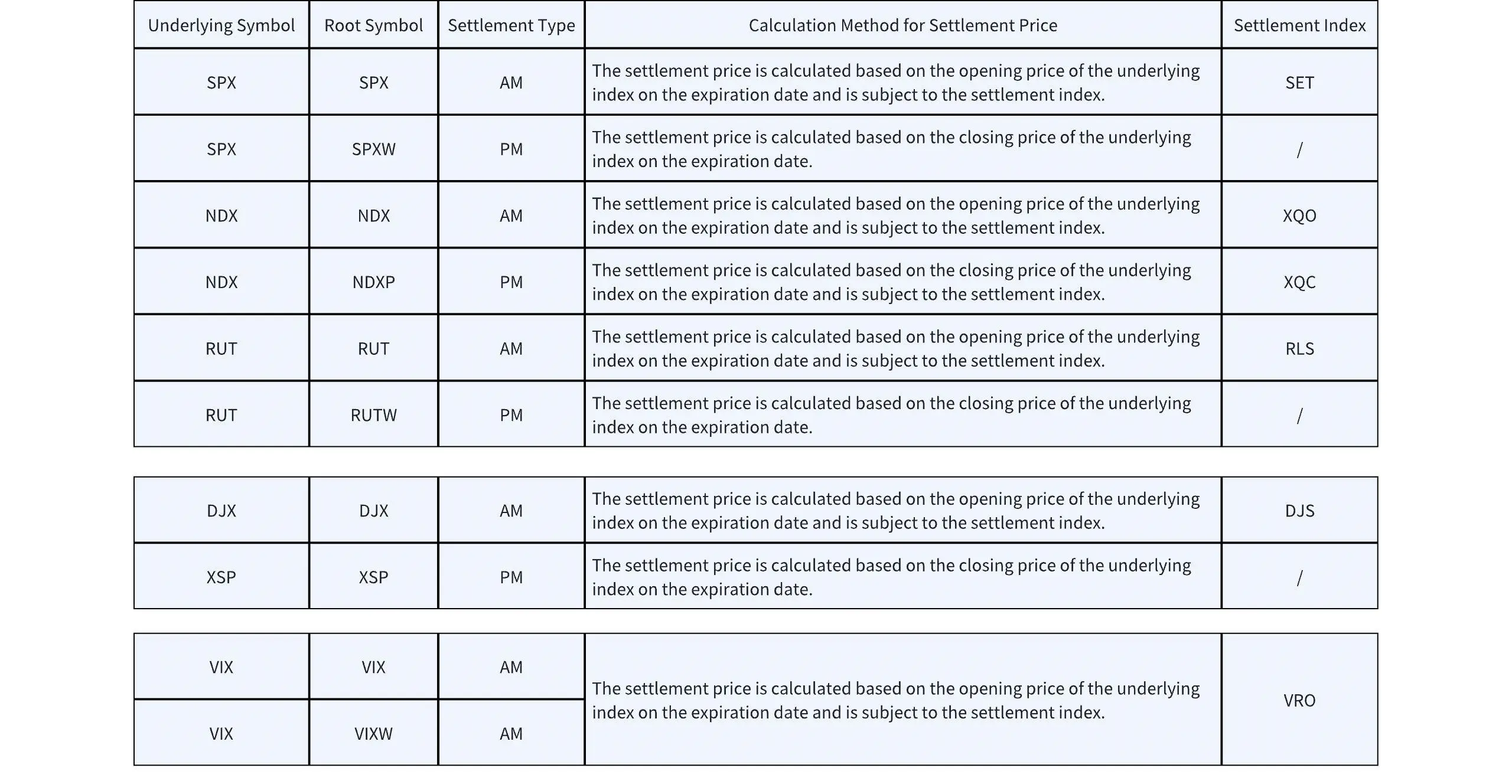
In the world of index derivatives—such as those based on the S&P 500 (SPX), Nasdaq 100 (NDX), or Russell 2000 (RUT)—the industry differentiates between "standard" contracts and "non-standard" or "weekly" contracts. The primary difference lies in exactly when the settlement value is calculated.
AM Settlement (Standard Monthlys)
Standard monthly index options, which usually expire on the third Friday of the month, are almost exclusively AM-settled. For these contracts, the last day of trading is actually the Thursday preceding the expiration Friday. Once the market closes on Thursday, you can no longer trade or close these positions.
The final settlement value is determined by the Special Opening Quotation (SOQ) on Friday morning. This value is calculated using the first traded price of every individual stock within the index on that Friday. If a particular stock in the S&P 500 doesn't open until 10:00 AM ET due to an imbalance, its opening price at that time is what is used for the SOQ calculation, even if the rest of the index has been trading for thirty minutes.
PM Settlement (Weeklys and 0DTE)
PM-settled options, often designated with a "W" (e.g., SPXW), expire at the market close on the day of expiration. These contracts allow traders to buy and sell right up until the final bell (typically 4:00 PM ET, or 4:15 PM ET for some products). The settlement value is based on the official closing price of the index as reported by the exchange.
In practice, PM settlement is preferred by many retail traders because it eliminates "overnight gap risk." You know exactly what the index is doing until the moment trading stops, providing more control over the final outcome of the trade.
How the Settlement Value is Calculated
One of the most common points of confusion for traders is why their brokerage screen shows one index price at the close, but their options settle at a slightly different price. This is due to the calculation of the Exercise Settlement Value.
For the S&P 500 (SPX), the settlement ticker is often represented as $SET. For the Nasdaq 100, it is $NDS. These tickers represent the official aggregate of the opening (for AM) or closing (for PM) prices of the underlying components.
- Constituent Aggregation: The exchange looks at all 500 (or 100) stocks.
- Price Capture: For AM settlement, they capture the very first print of each stock on the primary exchange (like the NYSE or Nasdaq).
- Weighting: These prices are weighted according to the index’s specific methodology (usually market-cap weighted).
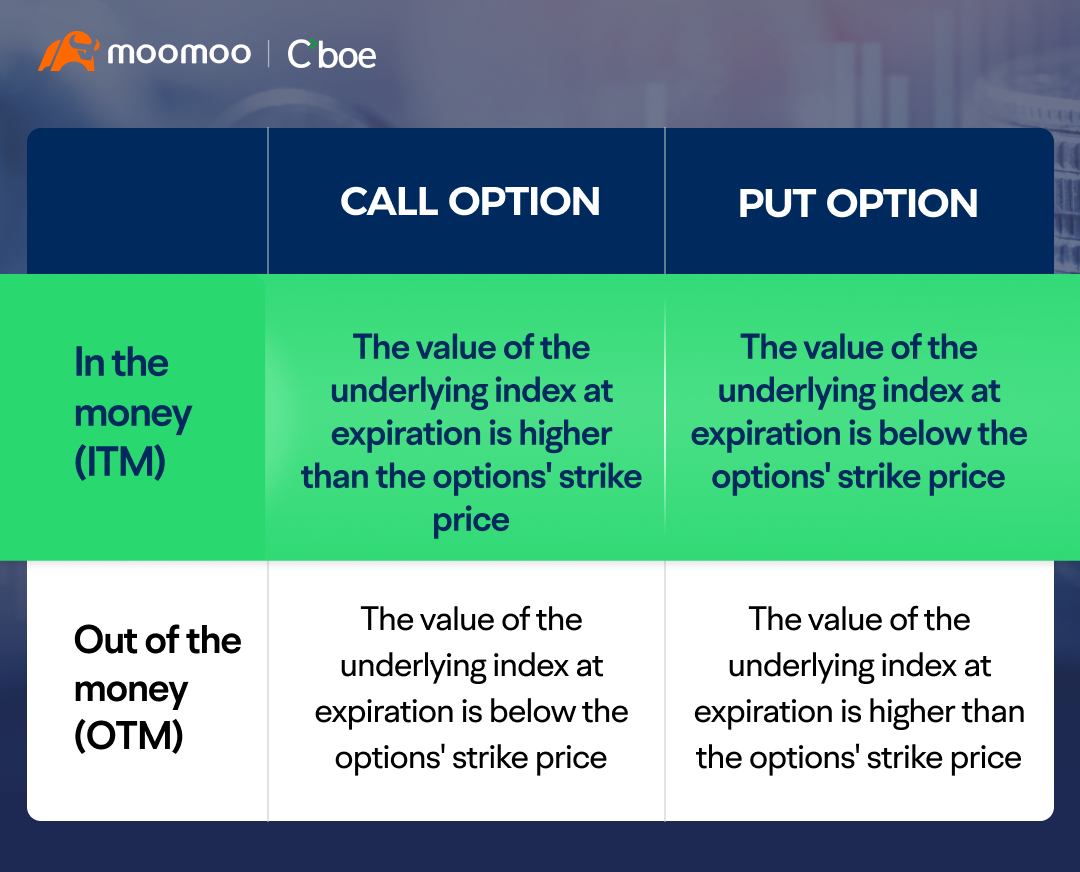
- Final Ticker: The resulting number is the settlement price used by the Options Clearing Corporation (OCC) to determine which options are in-the-money.
Because it takes time for all 500 stocks in the SPX to record an official opening trade, the $SET value is often not finalized until well into the Friday morning trading session. Traders should not rely on the "opening print" of the SPX index ticker on their charts, as that is often a "stale" price based on the previous day's close for stocks that haven't opened yet.
The Timeline of Settlement in Practice
To visualize how this works in a standard trading week in 2026, consider the following timeline for a standard monthly AM-settled SPX call option:
| Timeframe | Action / Status |
|---|---|
| Thursday, 4:00 PM ET | Trading Ceases. This is the last moment you can buy to close or sell to open the standard monthly contract. |
| Thursday Overnight | Maximum Risk Period. You are "locked in." If a major geopolitical event occurs overnight, you cannot exit the position, but the Friday open will reflect that event. |
| Friday, 9:30 AM ET | Opening Bell. Individual stocks begin to open. The calculation of the Special Opening Quotation (SOQ) begins. |
| Friday, ~10:30 AM ET | SET Value Published. Usually, by this time, all stocks have opened and the final settlement price is disseminated. |
| Saturday | Clearing. The OCC processes the exercise and assignment instructions. |
| Monday Morning | Cash Distribution. The cash resulting from the settlement (the "intrinsic value") is credited to or debited from your brokerage account. |
Practical Risks: The "Overnight Gap"
The most significant risk in index option settlement is the gap between Thursday’s close and Friday’s open for AM-settled contracts. Because the options stop trading on Thursday afternoon, the trader is exposed to any market-moving news that happens while the market is closed.
For example, if you are short an SPX credit spread that is safely out-of-the-money on Thursday at 4:00 PM, a massive rally in the overnight futures market could cause the index constituents to open much higher on Friday morning. This could push your spread deep into-the-money. Since you cannot trade out of the position on Friday morning, you are forced to accept the loss dictated by the SOQ.
In practice, professional traders often "roll" their positions or close them on Thursday before the bell to avoid this uncertainty, unless they are specifically betting on the overnight move.
European Style vs. American Style
Index options (like SPX and NDX) are almost always European-style exercise. This is a crucial distinction from ETF options (like SPY or QQQ), which are American-style.
- American-style (ETFs): Can be exercised by the holder at any time before expiration. This introduces "assignment risk" for the seller, especially when dividends are involved.
- European-style (Indices): Can only be exercised at expiration. This means as a seller of an index option, you don't have to worry about being "assigned" early. You only need to concern yourself with where the index settles at the very end.
Furthermore, index options fall under Section 1256 of the IRS Code. In 2026, this continues to provide a significant tax advantage for US traders: 60% of capital gains are taxed at the lower long-term rate, and 40% are taxed at the short-term rate, regardless of how long the position was held. This is a primary reason why high-volume traders prefer SPX index options over SPY ETF options despite the larger contract size.
Comparison of Settlement Characteristics
The following table compares the practical settlement differences between the most popular index-based products.
| Product Type | Ticker Example | Settlement Style | Exercise Style | Settlement Basis |
|---|---|---|---|---|
| Standard Index | SPX | AM Settlement | European | SOQ ($SET) |
| Weekly Index | SPXW | PM Settlement | European | Closing Index Price |
| Index ETF | SPY | PM Settlement | American | Closing Price (Physical) |
| Nasdaq Index | NDX | AM Settlement | European | SOQ ($NDS) |
| Russell Index | RUT | AM Settlement | European | SOQ ($RLS) |
Common Pitfalls to Avoid
1. Confusing SPX and SPY
Many traders move from SPY (ETF) to SPX (Index) without realizing the settlement changes. SPY options settle into 100 shares of the ETF. SPX options settle into cash. If you hold a SPY option through expiration, you might wake up Monday morning owning thousands of shares of an ETF on margin. If you hold an SPX option, you will simply see a cash adjustment in your balance.
2. Ignoring the Thursday Close
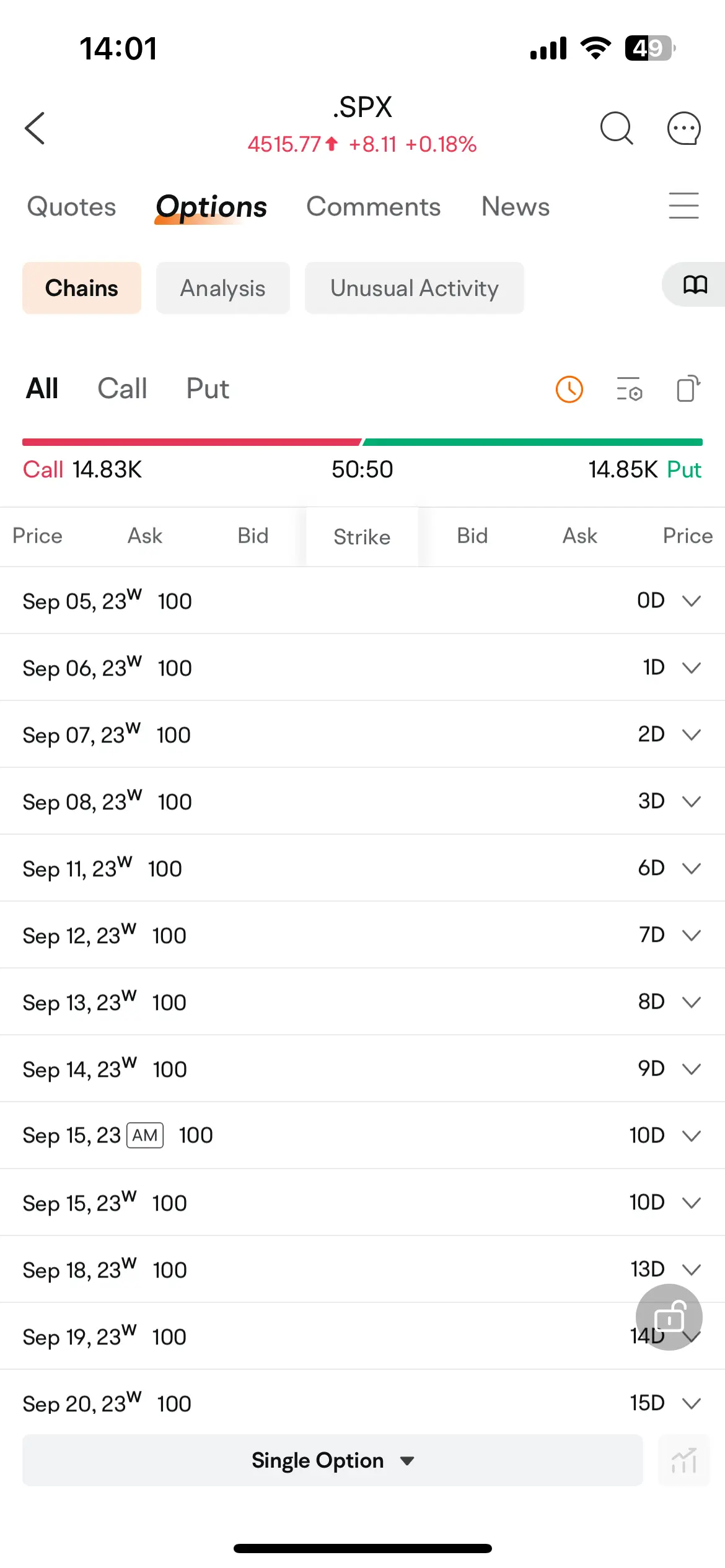
For monthly AM-settled options, many retail traders forget that Thursday is the final day to act. Attempting to "wait and see" what happens Friday morning is impossible because the contracts are already frozen. Always check your option chain for the "Frequency" or "Settlement" tag (often denoted as [AM] or [PM]).
3. Miscalculating 0DTE Risks
With 0DTE (Zero Days to Expiration) options, the settlement happens at the 4:00 PM ET close. However, the Chicago Board Options Exchange (CBOE) allows trading in these contracts until 4:00 PM, but the final "print" that determines settlement can sometimes be delayed by a few seconds as the "closing auction" on the NYSE and Nasdaq completes. This can lead to "pinning risk," where the index settles exactly at a strike price, making it uncertain whether the option will be worth anything until the final numbers are tallied.
Frequently Asked Questions
When exactly does the cash from index options appear in my account?
While the settlement value is determined on Friday (for both AM and PM monthlys/weeklys), the actual cash transfer typically occurs on the next business day, which is usually Monday. Your brokerage may show a "pending" transaction or an adjusted "buying power" over the weekend, but the hard cash is finalized through the OCC on Monday morning.
Can I exercise my index options early?
No. Because almost all index options are European-style, they cannot be exercised prior to expiration. You can, however, sell the option back into the market at any time during trading hours to realize your profit or loss.
Why is there a difference between the $SET value and the Friday opening price of the SPX?
The SPX ticker you see on your screen at 9:30:01 AM is a "composite" that may still include Thursday's closing prices for stocks that haven't traded yet. The $SET (Special Opening Quotation) waits for the actual first trade of each of the 500 stocks. Therefore, the $SET value is a more accurate reflection of the true "opening" of the entire market.
Do 0DTE options settle differently than monthly options?
Yes. 0DTE options are PM-settled. They settle based on the closing price of the index on the day they expire. This provides more transparency for short-term traders compared to the AM settlement of monthly contracts, which involves overnight risk.
Are index options better than ETF options for settlement?
"Better" depends on your goals. Index options offer cash settlement (no share delivery) and potential tax advantages under Section 1256. ETF options offer more flexibility for smaller accounts (due to smaller contract sizes) and the ability to eventually own the underlying shares if that is your strategy.
Practical Recommendation for Traders
To navigate index option settlement effectively in 2026, traders should prioritize PM-settled contracts (Weeklys/0DTE) for short-term tactical trades to avoid the "hidden" risks of the Friday morning gap. If you are trading standard monthly AM-settled contracts, ensure you have a hard rule to close or roll your positions by the Thursday market close. Always monitor the official settlement tickers like $SET or $NDS rather than the standard index chart to verify your final profit or loss. Finally, consult with a tax professional to ensure you are correctly applying the 60/40 tax rule associated with these index products.
Image Gallery