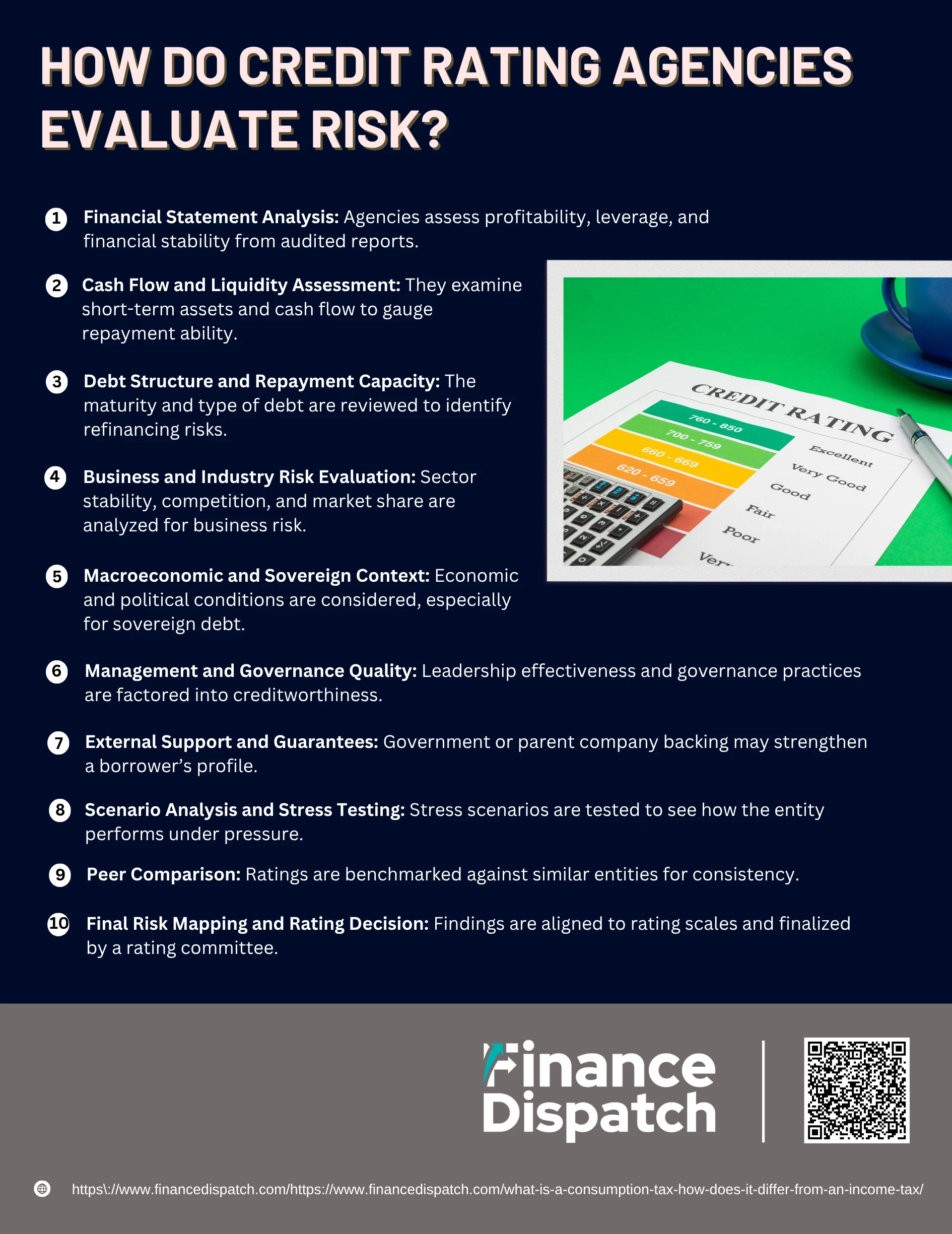
How the S&P Credit Rating Scale Defines Financial Risk
S&P Global Ratings defines credit risk as the likelihood that an obligor will fail to meet its financial commitments in full and on time. The Standard & Poor's (S&P) credit rating scale measures relative default risk on a standardized...
S&P Global Ratings defines credit risk as the likelihood that an obligor will fail to meet its financial commitments in full and on time. The Standard & Poor's (S&P) credit rating scale measures relative default risk on a standardized spectrum from 'AAA' (extremely strong capacity to meet obligations) down to 'D' (payment default).
Contents
The Fundamental Definition of Risk According to S&P
In global financial markets, credit risk represents the potential that an issuer of debt—whether a sovereign nation, municipality, corporation, or financial institution—will default on its contractual debt obligations. S&P Global Ratings evaluates this exposure by assessing two distinct dimensions: the likelihood of default and the structural protection provided to creditors in the event of default.
When evaluating credit risk, S&P distinguishes between an Issuer Credit Rating (ICR) and an Issue Rating:
- Issuer Credit Rating (ICR): An overall evaluation of an obligor's capacity and willingness to meet its financial obligations as they come due. It does not focus on a specific debt security, collateral arrangement, or structural seniority.
- Issue Rating: A specific assessment of a particular financial obligation, debt security, or preferred stock issue. Issue ratings account for credit enhancements, asset backing, structural subordination, and recovery expectations in bankruptcy.
S&P also utilizes the Stand-Alone Credit Profile (SACP). The SACP represents an entity's intrinsic creditworthiness without taking into account potential extraordinary external support—such as government bailouts or parent company infusions during a crisis. By isolating the SACP from parent or sovereign support, market participants can evaluate an entity's fundamental operational and financial health.
Crucially, the S&P rating scale is a relative measure of default probability, not an absolute statistical prediction of failure over a fixed timeframe. A entity rated 'AA' possesses lower relative default risk than an entity rated 'BBB', but the rating itself does not guarantee an absolute zero-percent default rate.
Breakdown of the S&P Long-Term Credit Rating Scale
The long-term rating scale applies to obligations with original maturities typically exceeding one year. S&P divides this scale into two primary categories: Investment Grade and Speculative Grade (often referred to as "high-yield" or "junk" bonds).
- Investment Grade: AAA to BBB-
- Speculative Grade: BB+ to D
Investment Grade Ratings (AAA to BBB-)
Investment grade ratings signify that the issuer or issue carries relatively low to moderate credit risk. Institutional investors, such as pension funds and insurance companies, often operate under investment mandates that restrict asset holdings exclusively to investment-grade securities.
- AAA: The highest rating assigned by S&P. The obligor's capacity to meet its financial commitments is extremely strong. Vulnerability to adverse economic or operational shifts is minimal.
- AA: The obligor's capacity to meet financial commitments is very strong. It differs from 'AAA' only to a small degree, maintaining exceptional financial stability.
- A: The obligor's capacity to fulfill financial commitments is strong. However, the entity is somewhat more susceptible to adverse economic conditions and changing business environments than higher-rated entities.
- BBB: The obligor exhibits adequate capacity to meet financial commitments. However, adverse economic conditions or deteriorating operational circumstances are more likely to weaken the issuer's capacity to honor debt service commitments. 'BBB-' represents the lowest investment-grade threshold.
Speculative Grade Ratings (BB+ to D)
Speculative grade ratings indicate that the obligation carries significant credit risk or speculative characteristics. While these instruments offer higher yields, they expose investors to higher potential rates of default.
- BB: Less vulnerable in the near term than lower-rated debt, but faces major ongoing uncertainties or exposure to adverse business, financial, or economic conditions that could impair financial capacity.
- B: More vulnerable to nonpayment than 'BB'. The obligor currently possesses the capacity to meet financial commitments, but adverse business or economic conditions will likely impair its willingness or capacity to pay.
- CCC: Currently vulnerable to nonpayment. The obligor relies on favorable business, financial, and economic conditions to meet its commitments. In the event of adverse shifts, default becomes likely.
- CC: Highly vulnerable. A default has not yet occurred, but S&P expects default to be a virtual certainty, regardless of economic conditions.
- C: Highly vulnerable to nonpayment, typically reserved for obligations that are subordinated to higher-ranked debt or undergoing a distressed debt exchange that S&P deems equivalent to a default.
- D: In payment default. This rating is assigned when payments on an obligation are not made on the due date (unless a grace period applies), or when an entity files a bankruptcy petition or executes an involuntary debt restructuring.
Rating Modifiers (+ and -)
To provide finer risk differentiation, S&P appends a plus (+) or minus (-) sign to ratings ranging from 'AA' to 'CCC'. For example, a rating of 'A+' sits above 'A', which sits above 'A-'. These modifiers indicate relative standing within the major rating tiers. The 'AAA' category and categories below 'CCC' do not use plus or minus modifiers.
Comprehensive S&P Credit Rating Scale Reference Table
The table below summarizes how the S&P long-term rating scale classifies risk, default vulnerability, and capacity to fulfill debt obligations:
| Rating Category | Classification | Relative Default Risk | Obligor Capacity & Financial Security |
|---|---|---|---|
| AAA | Investment Grade | Minimal | Extremely strong capacity to meet financial commitments. |
| AA+ / AA / AA- | Investment Grade | Very Low | Very strong capacity; differs from AAA by only a slight degree. |
| A+ / A / A- | Investment Grade | Low to Moderate | Strong capacity, but somewhat susceptible to long-term economic shifts. |
| BBB+ / BBB / BBB- | Investment Grade | Moderate | Adequate capacity; economic shocks can weaken debt repayment ability. |
| BB+ / BB / BB- | Speculative Grade | Elevated | Speculative; faces major ongoing business and financial uncertainties. |
| B+ / B / B- | Speculative Grade | High | Highly speculative; currently paying, but vulnerable to adverse conditions. |
| CCC+ / CCC / CCC- | Speculative Grade | Substantial | Currently vulnerable; requires favorable economic conditions to avoid default. |
| CC | Speculative Grade | Severe | Extreme risk; default is considered a virtual certainty. |
| C | Speculative Grade | Imminent | Subordinated obligation or ongoing distressed exchange proposal. |
| D | Default | Complete | In payment default, bankruptcy, or executing a distressed restructuring. |
Short-Term vs. Long-Term Credit Rating Scales
While long-term ratings evaluate obligations extending years or decades into the future, short-term ratings evaluate obligations with an original maturity of 365 days or less, such as commercial paper, certificates of deposit, and treasury bills.
Short-term liquidity and immediate cash availability carry higher weighting in short-term ratings than in long-term solvency assessments. S&P uses a specialized short-term scale:
- A-1: The highest short-term rating. The obligor's capacity to meet its financial commitment on the obligation is strong. Within this category, obligations designated with a plus (+) sign indicate an exceptionally strong capacity to pay.
- A-2: Satisfactory capacity to meet financial commitments. Somewhat more susceptible to economic shifts than 'A-1' issuers.
- A-3: Adequate capacity to meet financial obligations. However, adverse economic conditions may weaken the obligor's short-term repayment capacity.
- B: Speculative short-term capacity. The obligor currently has the capacity to pay, but faces significant vulnerabilities in adverse economic environments.
- C: Vulnerable to nonpayment in the short term. Relies heavily on external economic conditions to fulfill obligations.
- D: In short-term payment default.
There is a natural correlation between an issuer's long-term and short-term ratings. An issuer rated 'AAA' or 'AA' on the long-term scale typically receives an 'A-1+' short-term rating, whereas an issuer rated 'BBB-' typically receives a short-term rating of 'A-3'.
Credit Outlooks and CreditWatch Statuses
Risk assessment is dynamic. To communicate the potential direction of a credit rating over time, S&P uses two supplementary indicators: Credit Outlooks and CreditWatch listings.
- S&P Dynamic Risk Tools
- Credit Outlook (6 to 24 Months)
- Positive
- Negative
- Stable
- Developing
- CreditWatch (Short-Term Focus)
- Positive
- Negative
- Developing
- Credit Outlook (6 to 24 Months)
Credit Outlooks (6 to 24 Month Horizon)
A Credit Outlook assesses the potential direction of a long-term credit rating over the medium term, typically six months to two years. It focuses on underlying economic trends, corporate strategies, and industry dynamics.
- Positive: Indicates that a rating may be raised.
- Negative: Indicates that a rating may be lowered.
- Stable: Indicates that a rating is unlikely to change in the near-to-medium term.
- Developing: Indicates that a rating may be raised, lowered, or affirmed depending on specific unresolved events.
CreditWatch Listings (Short-Term Focus)
A CreditWatch placement highlights a heightened probability of a short-term rating change, usually within 90 days. It is triggered by specific, sudden events—such as a proposed merger or acquisition, regulatory actions, major litigation, or rapid financial deterioration.
- CreditWatch Positive: High likelihood of an upgrade following event resolution.
- CreditWatch Negative: High likelihood of a downgrade following event resolution.
- CreditWatch Developing: Rating may be upgraded, downgraded, or affirmed depending on the outcome of the event.
Key Factors S&P Evaluates to Determine Credit Risk
S&P Global Ratings arrives at a credit opinion through a structured analytical methodology that integrates qualitative business analysis with quantitative financial modeling. The criteria framework balances business fundamentals against financial leverage.
- S&P Fundamental Risk Evaluation
- Business Risk Profile
- Country Risk
- Industry Risk
- Competitive Position
- Operational Scale
- Financial Risk Profile
- Financial Leverage
- Debt-to-EBITDA
- Interest Coverage
- Cash Flow / Liquidity
- Business Risk Profile
1. Business Risk Profile
The business risk profile establishes the economic environment and competitive standing of the enterprise. S&P assesses:
- Country Risk: Institutional stability, legal framework, economic growth prospective, and sovereign risk of the country in which the obligor operates.
- Industry Risk: Secular growth trends, cyclicality, capital intensity, regulatory burdens, and barrier to entry within the sector.
- Competitive Position: Market share, brand equity, product diversification, cost structure efficiency, and customer concentration.
2. Financial Risk Profile
The financial risk profile measures an obligor's financial structure, leverage, and cash flow protection. Key quantitative metrics evaluate financial health:
- Financial Leverage: Debt-to-EBITDA (Earnings Before Interest, Taxes, Depreciation, and Amortization) ratios measure total debt burdens relative to earnings.
- Cash Flow Coverage: Funds From Operations (FFO) to debt ratios, and Free Operating Cash Flow (FOCF) to debt ratios, assess organic cash generation.
- Interest Coverage: EBITDA-to-interest coverage ratios gauge an entity's buffer to service interest payments comfortably.
3. Modifiers and Governance Modifiers
Once S&P combines the business and financial risk profiles to establish an anchor rating, analysts apply additional structural modifiers:
- Liquidity Assessment: Evaluates whether immediate cash, short-term investments, and committed bank credit lines are adequate to cover upcoming debt maturities and capital expenditures over a 12-to-24-month horizon.
- Management and Governance: Evaluates management's strategic execution, financial policy prudence, risk management discipline, and organizational transparency.
- Financial Policy: Analyzes share buyback aggressiveness, dividend payout policies, and M&A appetite.
The framework and quantitative governance standards applied by credit rating organizations operating under regulatory oversight are detailed by the U.S. Securities and Exchange Commission (SEC) Office of Credit Ratings and international policy guidelines maintained by the Bank for International Settlements (BIS).
Capital Market Impact of Credit Ratings
The rating assigned by S&P carries major economic consequences for both debt issuers and institutional investors. Because the scale serves as a standardized proxy for default risk, it directly influences liquidity, yield pricing, and access to capital markets.
Borrowing Costs and Yield Spreads
A higher credit rating allows an issuer to sell bonds at lower interest rates (yields), reducing corporate capital expenditures and debt service requirements. Conversely, as ratings fall down the scale toward speculative grade, market investors demand higher credit risk premiums (spreads over benchmark treasury yields) to compensate for default risk.
- Rating: AAA / AA
- Lower Yield Spreads
- Cheaper Cost of Debt
- Lower Yield Spreads
- Rating: BB / B / CCC
- Higher Yield Spreads
- Expensive Capital / High Yield
- Higher Yield Spreads
The "Fallen Angel" and "Rising Star" Phenomena
- Fallen Angels: Companies downgraded from investment grade (BBB- or higher) into speculative grade (BB+ or lower). When a corporate issuer crosses this threshold, institutional funds constrained by investment-grade mandates are forced to sell their holdings. This forced selling frequently triggers a sharp drop in bond prices and a spike in borrowing costs.
- Rising Stars: Companies upgraded from speculative grade to investment grade. This transition expands the potential investor base, driving up demand for the company's debt securities and lowering its future capital costs.
Regulatory Context and Financial Advice Limitations
Credit ratings issued by credit rating agencies such as S&P Global Ratings represent forward-looking opinions regarding creditworthiness, relative default probability, and financial strength.
- Not Investment Advice: An S&P rating is not a recommendation to buy, sell, or hold a specific security, bond, or commercial paper issue.
- Not Market Price or Volatility Indicators: Ratings evaluate default risk; they do not measure market price volatility, interest rate risk, or broader equity market performance.
- Regulatory Oversight: Credit rating agencies operate under statutory regulatory frameworks in major jurisdictions (such as Nationally Recognized Statistical Rating Organizations, or NRSROs, in the United States). Investors should conduct independent financial analysis and consult licensed financial advisors before making investment decisions.
Official definitions, rating criteria publications, and regulatory disclosures can be reviewed directly via S&P Global Ratings.
Frequently Asked Questions
What is the primary difference between S&P investment-grade and speculative-grade ratings?
Investment-grade ratings (AAA down to BBB-) represent issuers or obligations with relatively low to moderate default risk and adequate-to-strong capacity to meet financial obligations. Speculative-grade ratings (BB+ down to D) denote higher default risk, where repayment capacity relies heavily on favorable business, financial, or economic environments.
Does an S&P credit rating measure interest rate risk or equity market performance?
No. An S&P credit rating measures relative credit risk—specifically the likelihood of payment default and contractual fulfillment. It does not measure interest rate sensitivity, price volatility, liquidity fluctuations, or equity stock performance.
Why is the 'BBB-' rating tier so critical for corporate debt issuers?
'BBB-' is the lowest tier of investment-grade debt. A one-notch downgrade from 'BBB-' to 'BB+' moves the issuer into speculative grade ("junk" status). This transition can force institutional investors restricted to investment-grade securities to sell the debt, triggering higher borrowing costs and reduced capital access.
How does S&P treat a distressed debt exchange?
If an issuer offers creditors new or restructured debt securities that convey less value than the original contractual obligation—and S&P determines the exchange is coercive rather than purely opportunistic—S&P considers the transaction equivalent to a default. The rating is typically lowered to 'C' or 'D' during the exchange.
What is the difference between an Issuer Credit Rating (ICR) and an Issue Rating?
An Issuer Credit Rating evaluates an entity's overall intrinsic capacity and willingness to pay its financial debts as they mature. An Issue Rating evaluates a specific bond or debt security, factoring in contractual guarantees, asset collateral, seniority in the capital structure, and potential recovery rates in bankruptcy.
How often does S&P review and update its credit ratings?
S&P monitors rated issuers on an ongoing basis. Formal rating reviews typically occur at least annually, but ratings, outlooks, or CreditWatch statuses can be updated immediately in response to material events, corporate earnings reports, acquisitions, or broader economic developments.
Strategic Summary and Next Actions
Understanding how the S&P credit rating scale defines risk allows corporate leaders, institutional investors, and treasury professionals to make informed capital allocation decisions.
To manage or analyze risk effectively using the S&P framework, consider the following action steps:
- Map Portfolio Concentration by Tier: Conduct a risk audit of fixed-income holdings across rating tiers to assess concentration in 'BBB-' or 'BB+' transition zones.
- Monitor Forward Indicators: Track Credit Outlooks and CreditWatch listings alongside static ratings to anticipate rating actions 6 to 24 months in advance.
- Evaluate Stand-Alone Profiles: Examine the Stand-Alone Credit Profile (SACP) independently of parent or sovereign support to understand an entity's underlying operational viability.
- Review Capital Structure Seniority: Distinguish between issuer ratings and specific issue ratings to evaluate structural subordination and asset recovery prospects under distressed conditions.
Image Gallery