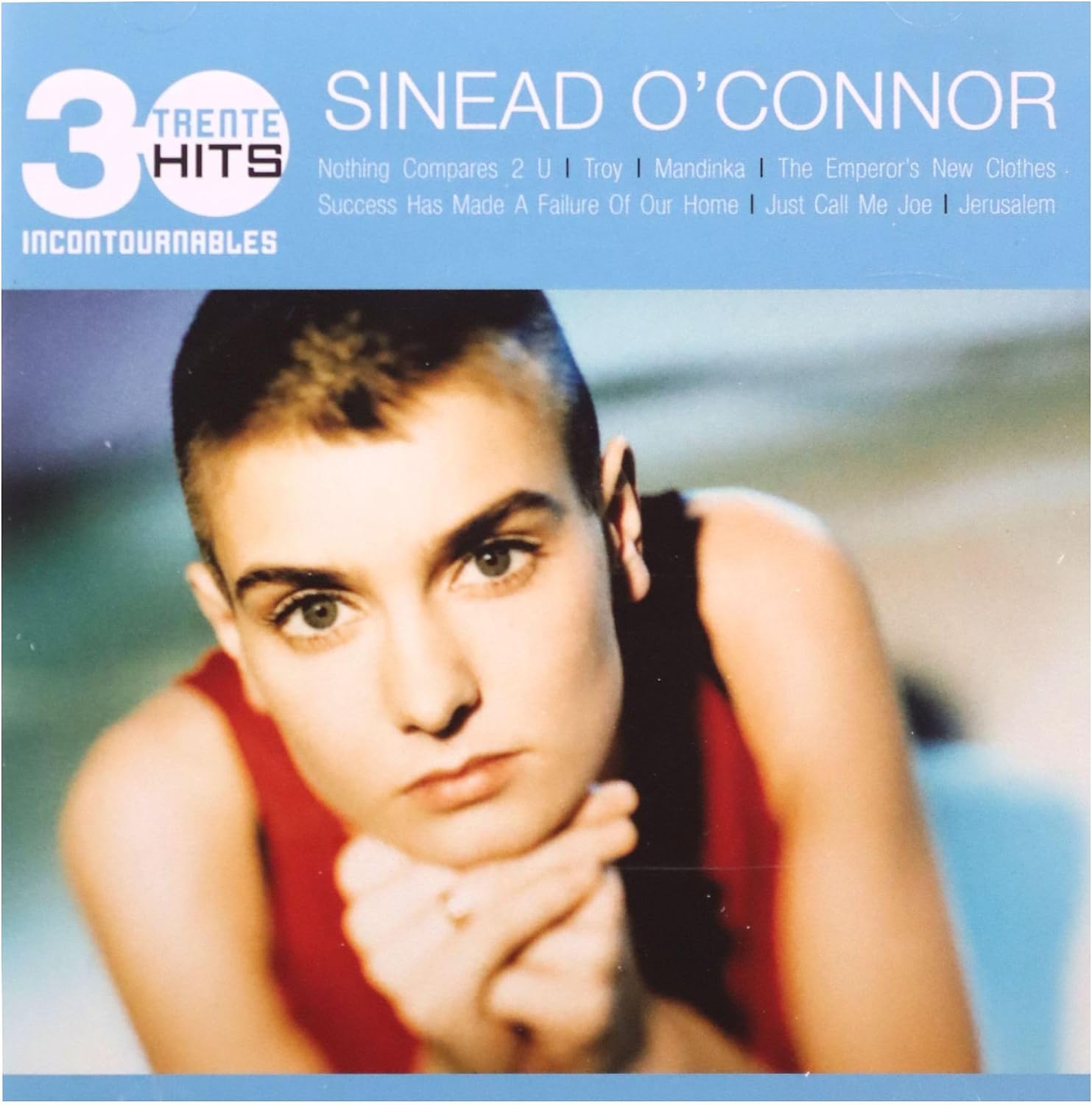
Sinéad O'Connor Greatest Hits: Essential Compilations, Key Tracks, and Listening Guide
The definitive central gateway to Sinéad O'Connor’s catalog is her official 1997 retrospective album, So Far... The Best of Sinéad O'Connor. Featuring chart-topping anthems like "Nothing Compares 2 U," iconic early singles such as "Man...
The definitive central gateway to Sinéad O'Connor’s catalog is her official 1997 retrospective album, So Far... The Best of Sinéad O'Connor. Featuring chart-topping anthems like "Nothing Compares 2 U," iconic early singles such as "Mandinka" and "Troy," and cinematic contributions like "You Made Me the Thief of Your Heart," it remains the premier physical and digital collection for exploring her artistic legacy.
Contents
Definitive Greatest Hits Compilations: An Overview
Navigating the discography of Irish singer-songwriter Sinéad O'Connor requires understanding how her work was curated across label transitions, soundtrack appearances, and thematic projects. While her studio albums represent distinct stylistic shifts—from raw alternative rock to traditional Irish folk and reggae—her compilation albums gather her most culturally resonant and commercially successful output into cohesive listening experiences.
So Far... The Best of Sinéad O'Connor (1997)
Released in November 1997 by Chrysalis Records, So Far... The Best of Sinéad O'Connor serves as the flagship compilation of her career. Spanning her first decade of major-label releases, the collection captures her rapid evolution from a fiercely independent 20-year-old alternative artist into a global superstar and vocal iconoclast.
The 16-track retrospective (17 on international pressings) gathers essential cuts from her first four studio albums:
- The Lion and the Cobra (1987): Includes the breakout rock single "Mandinka," the grand orchestral tragedy "Troy," and the funk-infused "I Want Your (Hands on Me)."
- I Do Not Want What I Haven't Got (1990): Features the worldwide number-one smash hit "Nothing Compares 2 U," alongside "The Emperor's New Clothes" and the tender acoustic ballad "Three Babies."
- Am I Not Your Girl? (1992): Highlights her big-band interpretation of big-screen standards, including "Success Has Made a Failure of Our Home."
- Universal Mother (1994): Incorporates the poignant synth-pop lullaby "Thank You for Hearing Me" and the hip-hop-influenced socio-political track "Famine."
Beyond album cuts, So Far... includes rare standalone tracks and soundtrack contributions that had previously been difficult to acquire on a single release. Most notable among these is "You Made Me the Thief of Your Heart," written by Bono, Gavin Friday, and Maurice Seezer for the soundtrack to Jim Sheridan’s 1993 film In the Name of the Father. Produced by Tim Simenon (Bomb the Bass), the song showcases O'Connor's extreme dynamic range—shifting from a whisper to a piercing belt—over atmospheric electronic percussion and traditional Irish instrumentation.
Collaborations (2005)
While So Far... highlights her primary solo singles, Collaborations (released in 2005 by EMI) illuminates another critical dimension of her career: her versatility as a guest vocalist across disparate genres. O'Connor was frequently sought after by legendary producers, rock bands, electronic pioneers, and traditional musicians.
This compilation collects major duet work, including:
- "Kingdom of Rain" (with The The): A poignant duet from Matt Johnson’s 1989 album Mind Bomb.
- "Haunted" (with Shane MacGowan): A tribute to punk icon Nancy Spungen, recorded with The Pogues' frontman.
- "Visions of You" (with Jah Wobble's Invaders of the Heart): A fusion of dub basslines, world music rhythms, and ethereal vocals.
- "Blood of Eden" (with Peter Gabriel): A sweeping art-rock duet from Gabriel's 1992 album Us.
- "Guide Me God" (with Ghostland): An electronic trance-inflected spiritual track showcasing her melismatic vocal phrasing.
Secondary and Budget Compilations
In addition to these flagship releases, several label-curated packages exist:
- She Who Dwells in the Secret Place of the Most High Shall Abide Under the Shadow of the Almighty (2003): A two-disc package combining unreleased studio tracks, covers (including ABBA’s "Chiquitita"), and a live concert recorded in Dublin.
- Icon (2012): A streamlined 11-track budget collection released as part of Universal Music Group’s Icon series, designed for casual listeners seeking her primary radio hits.
Essential Tracks: The Songs That Defined Her Career
To understand why Sinéad O'Connor’s greatest hits resonated so deeply across global audiences, one must examine the specific vocal technique, production aesthetics, and songwriting mechanisms of her seminal tracks.
- 1987: "Mandinka" / "Troy"
- Post-punk energy, searing strings, dynamic vocal range
- 1990: "Nothing Compares 2 U" / "The Emperor's New Clothes"
- Prince composition, sparse Soul II Soul drum beat, world-wide hit
- 1994: "You Made Me the Thief of Your Heart" / "Thank You for Hearing Me"
- Cinematic score elements, ambient synth textures, trip-hop beat
- 2000: "No Man's Woman"
- Turn-of-the-millennium pop/R&B production, anthem of autonomy
1. "Nothing Compares 2 U" (1990)
Originally written and recorded in 1985 by Prince for his side project The Family, "Nothing Compares 2 U" was transformed by O'Connor into one of the most famous vocal performances in modern pop history. Produced by O'Connor and Nellee Hooper, the arrangement strips away original synth-funk flourishes, replacing them with an understated drum loop (sampled from Soul II Soul’s "Fairplay"), subtle string arrangements, and a minimal synthesizer bed.
The minimalism places O'Connor's vocal delivery at the absolute center of the track. Utilizing stark dynamic contrast, she shifts effortlessly between head voice restraint and an emotionally raw, uninhibited belt in the chorus. The accompanying music video, directed by John Maybury and consisting almost entirely of a close-up shot of O'Connor’s face against a dark background, won Video of the Year at the 1990 MTV Video Music Awards, cementing the song as an iconic piece of 1990s culture.
2. "Mandinka" (1987)
As the second single from her debut studio album The Lion and the Cobra, "Mandinka" introduced O'Connor to international alternative rock radio. Built around a driving hard-rock guitar riff, aggressive bassline, and punchy 4/4 drums, the track demonstrated her affinity for post-punk arrangements.
Vocally, "Mandinka" showcases her distinct use of vocal breaks, shifting rapidly from guttural growls to crystalline soprano notes. Named after the West African ethnic group, the lyric reflects themes of personal autonomy, defiance, and spiritual awakening that would come to define her lifelong lyricism.
3. "Troy" (1987)
Clocking in at over six and a half minutes on The Lion and the Cobra, "Troy" is an epic, dramatic ballad built around an intricate acoustic guitar pattern and a 40-piece orchestral string section arranged by Philip Glass collaborator Fiachra Trench. The song contains no conventional pop rhythm section for its first several minutes, allowing the tension to build purely through vocal intensity and rising string crescendos.
Lyrically referencing the fall of ancient Troy as an allegory for romantic betrayal and maternal grief, O'Connor's vocal performance scales from a whispered intimacy to a fury that remains one of the most celebrated vocal climaxes in alternative rock history.
4. "The Emperor's New Clothes" (1990)
The second single from I Do Not Want What I Haven't Got, "The Emperor's New Clothes" features a jaunty, mid-tempo alt-rock rhythm anchored by live drumming from Karl Wallinger (World Party) and crisp rhythm guitars.
Lyrically, the song provides an autobiographical window into O'Connor's reaction to overnight fame, public scrutiny, motherhood, and her refusal to conform to music industry expectations. The famous opening lines—"It seems like mighty long time / Since I had a dream with any point to it"—set a candid tone that influenced a generation of 1990s singer-songwriters, including Alanis Morissette, Liz Phair, and Fiona Apple.
5. "You Made Me the Thief of Your Heart" (1994)
Commissioned for the film In the Name of the Father, this track remains one of O'Connor’s most haunting vocal deliveries. Produced by Tim Simenon, the song blends ambient soundscapes, traditional tin whistle, sweeping cellos, and a heavy, slow-tempo electronic drum beat.
O'Connor’s vocal line spans two octaves, utilizing traditional Irish sean-nós singing techniques, including microtonal ornamentation and un-vibrato sustained notes. The track earned a Golden Globe nomination for Best Original Song and stands out as a focal point of her late-1990s hits compilations.
6. "Thank You for Hearing Me" (1994)
The closing track of Universal Mother, "Thank You for Hearing Me," is built upon a repeating ambient synth loop and a subtle trance drum pulse. Built around a simple, litany-style lyric expressing gratitude and closure, the track demonstrates O'Connor's ability to create deep emotional resonance through repetition, minimalism, and gentle vocal layering.
Audio Formats and Collecting Guide: Vinyl, CD, and Streaming
For audiophiles, record collectors, and digital music listeners looking to experience Sinéad O'Connor’s greatest hits, selecting the correct release format impacts both sound quality and track availability.
| FORMAT | ADVANTAGES | CONSIDERATIONS |
|---|---|---|
| Vinyl (LP) | Full dynamic range, physical artworkHeavyweight 180g pressings available | Requires 2xLP for full track list; higher cost |
| Compact Disc (CD) | Original uncompressed 16-bit audioLow cost on secondary market | Includes original tracklists; plastic jewel case packaging |
| Digital Streaming | Lossless 24-bit audio availableInstant access to full back catalog | Track listing may vary by regional licensing rights |
Vinyl Record Pressings
Original 1997 vinyl pressings of So Far... The Best of Sinéad O'Connor were produced in limited quantities during the decline of vinyl manufacturing in the late 1990s, making original European Chrysalis pressings highly sought-after by collectors.
- 1997 Original Pressing: Issued as a single LP in some territories and double LP in others. The single-LP version truncated several track edits to fit side lengths.
- Modern 180g Remastered Reissues: Modern double-LP reissues have been remastered directly from original analog and digital master tapes. Pressed on 180-gram audiophile vinyl, these double-LP editions allow for wider groove spacing, preserving the full dynamic range of complex orchestral arrangements on tracks like "Troy" and the deep low-end frequencies of "You Made Me the Thief of Your Heart."
CD Releases
The standard CD issue of So Far... The Best of Sinéad O'Connor remains the standard physical digital master.
- Red Book CD Audio: Features uncompressed 16-bit/44.1kHz digital audio.
- International Tracklist Variations: Certain Japanese and North American pressings included subtle variations, such as the inclusion of her cover of Elton John’s "Sacrifice" or altered single edits of "I Want Your (Hands on Me)."
Lossless Digital Streaming
On digital streaming platforms (including Apple Music, Tidal, Amazon Music HD, and Qobuz), her greatest hits catalog is widely available in lossless high-resolution digital formats:
- Resolution: Mastered for iTunes and FLAC 24-bit/96kHz streams offer improved clarity in the upper register of her vocals, reducing harshness in sibilant passages.
- Dolby Atmos / Spatial Audio: Select tracks, including "Nothing Compares 2 U," have received spatial audio mixes, separating the vocal layer, string section, and drum loops into an expanded three-dimensional sound field.
Comparative Matrix of Essential Sinéad O'Connor Releases
The table below outlines the core attributes, formats, primary tracks, and historical context of Sinéad O'Connor’s principal compilations and essential studio releases containing her greatest hits.
| Release Title | Release Year | Album Type | Key Featured Tracks | Primary Genre / Style | Recommended Format |
|---|---|---|---|---|---|
| The Lion and the Cobra | 1987 | Studio Debut | "Mandinka," "Troy," "I Want Your (Hands on Me)" | Alternative Rock, Post-Punk | Vinyl / Hi-Res Digital |
| I Do Not Want What I Haven't Got | 1990 | Studio Album | "Nothing Compares 2 U," "The Emperor's New Clothes," "Three Babies" | Alternative Pop/Rock, Acoustic | 180g Vinyl / CD |
| Universal Mother | 1994 | Studio Album | "Thank You for Hearing Me," "Fire on Babylon," "Famine" | Alternative, Synth-Pop, Trip-Hop | CD / Digital Streaming |
| So Far... The Best of Sinéad O'Connor | 1997 | Official Greatest Hits | "Nothing Compares 2 U," "Mandinka," "Troy," "You Made Me the Thief of Your Heart" | Comprehensive Career Retrospective | 2xLP Vinyl / Hi-Res Digital |
| Collaborations | 2005 | Guest Duets Compilation | "Kingdom of Rain," "Haunted," "Blood of Eden," "Guide Me God" | Art Rock, World Music, Dub | CD / Digital Streaming |
| Icon | 2012 | Budget Hits Compilation | "Nothing Compares 2 U," "Mandinka," "The Emperor's New Clothes" | Highlights / Radio Cuts | Compact Disc |
Critical Legacy and Impact on Alternative Music
Sinéad O'Connor’s greatest hits represent more than a commercial record of successful singles; they document a structural shift in how female artists navigated the mainstream music industry in the late 1980s and early 1990s.
- Vocal Technique: Blended classical Irish sean-nós dynamics with aggressive post-punk belts and microtonal phrasing.
- Visual Identity: Shaved head and austere presentation challenged mainstream commercial marketing of female pop performers.
- Vocal Advocacy: Integrated explicit political commentary and social critique directly into alternative rock pop hits.
Breaking Commercial Pop Aesthetics
Prior to O'Connor’s arrival in 1987, female pop stars in mainstream American and European markets were largely pushed by record labels toward polished, highly stylized visual aesthetics and conventional dance-pop or soft-rock arrangements.
By shaving her head, wearing oversized leather jackets and combat boots, and demanding self-production credits on her albums, O'Connor dismantled industry expectations. The visual and sonorous intensity of hits like "Mandinka" proved that uncompromising alternative artists could achieve massive global commercial success without altering their identity.
Influence on 1990s Alternative Singer-Songwriters
The critical and commercial breakthrough of I Do Not Want What I Haven't Got paved the commercial runway for the 1990s alternative singer-songwriter movement. Her willingness to address taboo topics—including maternal trauma, child abuse, religious authoritarianism, and state hypocrisy—in songs like "Famine" and "Fire on Babylon" laid the foundation for subsequent alternative icons. Artists ranging from Alanis Morissette, Dolores O'Riordan (The Cranberries), and Tori Amos to contemporary musicians like Phoebe Bridgers and Olivia Rodrigo have cited O'Connor’s dynamic vocal control and raw lyricism as a foundational influence.
Vocal Technique and Innovations
Musicologists frequently highlight O'Connor’s unique synthesis of traditional Irish singing styles with modern rock vocals. Her use of:
- Sean-nós vocal ornamentation: Unaccompanied, highly decorative traditional singing characterized by subtle pitch bends and microtonal shifts (heard clearly on "Troy" and "You Made Me the Thief of Your Heart").
- Dynamic extremes: The ability to transition immediately from a delicate, airy whisper to a full-throated, raspy belt without transitional vocal cracks.
- Rhythmic flexibility: Singing intentionally behind or ahead of the beat on hip-hop-influenced tracks like "Famine" to create emotional urgency.
Frequently Asked Questions
What is the best Sinéad O'Connor compilation album for new listeners?
The definitive compilation for new listeners is So Far... The Best of Sinéad O'Connor (1997). It contains all her major breakthrough singles—including "Nothing Compares 2 U," "Mandinka," and "Troy"—alongside key soundtrack contributions like "You Made Me the Thief of Your Heart."
Did Prince write "Nothing Compares 2 U"?
Yes. Prince wrote and composed "Nothing Compares 2 U" in 1985 for his side-project group, The Family. However, Sinéad O'Connor recorded her iconic version in 1989 alongside producer Nellee Hooper, adding a minimalist drum track and string arrangement that turned the song into a global chart-topper in 1990.
Are Sinéad O'Connor’s greatest hits available on vinyl?
Yes. While original 1997 pressings of So Far... The Best of Sinéad O'Connor are rare collector items, modern remastered 180g double-LP editions are widely available through major music retailers and online record distributors.
What soundtrack songs are included in Sinéad O'Connor’s greatest hits?
Her most famous soundtrack contribution included on So Far... is "You Made Me the Thief of Your Heart," recorded for the 1993 film In the Name of the Father. Other compilations and expanded editions feature her work for films such as The Karate Kid Part II ("The Journey") and Gangs of New York ("Take My Hand").
How does Collaborations differ from So Far... The Best of Sinéad O'Connor?
While So Far... focuses primarily on her solo career singles and album highlights, the 2005 release Collaborations focuses exclusively on her guest duets and vocal features with other prominent artists, including Peter Gabriel, Massive Attack, Jah Wobble, and The Pogues' Shane MacGowan.
Recommendations for Listeners and Collectors
To build a thorough collection of Sinéad O'Connor’s essential work, choose the path that best matches your preferred listening environment:
- For Casual Listeners and Streaming Users: Start by streaming the standard remastered edition of So Far... The Best of Sinéad O'Connor in lossless 24-bit resolution. Pay specific attention to the dynamic mastering on her early tracks "Troy" and "Mandinka."
- For Vinyl Collectors: Target the 2xLP 180g audiophile reissue of So Far... The Best of Sinéad O'Connor. Avoid single-disc budget vinyl pressings, as cutting her 16-track compilation onto a single LP compresses dynamic range and weakens low-end response.
- For Deep Catalog Exploration: Once familiar with her hits compilation, explore her complete studio albums in chronological sequence, beginning with her 1987 debut The Lion and the Cobra and her 1990 masterpiece I Do Not Want What I Haven't Got, followed by her traditional Irish folk exploration Sean-Nós Nua (2002).
Image Gallery