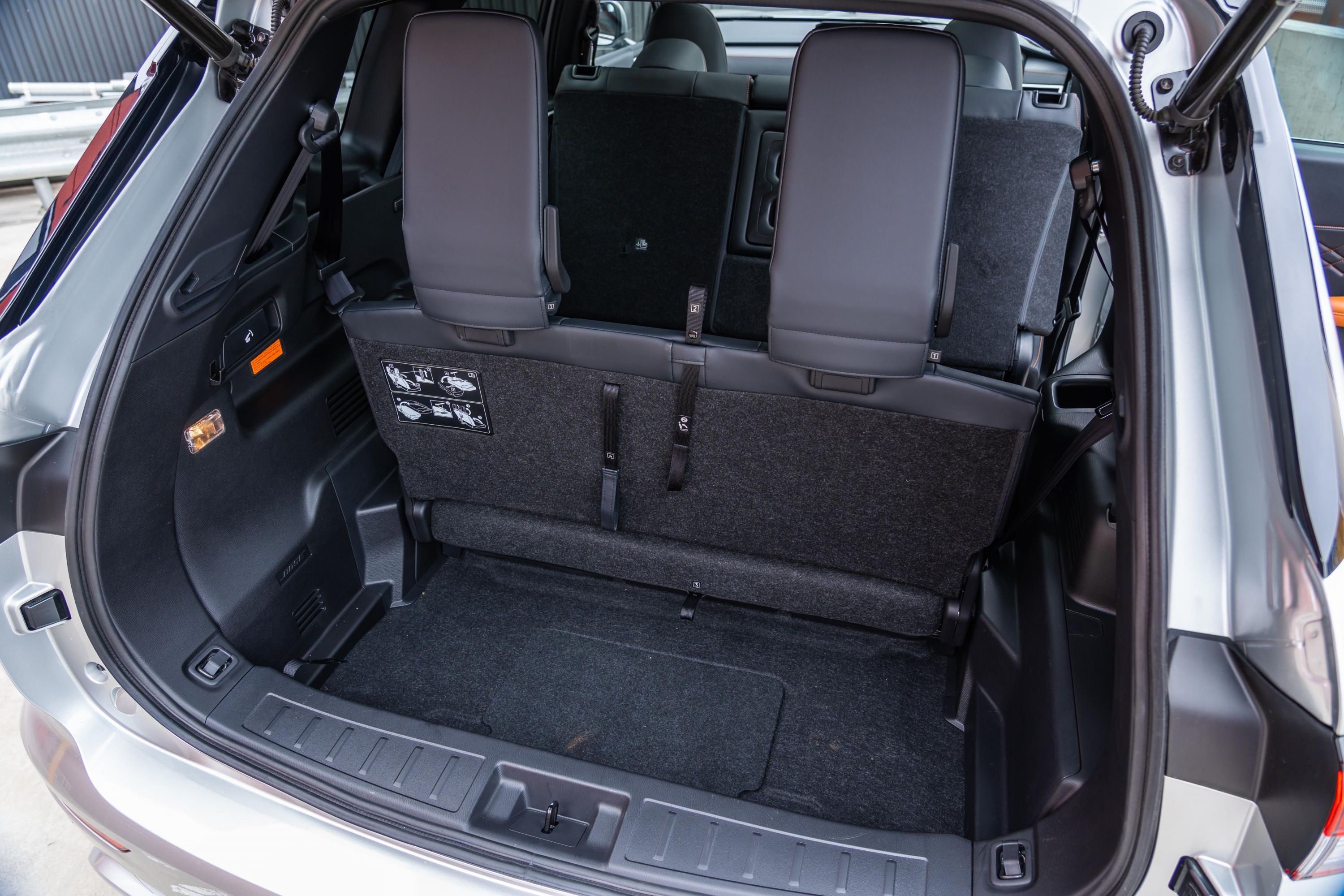
Mitsubishi Outlander Trunk Space Overview: Cargo Capacity, Dimensions, and Practical Utility
The Mitsubishi Outlander provides 11.7 cubic feet of trunk space behind the third row, expanding to 33.5 cubic feet with the third row folded flat, and reaching a maximum capacity of up to 79.7 cubic feet when both rear rows are stowed...
The Mitsubishi Outlander provides 11.7 cubic feet of trunk space behind the third row, expanding to 33.5 cubic feet with the third row folded flat, and reaching a maximum capacity of up to 79.7 cubic feet when both rear rows are stowed. These dimensions make it one of the most flexible compact three-row crossover SUVs on the market.
Contents
Whether packing for family road trips, managing daily grocery runs, or hauling bulky home improvement materials, understanding how cargo volume translates into real-world utility is essential. The Outlander—built on the common modular platform shared with the Nissan Rogue—balances seven-passenger seating with flexible storage configurations. This guide details the cargo dimensions, storage capabilities, mechanical differences between gas and plug-in hybrid (PHEV) variants, and how the Outlander stacks up against its compact SUV rivals.
Detailed Cargo Space Dimensions by Configuration
The Outlander’s storage capabilities shift dramatically depending on passenger count. Because it features standard three-row seating across most trims, the cabin transitions through three distinct cargo configurations.
- Full Passenger Mode (3 Rows Up): 11.7 cu. ft.
- 5-Passenger Utility Mode (Row 3 Down): 33.5 cu. ft.
- Maximum Cargo Hauler (Rows 2 & 3 Down): Up to 79.7 cu. ft.
1. Behind the Third Row (11.7 Cubic Feet)
With all seven seats occupied, available cargo room behind the 50/50-split third row measures 11.7 cubic feet (approximately 331 liters).
This space offers a narrow cargo depth of roughly 14 to 15 inches from the tailgate sill to the rear seatbacks. While vertical height remains generous, horizontal floor depth is limited. In practical terms, this volume fits:
- Two to three carry-on roller bags placed upright or stacked horizontally.
- A standard single umbrella stroller paired with a few soft grocery bags.
- Backpacks, sports duffels, or standard grocery totes.
For large families planning long-distance road trips with seven occupants, the space behind the third row will not accommodate full-size suitcases for everyone. In such cases, utilizing a roof cargo box or a hitch-mounted cargo tray becomes necessary.
2. Behind the Second Row (33.5 Cubic Feet)
Folding the third-row seats flat into the floor transforms the vehicle into a conventional two-row crossover, expanding cargo capacity to 33.5 cubic feet (949 liters) in standard gasoline models. In the Outlander PHEV, the packaging of the rear electric motor and onboard charger slightly trims this space to approximately 30.8 cubic feet.
This configuration represents the standard day-to-day setup for most owners. The cargo floor extends to roughly 37.5 inches in length and features a nearly flat loading surface. It easily accommodates:
- Four standard 28-inch checked suitcases along with daypacks.
- A full-size tandem stroller or bulky double jogger.
- Medium-to-large dog crates.
- Camping gear, including tents, coolers, and folding chairs for a weekend getaway.
3. Maximum Cargo Volume Behind the First Row (Up to 79.7 Cubic Feet)
Folding down both the second and third rows unlocks maximum hauling volume. Gasoline models equipped without a panoramic sunroof yield up to 79.7 cubic feet (2,257 liters) of total storage space. Models fitted with the panoramic glass sunroof or the PHEV powertrain deliver between 64.7 and 66.8 cubic feet due to altered roofline geometry and underfloor battery placement.
In this layout, the cargo floor extends beyond 67 inches in length, and sliding the front passenger seat forward allows for items up to 72 inches (6 feet) long to sit flat on the floor. The wide rear hatch opening provides sufficient clearance to load:
- Flat-pack furniture boxes (such as standard bookcases and desks).
- Bicycles with the front wheel removed.
- Major home appliances, including washing machines, compact dishwashers, and boxed 65-inch televisions.
- Multiple sets of golf bags, skis, or camping gear for extended excursions.
Physical Interior Dimensions and Measurements
Volume figures (measured in cubic feet) do not always convey how easy it is to fit oddly shaped objects. Physical tape measurements provide a clearer picture of real-world clearance.
- Cargo Floor Length to 3rd Row: ~15.2 inches (38.6 cm)
- Cargo Floor Length to 2nd Row: ~37.8 inches (96.0 cm)
- Cargo Floor Length to 1st Row: ~67.5 inches (171.5 cm)
- Trunk Width (Narrowest Point Between Wheel Arches): ~38.4 inches (97.5 cm)
- Trunk Width (Widest Point at Side Alcoves): ~51.2 inches (130.0 cm)
- Cargo Opening Height: ~31.8 inches (80.8 cm)
- Cargo Opening Width (Tailgate Aperture): ~42.5 inches (108.0 cm)
- Lift-Over Height (Ground to Floor): ~29.7 inches (75.4 cm)
The low lift-over height (under 30 inches) reduces the physical strain of loading heavy cargo such as luggage, bags of soil, or heavy toolboxes over the rear bumper.
Gas Model vs. Outlander PHEV: Cargo Differences
Buyers evaluating the conventional gas Outlander against the Outlander Plug-in Hybrid Electric Vehicle (PHEV) must account for specific packaging distinctions.
| Feature / Specification | Gasoline Outlander | Outlander PHEV |
|---|---|---|
| Behind 3rd Row | 11.7 cu. ft. | 11.7 cu. ft. |
| Behind 2nd Row | 33.5 cu. ft. | 30.8 cu. ft. |
| Behind 1st Row (Max) | Up to 79.7 cu. ft. | Up to 64.7 cu. ft. |
| Underfloor Storage Depth | Deep storage recess | Shallow / Dedicated |
| 120V AC Power Outlets | No (12V DC standard) | Yes (1,500W Inverter) |
Battery and Drivetrain Packaging
The Outlander PHEV houses a 20-kWh lithium-ion traction battery under the passenger compartment floor and a dedicated electric drive motor across the rear axle. Mitsubishi engineered the chassis to preserve the third-row seating fold-down mechanism, but the electrified running gear requires a slightly higher cargo floor height in the rear.
Underfloor Cavity and Power Utility
The gas model features a deeper underfloor storage cavity beneath the cargo tray behind the third row, ideal for concealing valuables, emergency kits, or the removable cargo shade.
The PHEV repurposes part of this underfloor recess to hold the Level 1/Level 2 portable charging cord and tire repair kit. However, upper trims of the PHEV offset this modest volume loss by including two 1,500-watt, 120-volt AC household power outlets (one in the second row, one in the rear cargo area). This feature enables owners to power outdoor appliances, power tools, camping equipment, or tailgating gear directly from the high-voltage hybrid battery.
Practical Cargo Features and Everyday Usability
Cargo utility depends on functional interior hardware just as much as raw cubic volume. Mitsubishi incorporates several ergonomic elements into the Outlander’s rear hold.
40/20/40 Split-Folding Second Row
Unlike many competitors that feature a basic 60/40 split-bench seat, the Outlander utilizes a 40/20/40 split configuration in the second row.
- The center section folds down independently to act as a wide armrest with cupholders, or as a pass-through for long, slender cargo such as snowboards, lumber, or fishing rods.
- This pass-through allows four passengers to sit comfortably in the outer seats while carrying extended items down the center spine of the vehicle, eliminating the need for an exterior roof rack in snowy conditions.
Third-Row Folding Operation
The third-row seats are designed to fold completely into the floor pan to yield a flat surface.
- Remove the third-row headrests and place them into the designated underfloor storage tray beneath the rear sill.
- Pull the quick-release straps mounted on the back of each third-row seatback.
- Push the backrests forward until they latch securely into the floor.
While the seats fold flat, returning them to an upright position requires a firm tug on the retrieval straps, which can require moderate effort from the rear bumper.
Tie-Downs, Lighting, and Hands-Free Access
- Tie-Down Anchors: Four heavy-duty metal tie-down points are anchored to the cargo floor corners, allowing you to strap down heavy items using cargo nets or ratchet straps.
- Bag Hooks: Molded hooks on the lateral interior panels prevent grocery bags from tipping and spilling items across the trunk during transit.
- Hands-Free Power Liftgate: Mid and upper trims (such as the SE, SEL, and Platinum Editions) include a foot-activated hands-free power tailgate. Kicking a foot beneath the center of the rear bumper opens the hatch, a practical touch when carrying armloads of supplies or luggage. The liftgate also features adjustable height programming to avoid striking low garage ceilings.
Outlander Cargo Space vs. Key Competitors
Although the Mitsubishi Outlander features three rows of seating, its exterior dimensions position it directly within the competitive compact crossover segment. Comparing its cargo capacity against two-row class leaders provides important context for prospective buyers.
| Vehicle Model | Behind Row 2 (cu. ft.) | Behind Row 1 (cu. ft.) | Standard 3rd Row? |
|---|---|---|---|
| Mitsubishi Outlander | 33.5 | 79.7 | Yes |
| Nissan Rogue | 31.6 – 36.5 | 74.1 | No |
| Honda CR-V | 36.3 – 39.3 | 76.5 | No |
| Toyota RAV4 | 37.5 – 37.6 | 69.8 | No |
| Subaru Forester | 26.9 – 29.6 | 69.1 – 74.4 | No |
| Hyundai Tucson | 38.7 | 74.8 – 80.3 | No |
Analysis of Competitive Trade-Offs
Versus Honda CR-V and Toyota RAV4
Two-row benchmark crossovers like the Honda CR-V and Toyota RAV4 deliver larger storage volumes behind the second row (36.3 to 39.3 cu. ft.) than the Outlander (33.5 cu. ft.). Because these competitors do not package a third-row seat under the load floor, their trunk floors sit lower, creating greater vertical depth for bulky gear. However, when maximum hauling capacity is required, the gasoline Outlander's 79.7 cubic feet matches or exceeds both vehicles, making it an exceptionally capable vehicle with the rear seats folded.
Versus Nissan Rogue
Sharing an underlying platform architecture, the Outlander and Nissan Rogue exhibit similar track widths and floor heights. The Rogue opts exclusively for a two-row format with an available multi-tier cargo shelf system (Divide-N-Hide). The Outlander sacrifices the tiered floor system to accommodate its standard fold-flat 50/50 third row, trading cargo compartment modularity for seven-passenger emergency seating flexibility.
Organizing and Maximizing the Outlander's Trunk
To extract the highest utility from the Outlander’s rear hold while preserving interior condition, owners should consider the following best practices:\n\n* Stow the Headrests Properly: The most common obstacle to achieving a fully flat load floor is failing to remove the third-row headrests. Stowing them in the designated foam insert beneath the cargo floor board prevents them from getting damaged or lost in the garage.
- Invest in an All-Weather Cargo Mat: The carpeting on the rear of the third-row seats is prone to collecting pet hair, dirt, and construction dust. A tri-fold, all-weather rubber cargo tray covers the floor across all configurations and features fold lines that move seamlessly as the third row is raised or lowered.
- Utilize the Side Cubbies: The indented storage wells located directly behind the wheel arches are designed to hold circular or unstable items. Place gallon milk jugs, windshield washer fluid, or small tool rolls in these pockets to prevent them from rolling across the flat floor during cornering.
- Respect Payload Limits: While the Outlander boasts up to 79.7 cubic feet of volume, cargo weight must not exceed the vehicle’s rated payload capacity (typically between 1,190 and 1,350 pounds, depending on equipment and drivetrain). When loading dense cargo—such as ceramic tile, dry concrete mix, or lumber—calculate the combined weight of passengers and freight to avoid overtaxing the rear suspension, brakes, and tires.
Frequently Asked Questions
Can the Mitsubishi Outlander fit a standard 4x8 sheet of plywood?
No. While the Outlander offers up to 79.7 cubic feet of cargo volume, the distance between the rear wheel arches measures approximately 38.4 inches, and the maximum length from the front seatbacks to the rear sill is roughly 67.5 inches. A 48-inch by 96-inch (4x8 foot) sheet of plywood is too wide to lie flat between the wheel wells and too long to fit inside with the rear liftgate closed. Transporting standard plywood sheets requires an approved roof rack system or an external utility trailer.
Can a dog fit comfortably in the trunk with the third row up?
Only small dog breeds can sit comfortably in the 11.7 cubic feet of space behind the upright third row. The floor depth of 15 inches does not allow medium or large dogs to stand, turn, or lie down comfortably. For medium-to-large canines, the third row should be folded flat, creating a 33.5-cubic-foot flat deck that easily accommodates large dog crates, pet beds, and travel restraints.
Does the third row fold completely flat?
Yes. The third-row seatbacks fold directly down into the rear floor well, creating a level loading surface continuous with the trunk sill. However, owners must first pull the release buttons to remove the oversized third-row headrests and store them in the underfloor compartment; otherwise, the seats cannot fold completely flat against the floor.
Where is the spare tire located on the Mitsubishi Outlander?
On gasoline-powered models equipped with a temporary spare, the spare tire is mounted externally underneath the rear chassis of the vehicle, forward of the rear bumper. This exterior underbody mounting preserves interior underfloor space for third-row seat folding. On Outlander PHEV models, the rear electric motor takes up this underbody space; consequently, the PHEV does not carry a physical spare tire and instead includes a 12-volt tire inflator compressor and liquid sealant kit stored in the underfloor cargo compartment.
What is the maximum towing capacity if trunk space is insufficient?
If cargo exceeds the Outlander’s internal dimensions, gasoline models feature a maximum towing capacity of up to 2,000 pounds when properly equipped with a factory-engineered Class II hitch receiver. Outlander PHEV models offer a towing capacity of 1,500 pounds. These capacities are sufficient for small open utility trailers, lightweight tear-drop campers, or hitch-mounted bike racks and cargo trays.
Practical Recommendation
When deciding whether the Mitsubishi Outlander’s trunk space fits your lifestyle, evaluate your typical passenger-to-cargo ratio:
- If you frequently transport six or seven passengers on highway trips, consider a midsize three-row SUV (such as the Honda Pilot or Subaru Ascent) or plan on installing a lockable, weatherproof rooftop cargo box. The Outlander's 11.7 cubic feet behind the third row is best reserved for quick errands, school gear, or groceries.
- If you primarily operate in five-passenger mode and need occasional third-row capability, the Outlander excels. Folding the third row yields 33.5 cubic feet of highly usable everyday cargo space, matched with a wide tailgate opening, convenient 40/20/40 ski pass-through, and a class-competitive 79.7 cubic feet of maximum load volume.
Image Gallery