Star Hunger Games Explained: Narrative Stardom, Tactics, and Lore Breakdown
In Suzanne Collins' The Hunger Games universe, "star" dynamics center on how public perception, celebrity status, and the engineered "Star-Crossed Lovers" persona were leveraged by Katniss Everdeen and Peeta Mellark to survive the Capi...
In Suzanne Collins' The Hunger Games universe, "star" dynamics center on how public perception, celebrity status, and the engineered "Star-Crossed Lovers" persona were leveraged by Katniss Everdeen and Peeta Mellark to survive the Capitol's arena. Beyond the original literary and cinematic narrative, the term also describes sci-fi battle royale gaming adaptations that mirror these survival mechanics.
Contents
The Core Concept: Stardom and Survival in Panem
The Hunger Games are far more than a physical battle to the death between twenty-four youth tributes. At its core, the annual event staged by the totalitarian nation of Panem is an engineered media spectacle designed to serve two primary functions: punishing the twelve districts for historical rebellion and providing high-stakes entertainment for the affluent Capitol population. Survival within the arena requires more than combat efficiency; it demands masterclass celebrity branding, media manipulation, and audience engagement.
Tributes entering the arena do not fight in a vacuum. The Capitol's Gamemakers construct a controlled ecosystem where audience favor directly translates to tactical, physical advantages. Wealthy Capitol citizens and institutional sponsors purchase real-time provisions—such as specialized medicines, high-calorie food, clean water, and tools—that are delivered straight into the arena via silver parachutes. A skilled combatant who fails to capture the interest or sympathy of the viewing public often dies of preventable injuries or resource exhaustion.
Understanding the "star" dynamic requires analyzing how tributes are transformed from doomed children into media icons long before they step onto the pedestal. Through pre-game parade floats, televised interviews with host Caesar Flickerman, and tailored training scores, the Capitol turns human suffering into public spectacle. For Katniss Everdeen and Peeta Mellark, navigating this public relations battleground became their most vital weapon.
The "Star-Crossed Lovers of District 12" Strategy
The defining strategic breakthrough of the 74th Hunger Games was the creation of the "Star-Crossed Lovers" narrative. During his broadcast interview with Caesar Flickerman prior to entering the arena, Peeta Mellark publicly confessed his long-standing romantic feelings for Katniss Everdeen. This revelation immediately reframed their trajectory from tragic, isolated victims into a compelling, romantic drama that captivated the Capitol audience.
- Tribute Selection (Reaping)
- Stylist Branding (Cinna's "Girl on Fire")
- Broadcast Interview (Peeta's Romantic Confession)
- Capitol Sponsorship & Sponsor Gift Flow
- Gamemaker Rule Modification (Two Victors Allowed)
This strategy, orchestrated in large part by their mentor Haymitch Abernathy and publicist Effie Trinket, altered the political and operational mechanics of the Games in several critical ways:
- Sponsor Monetization: The romantic narrative gave wealthy patrons a personal narrative to invest in. Capitalizing on romantic sympathy generated unprecedented financial backing for District 12, yielding essential supplies like burn ointment and broth during critical moments of survival.
- Media Pressure on Gamemakers: The overwhelming popularity of the pair forced Head Gamemaker Seneca Crane to adapt the game's structure to maintain peak viewership ratings, ultimately leading to the mid-game announcement that two tributes could win if they belonged to the same district.
- Tactical Shielding: By establishing themselves as a unit, Katniss and Peeta lowered the likelihood of Capitol citizens demanding their immediate elimination, forcing the arena's environment to accommodate their ongoing story arc.
While Katniss initially viewed Peeta's confession as a calculated betrayal designed to make her look vulnerable, she quickly recognized its pragmatic utility within the arena. To secure sponsor gifts necessary to keep Peeta alive after he sustained a severe leg injury from Career tribute Cato, Katniss actively leaned into the public romance, performing affection for the hidden cameras stationed throughout the arena.
Reclaiming Power Through "Star" Defiance
The pinnacle of the "star" narrative occurred during the climax of the 74th Hunger Games. Once Cato was eliminated, the Capitol abruptly revoked the rule change, attempting to force Katniss and Peeta into a bloody, dramatic duel for a single victor. The Gamemakers assumed that the instinct for self-preservation would triumph over the manufactured romance.
Instead, Katniss recognized the fundamental flaw in the Capitol's media strategy. The Capitol required a Victor to complete the narrative arc of the Games; a double suicide would deny the Capitol its triumph, destroy the entertainment value of the broadcast, and expose the regime's impotence to the watching districts. By producing poisonous Nightlock berries and preparing for simultaneous suicide, Katniss and Peeta forced Seneca Crane to intervene and declare them both Victors seconds before ingestion.
- Capitol Rule Revocation
- Katniss & Peeta Produce Nightlock Berries
- Threat of Total Narrative Failure
- Capitol Relents & Rescinds Order
- Dual Victors Declared
- Sparks Political Unrest Across Panem
This act of defiance fundamentally inverted the "star" concept. What began as a defensive media strategy to earn sponsor gifts transformed into an act of political subversion. Katniss became a symbol of resistance—the Mockingjay—demonstrating that the Capitol's media infrastructure could be turned against the regime itself.
Star Status as a Political Weapon: Capitol vs. Rebellion
Following the 74th Games, the concept of stardom shifted from individual arena survival to full-scale political propaganda between President Coriolanus Snow's regime and the underground rebellion based in District 13.
President Snow's Counter-Strategy
President Snow recognized that Katniss's berry stunt was read as an act of rebellion by the districts, rather than pure romantic desperation. To suppress uprising, Snow forced Katniss and Peeta to continue their act during the Victory Tour, threatening the lives of their families if they failed to convince the nation of their uncontainable love. When the tour failed to stem growing civil unrest, Snow announced the 75th Hunger Games (the Third Quarter Quell), which selected tributes exclusively from the existing pool of Victors.
By forcing established Capitol celebrities—such as Finnick Odair, Johanna Mason, and Beetee Latier—back into the arena, Snow sought to prove that even the nation's greatest "stars" were utterly powerless against the Capitol's authority.
District 13 and the "Propos"
When Katniss was extracted from the Quarter Quell arena by the rebel alliance, District 13's leadership, under President Alma Coin, immediately commodified her star power. Rather than relying solely on traditional military tactics, director Cressida and her film crew filmed Katniss in active combat zones across the districts. These propaganda shorts, termed "Propos," were broadcast illegally into Capitol channels.
The rebellion understood what the Capitol had taught them: in Panem, control over the narrative and the public's symbolic icons is as vital as physical territory. Katniss's star status served as the primary catalyst for unifying the disparate districts into a cohesive military force.
Sci-Fi Gaming Formats: "Star" Battle Royale Mechanics
Beyond the original narrative lore, "Star Hunger Games" frequently refers to custom survival game modes developed within sandbox and sci-fi gaming communities, such as Minecraft Survival Games, Star Citizen community events, and custom Star Wars battle royale maps. These gaming formats directly replicate the structural dynamics introduced in Collins' work.
In these virtual environments, player success depends on balancing resource management, environmental awareness, and arena dynamics:
- The Cornucopia Sprint: Games begin with all players arranged in a circle around a central cache of high-tier loot. Players must assess immediate risk: push into the center for powerful weapons or flee toward outer zones to gather basic supplies safely.
- Gamemaker Events: Server administrators or automated systems introduce artificial hazards—such as orbital strikes, border contractions, creature spawns, or severe weather—to force players into combat and prevent passive camping strategies.
- Spectator/Sponsor Systems: Advanced custom servers incorporate twitch integrations or spectator voting mechanics, allowing non-participants to vote on resource drops or environmental events that directly impact surviving players.
Comparative Analysis of Hunger Games Mechanics
The table below outlines how narrative mechanisms from the Hunger Games lore map to practical tactical execution within both the universe's lore and adapted gaming environments.
| Narrative Element | Lore Mechanism (Books & Films) | Tactical Purpose in Arena | Sci-Fi Gaming Adaptation |
|---|---|---|---|
| Stylist Branding | Pre-game parades, specialized outfits (Cinna's fire dresses). | Elevate public visibility to secure high-value financial sponsors. | Custom player skins, cosmetic unlocks, and leaderboard highlight reels. |
| Sponsor Parachutes | Real-time delivery of medical supplies, food, and specialized tools. | Sustain injured or starving tributes without leaving shelter. | Audience-voted supply drops, point-funded care packages, and Twitch integration. |
| Cornucopia Cache | Central horn filled with weapons, armor, food, and survival gear. | Force immediate high-stakes combat at game launch; reward aggression. | Central chest spawn zones featuring top-tier gear surrounded by open terrain. |
| Gamemaker Hazards | Tracker jacker nests, artificial forest fires, mutate releases. | Drive passive players toward conflict zones; control match pacing. | Shrinking play zones, radiation borders, boss mob spawns, and artillery strikes. |
| Media Propos | Broadcast propaganda engineered by District 13 and Capitol state TV. | Control public opinion, demoralize enemy forces, and inspire rebellion. | In-game global announcements, kill-feed broadcasts, and tournament streaming overlay systems. |
Common Misconceptions in Hunger Games Lore
1. Was Peeta's Love Strictly a Strategy?
A frequent misconception is that Peeta's romantic confession during the Caesar Flickerman interview was purely a manufactured lie devised by Haymitch. In reality, Peeta had been in love with Katniss since childhood. While Haymitch recognized the operational value of capitalizing on those genuine feelings for sponsor acquisition, Peeta's emotional transparency was authentic, whereas Katniss had to consciously perform her romantic responses to ensure their survival.
2. Did the Capitol Intend to Allow Two Victors?
Seneca Crane's mid-game announcement allowing two victors from the same district was never a structural policy shift; it was a desperate media play to boost sagging viewership ratings after several high-profile tributes died early. The Capitol fully intended to force a tragic betrayal at the end to reinforce its ultimate authority. Katniss's manipulation of the Nightlock berries exposed the vulnerability of this media strategy, directly leading to Crane's execution by President Snow.
3. Are Sponsor Gifts Distributed Equally?
Sponsor gifts are explicitly unequal. The pricing of items increases exponentially as the games progress, and items are auctioned based strictly on tribute demand and patron funding. A basic cup of broth late in the game can cost as much as an entire house in the Capitol, ensuring that only tributes with massive media popularity receive life-saving interventions.
Frequently Asked Questions
Why did Haymitch insist on keeping Katniss and Peeta together in the arena?
Haymitch recognized that their only path to surviving the Capitol's rigged system was to maximize public interest. Separated, they were just two under-equipped tributes from an impoverished district. Together as the "Star-Crossed Lovers," they commanded the majority of Capitol media attention, compelling sponsors to spend immense sums to keep them both alive.
What is the origin of the term "Nightlock" and why was it significant?
Nightlock is a lethal wild berry introduced in The Hunger Games. Eating just a few berries causes near-instant death. It became a central symbolic object when Katniss and Peeta threatened to consume them simultaneously, converting a toxic plant into an instrument of political defiance that outsmarted the Gamemakers.
How do sponsor systems work in modern Hunger Games-style video games?
In modern custom gaming servers, sponsor systems often use secondary viewer channels (such as live stream chats or spectator voting interfaces). Spectators spend channel points, in-game currency, or site credits to send surviving players health packs, ammo drops, or temporary buffs, directly mirroring the silver parachute mechanic from the books.
Why did President Snow execute Head Gamemaker Seneca Crane?
President Snow executed Seneca Crane because Crane allowed himself to be outmaneuvered by teenagers on live television. By permitting Katniss and Peeta both to survive rather than allowing them to commit suicide, Crane compromised the Capitol's image of absolute power and planted the seeds for district-wide rebellion.
How did Cinna's dress design influence the plot of Catching Fire?
In Catching Fire, Cinna altered Katniss's wedding dress—mandated by President Snow to promote the fake romance—so that when she spun, it burned away to reveal a gown resembling a black and white Mockingjay. This explicit act of artistic rebellion signaled to the nation that Katniss was the face of the uprising, directly contributing to Cinna's arrest and execution by the Peacekeepers.
Summary and Key Takeaways
Analyzing the "star" dynamics of The Hunger Games reveals that survival in Panem was never purely a function of physical strength or combat skill. It was an exercise in strategic communications, public perception management, and leveraging system mechanics against an authoritarian regime.
- Public Image as Survival: Tributes who successfully curated a compelling narrative secured the financial sponsorship required to survive injuries and starvation within the arena.
- The Power of Narrative: The "Star-Crossed Lovers" persona transformed District 12 from hopeless underdogs into media sensations, forcing rule changes that enabled dual victors.
- Symbolic Warfare: Katniss's ability to turn media stardom into political rebellion demonstrates how totalitarian media structures can be hijacked when public sympathy aligns with the oppressed.
- Gaming Legacy: The structural mechanics of Panem's arena—resource scarcity, sponsor drops, central caches, and environmental hazards—continue to form the core blueprint for modern battle royale and survival gaming formats.
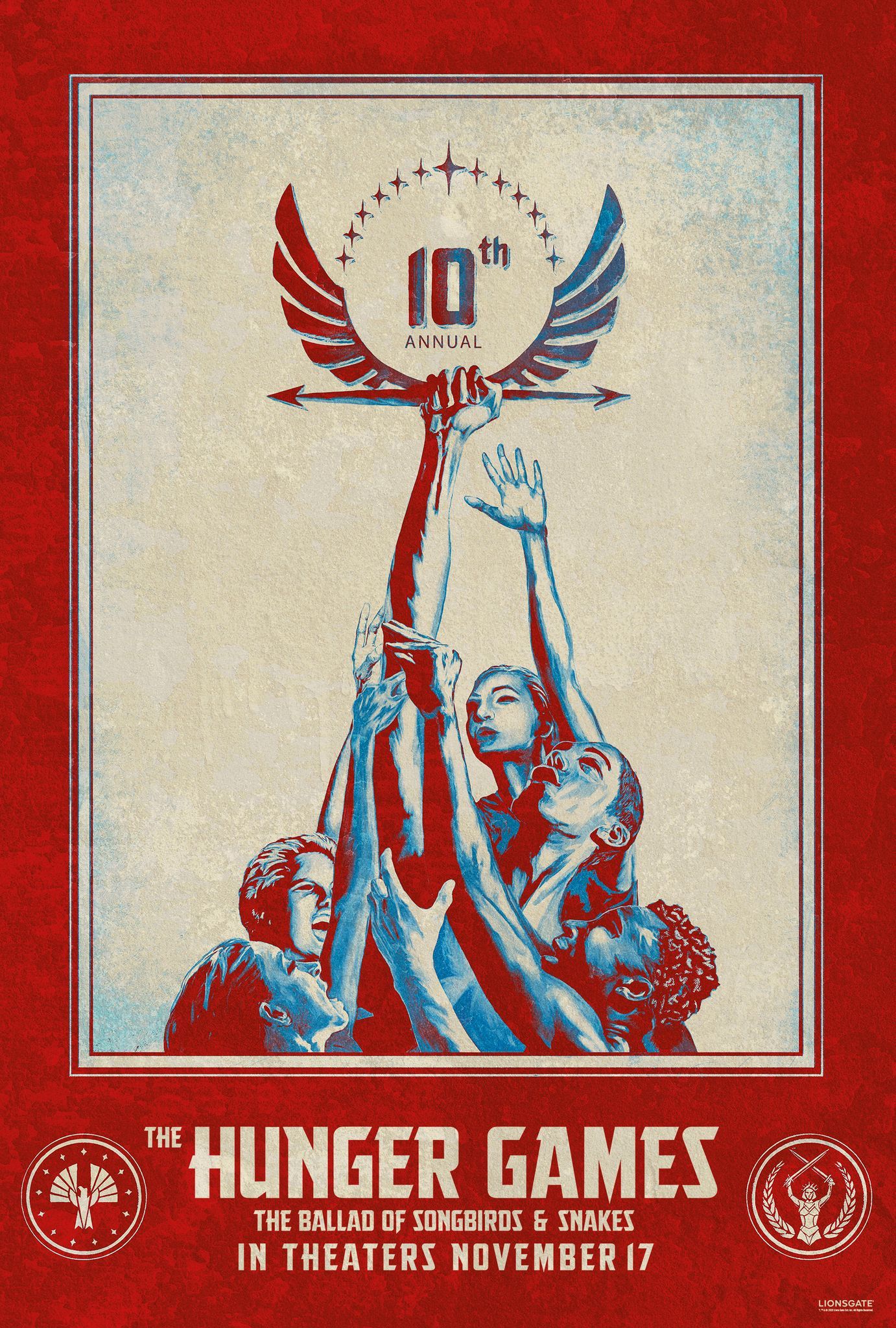
To further explore the lore and mechanical design of survival arenas, examine Suzanne Collins' prequel novel, The Ballad of Songbirds and Snakes, which details the historical origin of the Gamemaker apparatus, sponsor mechanics, and the initial transformation of the Hunger Games from a raw military execution into a polished media event.
Image Gallery