Shaun White’s Olympic Snowboarding Medals: A Career Technical Analysis
Shaun White won three Olympic gold medals in the Men’s Halfpipe snowboarding event during his illustrious career. His gold-medal performances occurred at the 2006 Turin Games, the 2010 Vancouver Games, and the 2018 PyeongChang Games. D...
Shaun White won three Olympic gold medals in the Men’s Halfpipe snowboarding event during his illustrious career. His gold-medal performances occurred at the 2006 Turin Games, the 2010 Vancouver Games, and the 2018 PyeongChang Games. Despite competing in five Winter Olympics, White’s podium finishes were exclusively gold, solidifying his status as the sport's most successful competitor.
Contents
Shaun White’s journey through the Winter Olympics is a narrative of technical progression, extreme physical resilience, and the evolution of snowboarding from a niche counter-culture activity to a mainstream Olympic powerhouse. As of 2026, White remains the gold standard for competitive halfpipe snowboarding, holding the record for the most Olympic gold medals by any snowboarder. To understand the magnitude of his achievements, one must analyze the specific technicalities of his winning runs and the context of the competition during each era.
The 2006 Turin Winter Olympics: The Arrival of the "Flying Tomato"
The 2006 Winter Olympics in Turin, Italy, served as Shaun White’s official introduction to the global stage. At just 19 years old, White had already established himself as a dominant force in the X Games, but the Olympics offered a different level of scrutiny and pressure.
In Turin, the halfpipe was significantly smaller than the modern "superpipe" standards. White’s performance was characterized by massive "amplitude"—the height a rider gains above the lip of the pipe. During his gold-medal run, White executed a series of technical maneuvers that were considered the pinnacle of the sport at the time, including his signature 1080s and high-flying airs.
He finished the event with a score of 46.8 out of 50, comfortably securing his first gold medal. This victory was instrumental in establishing his "Flying Tomato" persona, a nickname derived from his long red hair and explosive riding style. The 2006 Games also highlighted White’s ability to perform under pressure, as he had to navigate a difficult qualifying round before dominating the final.
The 2010 Vancouver Winter Olympics: Technical Dominance and the Double McTwist 1260
By the time the 2010 Vancouver Games arrived, the snowboarding world had undergone a technical revolution. The halfpipe had grown into a 22-foot "superpipe," allowing riders to generate more speed and airtime. Shaun White entered these games not just as the defending champion, but as an athlete who had spent millions of dollars on private training facilities—including a secluded pipe in Silverton, Colorado—to develop tricks that his competitors couldn't replicate.
The 2010 performance is often cited by historians as the most dominant display in Olympic snowboarding history. White had already secured the gold medal based on his first run in the finals. However, in his second "victory lap" run, he chose to unveil the Double McTwist 1260, a trick he famously dubbed "The Tomahawk."
This maneuver involved two flips while rotating 3.5 times (1260 degrees). At the time, it was arguably the most dangerous and difficult trick ever landed in competition. White’s score of 48.4 remains one of the highest in Olympic history, emphasizing the gap between him and the rest of the field in 2010.
The 2014 Sochi Gap: Analysis of the Fourth-Place Finish
The 2014 Sochi Winter Olympics represented the first major setback in White’s Olympic career. He famously withdrew from the Slopestyle event—which was making its Olympic debut—to focus entirely on the Halfpipe. However, the conditions in Sochi were problematic. The halfpipe was criticized by many athletes for being "mushy" and poorly shaped due to warm weather, which hindered the riders' ability to maintain speed.
White finished fourth, missing the podium entirely. The gold medal went to Iouri Podladtchikov, who successfully landed the "Yolo Flip" (a Cab double cork 1440). This event marked a shift in the sport; it proved that the field had caught up to White’s technical difficulty. The Sochi results forced White to undergo a period of soul-searching and physical rebuilding, as he faced questions about whether his era of dominance had ended.
The 2018 PyeongChang Winter Olympics: The Ultimate Redemption
The 2018 Games in South Korea provided the stage for what many consider the greatest comeback in action sports history. At 31, White was the veteran of the field, facing off against younger superstars like Ayumu Hirano and Scotty James. Just months before the games, White had suffered a horrific crash in New Zealand that required 62 stitches in his face and threatened his career.
The final in PyeongChang was a high-stakes technical duel. Ayumu Hirano had taken the lead with a run that included back-to-back 1440s. White, trailing going into his final run, knew he had to perform the most difficult sequence of his life to reclaim the gold.
White’s final run was a masterclass in precision:
- Frontside Double Cork 1440
- Cab Double Cork 1440 (back-to-back)
- Frontside 540
- Double McTwist 1260
- Frontside 1260
He landed the run perfectly, earning a score of 97.75. This third gold medal made him the first snowboarder to win three golds and the first American to win gold in three different Winter Olympics.
The 2022 Beijing Winter Olympics: The Final Chapter
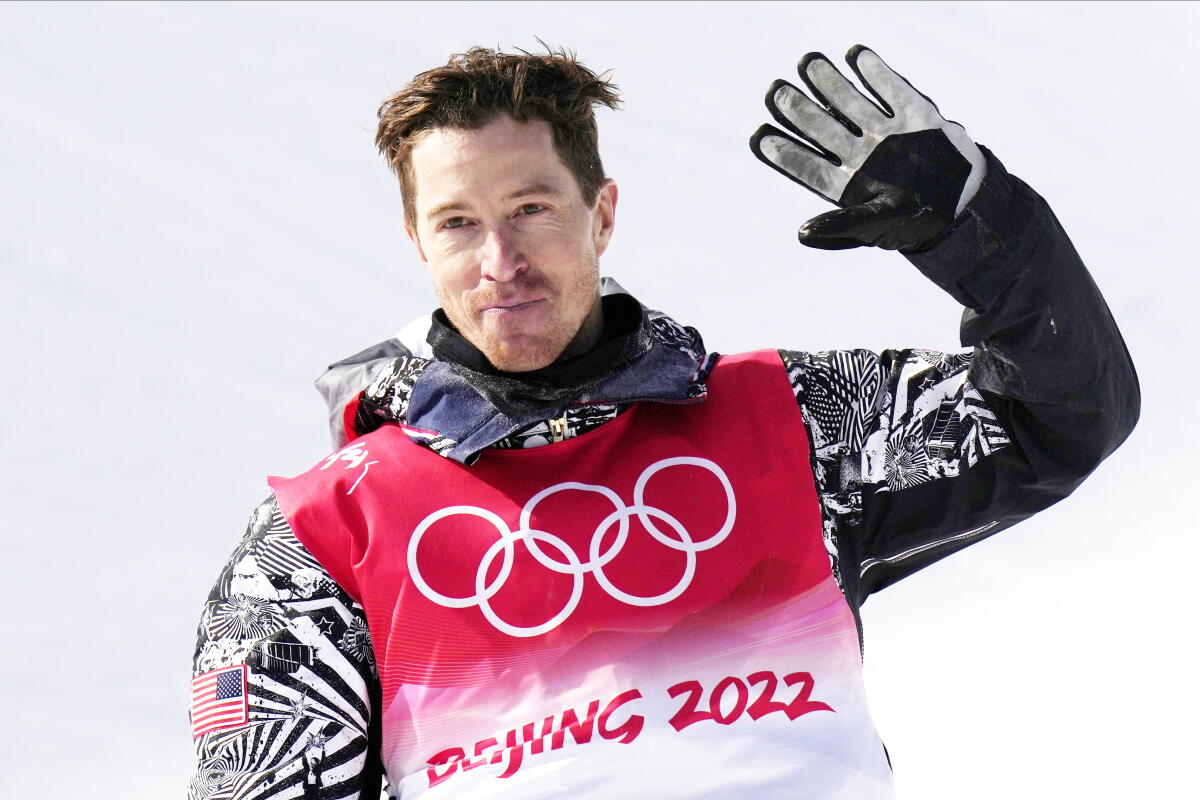
Shaun White’s final Olympic appearance occurred at the 2022 Beijing Games. At age 35, he was competing against a generation of riders who had grown up idolizing him. While White showed flashes of his legendary form, qualifying for the finals and putting together a strong technical performance, he ultimately finished in fourth place.
Following his final run, White announced his retirement from competitive snowboarding. Although he did not add to his medal count in Beijing, his presence underscored his longevity in a sport that typically favors teenagers and those in their early 20s.
Summary of Shaun White’s Olympic Medal Record
The following table summarizes Shaun White’s performance across all five of his Olympic appearances.
| Olympic Year | Location | Discipline | Result/Medal | Top Score | Key Technical Milestone |
|---|---|---|---|---|---|
| 2006 | Turin, Italy | Halfpipe | Gold | 46.8 | First Olympic Gold; dominant amplitude. |
| 2010 | Vancouver, Canada | Halfpipe | Gold | 48.4 | Landed the Double McTwist 1260 (The Tomahawk). |
| 2014 | Sochi, Russia | Halfpipe | 4th Place | 90.25 | Challenging course conditions; end of win streak. |
| 2018 | PyeongChang, South Korea | Halfpipe | Gold | 97.75 | Back-to-back 1440s; 100th Winter Gold for Team USA. |
| 2022 | Beijing, China | Halfpipe | 4th Place | 85.00 | Final competitive appearance and retirement. |
Technical Evolution: How White’s Medals Changed the Sport
Shaun White’s quest for Olympic medals directly drove the technical progression of snowboarding. In 2006, the focus was on 1080-degree rotations. By 2018, the standard for a gold medal required multiple 1440-degree rotations (four full spins in the air) performed consecutively.
White’s impact was not just in the tricks he landed, but in how he approached the sport as a professional athlete. He was one of the first to utilize private training facilities, airbags for practicing dangerous maneuvers safely, and a dedicated team of coaches and physiotherapists. This "high-performance" model has since been adopted by national teams worldwide, including the powerhouse programs of Japan and Australia.
Frequently Asked Questions
How many total Olympic medals does Shaun White have?
Shaun White has a total of three Olympic medals, all of which are gold. He earned them in the Men’s Halfpipe event at the 2006 (Turin), 2010 (Vancouver), and 2018 (PyeongChang) Winter Olympics. He did not win any silver or bronze medals during his Olympic career.
Why didn't Shaun White win a medal in the 2014 Sochi Olympics?
Several factors contributed to White’s fourth-place finish in Sochi. The halfpipe was in poor condition due to high temperatures, making it difficult for riders to maintain the speed necessary for high-amplitude tricks. Additionally, Iouri Podladtchikov and other competitors successfully landed more advanced technical tricks, such as the Cab double cork 1440, which White struggled to execute cleanly during that specific final.
What was Shaun White’s highest-ever Olympic score?
White’s highest Olympic score was a 97.75, achieved during his third and final run at the 2018 PyeongChang Winter Olympics. This score was awarded after he landed back-to-back 1440s, a feat that secured his third gold medal.
Did Shaun White compete in Slopestyle at the Olympics?
While White is primarily known for the Halfpipe, he did attempt to compete in Slopestyle. He qualified for the inaugural Slopestyle event at the 2014 Sochi Games but famously withdrew just before the competition began to focus on the Halfpipe, citing concerns over the safety and design of the Slopestyle course.
Has anyone beaten Shaun White’s Olympic gold medal record in snowboarding?
As of 2026, no other snowboarder has surpassed Shaun White’s record of three Olympic gold medals. Chloe Kim and Jamie Anderson have both won two gold medals, but White remains the only individual with three in the sport of snowboarding.
Legacy and Next Actions for Fans
Shaun White’s three gold medals represent more than just athletic hardware; they mark the milestones of a career that spanned two decades and transformed snowboarding into a premier Olympic event. For those looking to delve deeper into his legacy, viewing the official Olympic archives for the 2010 and 2018 finals provides the best technical insight into how his riding evolved.
If you are interested in the future of the sport, following the International Ski and Snowboard Federation (FIS) or Team USA Snowboarding will provide updates on the new generation of athletes currently attempting to break White’s long-standing records in the lead-up to the next Winter Games.
Image Gallery