Better Business Bureau Review of Colonial Penn Life Insurance: A 2026 Consumer Overview
Colonial Penn Life Insurance currently maintains an A+ rating from the Better Business Bureau (BBB), reflecting the company's responsiveness to consumer inquiries and its adherence to BBB accreditation standards. While the letter grade...
Colonial Penn Life Insurance currently maintains an A+ rating from the Better Business Bureau (BBB), reflecting the company's responsiveness to consumer inquiries and its adherence to BBB accreditation standards. While the letter grade remains high, consumer reviews often highlight complexities regarding the "unit" pricing model and the two-year graded death benefit period common in their guaranteed acceptance policies.
Contents
For over 50 years, Colonial Penn has been a household name in the insurance industry, primarily due to its aggressive television marketing campaigns featuring the "995 Plan." As of 2026, the company continues to operate as a subsidiary of CNO Financial Group, focusing heavily on the senior market (individuals aged 50 to 85). When consumers search for "bbb org colonial penn life insurance overview," they are typically looking for an objective assessment of the company’s reliability, the frequency of complaints, and how the insurer handles disputes.
This comprehensive overview analyzes Colonial Penn’s standing with the BBB, dissects the nuances of their policy offerings, and provides the technical context necessary to determine if their products align with your financial goals.
The Distinction Between BBB Ratings and Consumer Reviews
To understand the Colonial Penn profile on the Better Business Bureau website, it is essential to distinguish between the BBB Letter Grade and the Customer Star Rating. These two metrics measure entirely different aspects of a business's operations.
The BBB Letter Grade (A+)
The A+ rating assigned to Colonial Penn (listed under its parent company, CNO Financial Group, or its specific corporate entities) is a grade determined by the BBB’s internal rubric. This grade is based on:
- Response to Complaints: How quickly and effectively the company responds to formal complaints filed through the BBB.
- Complaint Volume: The number of complaints relative to the size of the business.
- Transparency: The company’s willingness to provide information about its ownership and business practices.
- Licensing: Verification that the company maintains the required professional and legal licenses to operate.
An A+ rating indicates that Colonial Penn has a proven track record of addressing the issues raised by consumers through the BBB’s mediation process.
The Customer Star Rating
In contrast, the customer star rating on the BBB website is often significantly lower than the letter grade. This is common for large insurance providers. As of 2026, Colonial Penn’s consumer rating typically hovers between 1.2 and 1.5 out of 5 stars. This discrepancy exists because consumers rarely visit the BBB to leave a positive review for an insurance company; instead, the platform serves as a repository for grievances. Most negative reviews center on the "waiting period" for benefits and the limited amount of coverage provided by a single unit of insurance.
Analysis of Common BBB Complaints
A deep dive into the formal complaints filed against Colonial Penn reveals three recurring themes. Understanding these issues can help prospective policyholders avoid the "traps" that lead others to file grievances.
1. The Two-Year Graded Death Benefit
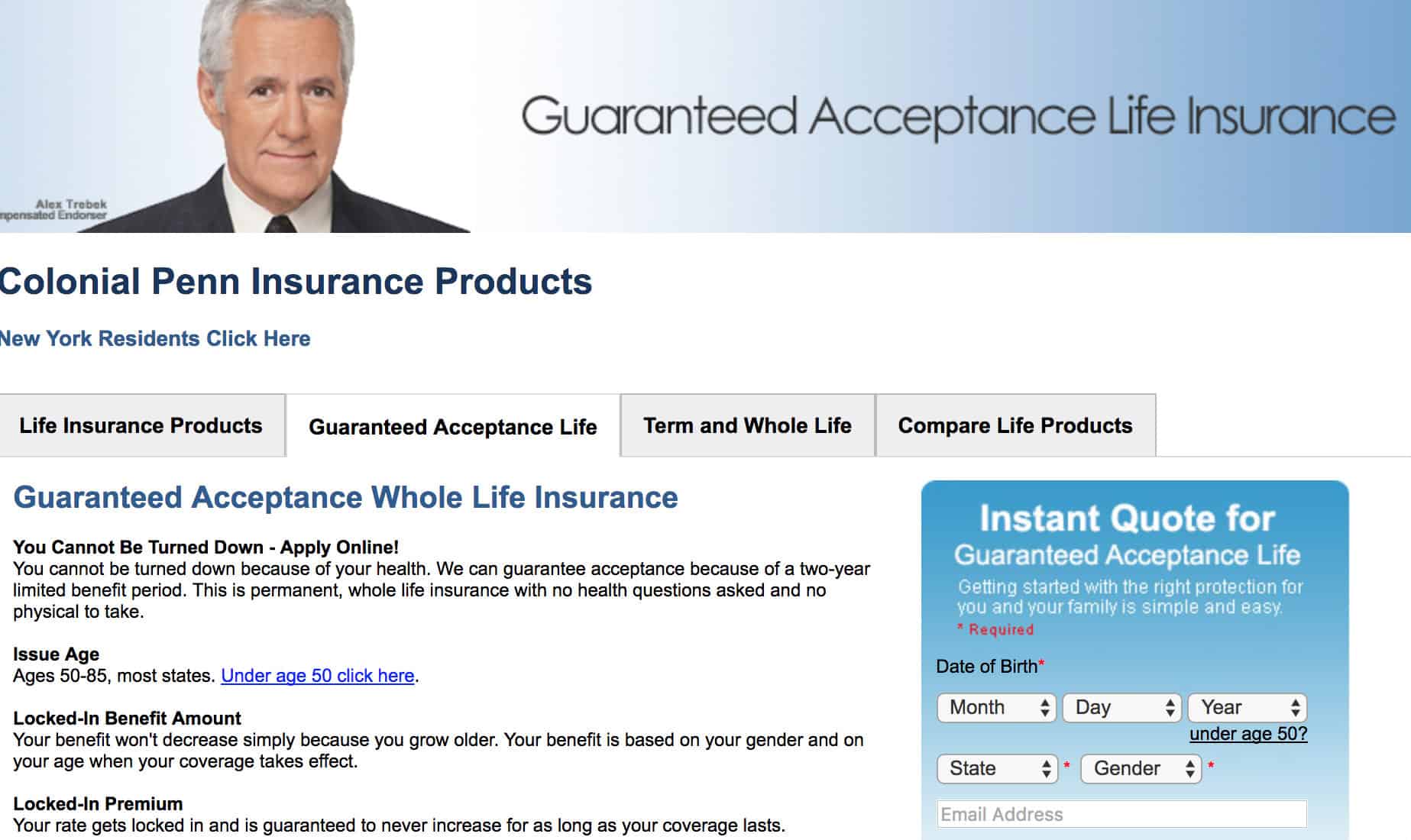
The most frequent source of frustration reported to the BBB involves the two-year waiting period. Colonial Penn’s primary product is "Guaranteed Acceptance Life Insurance." Because there is no medical exam and no health questions, the company offsets its risk by implementing a graded death benefit.
If the insured individual dies within the first two years of the policy from natural causes (not an accident), the beneficiaries do not receive the full face value of the policy. Instead, they receive the total premiums paid plus a small percentage of interest (usually 7% to 10%). Complaints often arise when family members are unaware of this clause, expecting a full payout during a time of grief.
2. The "Unit" Pricing Confusion
Colonial Penn’s marketing focuses on a price point of $9.95 per unit. However, a "unit" is not a fixed amount of insurance. The value of a unit decreases as the applicant's age increases.
- A 50-year-old male might get $1,500 of coverage for one unit.
- An 80-year-old male might only get $400 of coverage for the same $9.95.
Many BBB complaints stem from consumers who realized—after paying premiums for several years—that their total coverage amount is insufficient to cover even basic funeral costs.
3. Claim Processing Delays
Some consumers report difficulties during the claims process, citing excessive requests for documentation or slow communication from adjusters. While the BBB records show that Colonial Penn eventually resolves most of these claims, the initial administrative friction is a significant pain point for beneficiaries.
Colonial Penn Product Specifications and Comparisons
To provide a clearer picture of what Colonial Penn offers, the following table compares their flagship Guaranteed Acceptance plan against standard industry alternatives for seniors as of 2026.
| Feature | Colonial Penn (Guaranteed Acceptance) | Traditional Whole Life Insurance | Final Expense (Simplified Issue) |
|---|---|---|---|
| Medical Exam | None | Required | Not Required (Health Qs Only) |
| Acceptance | Guaranteed (Ages 50-85) | Based on Health | Based on Health History |
| Waiting Period | 2-Year Graded Benefit | Immediate | Immediate (usually) |
| Pricing Model | Unit-based ($9.95/unit) | Level Premium per $1k | Level Premium per $1k |
| Max Coverage | Generally Low (Under $25k) | Very High ($1M+) | Moderate ($5k - $50k) |
| Cash Value | Yes (Builds slowly) | Yes | Yes |
The Mechanics of the $9.95 Unit System
When reviewing Colonial Penn through the lens of a BBB inquiry, it is vital to understand the math behind the marketing. Because the price is locked at $9.95, the variable is the death benefit.
In 2026, the cost of a standard funeral in the United States averages between $8,000 and $12,000. To achieve this level of coverage through Colonial Penn at age 75, an individual might need to purchase 10 to 15 units, bringing the monthly cost closer to $100–$150. This is a critical detail often overlooked by consumers who see the "$9.95" figure and assume it provides comprehensive protection.
The BBB often suggests that consumers compare the "cost per thousand" ($/1000) of coverage. When calculated this way, Colonial Penn’s guaranteed acceptance product is often more expensive than a "simplified issue" policy from a competitor, provided the applicant can answer "no" to a few basic health questions.
Assessing Financial Strength and Stability
While the BBB evaluates customer service, financial rating agencies evaluate a company’s ability to pay its claims. As of 2026, Colonial Penn continues to hold strong ratings from major independent agencies:
- A.M. Best: Generally rated A (Excellent) or A- (Excellent). This indicates a stable financial outlook and a high capacity to meet ongoing insurance obligations.
- Standard & Poor’s (S&P): Often maintains a rating in the "A" range, signifying strong financial security.
For a consumer, these ratings are just as important as a BBB profile. They ensure that the company will actually have the funds to pay out a death benefit 10, 20, or 30 years from now. You can verify these current ratings through the A.M. Best website.
Is Colonial Penn Right for You?
Based on an analysis of BBB data and policy structures, Colonial Penn is most suitable for a specific niche of the population.
Who Should Consider It:
- Individuals with Terminal or Chronic Illness: If you have been denied coverage elsewhere due to severe health issues, a guaranteed acceptance policy is one of the few ways to secure some form of life insurance.
- Those Seeking Small Policies: If you only need a very small amount of coverage to supplement existing savings.
Who Should Look Elsewhere:
- Healthy Seniors: If you are in relatively good health, you can almost certainly get more coverage for less money by choosing a policy that requires health questions (simplified issue).
- Individuals Needing Immediate Coverage: If you have an immediate need for the full death benefit to be active, the two-year graded benefit makes Colonial Penn a poor choice.
Frequently Asked Questions
What is the Colonial Penn BBB rating for 2026?
Colonial Penn, through its parent organization CNO Financial Group, maintains an A+ rating with the Better Business Bureau. This rating signifies that the company adheres to BBB standards for trust and actively works to resolve consumer complaints. However, its customer review score is significantly lower, reflecting common dissatisfaction with the graded death benefit and unit pricing.
How do I file a complaint against Colonial Penn?
To file a formal complaint, you can visit the BBB website and search for "Colonial Penn Life Insurance Company." You will need to provide your policy number, a clear description of the issue (e.g., billing error, claim denial), and your desired resolution. The BBB will then forward this to the company for a response.
Does Colonial Penn pay out claims?
Yes, Colonial Penn is a legitimate, multi-billion dollar insurance company that pays out thousands of claims annually. Most disputes regarding payouts are not about the company's "willingness" to pay, but rather the "amount" paid out if the death occurred within the first two years of the policy’s life.
What happens if I stop paying my premiums?
Colonial Penn whole life policies, including the guaranteed acceptance plan, do build a small amount of cash value over time. If you stop paying premiums, you may be able to use the accumulated cash value to keep the policy in force for a limited time (extended term insurance) or receive a reduced paid-up policy. If no cash value exists, the policy will lapse, and coverage will end.
Can I cancel my Colonial Penn policy and get my money back?
Colonial Penn offers a "30-day right to examine" period. If you cancel within the first 30 days of receiving your policy, you are entitled to a full refund of any premiums paid. After 30 days, you can cancel at any time, but you will generally not receive a refund of premiums already paid, as those funds were used to provide coverage during that period.
Practical Recommendations
Before committing to a Colonial Penn policy, take the following steps to ensure you are making an informed decision:
- Request a "Cost per $1,000" Quote: Ask the representative exactly how much coverage one unit provides for your specific age and gender. Then, divide the monthly premium by the coverage amount to compare it with other insurers.
- Verify the Waiting Period: Confirm the exact terms of the graded death benefit. Ensure your beneficiaries understand that the full face value is not available for the first 24 months.
- Check for "Simplified Issue" Eligibility: Before opting for "Guaranteed Acceptance," apply for a "Simplified Issue" policy. These require no medical exam—only a few health questions—and often provide immediate full coverage at a lower rate.
- Consult the NAIC Map: Use the National Association of Insurance Commissioners (NAIC) Consumer Insurance Search Tool to look up the "Complaint Index" for Colonial Penn in your specific state. This provides a more statistical view of complaints compared to the qualitative view of the BBB.
Image Gallery