The History of the Parade Car: Evolution, Engineering, and Ceremony
The history of the parade car tracks the intersection of automotive engineering, statecraft, and public spectacle, evolving from modified early motor carriages into highly specialized, armored limousines designed to display dignitaries...
The history of the parade car tracks the intersection of automotive engineering, statecraft, and public spectacle, evolving from modified early motor carriages into highly specialized, armored limousines designed to display dignitaries safely while maximizing public visibility.
Contents
The Dawn of Motoring and State Transport
In the late 19th and early 20th centuries, public processions relied on horse-drawn carriages, a tradition preserved for centuries by monarchies and heads of state. The introduction of the internal combustion engine challenged this dynamic. Early motor vehicles were viewed with skepticism by conservative royal courts and government officials, who doubted their reliability, comfort, and dignified presentation. However, as mechanical dependability improved, the advantages of the automobile became undeniable.
Early parade cars were not purpose-built machines; rather, they were standard luxury vehicles—often open-top phaetons or touring cars—selected for their high-end coachwork and smooth ride. Manufacturers such as Mercedes-Benz, Rolls-Royce, and Packard supplied chassis that coachbuilders customized with open configurations. These designs prioritized visibility, allowing crowds to clearly see monarchs, presidents, and military generals.
The transition from horses to horsepower required shifts in crowd control and route planning. Motorized vehicles moved at higher and less predictable speeds than horses, necessitating cleared routes and security details. Yet, the core function remained unchanged: projecting power, accessibility, and national prestige through a moving stage.
The Interwar Period and Bespoke State Coachwork
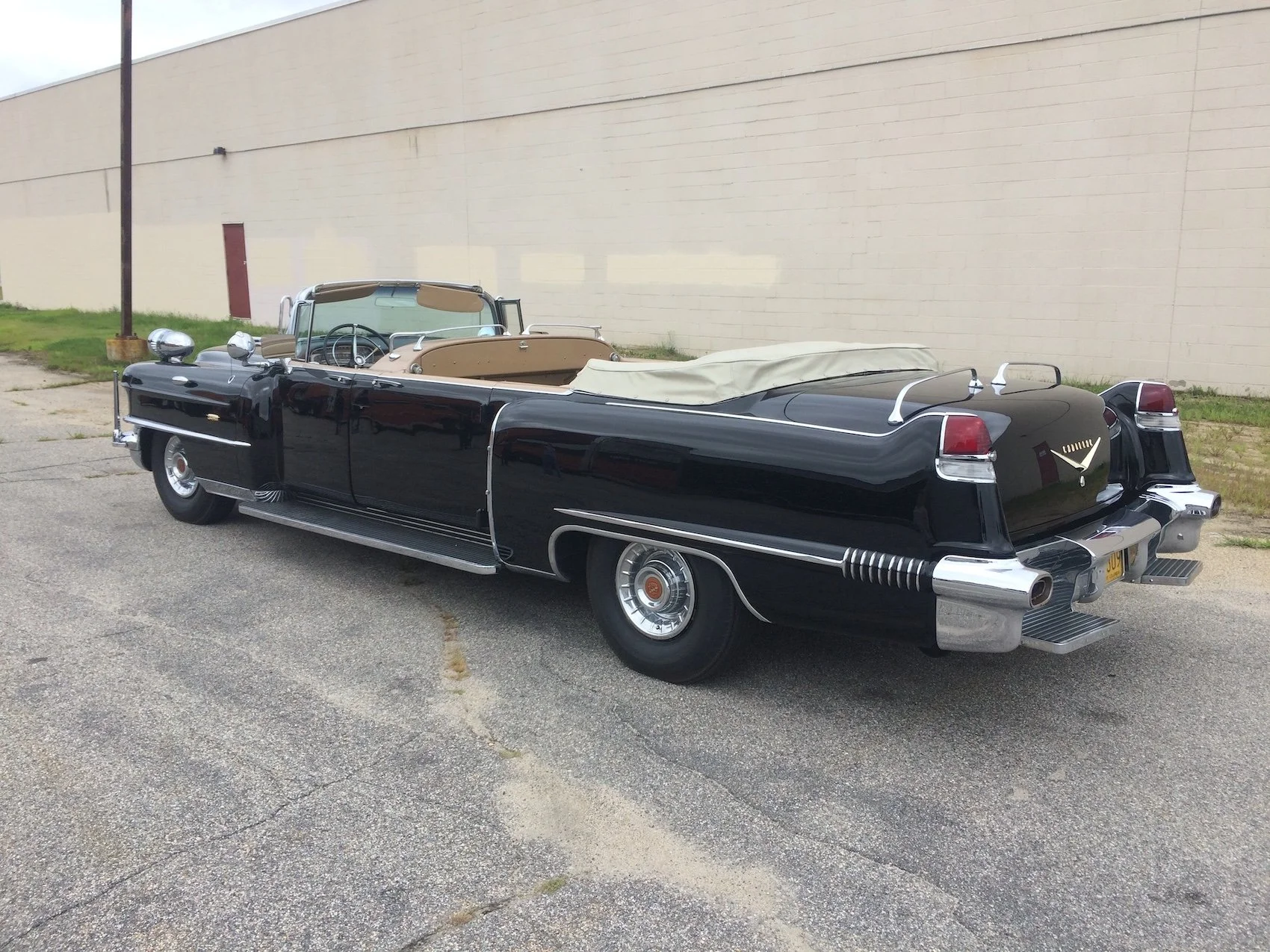
During the 1920s and 1930s, the parade car transitioned from an adapted luxury vehicle to a heavily customized piece of engineering. Coachbuilders recognized that state processions demanded specific architectural modifications. Rooflines were altered, grab handles were integrated into the bodywork, and specialized seating arrangements were introduced to elevate passengers above the beltline of the vehicle.
During this era, prominent political figures and dictators alike recognized the propaganda value of the automobile. The introduction of grand, long-wheelbase chassis allowed designers to incorporate sweeping fenders, dual-windshield setups, and custom convertible tops that could be lowered or raised depending on weather conditions.
- Enhanced Visibility: Raised rear seating platforms allowed crowds to maintain eye contact with dignitaries even from a distance.
- Specialized Hardware: Reinforced running boards and exterior handholds were engineered specifically for security personnel to ride alongside the vehicle during slow-moving processions.
- Aesthetic Grandeur: Chrome detailing, bespoke paint schemes, and national insignia transformed standard luxury chassis into rolling monuments.
Post-World War II Era: Security, Glass, and the Open-Air Dilemma
The geopolitical landscape following World War II introduced severe security concerns for public figures, fundamentally altering parade car design. The assassination of U.S. President John F. Kennedy in 1963 inside an open-top 1961 Lincoln Continental convertible marked a definitive turning point. The era of the completely unprotected, open-air parade car came to a close for many world leaders, forcing engineers to balance public accessibility with ballistic protection.
Automotive manufacturers responded by developing sophisticated ballistic glass and armored body panels that could withstand high-powered rifle rounds and explosive devices. However, incorporating heavy armor into a ceremonial vehicle presented severe mechanical and aesthetic challenges.
- [Standard Luxury Chassis]
- [Ballistic Steel Plating]
- Increased Weight
- Heavy-Duty Suspension
- [Polycarbonate Glass]
- Optical Distortion
- Custom Curved Framing
- [Ballistic Steel Plating]
To solve these issues, engineers implemented heavy-duty truck-based suspension systems, upgraded braking architectures, and high-displacement engines capable of moving multi-ton vehicles at a slow crawl without overheating. The aesthetic challenge—maintaining the graceful lines of a luxury car while housing inches-thick transparent armor—led to the development of custom Landaulet configurations, where the driver's compartment remained enclosed and protected, while the rear passenger area featured a retractable soft top.
Modern Engineering and Technological Integration
In contemporary statecraft, the modern parade car is an ultra-secure, highly specialized command center disguised as a luxury limousine. Brands such as Cadillac, Rolls-Royce, and Mercedes-Benz design bespoke vehicles that incorporate advanced communications equipment, run-flat tires, and independent oxygen supply systems to protect occupants against chemical or biological threats.
Despite these advanced defensive capabilities, the primary mission of the parade car remains ceremonial. Manufacturers utilize lightweight composite materials where possible to offset the immense weight of the armor, ensuring the vehicle handles predictably at low speeds. Furthermore, advanced thermal management systems prevent engines from overheating during prolonged, low-speed processions under direct sunlight.
Comparison of Parade Car Eras
| Era | Primary Configuration | Security Level | Notable Innovation |
|---|---|---|---|
| Early Motoring (1900–1918) | Open Phaeton / Touring | Minimal (Guards on foot) | Transition from horse-drawn to motorized transport |
| Interwar Period (1919–1939) | Long-wheelbase Landaulet | Low to Moderate | Raised rear seating and exterior security handholds |
| Cold War Era (1945–1989) | Armored Convertible / Hardtop | High (Ballistic steel) | Introduction of heavy armor and bulletproof glass |
| Modern Era (1990–Present) | Custom Armored Limousine | Maximum (NBC protection) | Integrated communications and advanced thermal management |
Frequently Asked Questions
Why do parade cars usually move at very slow speeds?
Slow speeds—typically between 3 and 5 miles per hour—allow crowds to view the dignitaries clearly and enable security personnel to walk alongside or ride on the exterior running boards of the vehicle, ensuring immediate response capabilities.
Are all modern parade cars fully bulletproof?
Most modern state parade cars feature high levels of ballistic and blast protection, often rated to withstand armor-piercing ammunition and explosive devices, though the exact specifications are typically classified for security reasons.
What is a Landaulet body style?
A Landaulet is a semi-convertible vehicle configuration where the driver's compartment is fully enclosed and rigid, while the rear passenger compartment features a folding or retractable soft top, offering both protection and visibility.
How do parade car engines keep from overheating during slow processions?
Because moving slowly prevents normal airflow through the radiator grille, parade cars are equipped with high-capacity cooling systems, heavy-duty electric auxiliary fans, and specialized low-speed transmission gearings designed to manage thermal loads.
Can the public purchase retired state parade cars?
Yes, many historical parade cars eventually find their way into private collections, automotive museums, or public auctions once they are decommissioned by government motor pools due to age or changing security protocols.
Next Actions for Automotive Historians and Enthusiasts
For those interested in studying the history of the parade car further, exploring specialized automotive museums—such as the Petersen Automotive Museum in Los Angeles or the Henry Ford Museum in Michigan—offers direct access to preserved state vehicles. Researchers should consult original coachbuilder archives and government transportation records for precise mechanical specifications and commissioning documents.
Image Gallery