How State Auto Insurance in Dayton, Ohio Works
Navigating state auto insurance in Dayton, Ohio requires understanding mandatory liability limits enforced by the Ohio Bureau of Motor Vehicles (BMV), minimum financial responsibility laws, and how local factors like urban driving cond...
Navigating state auto insurance in Dayton, Ohio requires understanding mandatory liability limits enforced by the Ohio Bureau of Motor Vehicles (BMV), minimum financial responsibility laws, and how local factors like urban driving conditions and weather impact premium calculations. Drivers in Montgomery County must maintain specific coverage types to legally operate a vehicle, and failing to do so can result in severe administrative penalties, license suspensions, and financial liability after an accident.
Contents
The Legal Framework of Ohio Auto Insurance
Ohio operates under a tort liability system for motor vehicle accidents. This means that the driver who is at fault for a collision is legally and financially responsible for the resulting property damage, medical bills, and other related costs. Because of this framework, state law mandates that every motorist carry minimum levels of liability insurance before they can legally register or drive a vehicle on public roadways in Dayton.
The state financial responsibility law is overseen by the Ohio BMV, which utilizes random verification systems and requires proof of insurance during traffic stops, vehicle registrations, and accident reports. Operating a vehicle without meeting these minimum financial responsibility requirements is a serious offense that triggers immediate administrative sanctions.
Mandatory Minimum Coverage Limits
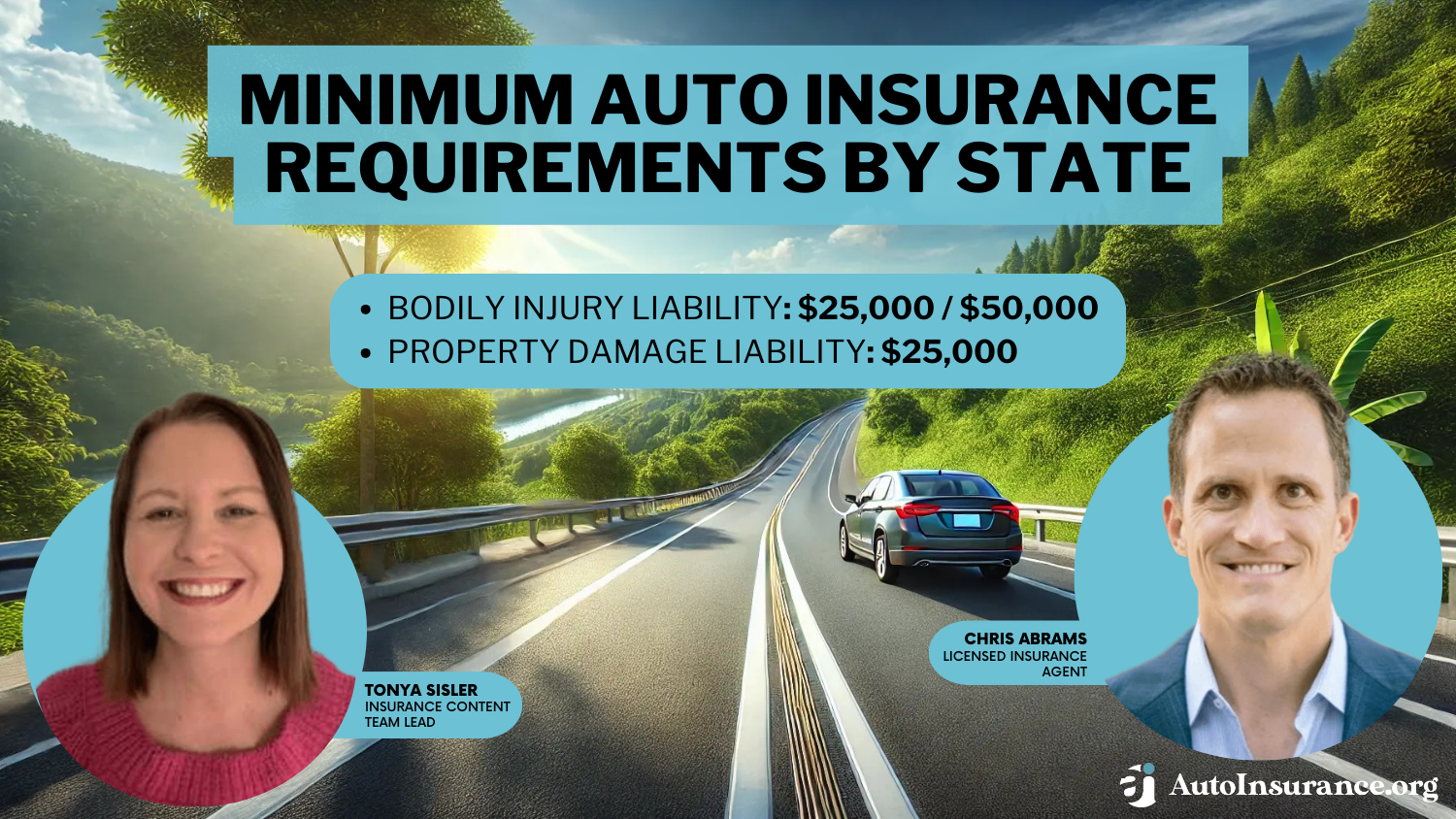
To comply with Ohio Revised Code, drivers must purchase liability insurance that meets or exceeds specific statutory limits. These limits represent the maximum amount the insurance company will pay out for a single accident, divided into bodily injury per person, total bodily injury per accident, and property damage.
The mandatory minimum coverage requirements in Ohio are:
- $25,000 for injury or death of a single person in any one accident.
- $50,000 for total injury or death liability per accident when multiple people are injured.
- $25,000 for property damage resulting from any single accident.
While these numbers represent the legal baseline, insurance professionals and legal experts frequently recommend purchasing higher limits. A single serious accident in Dayton can easily exceed $25,000 in property damage or medical expenses, leaving the at-fault driver personally liable for any remaining balance.
How Dayton, Ohio Factors Influence Insurance Rates
Insurance companies do not charge a flat rate across the state; instead, they use complex underwriting algorithms that evaluate geographic and personal risk factors. Dayton presents a unique risk profile that shapes how insurers price policies for local residents.
Urban Density and Traffic Patterns
Dayton is the economic and population center of Montgomery County, featuring high-traffic corridors such as Interstate 70, Interstate 75, and State Route 4. Higher traffic density increases the statistical probability of fender-benders, multi-vehicle collisions, and commuter congestion. Consequently, drivers residing within Dayton city limits often experience higher base insurance rates compared to those living in rural surrounding townships.
Comprehensive Risk Assessment Variables
Insurers evaluate several distinct data points when determining individual premiums in the Dayton market:
- Driving Record: Past traffic violations, speeding tickets, and preventable accidents significantly increase premium costs.
- Claims History: A history of filing frequent insurance claims marks a driver as high-risk.
- Vehicle Characteristics: The make, model, safety ratings, repair costs, and theft rates of the insured vehicle directly influence comprehensive and collision rates.
- Credit-Based Insurance Score: In Ohio, insurers are permitted to use credit history as a rating factor, provided they comply with state department of insurance regulations.
- Coverage Selections: Choosing higher liability limits, lower deductibles, or optional coverages like comprehensive and collision will raise the overall cost of the policy.
Understanding Coverage Types Available in Dayton
Beyond the state-mandated liability insurance, drivers in Dayton can select several optional or complementary coverage types to build a comprehensive financial safety net. Understanding these distinctions ensures drivers are adequately protected against unexpected roadway perils.
| Coverage Type | What It Protects Against |
|---|---|
| Bodily Injury Liability | Injuries you cause to others in an at-fault accident. |
| Property Damage | Damage you cause to another person's property or vehicle. |
| Collision Coverage | Damage to your own vehicle from a crash or rollover. |
| Comprehensive Coverage | Theft, vandalism, fire, or animal strikes (e.g., deer). |
| Uninsured Motorist | Accidents involving drivers who lack any insurance. |
Uninsured and Underinsured Motorist Protection
Although Ohio law requires all drivers to carry insurance, a percentage of motorists drive without coverage. Uninsured Motorist (UM) and Underinsured Motorist (UIM) coverages protect you if you are hit by a driver who has no insurance or carries limits that are too low to pay for your medical bills and vehicle repairs. Given regional uninsured driver statistics, adding UM and UIM coverage is a prudent choice for Dayton commuters.
Comprehensive and Collision Coverages
Liability insurance only pays for the other person's damages when you are at fault. If you want your own vehicle repaired after an accident—regardless of who caused it—you need collision coverage. Comprehensive coverage protects your vehicle from non-collision events, which is particularly relevant in Dayton given seasonal weather hazards, urban vandalism risks, and deer populations in surrounding Montgomery County parks.
Proof of Insurance and BMV Verification
The Ohio BMV utilizes the Ohio Insurance Verification System (OHIVS) to electronically verify whether vehicle owners maintain active liability insurance. This system cross-references vehicle registration data with insurance company databases in real time.
Random Random Verification Process
If the OHIVS cannot electronically confirm your insurance coverage during a random check, or if you are involved in a traffic stop or accident, the BMV will issue a notice requiring you to prove that you were insured on the specified date. Failing to respond or providing fraudulent proof results in severe penalties.
Penalties for Driving Without Insurance in Ohio
Driving without valid auto insurance in Dayton carries escalating administrative penalties enforced by the state:
- First Offense: Suspension of driving privileges and vehicle registration for 90 days, plus mandatory surrender of license plates and driver's license. Reinstatement requires paying a fee and filing an SR-22 financial responsibility form for three years.
- Second Offense: Suspension for one year, mandatory license plate surrender, and higher reinstatement fees.
- Subsequent Offenses: Longer suspensions, vehicle immobilization or impoundment, and substantial monetary fines.
An SR-22 is not an insurance policy itself; it is a certificate of financial responsibility that your insurance carrier files with the Ohio BMV to prove you carry at least the minimum required coverage. Drivers required to carry an SR-22 often face significantly higher insurance premiums for the duration of the filing period.
Practical Steps to Manage Auto Insurance in Dayton
Managing your auto insurance effectively involves regular reviews of your policy, understanding how to handle claims, and utilizing discounts to control costs.
1. Shop and Compare Quotes Regularly
Insurance rates fluctuate based on market conditions, company underwriting changes, and personal life updates. Comparing quotes from multiple licensed carriers writing policies in Ohio ensures you secure competitive pricing.
2. Leverage Available Discounts
Most insurers offer a variety of discounts that can substantially lower your premium. Common discounts include:
- Bundling Discounts: Combining auto insurance with homeowners or renters insurance.
- Safe Driver Discounts: Maintaining a clean driving record free of accidents and violations for three to five years.
- Good Student Discounts: Providing proof of high academic achievement for young drivers on the policy.
- Safety Feature Discounts: Equipping your vehicle with anti-theft devices, anti-lock brakes, or modern passive restraint systems.
- Telematics Programs: Participating in app-based monitoring programs that track driving habits such as speed, braking, and mileage.
3. Know What to Do After an Accident
If you are involved in a collision in Dayton, immediate steps protect both your physical safety and your insurance claim integrity:
- Move to a safe location out of traffic if possible.
- Call local law enforcement (such as the Dayton Police Department) to file an official accident report.
- Exchange insurance and contact information with the other driver.
- Document the scene with photographs of vehicle damage, road conditions, and traffic signs.
- Notify your insurance carrier promptly to initiate the claims process.
Disclaimer: Insurance laws, regulatory guidelines, and policy terms are subject to change. For specific legal advice or official administrative inquiries, consult the Ohio Bureau of Motor Vehicles or a licensed insurance professional.
Frequently Asked Questions
What are the minimum car insurance requirements in Dayton, Ohio?
Ohio law requires all drivers to carry liability insurance with minimum limits of $25,000 for bodily injury per person, $50,000 for total bodily injury per accident, and $25,000 for property damage per accident. These minimums apply identically in Dayton and throughout Montgomery County.
Does Ohio use a fault-based or no-fault insurance system?
Ohio is a tort, or fault-based, state. This means the driver who is legally determined to be at fault for causing a car accident is financially responsible for all resulting damages, medical expenses, and vehicle repairs through their liability insurance carrier.
What happens if I am caught driving without insurance in Dayton?
Driving without insurance in Dayton can lead to immediate vehicle impoundment, suspension of your driver's license and vehicle registration, mandatory surrender of license plates, reinstatement fees, and the requirement to file an SR-22 financial responsibility form for multiple years.
Will my Dayton insurance rates be higher than in rural Ohio?
Generally, yes. Urban areas like Dayton experience higher traffic density, greater accident frequencies, and higher rates of vehicle theft and vandalism compared to rural parts of Ohio. Insurers factor these statistical risks into their pricing algorithms, resulting in higher average premiums for city residents.
What is an SR-22 and when is it required?
An SR-22 is a certificate of financial responsibility that an insurance company files with the Ohio BMV on your behalf. It proves that you carry the state-mandated minimum liability insurance. It is typically required after major driving infractions, such as driving without insurance, DUI convictions, or accumulating excessive traffic points.
Can insurance companies in Ohio use credit scores to set rates?
Yes. Insurance companies operating in Ohio are permitted to use credit-based insurance scores as one of several rating factors when determining premiums, provided their underwriting guidelines comply with state insurance regulations and are filed with the Ohio Department of Insurance.
Image Gallery