Understanding Different Types of Auto Insurance in California
Navigating California auto insurance requires balancing mandatory state-minimum liability coverages with optional protections like collision, comprehensive, and uninsured motorist policies. Choosing the right types of coverage protects...
Navigating California auto insurance requires balancing mandatory state-minimum liability coverages with optional protections like collision, comprehensive, and uninsured motorist policies. Choosing the right types of coverage protects you from out-of-pocket expenses, legal liabilities, and financial ruin following an accident on the state’s complex roadways.
Contents
The Legal Framework of California Auto Insurance
Before evaluating policy types, it is essential to understand the regulatory environment governing motor vehicles in the state. The California Department of Insurance (CDI) regulates policy terms, rate changes, and consumer rights, while the Department of Motor Vehicles (DMV) enforces compliance. California operates under a fault-based insurance system. This means the driver who causes an accident is legally responsible for the resulting damages, medical bills, and property repairs.
To comply with California Vehicle Code Section 16056, every driver must maintain financial responsibility. For the vast majority of motorists, this means purchasing a standard auto liability insurance policy. Driving without valid insurance can lead to severe penalties, including steep fines, vehicle impoundment, and the suspension of your driver’s license. Furthermore, California law requires drivers to carry proof of insurance in their vehicles at all times and present it upon request by law enforcement or during a traffic collision investigation.
Mandatory State-Minimum Liability Coverage
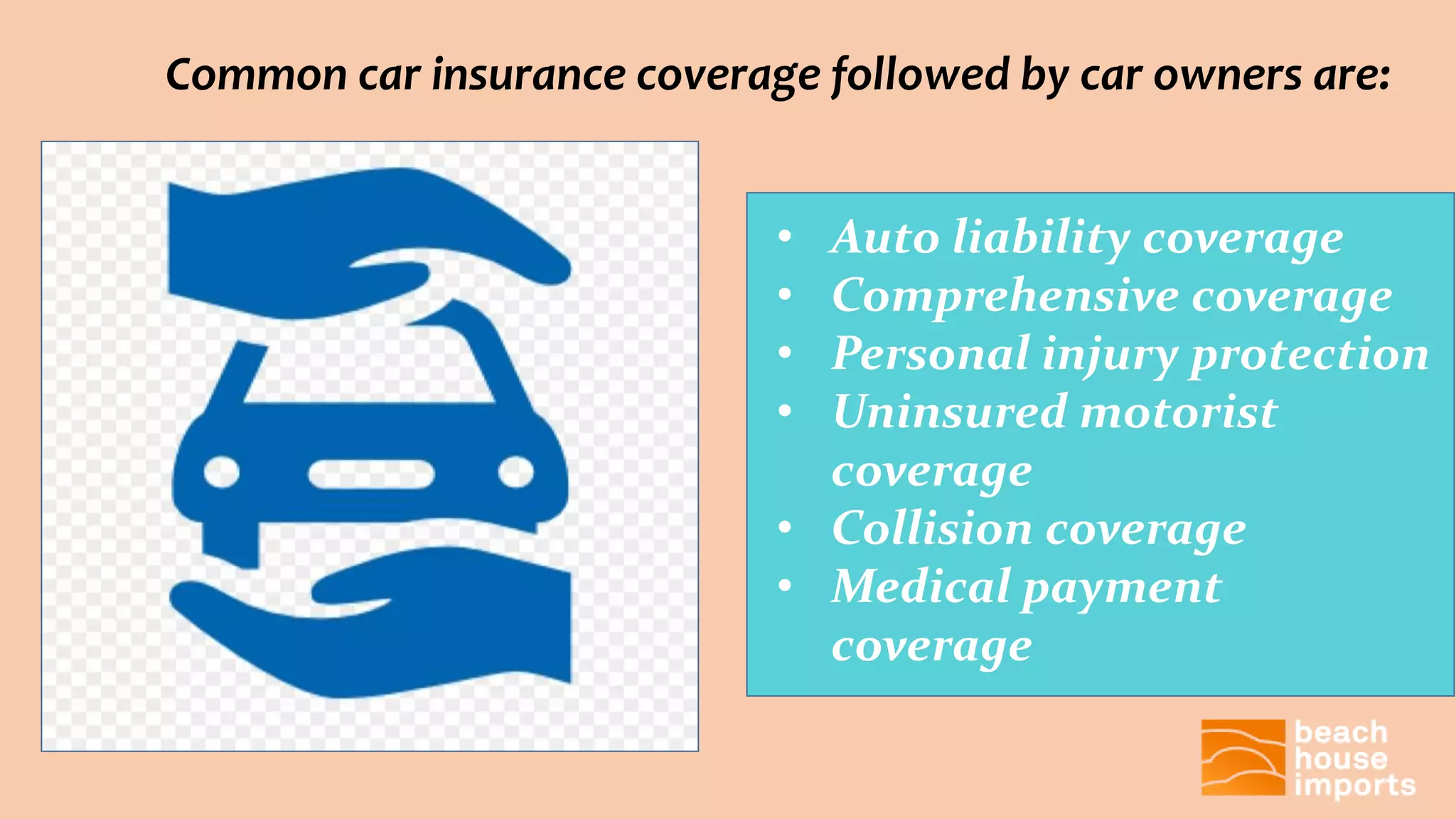
Liability coverage is the foundation of any auto insurance policy in California. It does not pay for your own injuries or vehicle repairs; instead, it covers costs you inflict on others when you are at fault for a collision. California law mandates specific minimum liability limits, often expressed as a series of three numbers (for example, 15/30/5).
Understanding these statutory limits helps clarify what the state requires versus what you may actually need to safeguard your personal assets:
- Bodily Injury Liability (Per Person): This pays for the medical expenses, rehabilitation costs, and legal fees of a single individual injured in an accident you cause.
- Bodily Injury Liability (Per Accident): This is the maximum payout for all combined bodily injuries resulting from a single accident for which you are at fault.
- Property Damage Liability: This covers the repair or replacement costs for another person’s vehicle, public infrastructure, or private property damaged during an at-fault accident.
| Coverage Type | Statutory Minimum Limit | What It Protects |
|---|---|---|
| Bodily Injury (Per Person) | $15,000 | Medical and legal costs for one injured party. |
| Bodily Injury (Per Accident) | $30,000 | Total medical and legal costs for all injured parties combined. |
| Property Damage | $5,000 | Repair or replacement costs for damaged physical property. |
While these statutory minimums satisfy legal requirements, financial experts widely consider them insufficient. Given the high cost of modern vehicle repairs and comprehensive medical care, a severe accident can easily exhaust a $5,000 property damage limit or a $30,000 bodily injury pool within minutes. Any costs exceeding your policy limits remain your personal legal responsibility.
Optional Physical Damage Coverages
Because liability insurance only pays for the other party's losses, drivers who want to protect their own vehicles must purchase optional physical damage coverages. Lenders and leasing companies almost universally require these coverages as part of auto financing agreements.
Collision Coverage
Collision coverage pays to repair or replace your vehicle if it is damaged in a crash with another vehicle or a stationary object, such as a guardrail, tree, or building. It also applies if your car is involved in a rollover accident or damaged by a large pothole.
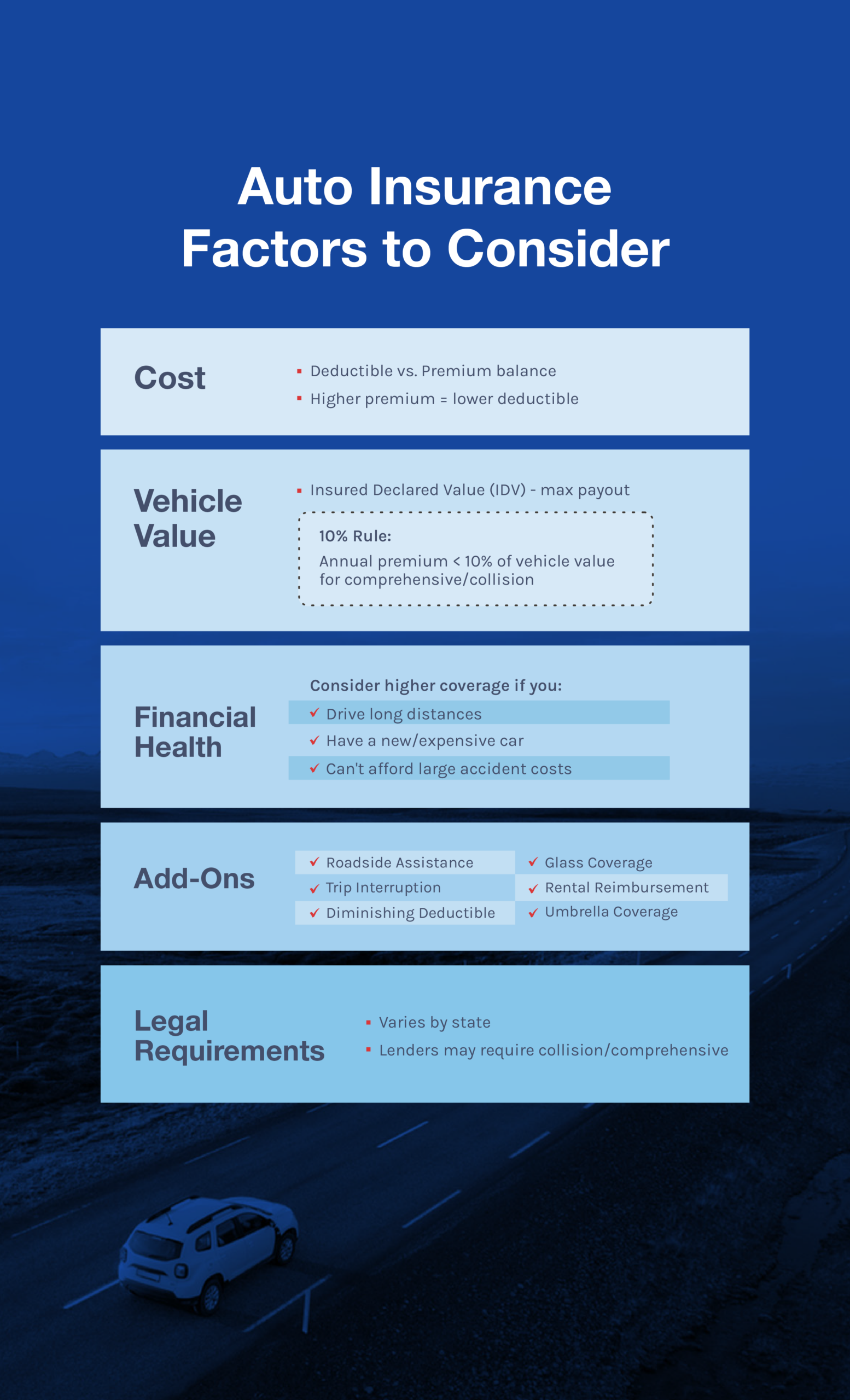
Collision coverage is subject to a deductible—the amount you agree to pay out of pocket before your insurance company covers the remaining repair costs. Choosing a higher deductible lowers your monthly premium, but increases your immediate financial burden if you file a claim.
Comprehensive Coverage
Comprehensive coverage protects your vehicle against non-collision incidents and environmental hazards. This includes damage caused by theft, vandalism, fire, falling objects, windstorms, floods, and animal strikes (such as hitting a deer). Like collision, comprehensive coverage operates with a separate deductible.
When deciding whether to carry collision and comprehensive coverage, evaluate the actual cash value of your vehicle against the combined cost of the premiums and deductibles. If your car is older and has a low market value, paying for physical damage coverage may cost more than the vehicle is actually worth.
Uninsured and Underinsured Motorist Protection
Despite strict legal requirements, a significant percentage of drivers in California operate vehicles without any insurance whatsoever, while many others carry only the state-mandated minimums. If an uninsured driver hits you, recovering compensation through a traditional liability claim becomes extremely difficult.
- Uninsured Motorist Bodily Injury (UMBI): This covers your medical bills, lost wages, and pain and suffering if you are injured by a driver who has no auto insurance. In California, insurers are required to offer UMBI, but you have the right to reject it in writing.
- Uninsured Motorist Property Damage (UMPD): This pays for repairs to your car if it is struck by an identified uninsured driver, typically up to a policy limit of $3,500, provided you do not carry collision coverage.
- Underinsured Motorist Coverage (UIM): This steps in when an at-fault driver has insurance, but their policy limits are too low to cover the full extent of your medical or property damage expenses.
Purchasing uninsured and underinsured motorist protection provides vital safety margins on California's busy freeways, where uninsured motorist rates fluctuate significantly by region.
Specialized Add-Ons and Endorsements
Beyond standard liability and physical damage policies, insurance providers offer specialized endorsements to customize coverage for specific driving habits and lifestyles:
- Medical Payments (MedPay): MedPay covers medical and funeral expenses for you and your passengers following an accident, regardless of who is at fault. It often coordinates with your health insurance policy to handle co-pays and deductibles.
- Roadside Assistance: This optional add-on provides 24/7 support for emergency towing, flat tire changes, jump-starts, locksmith services, and emergency fuel delivery.
- Rental Car Reimbursement: If your vehicle is disabled due to a covered insurance claim, this endorsement pays for a temporary rental car while your vehicle is in the repair shop.
- Gap Insurance: For drivers who finance or lease a brand-new vehicle, standard auto insurance only pays the current market value if the car is totaled. Gap insurance covers the difference—the "gap"—between that market value and the remaining balance on your auto loan.
Factors Influencing Auto Insurance Rates in California
Auto insurance pricing in California is heavily regulated by Proposition 103, a voter-approved initiative that prohibits insurers from pricing policies arbitrarily. Under these regulations, insurance companies cannot base rates solely on credit scores. Instead, state law mandates that insurers weigh three primary mandatory rating factors most heavily:
- Driving Safety Record: The number of at-fault accidents, moving violations, and traffic tickets you have accumulated over a rolling three-to-ten-year period.
- Annual Mileage: The total number of miles you drive per year, as measured by odometer readings or estimated usage. Higher mileage increases exposure to risk.
- Years of Driving Experience: The length of time you have held a valid driver's license. Inexperienced drivers face higher premiums due to statistical risk profiles.
Insurers may also factor in secondary elements such as the garaging zip code of the vehicle, historical claims data for your specific vehicle make and model, and optional coverage selections.
Frequently Asked Questions
What are the minimum auto insurance requirements in California?
California requires drivers to carry liability coverage with minimum limits of $15,000 for injury to one person, $30,000 for injury to multiple people per accident, and $5,000 for property damage. These limits are commonly written as 15/30/5.
Does California auto insurance follow the driver or the car?
In California, auto insurance generally follows the vehicle, not the driver. If you lend your car to a friend with your permission, your insurance acts as the primary coverage if they get into an accident, while their insurance may act as secondary coverage for remaining balances.
Can I be denied auto insurance in California?
Under California's Low Cost Auto Insurance (CLCA) program, low-income drivers who meet specific eligibility criteria cannot be turned down for basic liability coverage. For standard commercial policies, insurers can reject applications based on underwriting guidelines, but they must provide clear, lawful justifications regulated by the CDI.
Is comprehensive coverage required by California law?
No. Comprehensive and collision coverages are entirely optional under state law. However, if you finance or lease your vehicle, your lender or leasing institution will contractually require you to maintain both coverages until the loan is fully paid off.
What should I do immediately after a car accident in California?
Stop your vehicle immediately, check for injuries, and call 911 if there are medical emergencies or significant property damage. Exchange insurance information, contact details, and license plate numbers with the other driver. File an official police report and notify your insurance company as soon as possible to initiate the claims process.
Next Steps and Practical Recommendations
Securing the appropriate auto insurance policy begins with assessing your personal financial exposure rather than settling for the cheapest state-minimum quote. Review your vehicle’s market value, evaluate your personal savings, and consider whether your assets would be vulnerable in a catastrophic lawsuit. Request quotes from multiple licensed carriers, verify their consumer complaint records with the California Department of Insurance, and select policy limits that provide genuine financial security before driving on California roads.
Image Gallery