What You Call Driving a Boat: Essential Nautical Terminology and Commands
Driving a boat is most commonly called operating, handling, or navigating a vessel, while the actual act of steering is referred to as conn-ing or helming. Depending on the size of the watercraft, the specific body of water, and whethe...
Driving a boat is most commonly called operating, handling, or navigating a vessel, while the actual act of steering is referred to as conn-ing or helming. Depending on the size of the watercraft, the specific body of water, and whether the context is recreational or professional, maritime terminology changes significantly.
Contents
Understanding the correct terminology for operating a watercraft is essential for clear communication, safety on the water, and compliance with maritime traditions. While land vehicles are simply "driven," vessels require a specialized vocabulary that reflects their unique dynamics, environmental factors, and historical roots. Whether you are stepping onto a small recreational powerboat for the first time or studying commercial maritime operations, knowing what to call driving a boat—and mastering the associated commands—transforms how you interact with the water.
The Primary Terminology: Operating, Handling, and Navigating
When people ask what you call driving a boat, the answer usually depends on the scope of the action. While landlubbers often use "driving," professional mariners and experienced boaters use distinct terms to describe different aspects of moving a vessel across the water.
Operating a Vessel
"Operating" is the broadest regulatory and practical term used for driving a boat. State and federal agencies, such as the United States Coast Guard (USCG), use "operation" in legal frameworks. To operate a vessel means to have physical control of its propulsion and steering systems while it is underway. This includes managing the throttle, shifting gears, monitoring engine instrumentation, and maintaining situational awareness.
Handling a Boat
"Boat handling" refers to the art and skill of maneuvering a vessel in various conditions, particularly in tight spaces like marinas, docks, or slips. While operating encompasses simply moving forward, stopping, and turning in open water, handling requires an intuitive understanding of external forces such as wind, current, and prop walk (the lateral thrust of a propeller). A captain skilled in boat handling can back a twin-engine cruiser into a narrow slip against a crosswind with minimal effort.
Navigating
Navigation is the process of planning, recording, and controlling the movement of a craft from one place to another. While you are technically "driving" while navigating, navigation places primary emphasis on chartwork, GPS monitoring, depth soundings, and collision avoidance rules (COLREGs). You can operate a boat without actively navigating (such as driving in circles for watersports), but you cannot safely navigate without operating the vessel.
Roles at the Helm: Who is Doing the Driving?
Unlike an automobile, where one person generally does everything, a boat often divides responsibilities among specific crew members. The terminology changes based on who is holding the controls and who is giving the orders.
The Helm and the Helmsman
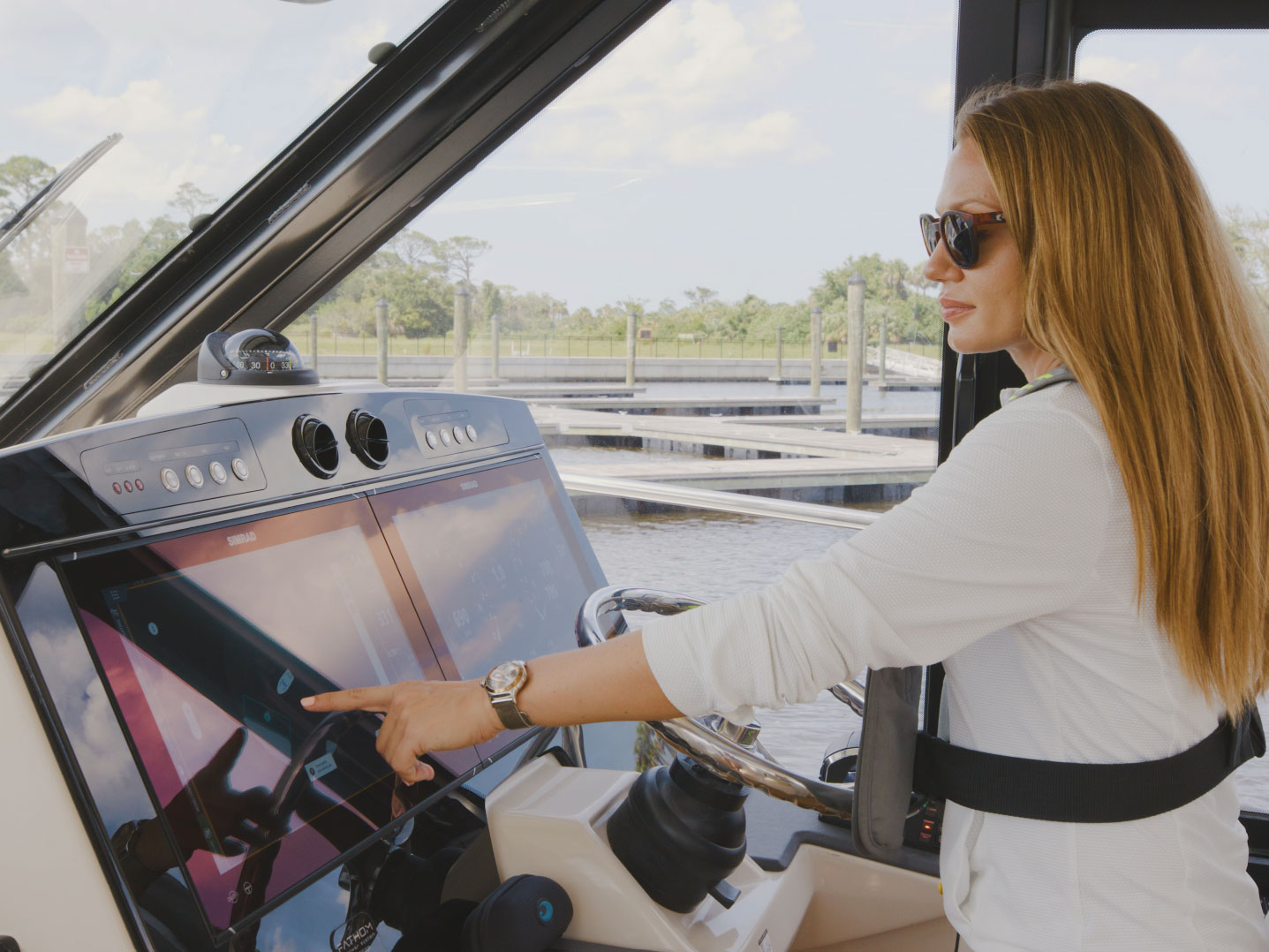
The steering wheel of a boat is traditionally called the helm, and the person steering is the helmsman. On smaller recreational boats, the operator acts as both the helmsman and the skipper. On larger yachts, commercial vessels, and historic ships, the helmsman physically turns the wheel or manages the autopilot, but they do so under the direct supervision of another officer.
The Skipper or Captain
The person in command of the vessel is the skipper or captain. On a recreational vessel, the owner-operator is typically referred to as the skipper. Legally, the captain is ultimately responsible for the safety of the vessel, the crew, and any passengers on board, regardless of who is physically holding the helm at any given moment.
Conning the Vessel
In professional maritime contexts, "conning" (derived from the archaic word cun or cond, meaning to direct) refers to the act of giving orders to the helmsman regarding the course and speed of the vessel. The person "having the conn" is the one making tactical decisions about where the boat goes, even if a quartermaster or helmsman is physically manipulating the wheel.
Terminology Breakdown by Vessel Type
The language used to describe driving a boat varies widely depending on the type of watercraft.
| Vessel Category | Common Term for Driving | Physical Steering Mechanism | Primary Operating Focus |
|---|---|---|---|
| Small Powerboats / Bowriders | Driving, Operating | Steering Wheel / Outboard Tilt | Recreational cruising, watersports, throttle control |
| Sailboats | Sailing, Tacking, Jibe-handling | Tiller or Ship's Wheel | Harnessing wind power, trimming sails, maintaining course |
| Inboard Cruisers / Yachts | Handling, Piloting | Helm, Dual Throttles, Bow Thrusters | Docking maneuvers, fuel management, electronics monitoring |
| Commercial Ships / Tugs | Conning, Navigating, Piloting | Bridge Console, Azimuth Thrusters | Cargo safety, traffic separation schemes, heavy weather management |
| Personal Watercraft (PWC) | Riding, Operating | Handlebars with Throttle Lever | Body-weight shifting, high-speed turning, throttle safety |
Essential Nautical Commands and Steering Language
When operating larger vessels or sailing with a crew, casual language is replaced by precise nautical commands. Using standardized terminology prevents confusion in high-pressure situations.
Steering Commands
- "Port" and "Starboard": Instead of left and right, mariners use port (left when facing forward) and starboard (right when facing forward) to eliminate ambiguity.
- "Hard to Port / Hard to Starboard": An order to turn the wheel as far as it will go in the specified direction.
- "Steady As She Goes": An instruction to steer the course that the vessel is heading at the exact moment the command is given.
- "Meet Her": An order to check the swing of the ship's head by applying opposite rudder.
Engine and Throttle Commands
- Ahead / Astern: Moving forward or backward.
- Neutral / Dead in the Water: Disengaging propulsion, allowing the boat to coast without power.
- Way: The movement of a vessel through the water. A boat has "way on" when it is moving forward and generating steerage. Without way, rudders become ineffective because water is not flowing across them.
Practical Skills Required to Drive a Boat
Operating a boat safely involves mastering several core mechanical and environmental skills that go far beyond turning a wheel.
Understanding Steerage and Momentum
Unlike cars, which have brakes that grip the road, boats rely on water resistance to stop and turn. This creates unique operational challenges:
- No Brakes: A boat has no mechanical brakes. To slow down, the operator must shift the transmission into reverse (known as "backing down"). This takes distance and time, often referred to as "stopping distance" or "head reach."
- Pivot Point: Boats do not pivot from the center or the rear; they pivot around a dynamic pivot point located roughly one-third of the way back from the bow when moving forward, and near the stern when moving in reverse. This dictates how wide you must swing when making a turn.
Managing Environmental Factors
Driving a boat requires constant adaptation to external forces that do not affect automobiles:
- Current and Tide: Moving water pushes the hull sideways, requiring the operator to point the bow slightly upstream of the intended destination—a technique known as "crabbing" or taking a "ferry angle."
- Windage: High-sided vessels act like sails, catching crosswinds that can make docking exceptionally difficult without proper throttle and line-handling techniques.
Frequently Asked Questions
Is it legal to drive a boat without a license?
License requirements vary significantly by jurisdiction. In many regions and U.S. states, operators born after a certain date or those operating motorboats above a specific horsepower threshold are required to complete a boating safety course and obtain a Boater Education Card. However, this is distinct from a commercial captain's license, which is required for carrying passengers for hire.
Why do people say "helm" instead of "steering wheel"?
The term "helm" historically refers to the entire steering apparatus of a ship, including the tiller or wheel, the rudder, and the connecting mechanism. While "steering wheel" is common on modern recreational boats, "helm" remains standard maritime terminology.
What is the difference between a captain and a skipper?
In modern recreational boating, the terms are largely interchangeable and refer to the person in charge of the vessel. Historically, a "skipper" (derived from the Dutch word schipper) traditionally commanded smaller commercial or fishing vessels, while a "captain" held formal licensing or military rank, though today both terms denote absolute command responsibility.
Can you drive a boat in reverse?
Yes, boats can be driven in reverse by shifting the transmission into astern. However, steering in reverse requires practice because most boats lose directional control (steerage) until they gather sternway, and the stern will often kick to port or starboard due to propeller rotation.
Next Actions for Aspiring Boaters
If you are preparing to take the helm of a watercraft for the first time, start by prioritizing safety and education. Enroll in a NASBLA-approved boater safety course (offered by organizations like the U.S. Coast Guard Auxiliary or state natural resource departments) to learn local navigation rules, right-of-way laws, and emergency procedures. Spend time practicing low-speed handling in an open, uncrowded area before attempting to dock in tight marinas, and always ensure every passenger wears a properly fitted U.S. Coast Guard-approved life jacket.
Image Gallery