Navigating Personal Injury Claims with a Waldorf Personal Injury Attorney
A Waldorf personal injury attorney represents victims of traffic collisions, slip-and-fall incidents, and negligence in Charles County, Maryland. Because Maryland strictly applies pure contributory negligence—where being even 1% at fau...
A Waldorf personal injury attorney represents victims of traffic collisions, slip-and-fall incidents, and negligence in Charles County, Maryland. Because Maryland strictly applies pure contributory negligence—where being even 1% at fault bars financial recovery—an experienced local lawyer protects your rights, collects critical evidence, calculates full damages, and handles negotiations with insurance carriers or litigation in court.
Contents
Understanding Maryland Personal Injury Law in Charles County
Personal injury cases in Waldorf are governed by Maryland tort law and procedural rules enforced in Charles County courts. Unlike many neighboring jurisdictions, Maryland retains several distinct legal doctrines that significantly impact how injury claims are evaluated, negotiated, and litigated.
| Maryland Personal Injury Legal Framework |
|---|
| • Pure Contributory Negligence: 1% fault bars all recovery |
| • General Statute of Limitations: 3 years from date of injury |
| • Local Govt. Notice Limit: 1 year (LGTCA written notice requirement) |
| • Court Venue: Charles County Circuit Court or District Court |
The Pure Contributory Negligence Standard
Maryland is one of only a handful of U.S. jurisdictions that continues to enforce the strict rule of pure contributory negligence. Under this doctrine, if an injured party contributed even minimally—as little as 1%—to the cause of the accident or injury, they are legally barred from recovering any financial compensation from the at-fault party.
Insurance adjusters frequently leverage this rule to deny legitimate claims by asserting that the victim failed to exercise reasonable care, stepped into traffic, reacted too slowly, or shared minor responsibility. A personal injury attorney counteracts these tactics by establishing clear liability, utilizing accident reconstruction experts, and demonstrating that the defendant held exclusive fault.
In limited circumstances, an injured plaintiff may overcome a defense of contributory negligence by invoking the Last Clear Chance Doctrine. This exception applies if the defendant had a fresh opportunity to avoid the accident after the plaintiff's initial negligence occurred, yet failed to exercise reasonable care to prevent the harm.
Statutes of Limitations and Filing Deadlines
Timing is critical when pursuing legal action in Maryland. Failing to comply with statutory deadlines permanently forfeits your right to compensation:
- General Personal Injury: Under Maryland Code, Courts and Judicial Proceedings § 5-101, a personal injury lawsuit based on negligence must be filed within three years from the date the injury occurred.
- Medical Malpractice: Claims against healthcare providers must be filed within five years of the alleged negligent act or three years from the date the injury was reasonably discovered, whichever period expires first (Md. Code Ann., Cts. & Jud. Proc. § 5-109).
- Claims Against Government Entities: If an injury involves a municipal vehicle, public road hazard maintained by the county, or an employee of Charles County or the State of Maryland, the Maryland Local Government Tort Claims Act (LGTCA) or Maryland Tort Claims Act requires formal written notice of the claim to be submitted within one year of the injury.
Statutory Caps on Non-Economic Damages
Maryland law imposes a statutory ceiling on non-economic damages—such as pain, suffering, inconvenience, physical impairment, and loss of consortium—in personal injury actions under Md. Code Ann., Cts. & Jud. Proc. § 11-108. This cap increases by $15,000 on October 1st of each year.
Economic damages, which include medical bills, rehabilitative therapy, lost wages, and loss of future earning capacity, are not subject to any legal cap and may be recovered in full provided they are supported by documentation and expert testimony.
Common Personal Injury Cases Handled in Waldorf, MD
As the largest commercial and residential hub in Southern Maryland, Waldorf experiences heavy traffic volume, commercial transport density, and significant retail activity. These factors contribute to specific categories of personal injury claims across Charles County.
Motor Vehicle Accidents on High-Volume Corridors
The major arterial roads running through Waldorf—including U.S. Route 301 (Robert Crain Highway), Maryland Route 228 (Berry Road), Maryland Route 5, and St. Charles Parkway—see frequent commuter traffic to and from Washington, D.C. High traffic density leads to severe motor vehicle collisions, including high-speed rear-end impacts, intersection T-bone crashes, and multi-car chain reactions.
In car accident claims, establishing negligence requires proving four key elements:
- The defendant owed a duty of care (e.g., following motor vehicle laws).
- The defendant breached that duty (e.g., speeding, distracted driving, or running a red light).
- The breach directly caused the collision.
- The plaintiff suffered actual damages (injuries, financial losses).
Commercial Trucking Accidents
The U.S. Route 301 freight corridor carries substantial heavy truck traffic daily. Collisions involving 18-wheelers, box trucks, and delivery vehicles often result in catastrophic injuries due to the mass differential between passenger vehicles and commercial rigs.
Truck accident litigation requires examining federal safety regulations established by the Federal Motor Carrier Safety Administration (FMCSA). Attorneys investigate driver logbooks, Electronic Logging Devices (ELDs), vehicle maintenance records, cargo loading procedures, and corporate hiring practices to determine whether liability rests with the driver, the motor carrier, or third-party maintenance contractors.
Premises Liability and Slip-and-Fall Claims
Property owners and business operators in Waldorf must maintain reasonably safe conditions for lawful visitors. Common premises liability claims arise at shopping plazas, grocery stores, apartment complexes, and parking structures along the Route 301 commercial corridor.
To succeed in a Maryland premises liability lawsuit, an injured party must demonstrate that the property owner either created the dangerous condition (such as a wet floor, broken staircase, or unlit walkway) or had actual or constructive knowledge of the hazard long enough to have corrected it or warned visitors.
Medical Malpractice and Healthcare Negligence
Patients who sustain severe harm due to medical errors at local medical facilities, emergency centers, or outpatient clinics may pursue medical malpractice claims. Maryland procedure mandates that before filing a lawsuit in court, medical injury claims must be filed with the Health Care Alternative Dispute Resolution Office (HCADRO), accompanied by a Certificate of Qualified Expert certifying that the defendant breached the medical standard of care.
Key Steps to Take Following an Injury in Waldorf
The actions taken immediately following an accident strongly influence the legal strength of a subsequent injury claim.
- Step 1: Seek Immediate Medical Treatment
- Step 2: File an Official Report (Police / Sheriff / Incident Report)
- Step 3: Document the Scene & Gather Evidence
- Step 4: Refrain from Giving Recorded Statements to Insurers
- Step 5: Consult a Waldorf Personal Injury Attorney
1. Seek Immediate Medical Evaluation
Prioritize emergency medical evaluation at a regional facility such as UM Charles Regional Medical Center or an urgent care clinic. Prompt treatment ensures personal safety and creates an official medical record linking the physical injuries directly to the incident. Gaps or delays in treatment give insurance carriers leverage to argue that injuries were pre-existing or caused by an intervening event.
2. Report the Incident to Authorities
For motor vehicle collisions, contact law enforcement immediately to request an officer from the Charles County Sheriff's Office or the Maryland State Police (Troop H - La Plata Barrack). Ensure an official police crash report is drafted. For slip-and-fall incidents on commercial property, notify the manager on duty and obtain a written incident report before leaving the premises.
3. Document the Scene and Preserve Physical Evidence
If physically able, gather real-time evidence before the scene is altered:
- Take high-resolution photographs and videos of vehicle positions, skid marks, road surface hazards, property damage, weather conditions, and visible bodily injuries.
- Obtain names, phone numbers, and addresses of all eyewitnesses.
- Store injured apparel or damaged personal items in an unaltered state.
4. Exercise Caution with Insurance Adjusters
Insurance representatives for the at-fault party often initiate contact quickly to request recorded statements or offer early settlements. Under Maryland's pure contributory negligence rule, adjusters may ask leading questions designed to elicit statements that imply partial fault. You are under no legal obligation to give a recorded statement to the opposing insurer without legal representation present.
How Personal Injury Compensation Is Calculated
Injury compensation (damages) aims to make the injured party financially whole after sustaining harm due to someone else's legal negligence.
Economic Damages (Objectively Measurable Losses)
Economic damages cover direct, quantifiable financial losses resulting from the injury:
- Medical Expenses: Coverage for ambulance transport, emergency surgery, hospital stays, physician visits, prescription medications, medical equipment, physical therapy, and projected future medical care.
- Lost Income: Full reimbursement for wages, salary, bonuses, and paid time off missed while recovering.
- Loss of Future Earning Capacity: Compensation calculated when a permanent disability prevents an individual from returning to their former occupation or working at full earning capacity.
- Property Damage: Costs to repair or replace a motor vehicle or personal property destroyed during the incident.
Non-Economic Damages (Subjective Quality of Life Losses)
Non-economic damages compensate for non-financial impacts:
- Pain and Suffering: Physical pain, physical discomfort, and long-term bodily distress.
- Emotional Distress: Anxiety, depression, sleep disturbances, or post-traumatic stress disorder (PTSD) stemming from the event.
- Loss of Consortium: Compensation awarded to a spouse for the loss of companionship, affection, and marital relations caused by severe injuries.
Punitive Damages Standard
Punitive damages are intended to punish egregiously wrongful conduct rather than compensate the victim. In Maryland, punitive damages are extremely rare in personal injury cases. Under the precedent set in Owens-Illinois, Inc. v. Zenobia, a plaintiff must prove by clear and convincing evidence that the defendant acted with actual malice—meaning actual evil motive, intent to injure, fraud, or intentional wrongdoing—rather than mere gross negligence.
Navigating Maryland Personal Injury Claims: Key Legal Frameworks
The following comparative table summarizes the legal standards, notice requirements, and court venues relevant to personal injury claims in Charles County, Maryland.
| Claim Type | Maryland Filing Deadline (Statute of Limitations) | Notice Requirements | Key Legal Hurdles | Primary Court Jurisdiction in Charles County |
|---|---|---|---|---|
| Motor Vehicle Collision | 3 years from date of accident | None (unless involving government entity) | Overcoming Pure Contributory Negligence defense | District Court (<$30k) or Circuit Court (>$30k) in La Plata |
| Commercial Truck Accident | 3 years from date of accident | Rapid spoliation letter needed to preserve black box/ELD data | Complex multi-party liability (driver, carrier, cargo loader) | Circuit Court for Charles County |
| Premises Liability (Slip & Fall) | 3 years from date of injury | Written incident report at scene recommended | Proving constructive knowledge/notice of dangerous condition | District Court or Circuit Court |
| Government Entity Claim | 3 years from date of injury | 1 year written notice under LGTCA or MTCA | Strict statutory notice limits, sovereign immunity defenses | Circuit Court for Charles County |
| Medical Malpractice | Earlier of 5 years from act or 3 years from discovery | Mandatory filing with Maryland HCADRO first | Requiring Certificate of Qualified Expert and merit defense | Circuit Court for Charles County |
Selecting Legal Counsel in Waldorf
Choosing legal representation in Charles County involves evaluating several factors:
Local Court Experience
Personal injury cases that cannot be resolved through settlement negotiations are tried in the Circuit Court for Charles County or the District Court of Maryland for Charles County, both located in La Plata. Counsel familiar with local court procedures, judicial preferences, and jury demographics in Southern Maryland can structure arguments effectively for local trials.
| Charles County Civil Court Venues |
|---|
| • District Court of Maryland (Charles County)200 Charles Street, La Plata, MD 20646Handles civil claims up to $30,000 |
| • Circuit Court for Charles County200 Charles Street, La Plata, MD 20646Handles major civil litigation exceeding $30,000 |
Fee Structures and Contingency Agreements
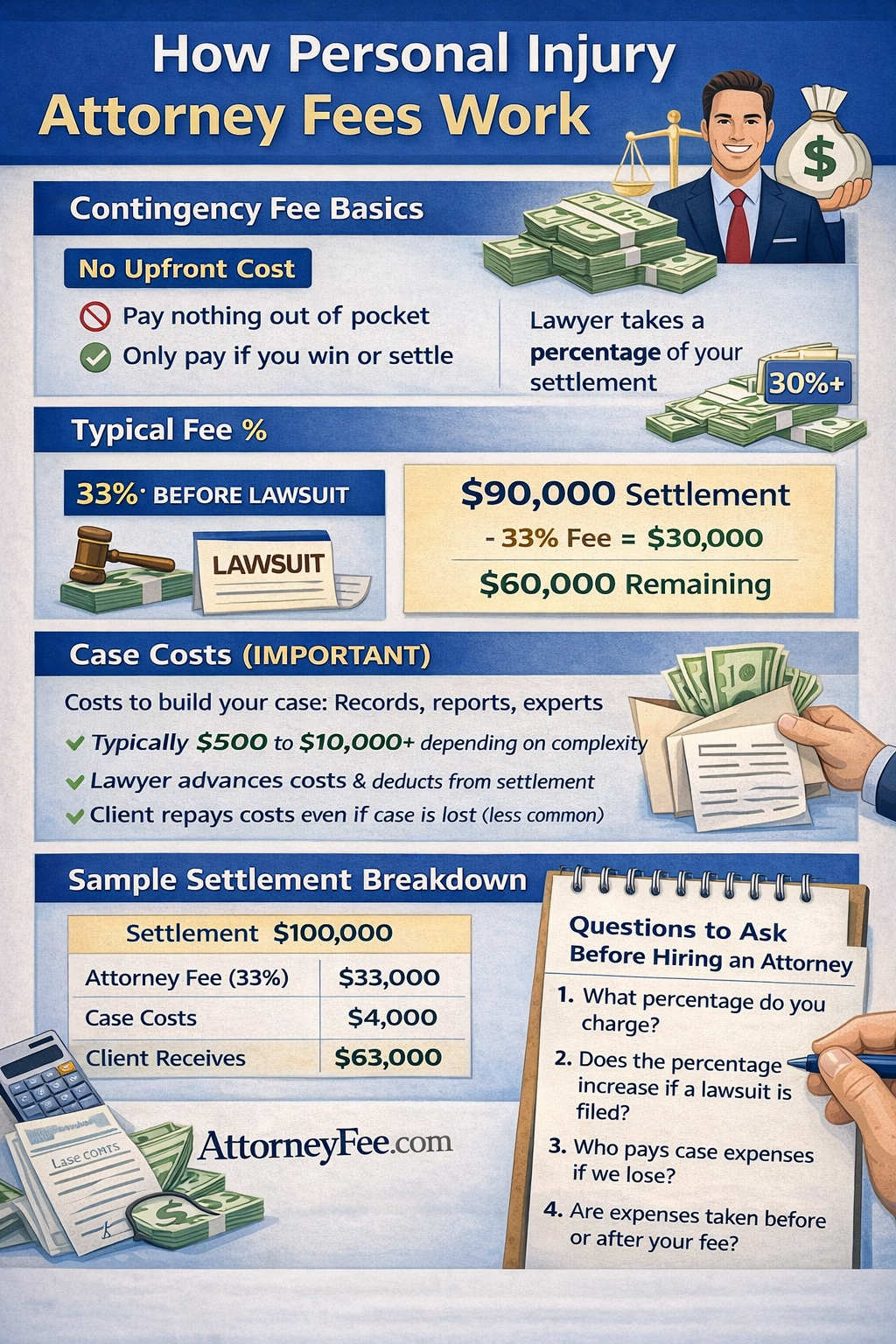
Personal injury attorneys typically operate on a contingency fee basis. Under this agreement:
- Clients pay no upfront retainer fees or hourly legal charges.
- The attorney receives an agreed-upon percentage (commonly 33.3% to 40%) of the final monetary settlement or court award.
- If the attorney fails to secure a financial recovery, the client owes no attorney fees.
It is essential to review the written representation agreement to understand how case litigation expenses (such as expert witness fees, medical records collection fees, court filing costs, and court reporter fees) are handled and reimbursed upon recovery.
Frequently Asked Questions
What happens if the insurance company claims I was partially at fault for the accident in Maryland?
Because Maryland adheres to the pure contributory negligence standard, an insurance company that proves you were even 1% at fault can deny your claim entirely. If an insurer raises this defense, consult a personal injury attorney immediately. Your attorney will gather evidence, interview witnesses, analyze physical damage, or hire accident reconstruction experts to prove the opposing party held 100% of the fault.
How long do I have to file a personal injury lawsuit in Waldorf, Maryland?
For most personal injury actions, the statute of limitations is three years from the date the injury occurred under Maryland Code, Courts and Judicial Proceedings § 5-101. However, if your claim involves a municipal or state government entity, you must submit formal written notice within one year. Medical malpractice claims have distinct timelines of three years from discovery or five years from the date of the incident.
Which court hears personal injury lawsuits in Charles County?
Personal injury lawsuits in Charles County are heard at the judicial complex in La Plata, Maryland. Civil claims seeking $30,000 or less are generally filed in the District Court of Maryland for Charles County. Claims seeking damages exceeding $30,000, or cases where either party requests a formal jury trial, are litigated in the Circuit Court for Charles County.
What is the difference between economic and non-economic damages?
Economic damages cover measurable financial losses such as emergency room bills, ongoing therapy costs, lost income, reduced future earning capacity, and property damage expenses. Non-economic damages compensate for subjective, non-monetary impacts like physical pain, mental anguish, physical impairment, and loss of enjoyment of life. Maryland caps non-economic damages by statute, while economic damages are uncapped.
Will my personal injury case have to go to court?
The majority of personal injury claims in Waldorf are resolved through negotiated settlements with insurance companies before reaching trial. However, if the insurance provider denies liability under contributory negligence rules or refuses to offer full value for documented economic and non-economic losses, your legal counsel may file a formal lawsuit and present the case before a judge or jury in Charles County.
Actionable Recommendations for Injured Residents
If you or a family member sustained an injury due to negligence in Waldorf or Charles County, take the following steps to protect your claim:
- Complete All Prescribed Medical Care: Attend all follow-up medical appointments, diagnostic imaging tests, and rehabilitation sessions to demonstrate the consistency of your care and document your recovery trajectory.
- Organize Incident Documentation: Maintain a dedicated file containing police crash report numbers, medical bills, explanation of benefits (EOB) statements, prescriptions, repair estimates, and contact details of all involved parties.
- Track Daily Symptoms and Expenses: Keep a written log recording pain levels, physical limitations, missed days of work, and out-of-pocket expenses directly tied to your recovery.
- Avoid Public Discussions on Social Media: Refrain from posting status updates, photos, or comments about the accident or your physical activities on social media platforms, as insurance defense teams frequently monitor public profiles for evidence to dispute injury severity.
- Schedule an Initial Case Evaluation: Consult an qualified personal injury attorney licensed in Maryland to review the specifics of your accident, evaluate liability risks under contributory negligence laws, and define an appropriate strategy for seeking full financial compensation.
Image Gallery