The Meaning of Lynn in Hebrew: Etymology, Variations, and Cultural Significance
While Lynn is not a native Hebrew name—originating instead from Welsh and English roots meaning "lake"—it is transcribed into Hebrew as לין. In a Hebrew linguistic context, the root L-Y-N refers to "staying overnight" or "lodging," tho...
While Lynn is not a native Hebrew name—originating instead from Welsh and English roots meaning "lake"—it is transcribed into Hebrew as לין. In a Hebrew linguistic context, the root L-Y-N refers to "staying overnight" or "lodging," though modern parents in Israel frequently choose it for its pleasant, international phonetic appeal.
Contents
The globalized nature of the year 2026 has seen a significant overlap in naming conventions, where traditional etymology often intersects with modern phonetic preferences. Understanding the meaning of Lynn in Hebrew requires a dual approach: examining how the Western name is adapted into the Hebrew alphabet and exploring native Hebrew words that share a similar sound or symbolic essence.
Linguistic Origins: From Welsh Waters to Hebrew Phonetics
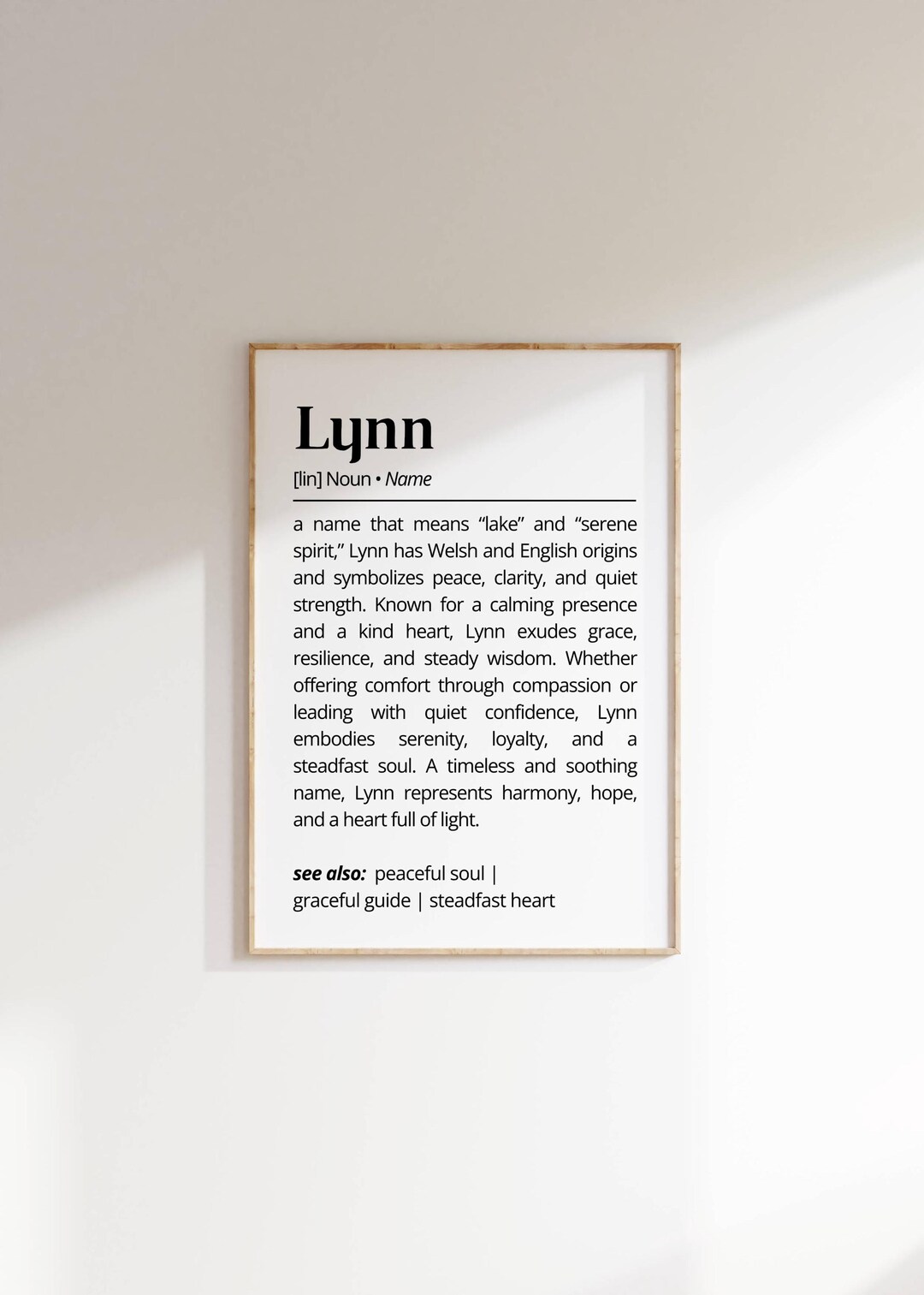
To understand what Lynn represents in a Hebrew-speaking environment, one must first recognize its primary origins. Lynn (or Lyn) traditionally stems from the Welsh word llyn, which translates to "lake" or "pool." In Old English, it is also associated with hlynna, meaning "torrent" or "cascade." It has historically served as both a surname and a given name, and it frequently appears as a suffix in names like Marilyn, Carolyn, or Evelynn.
When this name enters the Hebrew language, it does so primarily as a transliteration. Because Hebrew is an Abjad (a writing system where each symbol stands for a consonant), vowels are often represented by specific letters acting as placeholders or by diacritical marks called nikkud.
To write "Lynn" in Hebrew, the following characters are used:
- Lamed (ל): Representing the "L" sound.
- Yod (י): Acting as a mater lectionis to represent the "i" or "ee" vowel sound.
- Nun Sofit (ן): The final form of the letter Nun, representing the "n" sound at the end of a word.
This results in לין. While the transcription is straightforward, the cultural "meaning" shifts once the name is viewed through the lens of Hebrew roots and biblical history.
The Hebrew Root L-Y-N (ל-י-ן) and Its Semantic Meaning
In Hebrew, almost every word is derived from a three-letter root (tri-consonantal root). The phonetic sequence of Lynn (L-Y-N) corresponds directly to a root that has existed since biblical times.
The root Lamed-Yod-Nun (ל-י-ן) or Lamed-Wav-Nun (ל-ו-ן) is associated with the concept of "staying," "lodging," or "spending the night."
Biblical Context of the Root
In the Hebrew Bible (Tanakh), the verb lan (לָן) appears in several significant passages. One of the most famous instances is found in Genesis 28:11, regarding Jacob’s ladder: "And he lighted upon a certain place, and tarried there all night (vayalun), because the sun was set."
In this context, the root conveys a sense of finding shelter, rest, and protection during the darkness. While this is quite different from the "lake" meaning of the Welsh origin, some modern interpretations view the Hebrew root as symbolic of "finding a home" or "providing a sanctuary."
Modern Hebrew Usage
In contemporary Israel as of 2026, derivatives of this root are common in daily life:
- Lina (לינה): This noun means "lodging," "overnight stay," or "accommodation." It is frequently used in the travel and hospitality industry (e.g., lina ve'aruchat boker—bed and breakfast).
- Malon (מלון): While derived from a similar root, this is the standard Hebrew word for "hotel."
When a child is named Lynn in Israel today, it is rarely because the parents are thinking of "lodging." Instead, they are typically drawn to the "International Hebrew" trend—names that are short, easy to pronounce in English-speaking countries, and possess a soft, melodic sound.
Is "Lynn" a Common Name in Israel?
As of 2026, naming trends in Israel have shifted toward brevity and global compatibility. While Lynn is not as common as names like Noa, Maya, or Agam, it has carved out a niche among secular families and those with international backgrounds.
The name is often perceived as:
- Modern: It lacks the heavy religious or traditional weight of names like Sarah or Rivka.
- Gender-Neutral: While predominantly female in the West, the phonetic "Lin" or "Lynn" is occasionally used in unisex contexts in Israel, though it remains much more common for girls.
- Sophisticated: The "L" sound (Lamed) is often associated with gentleness and fluidity in Hebrew aesthetics.
Hebrew Alternatives with Similar Meanings
If a parent is looking for a "Hebrew version" of Lynn that preserves the original Welsh meaning of "lake" or "water," there are several native Hebrew options. These names carry the watery essence of the original etymology while being deeply rooted in the Hebrew language.
| Hebrew Name | Hebrew Script | English Meaning | Connection to Lynn |
|---|---|---|---|
| Agam | אגם | Lake | Matches the Welsh etymology of Lynn ("lake"). |
| Mayim | מים | Water | Reflects the elemental nature of the name. |
| Gal | גל | Wave | Captures the movement of water. |
| Kinneret | כנרת | Sea of Galilee | A specific, iconic Israeli lake. |
| Linoy | לינוי | "Beauty for me" | Shares the "Lin" sound with a Hebrew meaning (Li + Noy). |
| Lital | ליטל | "Dew for me" | Combines the "Li" prefix with "Tal" (Dew/Water). |
Agam: The Direct Semantic Equivalent
For those seeking the closest semantic match, Agam (אגם) is the most accurate. In Hebrew, Agam specifically means a lake or a large pond. It has become a highly popular name for girls in Israel over the last two decades. Choosing Agam provides the "lake" meaning of Lynn while using a word that is natively and undeniably Hebrew.
Linoy and Lior: The Phonetic Bridge
Many parents who like the sound of Lynn but want a name with a clearer Hebrew meaning opt for Linoy (לינוי). This name is a combination of "Li" (to me/for me) and "Noy" (beauty). It retains the "Lin" sound at the beginning but anchors the name in Hebrew vocabulary. Similarly, Lior (my light) is a common choice for those drawn to "L" names.
Practical Considerations for 2026
If you are choosing the name Lynn for use in a Hebrew-speaking context—such as for a birth certificate, a move to Israel, or a Hebrew naming ceremony—there are a few technical details to keep in mind regarding spelling and pronunciation.
Spelling Variations
While לין is the most common spelling, you may occasionally see ליין. The double "Yod" (יי) is sometimes used in non-vocalized Hebrew (Ktiv Male) to ensure the reader knows to pronounce it as a long "i" sound rather than a short vowel. However, for a name as short as Lynn, the single Yod is usually sufficient and more aesthetically pleasing.
Gender Considerations
In the United States and the United Kingdom, Lynn has historically transitioned from a male name to a predominantly female one. In Israel, the phonetic sound "Lin" is almost exclusively feminine. If used for a boy, it might be mistaken for a nickname or a non-Hebrew name, whereas for a girl, it fits perfectly into the modern landscape of short, vowel-heavy names.
Frequently Asked Questions
1. Does the name Lynn appear in the Torah?
No, the name Lynn does not appear in the Torah as a proper noun. However, the root word lan (to lodge or stay the night) appears frequently. For example, in the Book of Ruth, the root is used to describe Ruth's loyalty: "Where you lodge (taliyni), I will lodge."
2. Is Lynn considered a "Jewish" name?
Lynn is considered a "Jewish-associated" name in the Diaspora primarily because it was a popular choice for Jewish immigrants in the mid-20th century who wanted names that sounded English but were easy to pronounce. However, it is not a traditional Hebrew or Yiddish name. In modern Israel, it is viewed as an international loan name.
3. How do you say "Lake Lynn" in Hebrew?
If you were referring to a geographical location named Lake Lynn, you would say Agam Lynn (אגם לין). Here, Agam acts as the descriptor for "Lake."
4. What is the numerological value of Lynn in Hebrew?
Using Gematria (the Jewish system of assigning numerical values to letters), the name לין (Lamed = 30, Yod = 10, Nun = 50) equals 90. In Gematria, 90 is associated with the letter Tzadi, which symbolizes the Tzadik (the righteous person).
5. Can Lynn be a nickname for a Hebrew name?
Yes. Lynn is often used as a diminutive or nickname for Hebrew names like Linoy, Lina, or even Liora. It provides a shorter, more "Westernized" version of these traditional names.
Final Recommendation
If your goal is to honor the linguistic heritage of the name Lynn while connecting it to Hebrew culture, the best approach depends on your priority. For phonetic consistency, use לין (Lynn/Lin), which is modern, sleek, and easily understood in Israel. For symbolic depth, consider the name Agam (Lake), which preserves the original Welsh meaning of Lynn in a native Hebrew form.
As we move through 2026, the boundaries between naming traditions continue to blur. Lynn stands as a perfect example of a name that, while not originally Hebrew, has found a comfortable home in the language through both its phonetic transcription and its accidental connection to an ancient biblical root of rest and lodging.
Image Gallery