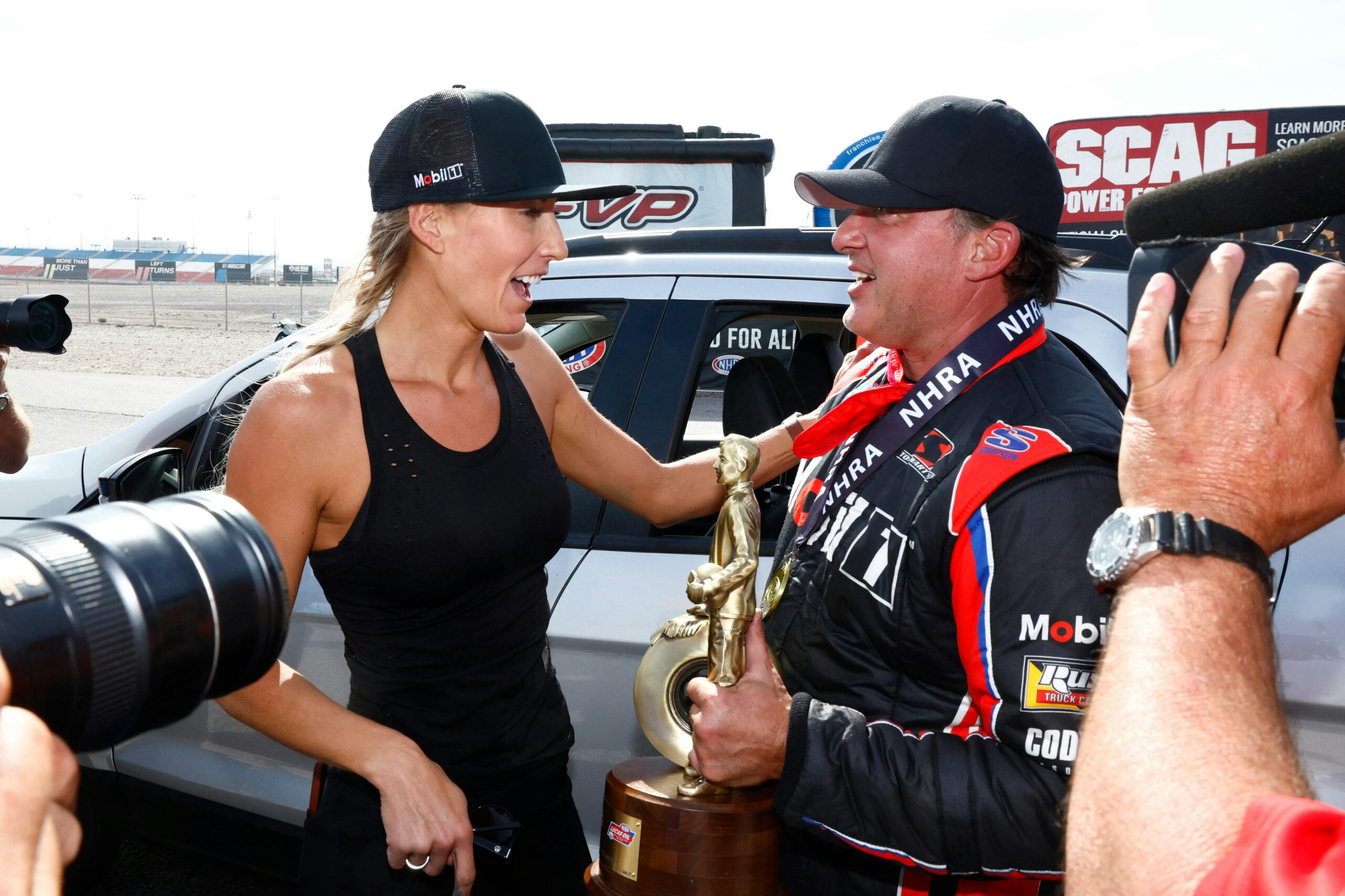
Understanding Leah Pruett’s Financial Profile and Career Valuation in 2026
Leah Pruett, a prominent figure in the NHRA (National Hot Rod Association) Top Fuel category, holds an estimated net worth between $3 million and $5 million as of 2026. This valuation reflects her extensive career earnings, high-profil...
Leah Pruett, a prominent figure in the NHRA (National Hot Rod Association) Top Fuel category, holds an estimated net worth between $3 million and $5 million as of 2026. This valuation reflects her extensive career earnings, high-profile multi-year sponsorship agreements, race winnings, and her transition into team ownership and strategic brand partnerships within professional motorsports.
Contents
The Foundations of Leah Pruett’s Professional Earnings
Analyzing the net worth of a professional drag racer requires looking beyond simple annual salaries. In the high-stakes world of Top Fuel racing, income is rarely a fixed paycheck. Instead, it is a complex ecosystem of performance bonuses, sponsorship equity, and commercial endorsements. By 2026, Leah Pruett has solidified her status as one of the most bankable athletes in the NHRA circuit.
Primary Revenue Streams for Top Fuel Drivers
- Sponsorship Agreements: The core of a Top Fuel racer’s income is derived from corporate partnerships. Major automotive, lubricant, and lifestyle brands pay for vehicle real estate and pilot association.
- Race Purse Winnings: NHRA events offer significant prize money for event winners and finalists. While Top Fuel budgets are massive, the portion allocated to the driver’s personal earnings is performance-dependent.
- Merchandising and Licensing: Personal branding, including team apparel and collaborative product lines, contributes a steady, albeit smaller, percentage to overall wealth.
- Team Equity and Ownership Stakes: Moving beyond the cockpit, participating in team management increases the long-term asset value of a driver’s professional profile.
The Role of Strategic Sponsorship in Motorsports Valuation
In 2026, the financial viability of any NHRA driver is directly tied to their ability to provide ROI (Return on Investment) for sponsors. Leah Pruett’s career has been characterized by her ability to bridge the gap between high-performance engineering and corporate marketing.
Sponsorships in the 2020s have shifted toward digital integration. It is no longer enough to simply display a logo on a rail. Drivers today are responsible for content creation, social media engagement, and executive presence at corporate hospitality events. This shift has inflated the market value of top-tier drivers who possess both driving talent and media savvy.
Industry Standard Evaluation: Professional motorsports valuations in 2026 utilize a performance-multiplied model. A driver’s net worth is calculated by combining their tangible assets—such as team ownership stakes and real estate—with the projected value of their multi-year contracts, adjusted for the volatility of seasonal performance.
Comparative Financial Dynamics in the NHRA Circuit
To better understand where Leah Pruett stands, it is useful to compare the financial landscape of Top Fuel drivers with other professional racing categories. Drag racing presents unique financial requirements compared to oval track or road course racing.
| Revenue Component | Top Fuel Driver (NHRA) | NASCAR Cup Series Driver | Professional Road Racer |
|---|---|---|---|
| Primary Funding | Performance Sponsorship | Corporate Fleet Sponsorship | OEM/Manufacturer Support |
| Season Duration | High-intensity (20-21 events) | High-volume (36 events) | Seasonal/Global |
| Asset Potential | High (Team Equity) | Very High (Charter Systems) | Moderate (Endorsement-led) |
| Primary Salary Base | Performance-Contingent | Contractual/Fixed Salary | Commission/Sponsorship |
Career Milestones and Their Impact on Marketability
Leah Pruett’s progression through the ranks of the NHRA has been marked by consistent improvement in standings and visibility. Each "Wally" trophy and each event record serves as a lever for negotiating higher sponsorship rates in subsequent seasons.
Her transition from driver to active participant in team development has also shielded her from the typical salary compression that affects aging athletes in other sports. By focusing on the business side of the pit lane, she has ensured that her personal brand retains value regardless of specific race day outcomes. This strategic positioning is a key component of her total net worth assessment.
Managing Wealth in Professional Athletics
Professional drivers face unique financial challenges, including high insurance premiums, significant travel expenses, and the necessity of maintaining personal management teams. In 2026, the financial planning for an athlete of Pruett’s caliber involves:
- Tax Optimization for High-Net-Worth Athletes: Utilizing specialized vehicles to manage income derived from diverse sources including international race purses.
- Liability Management: Maintaining comprehensive insurance portfolios to cover the physical and professional risks inherent in piloting 11,000-horsepower vehicles.
- Long-Term Diversification: Reinvesting earnings into assets outside of the racing industry, such as real estate, private equity, or sustainable technology investments.
Frequently Asked Questions Regarding Leah Pruett’s Wealth
Does Leah Pruett earn a salary like a traditional employee? Most Top Fuel drivers operate as independent contractors or business entities rather than traditional employees. Her "salary" is effectively a distribution from her team’s operating budget, augmented by independent sponsorships.
How much does an NHRA driver make per race win? Event purses vary by sponsor and category, but in the Top Fuel class, the winner typically receives a payout that helps cover operational costs. However, the true value of a win is the "exposure equity" it provides to secure higher-paying renewals with lead sponsors.
How does team ownership affect net worth? Owning an equity stake in an NHRA team transforms a driver from a service provider into a business owner. This increases total valuation by adding the worth of physical assets, such as transporters, spare parts, and the intellectual property of the team’s custom engine configurations.
Are sponsorships the only source of income for drag racers? While sponsorships are the primary revenue driver, professional racers also earn through public appearances, broadcast commentary, and licensing deals for video games and apparel.
Has the economic landscape for NHRA changed in 2026? The 2026 racing season has seen an increase in digital-first sponsorship activations. Drivers who can generate high engagement on social platforms are seeing their market value increase compared to those relying solely on traditional trackside advertising.
Final Perspective on Athletic Financial Strategy
Leah Pruett’s financial trajectory serves as a case study for modern professional athletes in specialized sports. By maintaining a balance between extreme on-track performance and professional off-track brand management, she has successfully built a sustainable financial foundation. For those interested in the economics of motorsports, following the career path of drivers who prioritize business diversification—rather than just on-track speed—remains the most reliable indicator of long-term financial health.
As the 2026 season progresses, stakeholders in the motorsports industry should continue to monitor how these drivers leverage their personal brands to transition into the next stage of their business careers, whether through team management, broadcast media, or private investment ventures.
Image Gallery