Why Are American Cars So Big? The History, Economics, and Regulations Driving Large Vehicles
American cars are notably larger than their European and Asian counterparts due to a unique convergence of historical cheap fuel, lenient regulatory standards for light trucks, suburban infrastructure, and shifting consumer preferences...
American cars are notably larger than their European and Asian counterparts due to a unique convergence of historical cheap fuel, lenient regulatory standards for light trucks, suburban infrastructure, and shifting consumer preferences toward safety, comfort, and status.
Contents
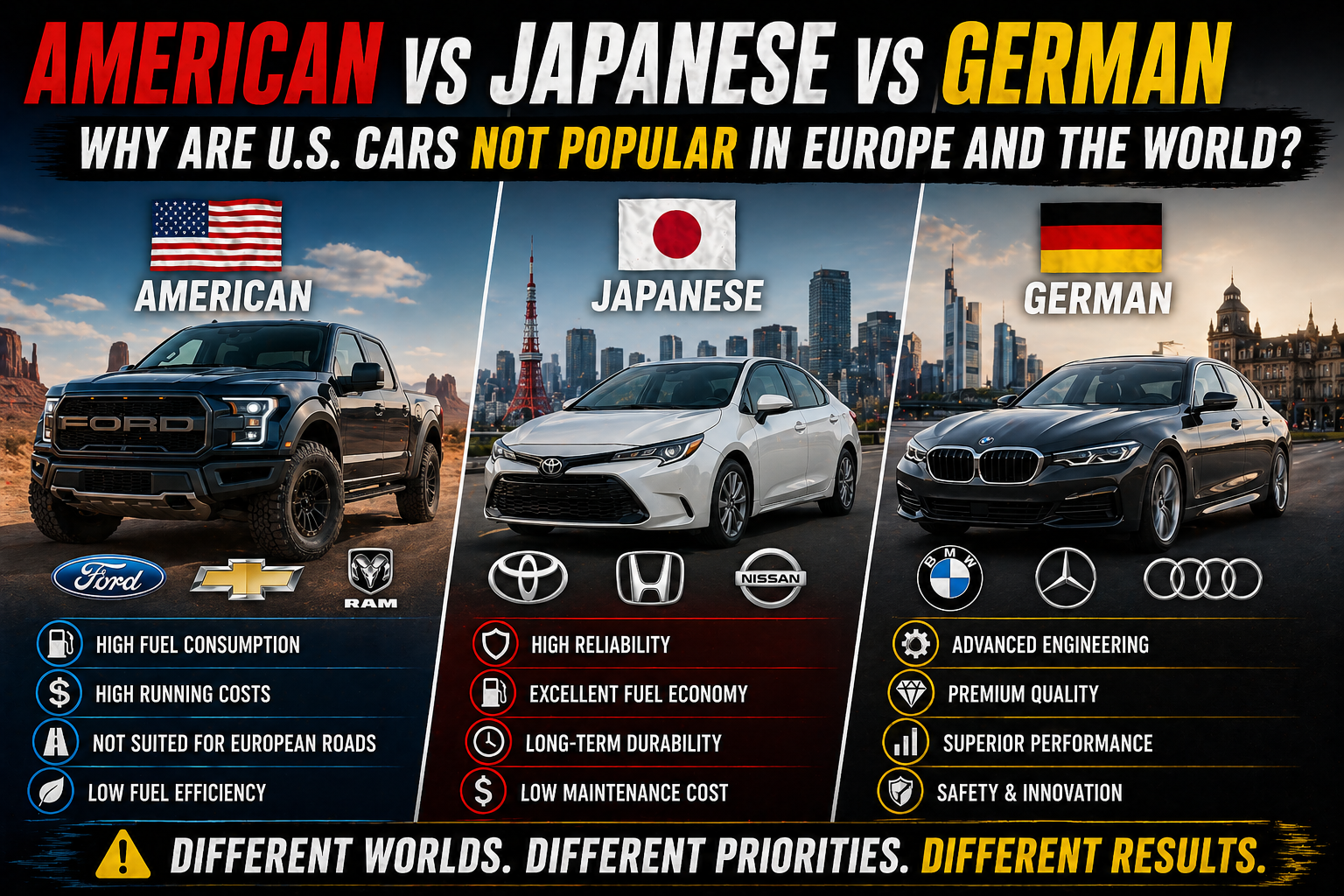
For decades, the automotive landscape in the United States has favored full-size pickup trucks, large sport utility vehicles (SUVs), and spacious sedans. To understand why American vehicles maintain this massive footprint, it is necessary to examine the regulatory loopholes, economic forces, and cultural shifts that have shaped the nation's roads for generations.
The Regulatory Framework: CAFE Standards and the Light Truck Loophole
Government policy plays a foundational role in shaping vehicle dimensions. When the United States federal government introduced Corporate Average Fuel Economy (CAFE) standards in 1975 in response to the 1973 oil crisis, manufacturers were forced to drastically improve the average fuel efficiency of their entire fleet of passenger cars.
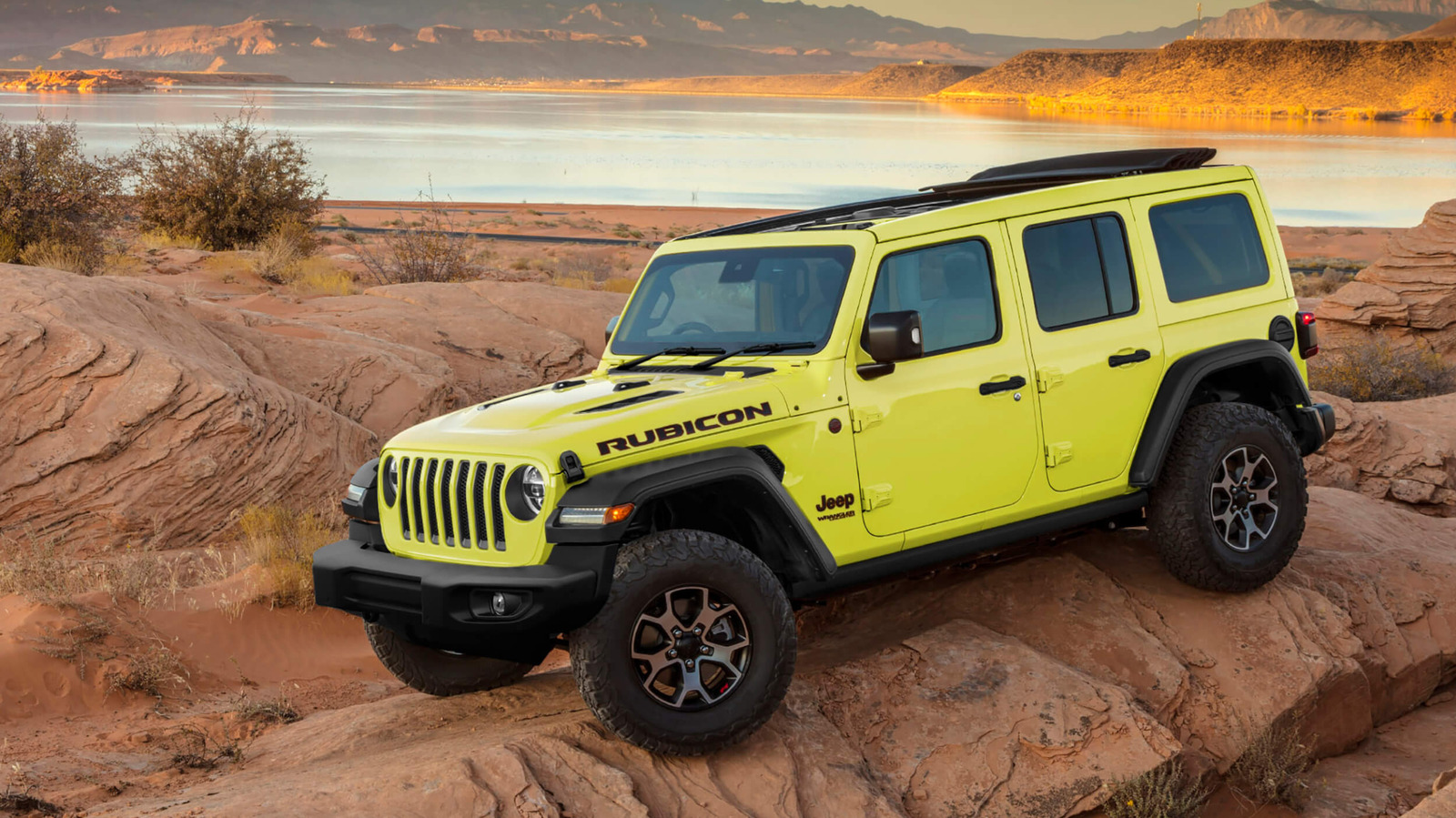
However, the regulations established different compliance tracks for passenger cars versus "light trucks"—a category that initially included pickup trucks, vans, and off-road utility vehicles like the Jeep Cherokee and Ford Bronco. Because light trucks were viewed primarily as commercial and agricultural workhorses, they were held to much less stringent fuel economy standards than traditional sedans and station wagons.
Automakers quickly realized they could maximize profits by shifting consumer demand toward larger vehicles. Building a large truck or SUV was often cheaper relative to its sale price than engineering high-tech, highly efficient small engines or lightweight composite passenger cars.
As consumer demand evolved, manufacturers expanded the light truck category by introducing unibody crossovers and luxury SUVs built on truck platforms. This regulatory structure effectively penalized compact passenger car production while subsidizing the proliferation of larger vehicles on American roadways.
Infrastructure and Space: The American Geography
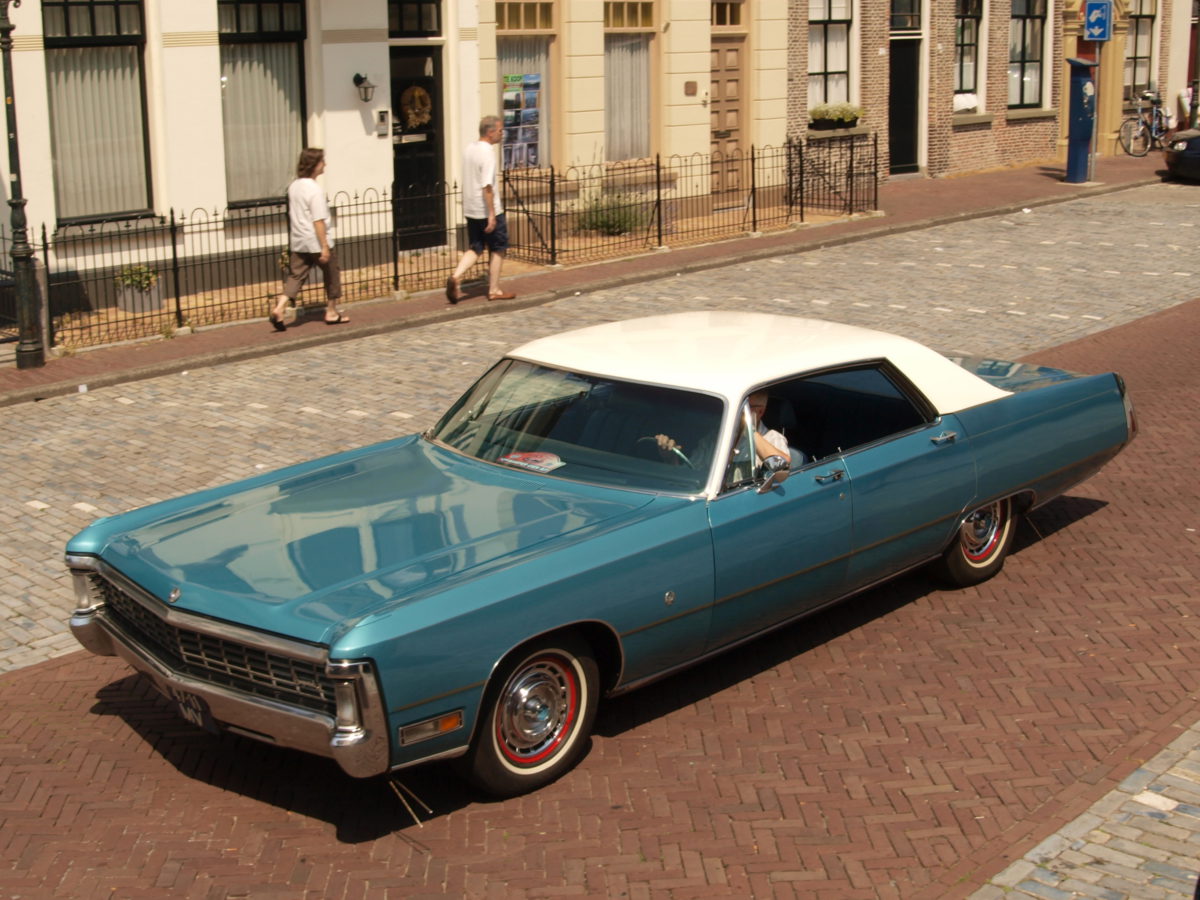
The physical layout of the United States has historically accommodated, and even demanded, larger vehicles. Unlike many European cities characterized by medieval street plans, narrow cobblestone alleys, and dense urban packing, American cities and suburbs grew exponentially during the mid-20th-century boom of the automotive age.
Wide multi-lane highways, expansive parking lots, sprawling suburban driveways, and large suburban garages remove the spatial constraints that plague drivers in Tokyo, London, or Rome. When a vehicle's physical footprint is not restricted by tight turning radiuses or scarce parking spaces, consumers naturally gravitate toward the comfort, roominess, and utility that larger dimensions provide.
Furthermore, the sheer vastness of the American landscape fosters long-distance travel. Driving hundreds of miles between states or across vast rural stretches makes highway stability, expansive legroom, and cavernous cargo capacities practical necessities rather than luxury features.
Economic Factors and Profit Margins
From a business perspective, large vehicles represent the financial lifeblood of major domestic automakers such as Ford, General Motors, and Stellantis. The profit margins on compact cars are historically razor-thin due to intense global competition, low entry-level price points, and high manufacturing volume requirements.
Conversely, large SUVs and heavy-duty pickup trucks can command staggering retail prices—often exceeding $80,000 to $100,000 when outfitted with luxury trims, advanced towing packages, and leather interiors.
| Vehicle Class | Average Weight (lbs) | Average Length (inches) | Primary Profit Margin | Fuel Economy Regulation Track |
|---|---|---|---|---|
| Subcompact Car | ~2,700 - 3,000 | 160 - 170 | Low / Minimal | Strict Passenger Car Standards |
| Midsize Crossover | ~3,800 - 4,300 | 185 - 195 | Moderate | Light Truck / Dual Standard |
| Full-Size SUV | ~5,500 - 6,000 | 200 - 225 | High / Premium | Light Truck Standard |
| Heavy-Duty Pickup | ~6,500 - 8,500 | 230 - 250 | Very High | Exempt from Standard CAFE |
Because consumers are willing to pay significant premiums for size, capability, and perceived status, automakers allocate their research, development, and marketing budgets heavily toward larger platforms. This economic cycle reinforces the dominance of big vehicles on showroom floors.
Cultural Perceptions of Safety and Status
Consumer psychology heavily influences the American preference for scale. In the collective mindset of many drivers, vehicle size is directly correlated with physical safety. The physics of a collision dictate that in a crash between a massive vehicle and a lightweight car, the occupants of the smaller vehicle absorb a disproportionate amount of kinetic energy.
This dynamic has created an automotive "arms race," where drivers purchase large SUVs and trucks partly to protect themselves from other large vehicles on the road.
Beyond safety, American automotive culture has long treated vehicles as extensions of personal identity and social status. Full-size pickup trucks, once strictly utilitarian tools for farming and construction, have transformed into luxury lifestyle vehicles. Leather-trimmed crew-cab trucks serve as daily drivers for suburban families, signaling rugged capability, independence, and affluence.
Environmental and Safety Trade-Offs
The dominance of oversized vehicles comes with significant systemic consequences. While modern engineering has drastically reduced tailpipe emissions compared to older generations of internal combustion engines, larger vehicles still consume more fuel and produce higher overall greenhouse gas emissions than smaller alternatives. This offsets some of the environmental gains achieved through the electrification of the automotive sector.
From a public safety standpoint, the height and weight of modern American cars present distinct hazards. High-riding hoods and massive front fascias create substantial blind spots, making it difficult for drivers to see pedestrians and cyclists, particularly children.
Data compiled by transportation safety organizations indicate that collisions involving high-profile, heavy light trucks and SUVs carry a significantly higher fatality rate for pedestrians than impacts involving traditional passenger cars.
Frequently Asked Questions
Are American cars getting bigger over time?
Yes. Over the past several decades, successive generations of popular models—such as the Ford F-150, Chevrolet Tahoe, and Toyota Camry—have grown substantially wider, taller, and heavier. This growth is driven by the addition of modern safety structures, advanced technology packages, and consumer demand for interior roominess.
Do electric vehicles solve the size problem?
Not necessarily. While electric vehicles (EVs) eliminate tailpipe emissions, battery-electric trucks and large SUVs often weigh significantly more than their gasoline-powered equivalents due to the sheer mass of heavy lithium-ion battery packs required to achieve long driving ranges.
Are large trucks and SUVs taxed differently in the US?
Under federal tax codes, businesses can often utilize Section 179 depreciation deductions to write off heavy vehicles (those with a Gross Vehicle Weight Rating exceeding 6,000 pounds) used for business purposes. This tax structure provides an additional financial incentive for business owners and self-employed professionals to purchase large SUVs and trucks.
Do European automakers sell large cars in America?
European and Asian manufacturers often produce vehicle variants specifically tailored for the North American market that are noticeably larger than the versions they sell in their home countries. Brands like BMW, Mercedes-Benz, and Toyota manufacture large SUVs and trucks within North America to satisfy local preferences.
Practical Next Steps for Vehicle Buyers
When evaluating your next vehicle purchase, balance the desire for space and perceived safety against practical operating realities. Consider how vehicle dimensions impact daily parking availability, maneuverability in tight urban environments, and long-term fuel or electricity costs. Test-driving multiple segments can clarify whether a midsize crossover or compact utility vehicle adequately meets your daily utility needs without the physical footprint of a full-size platform.
Image Gallery