Complete Guide to the Navy Federal Credit Union Credit Card Application
Applying for a Navy Federal Credit Union credit card requires meeting specific membership criteria, preparing essential financial documentation, and understanding the underwriting criteria used for different card tiers in 2026. This gu...
Applying for a Navy Federal Credit Union credit card requires meeting specific membership criteria, preparing essential financial documentation, and understanding the underwriting criteria used for different card tiers in 2026. This guide details every step of the submission process, eligibility prerequisites, and optimization strategies to maximize approval odds.
Contents
Understanding Navy Federal Credit Union Membership Prerequisites
Before initiating any card submission, applicants must establish active membership with Navy Federal Credit Union (NFCU). Membership is strictly restricted to individuals with specific ties to the military, Department of Defense, National Guard, or Coast Guard, along with their immediate family members and household residents.
The eligibility umbrella encompasses several distinct groups:
- Active duty personnel from the Army, Marine Corps, Navy, Air Force, Space Coast, and Coast Guard.
- Veterans and retirees who have honorably served.
- Reserve and National Guard components.
- Department of Defense civilian personnel, contractors assigned to government installations, and delayed entry program (DEP) participants.
- Immediate family members, defined as spouses, parents, children, siblings, grandparents, and grandchildren, including step-family relationships and household occupants sharing a domicile.
Establishing membership involves opening a primary savings share account with a minimum initial deposit of $5. Applicants must provide valid government-issued identification, a Social Security Number or Individual Taxpayer Identification Number, and proof of military affiliation or familial connection.
Reviewing Credit Card Tiers and Matching Options to Financial Profiles
Navy Federal offers a diverse portfolio of consumer credit cards tailored to different spending habits, credit histories, and reward preferences. Selecting the correct product before submitting prevents unnecessary hard credit inquiries that could temporarily lower credit scores.
| Card Name | Primary Reward Structure | Typical Credit Tier Required | APR Range (2026) | Foreign Transaction Fees |
|---|---|---|---|---|
| cashRewards | 1.5% to 1.75% cash back on all purchases | Good to Excellent (670+) | 11.49% - 18.00% Variable | None |
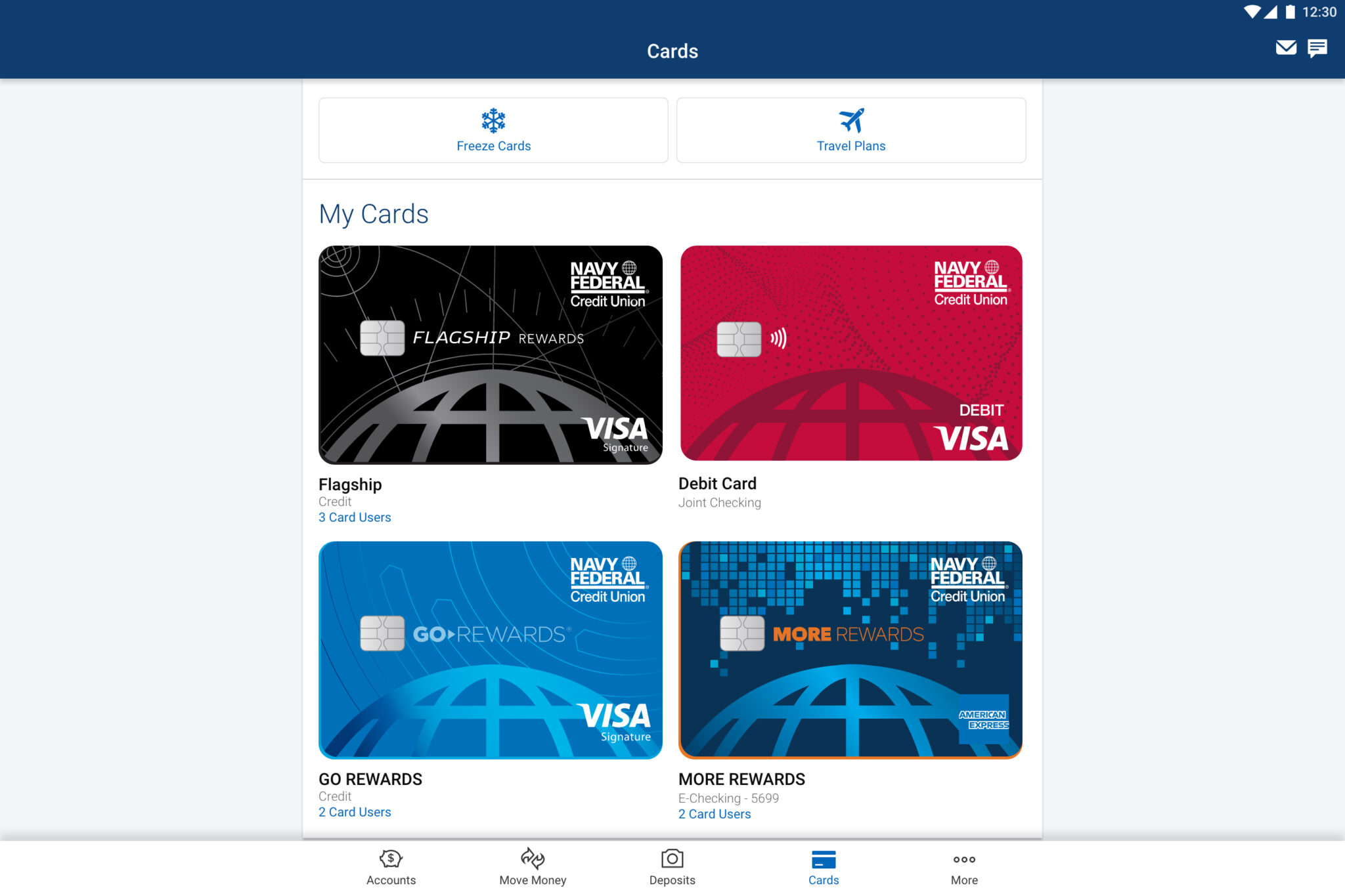
| More Rewards American Express | 3x points on supermarkets, gas, transit, and dining | Fair to Good (620+) | 11.49% - 18.00% Variable | None |
| Flagship Rewards Signature Visa | 3x points on travel, 2x on all other purchases | Excellent (720+) | 15.99% - 18.00% Variable | None |
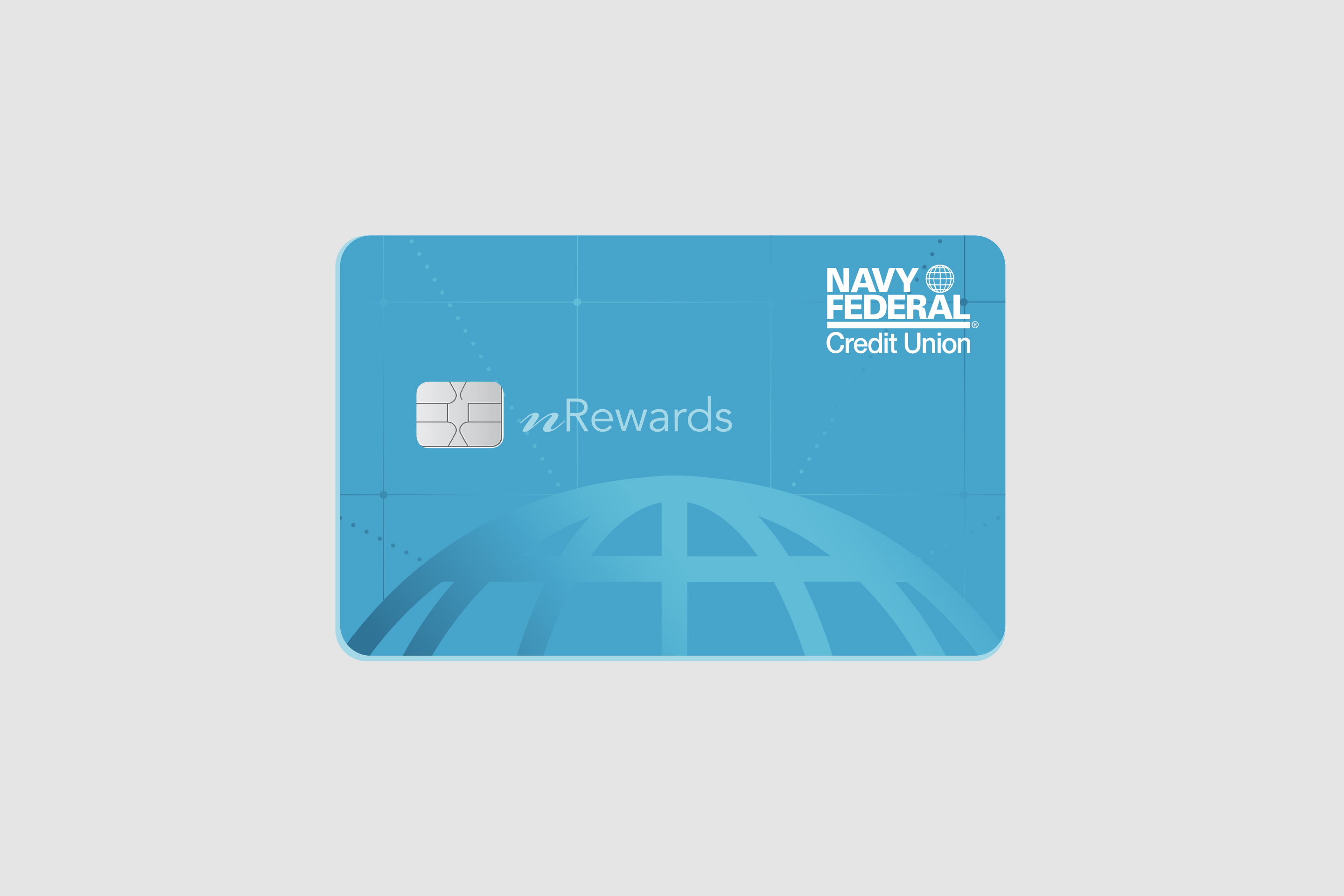
| nRewards Secured | Builds credit history; graduates to unsecured | Building / No Credit | 18.00% Fixed | None |
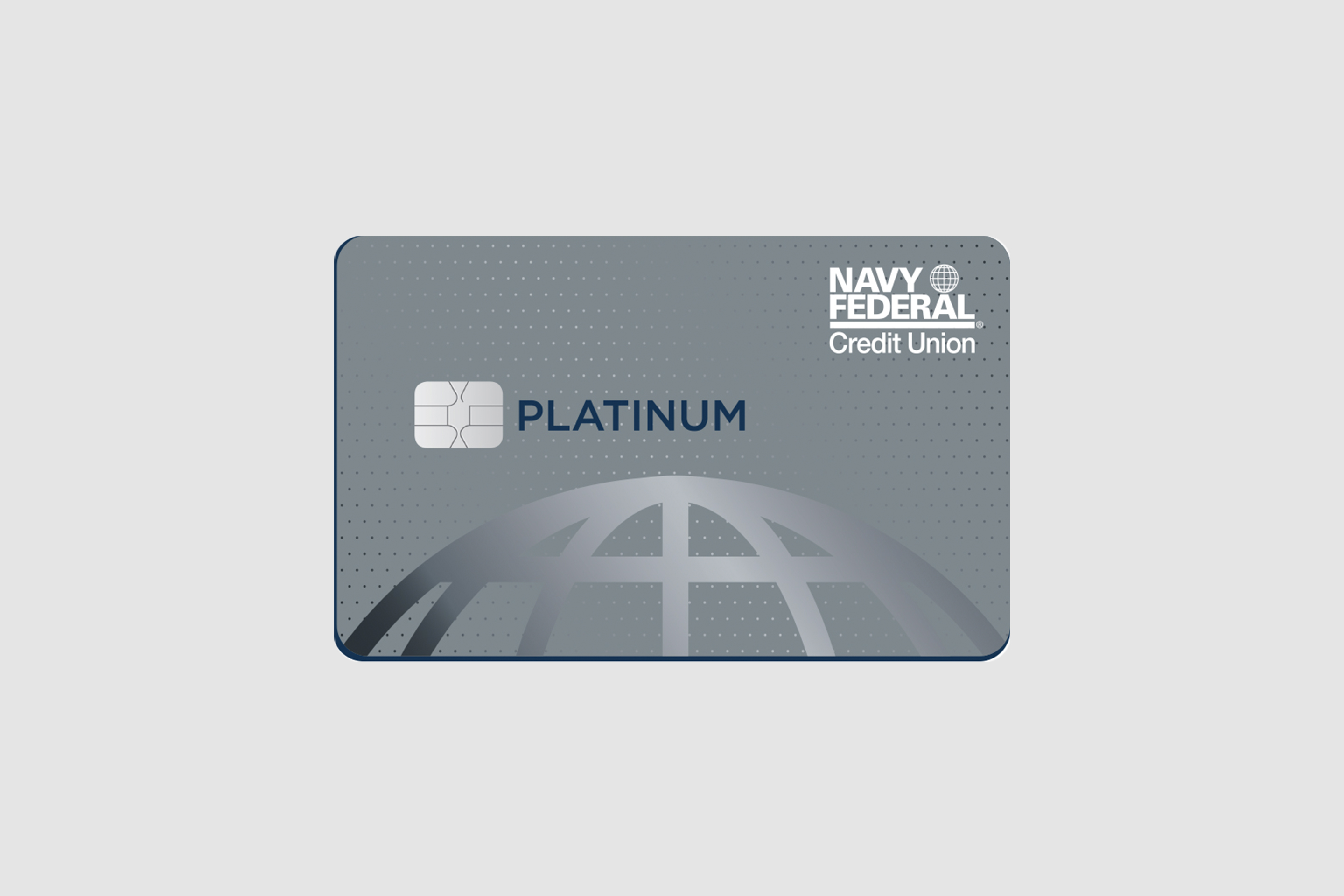
| Platinum | Low standard APR focused on balance transfers | Good to Excellent (680+) | 8.99% - 18.00% Variable | None |
Matching your financial profile to the appropriate card ensures higher approval probability. Applicants with limited or damaged credit histories should consider the nRewards Secured card, which requires a refundable security deposit ranging from $200 to $5,000, serving as the credit limit. Responsible usage over several months typically prompts an automatic review for graduation to an unsecured card.
Preparing Necessary Documentation and Personal Information
Streamlining the submission requires having specific data points readily available. Inaccurate or mismatched data serves as a primary driver of processing delays or manual review holds.
- Personal Identification Data: Full legal name, current residential address, previous address if at current location for less than two years, date of birth, and Social Security Number.
- Employment and Income Verification: Current employer name, occupational title, length of employment, and total gross annual household income. Federal regulations require lenders to evaluate an applicant's independent ability to make minimum debt payments based on income.
- Housing Financial Metrics: Monthly mortgage payment or rent amount, along with designation of whether the home is owned or rented.
Step-by-Step Submission Process via Digital Channels
Submitting a request through digital channels represents the fastest method for receiving an underwriting decision. Most automated systems deliver a decision within seconds or minutes.
- Access the official Navy Federal Credit Union secure portal through their desktop website or official mobile application.
- Log into your established online banking profile using your multi-factor authentication credentials. If you are a new member, finish opening your savings account first.
- Navigate to the "Credit Cards" section, review the available product options, and select "Apply Now" under your chosen card.
- Complete the digital application form by accurately inputting your personal, employment, and financial metrics. Double-check all entries for typographical errors.
- Review the terms and conditions, pricing disclosures, and electronic communication consents, then submit the document for instant processing.
If the automated system cannot issue an immediate approval, the submission is routed to a loan officer for manual review. This status does not indicate a denial; rather, it often means the institution requires verifying documents such as a recent pay stub, tax return, or proof of residence.
Maximizing Approval Odds and Troubleshooting Common Obstacles
Optimizing your financial profile before submission significantly increases the likelihood of securing high credit limits and favorable interest rates. Underwriters evaluate specific internal and external metrics during the review process.
- Check Your Credit Reports: Review your reports through major bureaus to dispute inaccuracies, lower revolving credit utilization below 30%, and ensure no missed payments appear on active trade lines.
- Maintain Internal Banking History: Maintaining a healthy checking or savings balance, direct deposit history, or existing auto loans with Navy Federal demonstrates trustworthiness to their internal risk models.
- Manage Debt-to-Income (DTI) Ratio: Keep your total monthly debt obligations relative to your gross monthly income well below standard lending thresholds, ideally under 35%.
Common failure remedies involve resolving fraud alerts or credit freezes placed on your bureau files. Temporarily lifting freezes with Equifax, Experian, and TransUnion before submitting prevents automated rejection due to inability to pull credit data.
Comparing Navy Federal Cards to Major Commercial Issuers
Evaluating NFCU offerings against standard commercial bank portfolios highlights unique structural advantages. Unlike many national commercial institutions, Navy Federal does not charge balance transfer fees, cash advance fees, or foreign transaction fees on its credit card lineup.
- Fee Structure: Commercial issuers typically assess a 3% to 5% fee on balance transfers and foreign transactions. Navy Federal eliminates these nuisance fees across nearly all consumer cards.
- Interest Rates: NFCU credit card APRs are federally capped, often resulting in substantially lower maximum interest rates compared to major commercial banks whose variable rates can exceed 29% for identical credit tiers.
- Customer Service: Members retain access to 24/7 domestic member service representatives without navigating complex automated phone trees.
Frequently Asked Questions
Does applying for a Navy Federal credit card trigger a hard inquiry?
Yes, submitting a formal application results in a hard credit inquiry on your credit report, which can cause a temporary, minor dip in your credit score. However, checking pre-qualification tools where available may utilize a soft pull that does not affect your score.
Can I apply for multiple credit cards at the same time?
Navy Federal typically restricts members to holding a maximum of three active consumer credit cards issued by the credit union. Furthermore, internal risk policies generally dictate waiting at least 90 days between subsequent credit card applications to demonstrate responsible credit management.
What is the minimum credit score required for Navy Federal credit cards?
While NFCU evaluates the entire financial profile rather than a single score, unsecured rewards cards generally require a score in the good-to-excellent range (670 and above). Secured card options are available for individuals with lower scores, thin files, or past bankruptcies.
How long does it take to receive the physical card after approval?
Upon final approval, physical cards are typically manufactured and mailed via standard USPS shipping, arriving within 5 to 7 business days. Expedited shipping options can sometimes be requested by speaking directly with a member service representative over the phone.
What should I do if my application is denied?
If an application is declined, Navy Federal will mail an Adverse Action Notice detailing the specific credit bureau factors that led to the decision. You can review these reasons, resolve any discrepancies on your credit report, and call the credit card department to request a reconsideration review if your financial circumstances have improved.
Practical Recommendation
Before submitting your credit card application, verify that your membership is fully established and funded with the baseline savings requirement. Assess your current credit standing to select the most appropriate card tier—such as opting for the More Rewards American Express card for daily grocery and fuel spending, or the Flagship Rewards card for premium travel perks—to ensure optimal alignment with your financial objectives.
Image Gallery