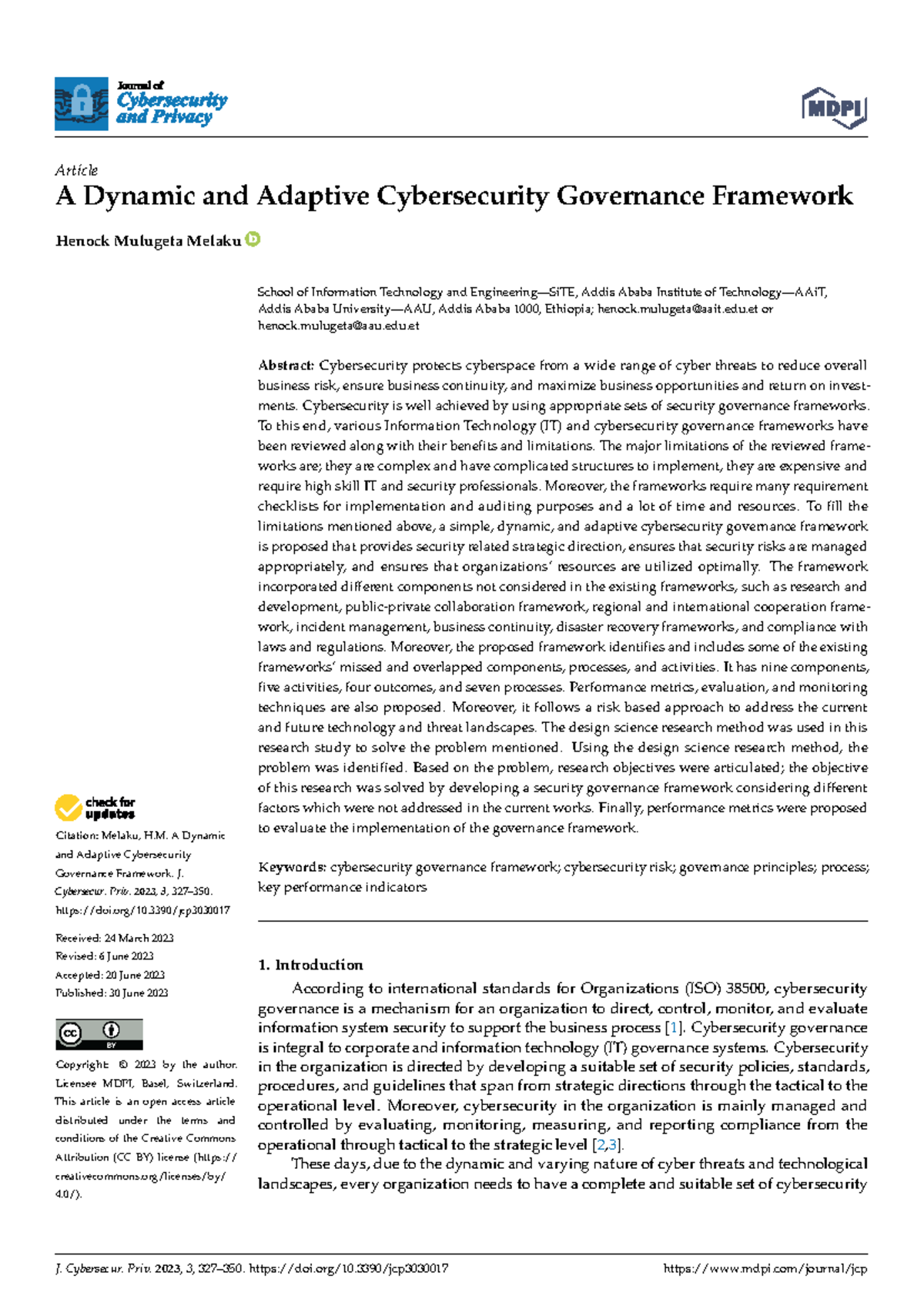
Understanding Cybersecurity Governance Frameworks in Practice
Cybersecurity governance frameworks establish the formal structures, policies, and accountability measures organizations use to direct and control their security programs. In practice, these frameworks bridge the gap between high-level...
Cybersecurity governance frameworks establish the formal structures, policies, and accountability measures organizations use to direct and control their security programs. In practice, these frameworks bridge the gap between high-level business objectives and technical defense operations, ensuring that digital risks are managed transparently and consistently across the enterprise.
Contents
Organizations face an increasingly complex threat landscape, regulatory scrutiny, and pressure from stakeholders to protect critical assets. Moving beyond ad-hoc security measures requires adopting structured governance frameworks that align information security with broader organizational goals. This article explores how cybersecurity governance frameworks operate in practice, examining their core components, implementation hurdles, framework comparisons, and ongoing operational maintenance.
The Foundation of Cybersecurity Governance
Governance forms the backbone of any mature information security program. Unlike technical controls—such as firewalls, endpoint detection systems, and encryption algorithms—which focus on preventing specific threats, governance dictates how decisions are made, who is accountable, and how resources are allocated.
At its core, a cybersecurity governance framework defines the rules of engagement for an organization's security posture. It establishes a top-down approach where executive leadership and the board of directors retain ultimate responsibility for risk oversight, while operational teams execute security policies day-to-day. Without this foundational structure, security efforts often become siloed, reactive, and misaligned with business priorities.
Implementing a framework requires mapping business processes to information assets. Organizations must identify what data they hold, where it resides, and who has access to it. This discovery phase prevents organizations from applying uniform security measures to assets of varying value, optimizing the allocation of finite cybersecurity budgets.
Core Components of an Effective Framework
While various frameworks exist, most effective governance structures share common foundational pillars. Understanding these components is essential for organizations seeking to operationalize security standards effectively.
- Executive Leadership
- (Board Oversight & Resource Allocation)
- Security Policy
- (Standards, Guidelines, & Procedures)
- Risk Assessment & Control
- (Identification & Mitigation)
- Monitoring & Continuous Auditing
- (Metrics, KPIs, & Reporting)
Policies, Standards, and Procedures
Governance begins with documentation. Policies state high-level management intent regarding security. Standards define mandatory requirements or rules to support policies, such as mandatory multi-factor authentication requirements. Procedures provide step-by-step instructions for personnel to follow when executing technical tasks.
Risk Management Integration
Governance frameworks mandate regular risk assessments. Rather than attempting to eliminate all vulnerabilities, governance provides a methodology for identifying, evaluating, and prioritizing risks based on potential business impact. This allows leadership to make informed decisions about whether to mitigate, transfer, accept, or avoid specific threats.
Accountability and Roles
A clear organizational chart for security is mandatory. Frameworks define specific roles, such as the Chief Information Security Officer (CISO), data protection officers, and asset owners. By clearly assigning responsibilities, organizations eliminate the ambiguity that often leads to security gaps during incidents.
Comparing Popular Cybersecurity Governance Frameworks
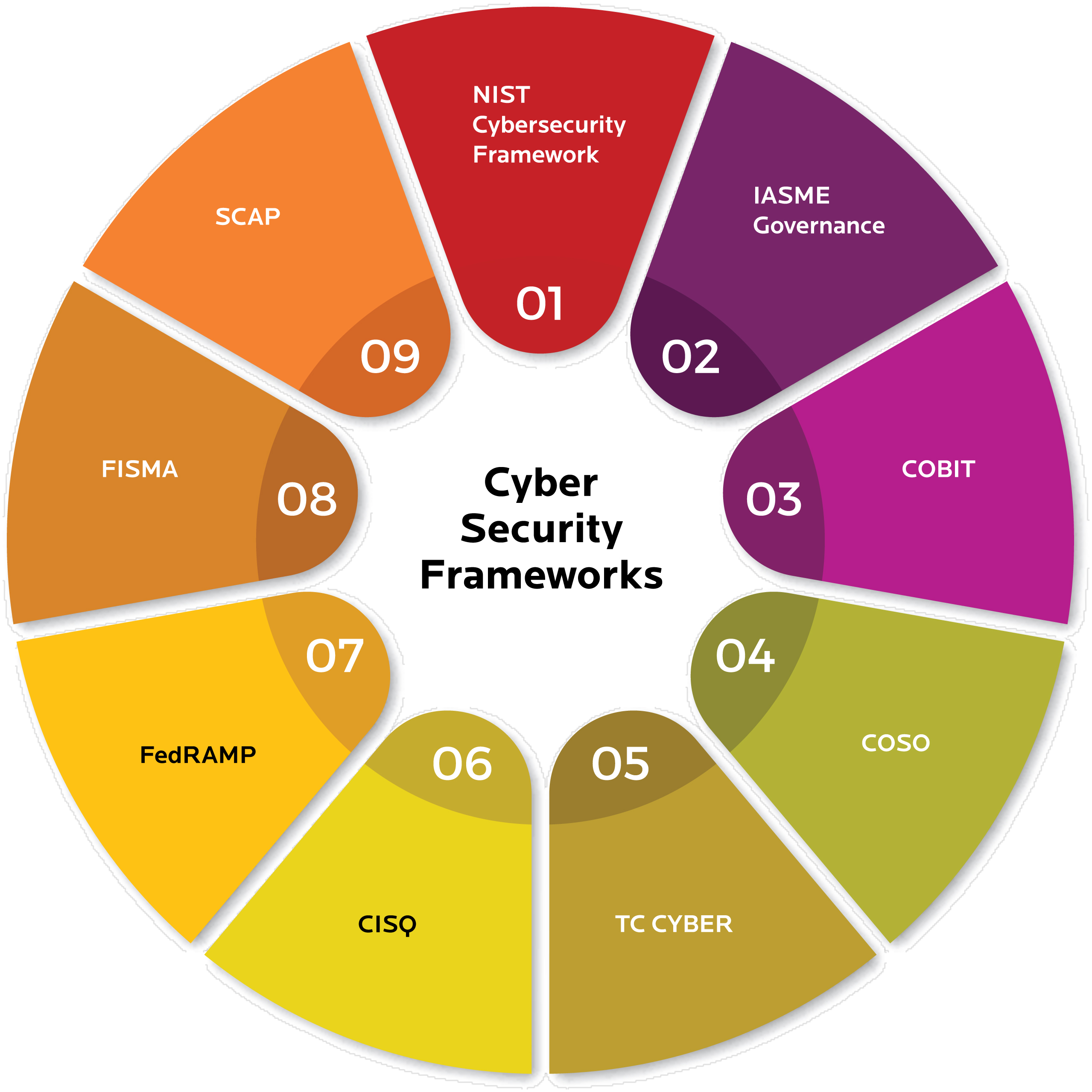
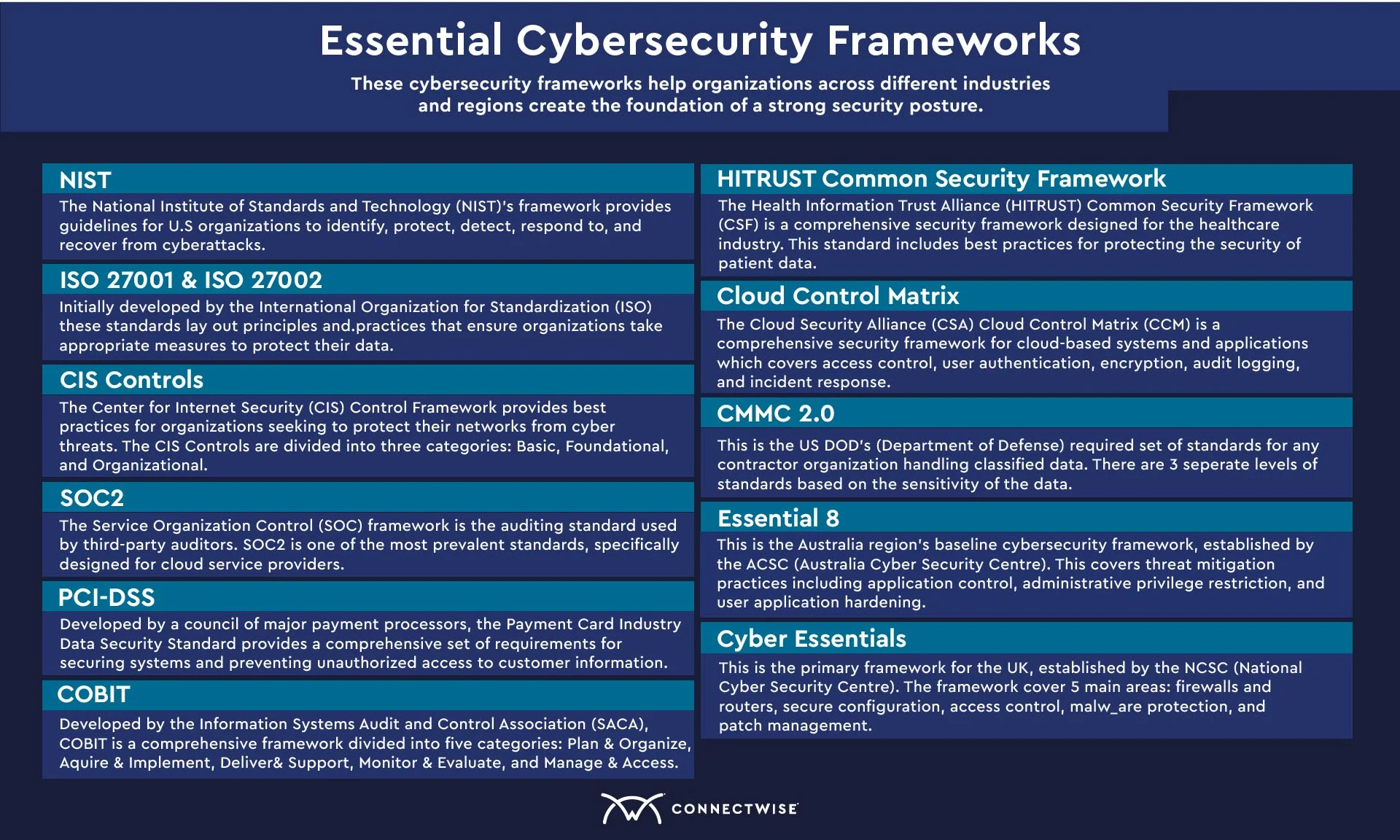
Organizations rarely build governance frameworks from scratch. Instead, they adopt or adapt established industry standards and guidelines published by recognized bodies. Choosing the right framework depends on regulatory requirements, industry sector, and operational scale.
| Framework / Standard | Primary Origin / Authority | Best Suited For | Core Focus |
|---|---|---|---|
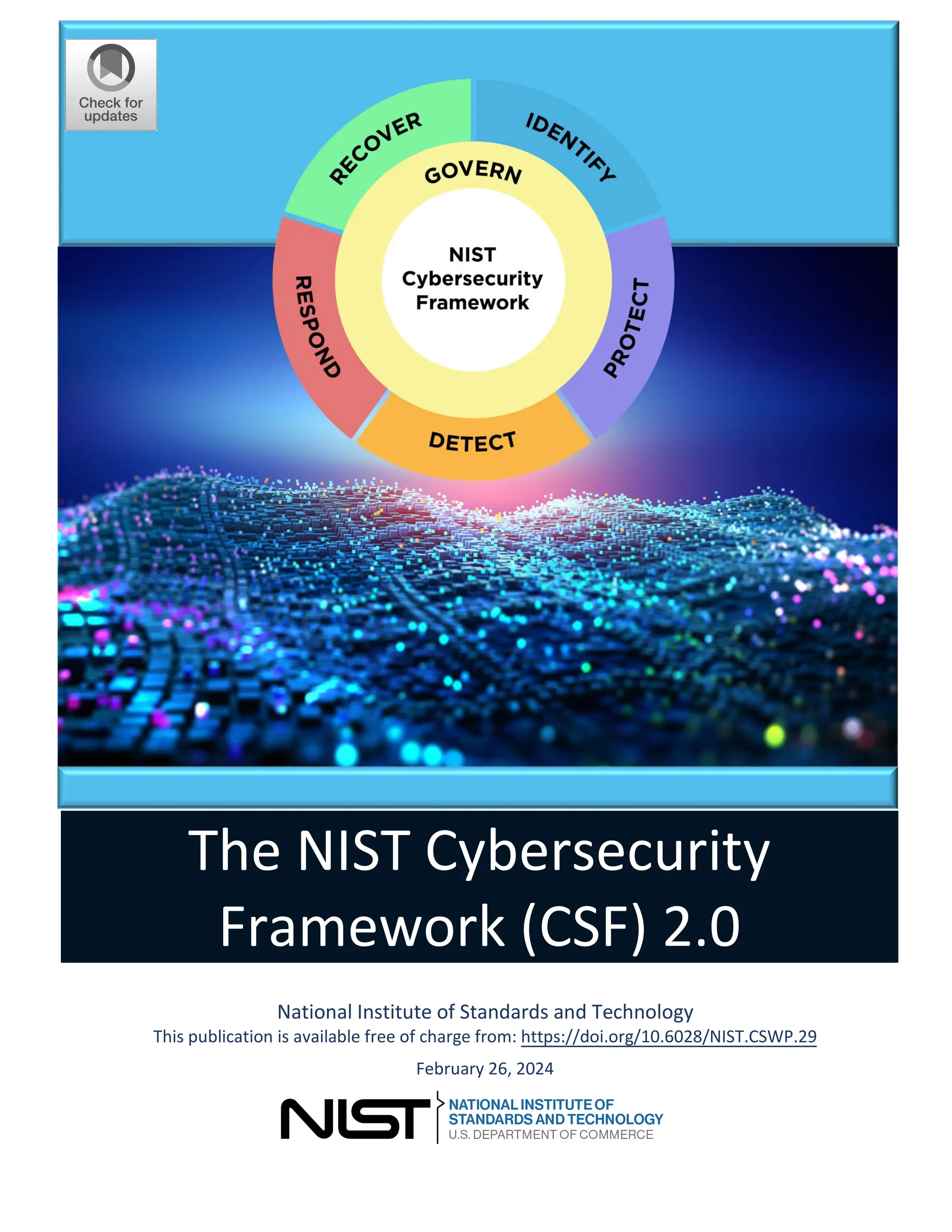
| NIST CSF (2.0) | National Institute of Standards and Technology | U.S. critical infrastructure, federal agencies, and general enterprises | Govern, Identify, Protect, Detect, Respond, Recover |
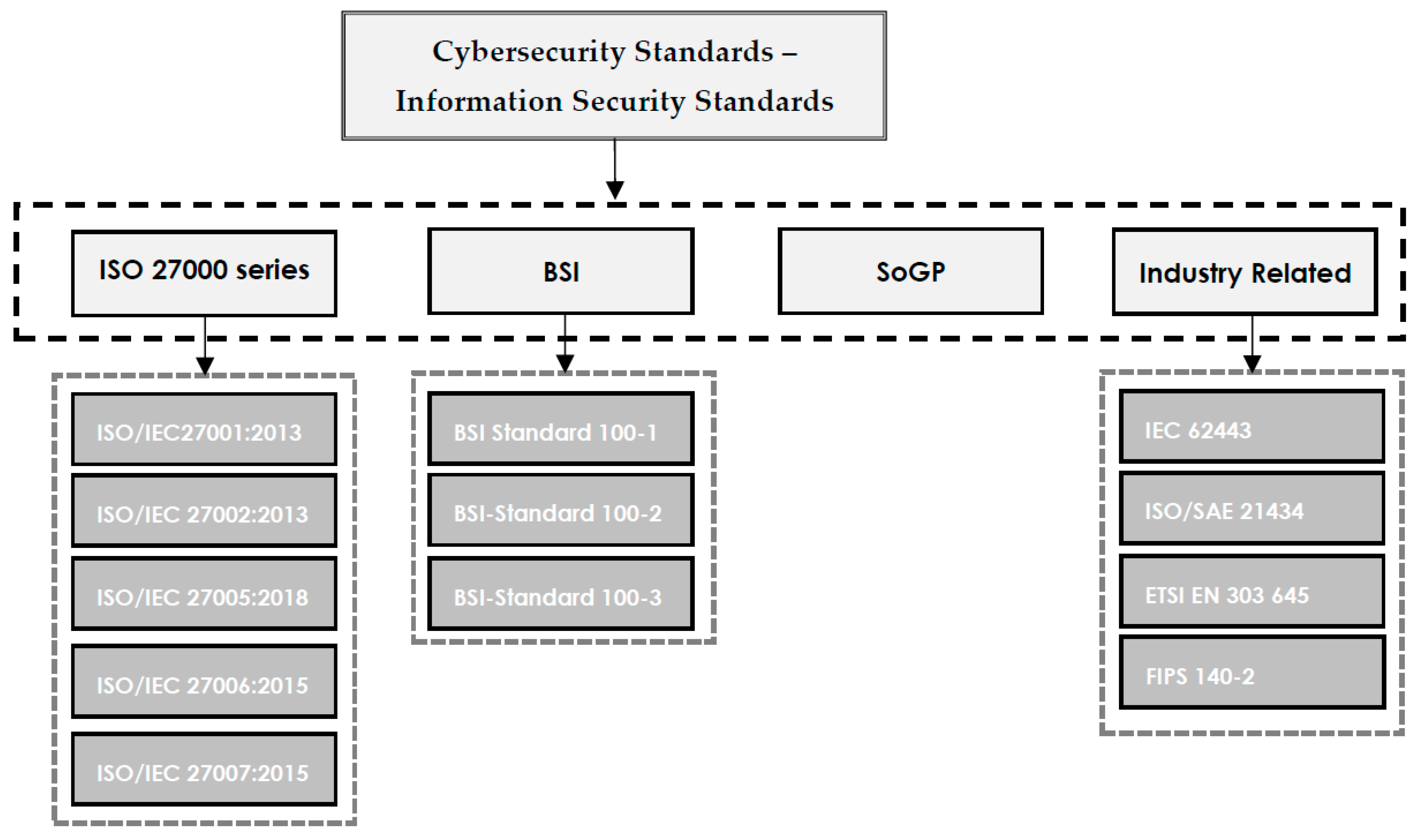
| ISO/IEC 27001:2022 | International Organization for Standardization | Global enterprises seeking international market validation | Information Security Management Systems (ISMS) |
| CIS Critical Security Controls | Center for Internet Security | Small to mid-sized organizations seeking actionable defense | Practical, prioritized technical defense measures |
| COBIT | Information Systems Audit and Control Association (ISACA) | Enterprise IT governance, audit, and risk alignment | Enterprise-wide IT management and governance |
The National Institute of Standards and Technology (NIST) Cybersecurity Framework (CSF) 2.0 expanded its scope explicitly to include "Govern" as a core function, emphasizing that governance is the overarching driver for identification, protection, detection, response, and recovery. Meanwhile, ISO/IEC 27001 requires organizations to establish a certified Information Security Management System (ISMS), making it popular for businesses dealing with international supply chains.
Practical Implementation Steps
Moving a framework from a static document to an active operational model requires a structured phased approach. Organizations must avoid rushing implementation, as poorly integrated frameworks generate administrative overhead without improving security posture.
Step 1: Secure Executive Buy-In and Budget
Governance cannot succeed as a bottom-up initiative. Leadership must understand the financial and operational risks of non-governance. CISOs must present risk metrics in business terms—such as potential downtime costs, regulatory fines, and reputational damage—rather than technical jargon.
Step 2: Conduct a Current-State Assessment
Before adopting new controls, organizations must perform a gap analysis comparing their existing practices against the chosen framework. This baseline assessment reveals where current security operations align with the standard and where significant deficiencies exist.
Step 3: Design and Tailor the Policies
Frameworks like ISO 27001 or NIST CSF provide templates, but they must be tailored to the organization's unique environment. Policies must account for remote work realities, cloud adoption models, and third-party vendor ecosystems without creating friction that drives employees toward insecure workarounds.
Step 4: Implement Technical and Administrative Controls
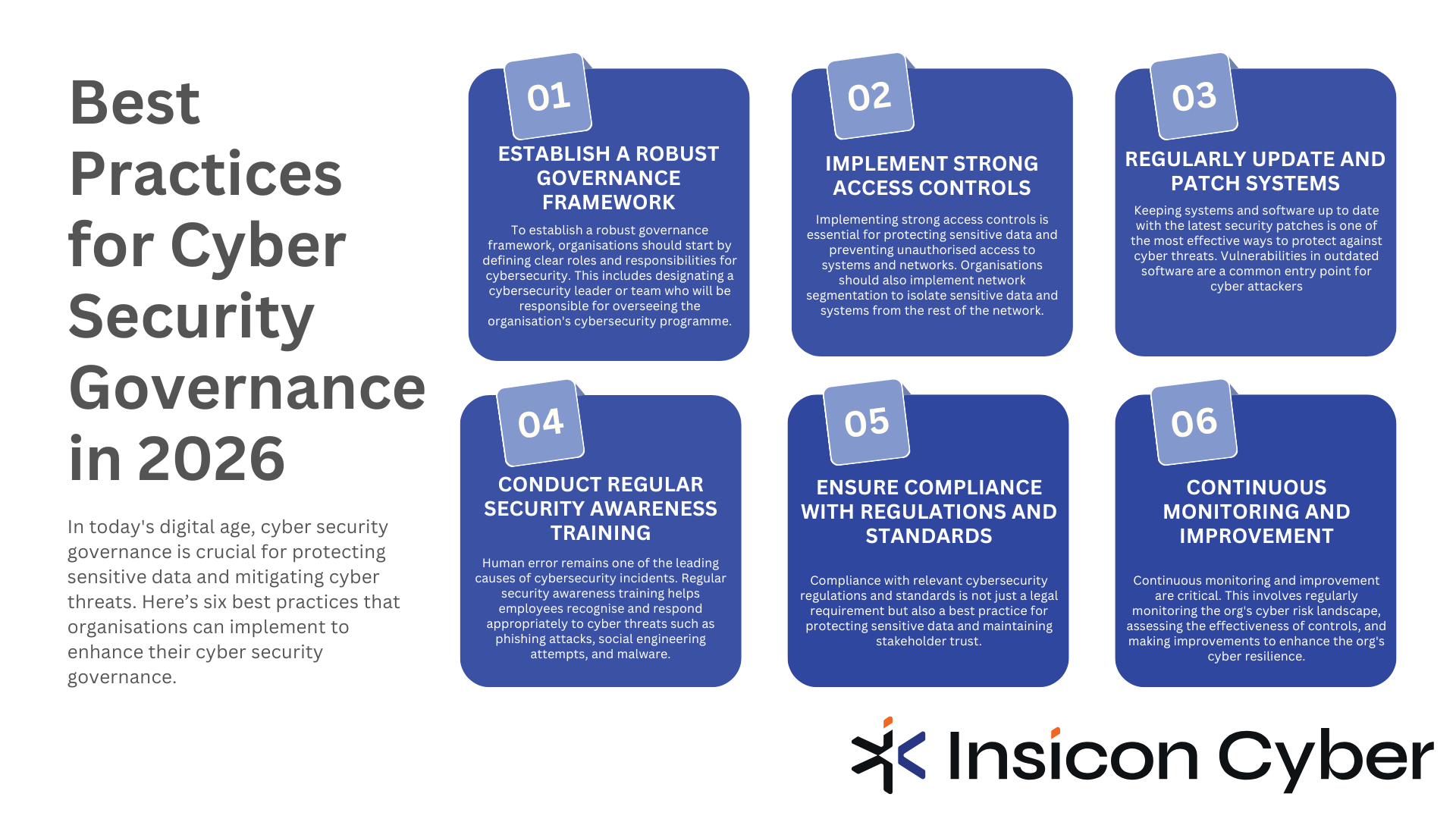
With policies approved, organizations deploy the necessary tools and training. This includes technical controls like identity and access management (IAM) systems, as well as administrative controls like mandatory security awareness training for all personnel.
Step 5: Establish Continuous Monitoring and Auditing
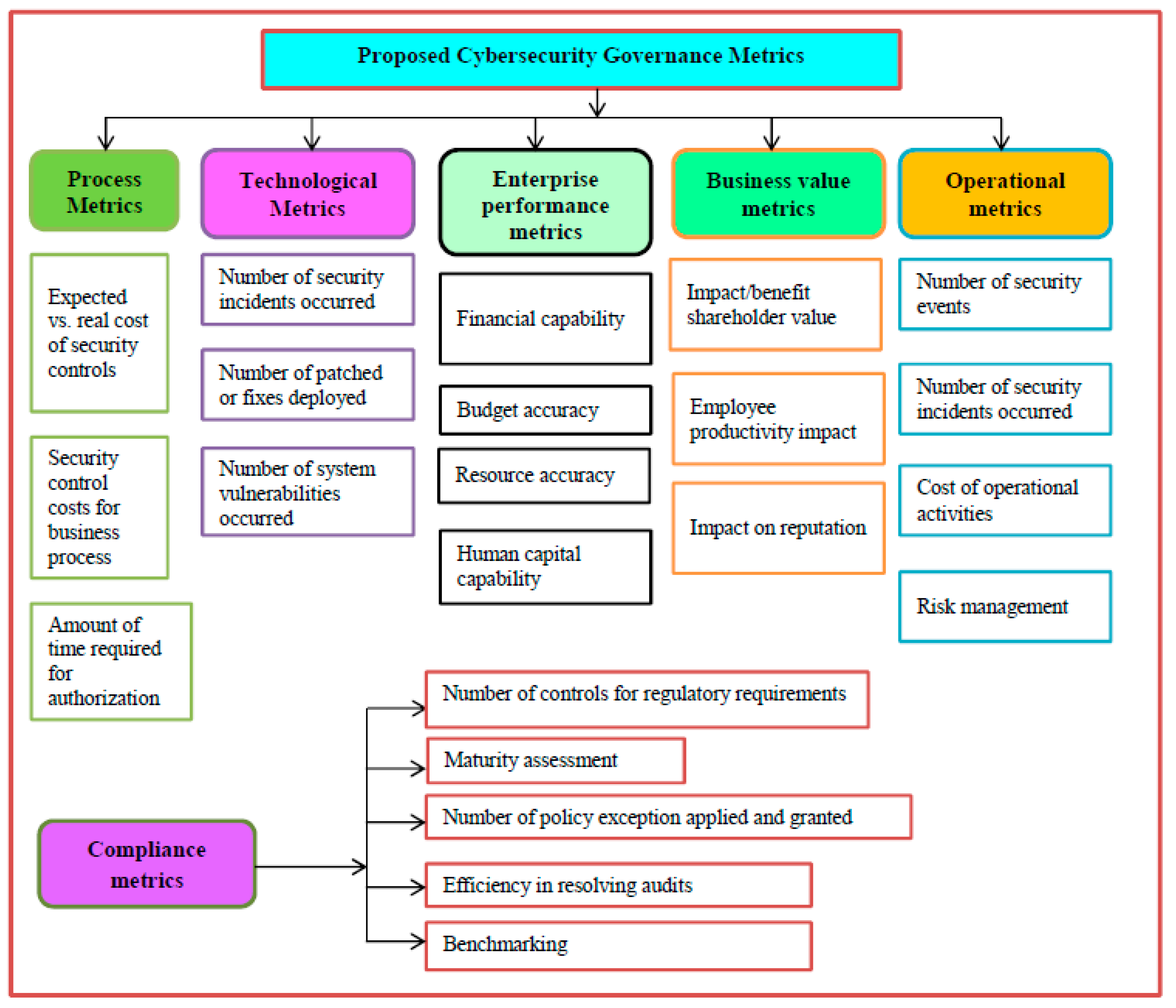
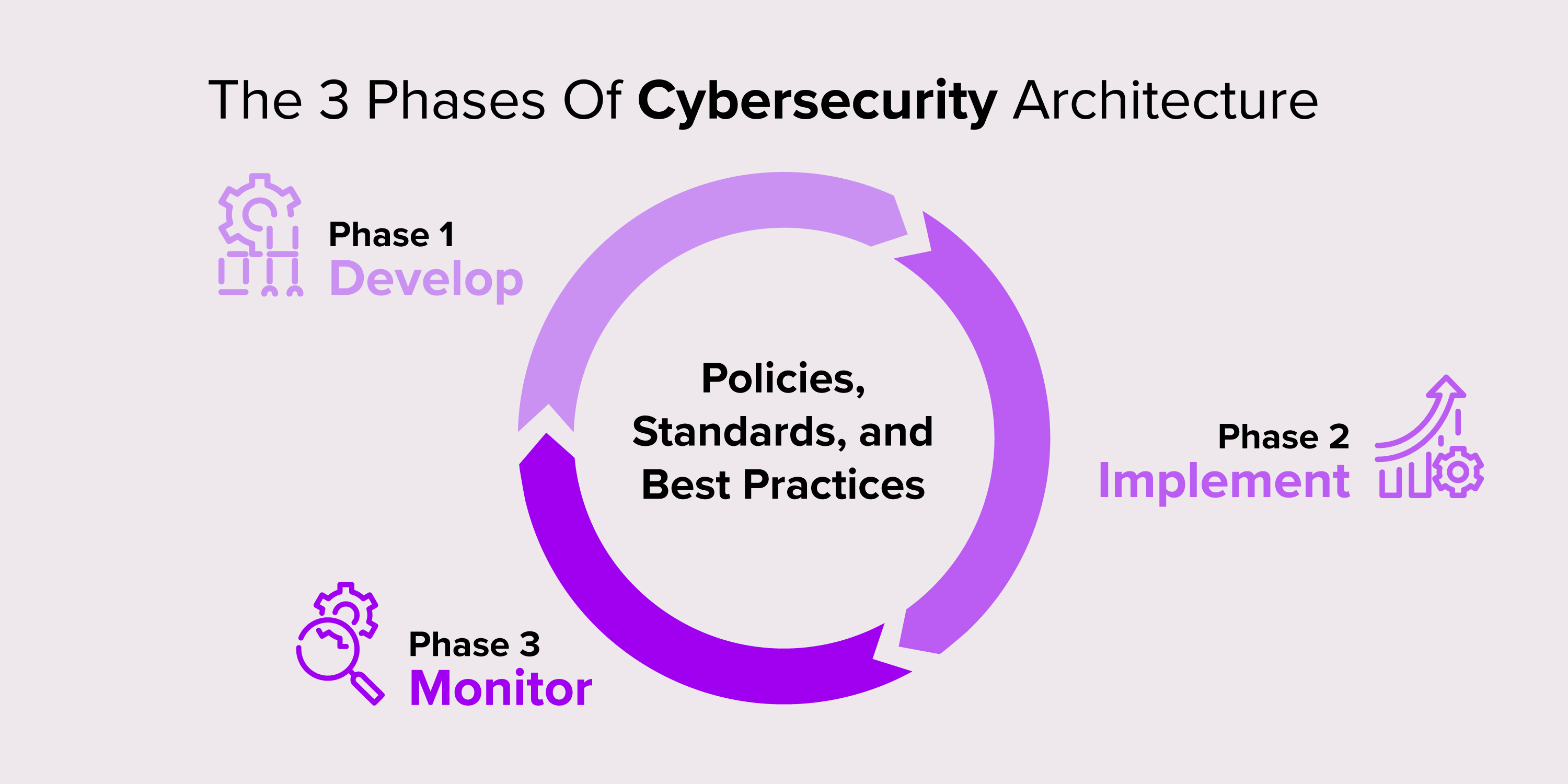
Governance is not a one-time project; it is a continuous cycle. Organizations must establish Key Performance Indicators (KPIs) and Key Risk Indicators (KRIs) to measure framework effectiveness. Regular internal audits and external assessments verify that controls remain operational over time.
Operational Challenges and Common Pitfalls
Even with clear guidance, organizations frequently encounter hurdles when implementing cybersecurity governance frameworks. Recognizing these obstacles helps security leaders adjust their strategies early.
- Treating Governance as a Check-Box Exercise: Organizations sometimes adopt frameworks solely to win contracts or satisfy auditors, resulting in "paper security" where policies exist on documentation drives but are ignored in practice.
- Over-Engineering Controls: Implementing overly restrictive policies reduces operational efficiency and frustrates employees. When security controls impede business productivity, users bypass them, creating shadow IT and unmonitored risk.
- Neglecting Third-Party Risk: Modern enterprises rely heavily on external vendors and cloud service providers. A governance framework that fails to assess and govern third-party supply chain risk leaves significant vulnerabilities exposed.
- Inadequate Resource Allocation: Establishing a framework requires dedicated personnel, continuous training, and ongoing tool maintenance. Underfunding the governance office guarantees implementation failure.
Next Actions for Security Leaders
Organizations looking to establish or refine their cybersecurity governance practices should begin with a pragmatic evaluation of their current risk profile. Review existing policy documentation, verify that executive leadership actively participates in risk reviews, and select a recognized foundational framework that matches regulatory obligations. By treating governance as an iterative business process rather than a static technical constraint, organizations can build resilient security postures capable of adapting to emerging threats.
Image Gallery