How to Pass in Basketball Like a Pro: Advanced Techniques and Court Vision
To pass in basketball like a pro, you must combine precise biomechanical execution, rapid spatial processing, and defensive manipulation. Professional passing relies on executing off the dribble with either hand, snapping the wrists to...
To pass in basketball like a pro, you must combine precise biomechanical execution, rapid spatial processing, and defensive manipulation. Professional passing relies on executing off the dribble with either hand, snapping the wrists to generate ball velocity and backspin, and using eye discipline to shift off-ball defenders before delivering the ball into a receiver's shot pocket.
Contents
The Biomechanics of Professional Passing
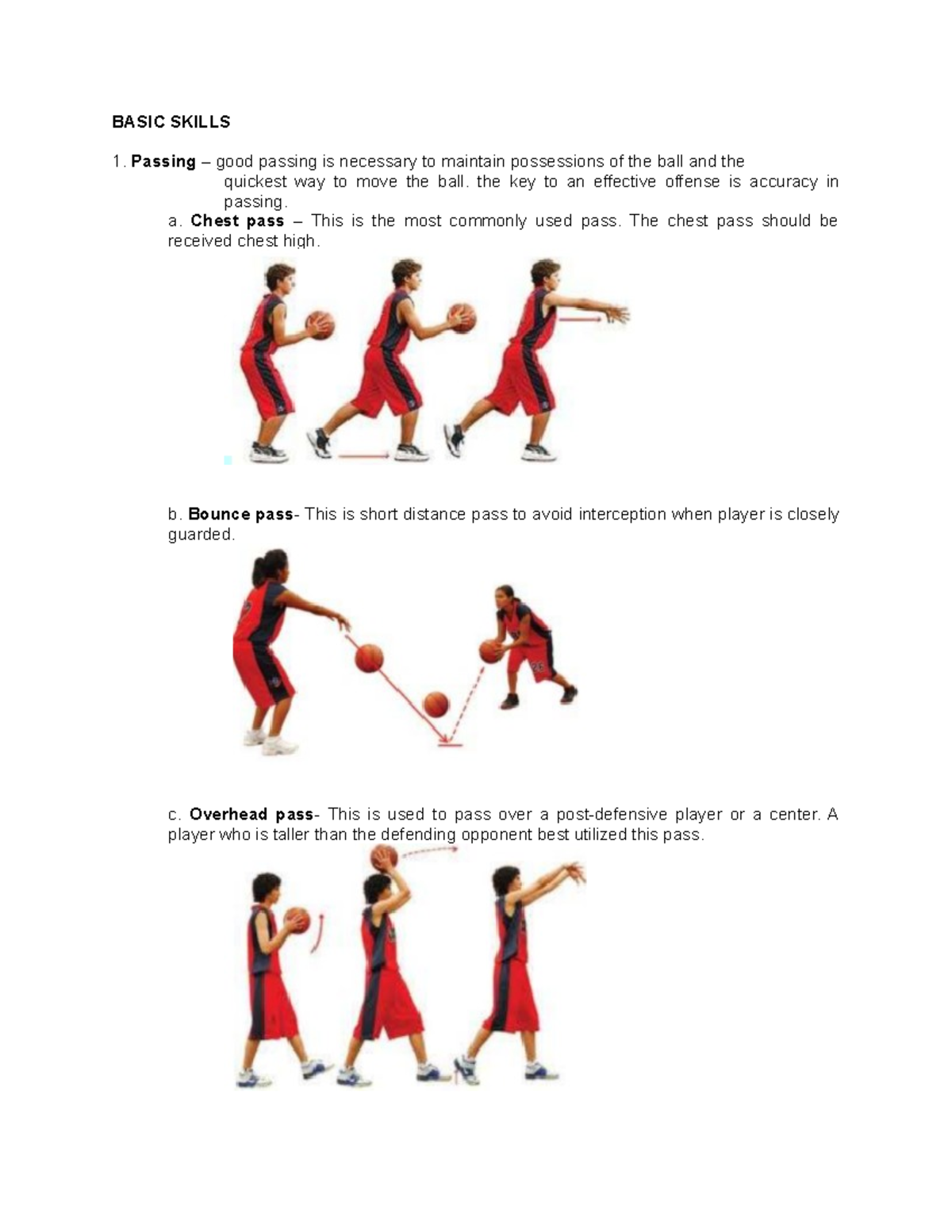
Elite passing is fundamentally a mechanical discipline. While beginner instruction focuses on simple chest passes from a static two-handed stance, professional play demands high-velocity delivery off the dribble, from single-handed releases, and from dynamic body angles. Achieving professional accuracy and speed requires mastering specific hand mechanics, kinetic chain movement, and ball spin.
- Kinetic Energy Flow:
- Hips & Core
- Shoulder Extension
- Wrist Snap & Finger Snap (Index/Middle)
- Backspin & Velocity
Hand Placement and Finger Release Points
Professional passing requires control over the ball's rotational dynamics. For a standard two-handed pass, place your hands on the sides of the ball with thumbs pointing slightly inward toward each other. The power does not come from pushing with the palms; it originates from forearm extension and a sharp downward snap of the wrists.
As the arms extend, the thumbs push downward and outward, causing your palms to turn outward upon release. The ball must leave your index and middle fingers last. This precise contact imparts clean backspin, which stabilizes the ball in flight, keeps the trajectory true, and makes the ball easier for teammates to catch cleanly.
For one-handed live-dribble passes, hand placement shifts dynamically to the top-back quadrant of the basketball. Instead of gathering with two hands—which signals your intent to the defense—you use the pads of your fingers on a single hand to leverage the momentum of the dribble, flicking the ball directly off the floor without interrupting your motion.
The Kinetic Chain: Generating Velocity Without Telegraphing
Generating elite pass velocity requires engaging your core, hips, and shoulders rather than relying solely on arm strength. Telegraphing occurs when a player winds up their arms, draws the ball back toward their chest, or steps heavily in the direction of the target before releasing. Defensive players in modern rotations easily break on telegraphed passes.
To eliminate telegraphing while maintaining speed:
- Maintain a low, balanced athletic base with knees bent and hips loaded.
- Drive force from the back foot through the hips, rotating your torso slightly toward the target just before release.
- Keep the ball in your front cylinder (between your chin and waist) without drawing it backward before propulsion.
- Extend your elbows fully and snap your wrists forcefully at the terminal end of the motion.
Mastering Advanced Professional Pass Types
Professional play requires a diverse inventory of passing options. Elite guards and playmakers choose specific passes based on defender body language, closing speed, and floor spacing.
- Pick & Roll Read
- Pocket Pass (Underneath help defender's arms)
- Skip Pass (Over the top to weak-side corner)
- Hook/Wrap Pass (Around a tall perimeter defender)
The Live-Dribble One-Handed Push Pass
The live-dribble push pass is the standard delivery method for point guards navigating pick-and-roll coverages and transition play. Instead of gathering the basketball, the passing hand meets the ball on the bounce up, cushions it momentarily, and pushes it forward or laterally in a single fluid motion. This cuts half a second off your release time, preventing help defenders from recovering.
The Pocket Pass
Executed primarily out of the pick-and-roll against drop or blitz coverages, the pocket pass slips the ball through a tight space between the on-ball defender and the hedging big man. The pass is pushed with one hand under the reaching arms of the defender, bouncing once roughly two-thirds of the distance to the rolling receiver. The ball should hit the floor hard to rise quickly to the roller's waist level.
The Skip Pass and Overhead Drag
When the defense collapses to protect the paint on a drive, weak-side shooters become open. The skip pass skips past adjacent perimeter defenders straight to the opposite wing or corner.
Executing a professional skip pass requires an overhead or high-angle release point. Hold the basketball with both hands above your forehead (not behind your head, which causes arc delay). Snap your wrists forward while bringing your arms through to keep the ball on a flat, low-arc line drive that minimizes flight time.
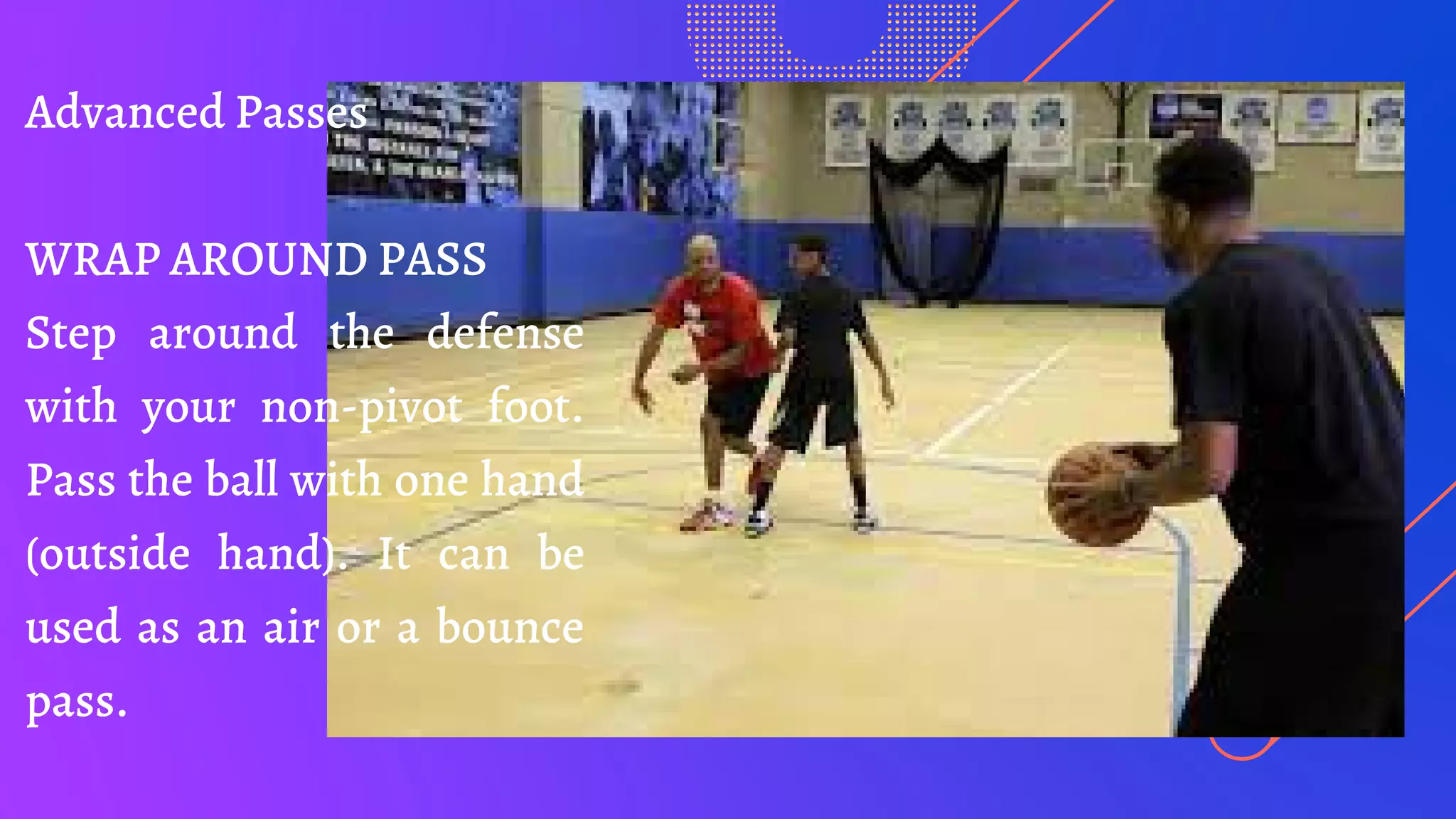
The Hook and Wrap-Around Pass
When a primary defender closes off your direct line of sight with active hands, you must pass around their frame.
- The Wrap-Around: Step laterally around the defender’s lead foot with your pivot foot, dipping your shoulder to clear space, and extend your passing arm out past their hip to push a low bounce pass.
- The Hook Pass: Driven off the dribble while moving at high speeds. Extend your arm outward in a semi-circular motion over or around the defender's shoulder, using your wrist to guide the ball past their head or arms.
Technical Comparison of Professional Passes
| Pass Type | Release Mechanism | Primary Tactical Use Case | Optimal Ball Trajectory | High-Risk Error to Avoid |
|---|---|---|---|---|
| Live-Dribble Push | Single-hand wrist snap directly off the bounce | Transition, fast-break distributions, quick wing entry | Flat, horizontal line drive | Pushing under the ball, causing soft loft |
| Pocket Pass | Single-hand low push with strong downward wrist flick | Pick-and-roll vs. Blitz/Drop coverage to rolling bigs | Sharp, rapid single-bounce | Bouncing too early, losing ball momentum |
| Overhead Skip | Two-handed release from above the forehead | Beating help-side defense to weak-side perimeter | Low arc, high-velocity air pass | Drawing ball behind head, telegraphing |
| Wrap-Around | Extended single-arm push with low lateral step | Penetration kick-outs around perimeter defenders | Ground-skimming bounce pass | Stepping straight instead of stepping laterally |
| Over-the-Top Lob | High two-handed extension with soft touch | Beating fronted post defense or rim-running bigs | High-arching drop into space | Under-throwing into the defender's reach |
Reading Defenses and Using Eye Discipline
Physical mechanics represent only half of professional passing; spatial intelligence and defensive manipulation constitute the rest. Elite passers do not just react to open teammates; they create open passing lanes using their eyes, head, and hips.
- [Attacking Guard] (Looks toward Right Wing): [Off-Ball Defender Shifts Right]
- Delivers No-Look Push Pass: [Target Open on Left Corner]
Manipulating Help-Side Rotations With Eye Discipline
Help-side defenders are taught to watch the ball-handler's eyes while maintaining sight of their assignment. Professional passers exploit this habit through eye manipulation:
- Fixate your eyes on a non-target defender or a covered teammate on one side of the floor.
- Force the off-ball defender to lean or step toward your visual target.
- Without moving your head or realigning your hips, fire a no-look or side-arm pass to your actual target in the vacated space.
Reading Pick-and-Roll Coverages
Passing out of the pick-and-roll requires diagnosing defensive alignments in real time.
Pick-and-Roll Read Engine
- Drop Coverage: Pull-up jumper or Pocket Bounce Pass
- Blitz / Trap: Early Short-Roll Pass over the trap
- Switch: Post Entry to mismatch or Drag Skip
Vs. Drop Coverage: The rim protector drops deep to protect the paint while the perimeter defender recovers. You must draw the dropping big man toward you with a subtle foot-prep, then deliver a crisp pocket pass to your roller right as the big commits to your drive.
Vs. Blitz/Trap: Two defenders aggressively trap the ball-handler. You must step back slightly to create distance from the hands of the trap, overhead-skip or hook-pass over the top to the short-roller, creating a 4-on-3 advantage on the weak side.
Vs. Switch: The defense swaps assignments. Recognize the speed or size mismatch immediately. Pass into the post before the defense can front the low block, or attack the perimeter defender's weak side to force secondary rotations.
Footwork, Balance, and Passing Off the Dribble
Elite passing depends directly on your footwork. Being off balance reduces passing velocity and accuracy, while correct footwork opens up dynamic passing angles that static receivers cannot offer.
- [Live Dribble Movement]
- [Stride Stop] (Step-Through)
- [Jump Stop] (Pivoting 360°)
- [Dynamic Angle Created]
- [Precision Delivery]
The Stride Stop vs. The Jump Stop
- The Stride Stop (1-2 Plant): Allows a ball-handler to plant their inside foot and step through with their outside foot. This extends your reaching range, allowing you to wrap a pass around an aggressive defender while maintaining a firm pivot foot.
- The Jump Stop: Lands both feet simultaneously, allowing either foot to become the pivot foot. Jump stops provide instant balance, enabling you to fake in one direction, pivot 180 degrees, and fire an accurate pass to a trailing cutter.
The Step-Through Pass
When driving into heavy interior traffic, defenders expect a layup or a wild floater. The step-through pass counteracts this momentum.
As you penetrate, execute a stride stop, fake a shot to lift the rim protector's hands, and step your trailing foot deep into the lane past their body. This step shifts your torso around the defender, clearing a direct passing lane for a dump-off pass to an open baseline cutter or Dunker spot finisher.
Targeted Drills for Elite Passing Development
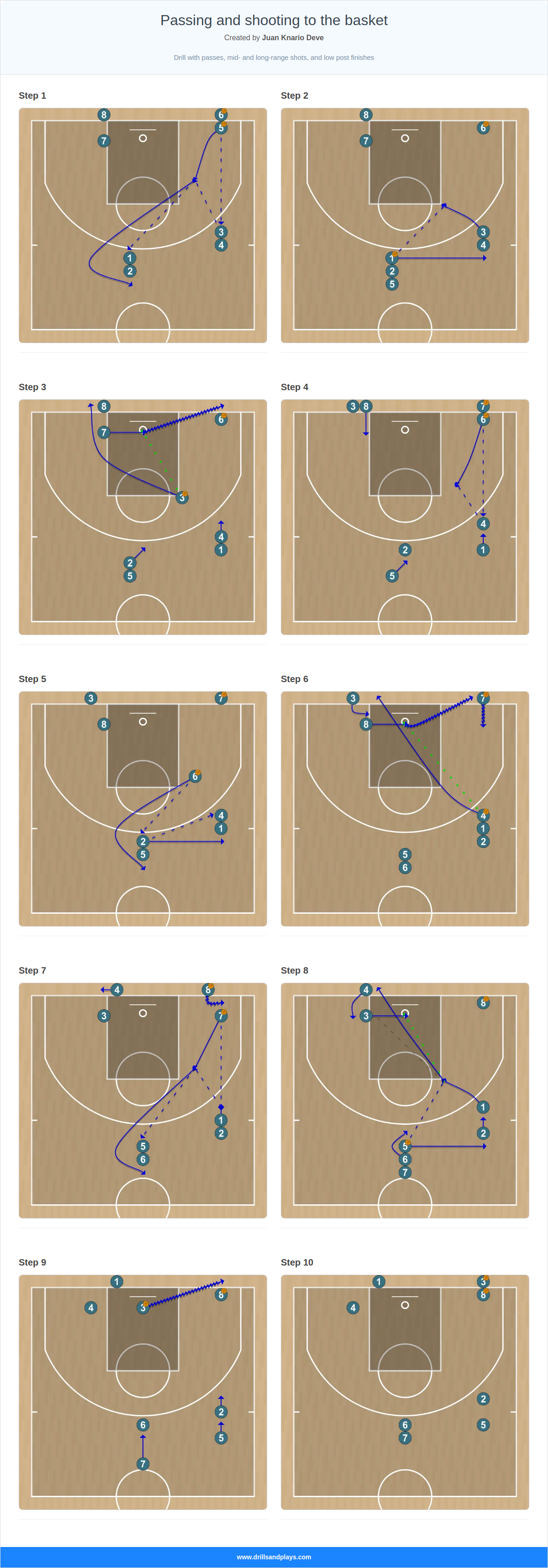
To build professional passing mechanics, you must transition from basic drills to dynamic exercises that combine footwork, hand strength, and visual reaction speed.
- [Drill Progression Matrix]
- Level 1: Foundation: Single-Arm Wall Micro-Passes
- Level 2: Dynamic Mechanics: Two-Ball Live Dribble Push Passes
- Level 3: Game Read Integration: Read-and-React Small-Sided Games
1. Single-Arm Wall Micro-Passes (Speed and Wrist Snap)
- Setup: Stand 4 to 5 feet away from a smooth concrete or brick wall holding one basketball.
- Execution: Perform continuous one-handed push passes against the wall using only your wrist and fingers. Do not catch the ball; snap it back against the wall immediately as it returns to your hand.
- Volume: Perform 50 reps with your dominant hand, then 50 with your non-dominant hand.
- Goal: Build wrist flexibility, finger strength, and quick-release neuromuscular pathways.
2. Two-Ball Live-Dribble Passing (Ambidexterity and Coordination)
- Setup: Stand 10 feet apart from a partner, with each player holding a basketball.
- Execution: Both players dribble continuously. On a signal, Player A delivers a low, one-handed live-dribble bounce pass while Player B simultaneously delivers a high, one-handed chest/push pass. Both players must catch and immediately resume dribbling without missing a beat.
- Volume: 3 sets of 60 seconds, swapping high/low assignments each set.
- Goal: Automate live-dribble mechanics so passing with either hand becomes second nature.
3. Visual Read and React Drill (Court Vision and Decision Speed)
- Setup: A ball-handler stands at the top of the key. Two passers stand on opposite wings, while a defensive player stands in the paint holding two colored cones (e.g., Red and Blue).
- Execution: The ball-handler initiates an aggressive dribble drive toward the elbow. The defensive player flashes one cone overhead just as the driver reaches the free-throw line.
- Red Cone: Execute a hard live-dribble push pass to the left wing.
- Blue Cone: Execute a step-through wrap-around pass to the right wing.
- Volume: 15-20 repetitions per training block.
- Goal: Reduce decision latency—the processing delay between identifying a visual defense signal and executing the physical pass.
Common Passing Errors and Technical Corrections
Even advanced players develop bad habits that lead to unnecessary turnovers against structured defenses.
- [Common Passing Pitfalls]
- Telegraphed Motion (Wind-up phase)
- [Fix: Wrist-Snap From Front Cyl]
- Passing to Feet (Target misplacement)
- [Fix: Target at Chest/Leading Space]
- Soft Off-Hand (Asymmetrical strength)
- [Fix: Isolated Weak-Hand Wall Reps]
- Telegraphed Motion (Wind-up phase)
1. Telegraphing by Winding Up
- The Fault: Pulling the basketball back behind the torso or stepping heavily toward the target before releasing.
- The Correction: Drive all power from wrist extension and quick forearm rotation within your front body cylinder. Keep your shoulders square to the basket until the instant of release to disguise your target.
2. Passing directly to a Moving Player's Feet
- The Fault: Aiming directly at a moving teammate's current position on the floor, forcing them to decelerate or reach behind their momentum to secure the ball.
- The Correction: Lead your teammate into open space. Throw the ball to where their hands will be two steps ahead, delivering the pass into their "shot pocket" (the chest-to-waist area where they can transition into a jump shot without repositioning their hands).
3. Weak Non-Dominant Hand Execution
- The Fault: Relying on your dominant hand to control passes across your entire body frame, which narrows your passing angles and allows defenders to play you to one side.
- The Correction: Dedicate 50% of all passing drill repetitions to your weak hand. Train your off-hand to push off the live dribble without requiring a two-handed gather.
Frequently Asked Questions
How do I increase the velocity of my passes without sacrificing accuracy?
Pass velocity comes from wrist snap and forearm extension, not pulling your arm back to throw. Focus on snapping your thumbs downward forcefully upon release to generate quick backspin. Additionally, transfer your weight smoothly from your back foot through your hips as you release the ball.
What is the most effective way to improve passing with my non-dominant hand?
Integrate one-handed live-dribble wall drills into your daily warm-up routine. Practice pushing the ball against a wall off the dribble without gathering with your dominant hand. Start 4 feet away to build wrist strength, then gradually increase your distance to 10–12 feet while maintaining speed and backspin.
When should I use a bounce pass instead of an air pass?
Use a bounce pass when passing through crowded lanes, out of pick-and-roll traps, or on wrap-around drives where defensive hands are held high. The ball should contact the floor roughly two-thirds of the distance to your teammate so it catches them right at waist level. Use air passes when making fast-break distributions or weak-side skip passes over rotated defenders.
How do I prevent defenders from jumping my passing lanes?
Avoid looking at your target before releasing the ball. Use eye discipline by staring down a weak-side defender or an alternative receiver to pull secondary help away from your true target. Deliver passes off the live dribble without bringing the ball to a full two-handed gather, which signals your intent to the defense.
What is the difference between a good pass and a professional-level pass?
A good pass reaches an open teammate. A professional-level pass arrives on time, on target, with optimum velocity, and positioned directly into the receiver's shot pocket—all while manipulating off-ball defenders to keep the rest of the floor spaced.
Practical Action Plan for Players
To elevate your passing skills to a professional standard, integrate these actionable steps into your training schedule immediately:
- Daily 5-Minute Hand-Isolation Warm-Up: Dedicate five minutes before every basketball session to off-hand wall micro-passes and dynamic one-handed wrist snaps.
- Audit Game Film for Telegraphing: Review footage of your scrimmage play or game performance. Count how many times you gather the ball with two hands before passing, and identify moments where your eyes directed the defense to your target.
- Incorporate Constraint Scrimmages: During pick-up games or practice scrimmages, challenge yourself with strict rules: no two-handed chest passes allowed, or all transition passes must be pushed off a live dribble using your non-dominant hand.
By refining your biomechanics, training both hands equally, and cultivating eye discipline, you will expand your playmaking presence and command the floor like a professional point guard.
Image Gallery