The Rise of Thermo Fisher Scientific in Biomedical Research
The rise of Thermo Fisher Scientific to its current position as a global leader in biomedical research is defined by a strategic combination of aggressive mergers, a vast portfolio of specialized scientific equipment, and the integrati...
The rise of Thermo Fisher Scientific to its current position as a global leader in biomedical research is defined by a strategic combination of aggressive mergers, a vast portfolio of specialized scientific equipment, and the integration of end-to-end supply chain services. By consolidating essential laboratory supplies, analytical instrumentation, and contract research capabilities, the company has become an indispensable infrastructure partner for life sciences organizations worldwide.
Contents
The Foundation of an Analytical Powerhouse
Thermo Fisher Scientific’s market dominance was not an overnight occurrence but a deliberate result of long-term structural expansion. The company was formed in 2006 through the merger of Thermo Electron and Fisher Scientific. This union was strategically significant because it combined two complementary halves of the research ecosystem: Thermo Electron provided high-end analytical instrumentation, such as mass spectrometers and electron microscopes, while Fisher Scientific provided the critical, high-volume consumables, laboratory chemicals, and distribution infrastructure required to keep research facilities operational.
This dual-pronged approach solved a persistent pain point for researchers: supply chain fragmentation. By offering a "one-stop-shop" model, the company effectively streamlined the procurement process for academic laboratories, pharmaceutical companies, and diagnostic clinics. In the years following the merger, the organization expanded its reach by acquiring major industry players, including Life Technologies (2014), FEI Company (2016), Patheon (2017), and PPD (2021). Each acquisition served to deepen the company’s technical moat, moving it from a mere provider of tools to a partner in drug development and clinical trials.
Core Competencies in Biomedical Research
The rise of the organization is inextricably linked to its technical footprint across several key sectors of modern biology. Its influence is felt in every stage of the research cycle, from basic genomic discovery to large-scale clinical manufacturing.
1. Analytical Instruments and Precision Diagnostics
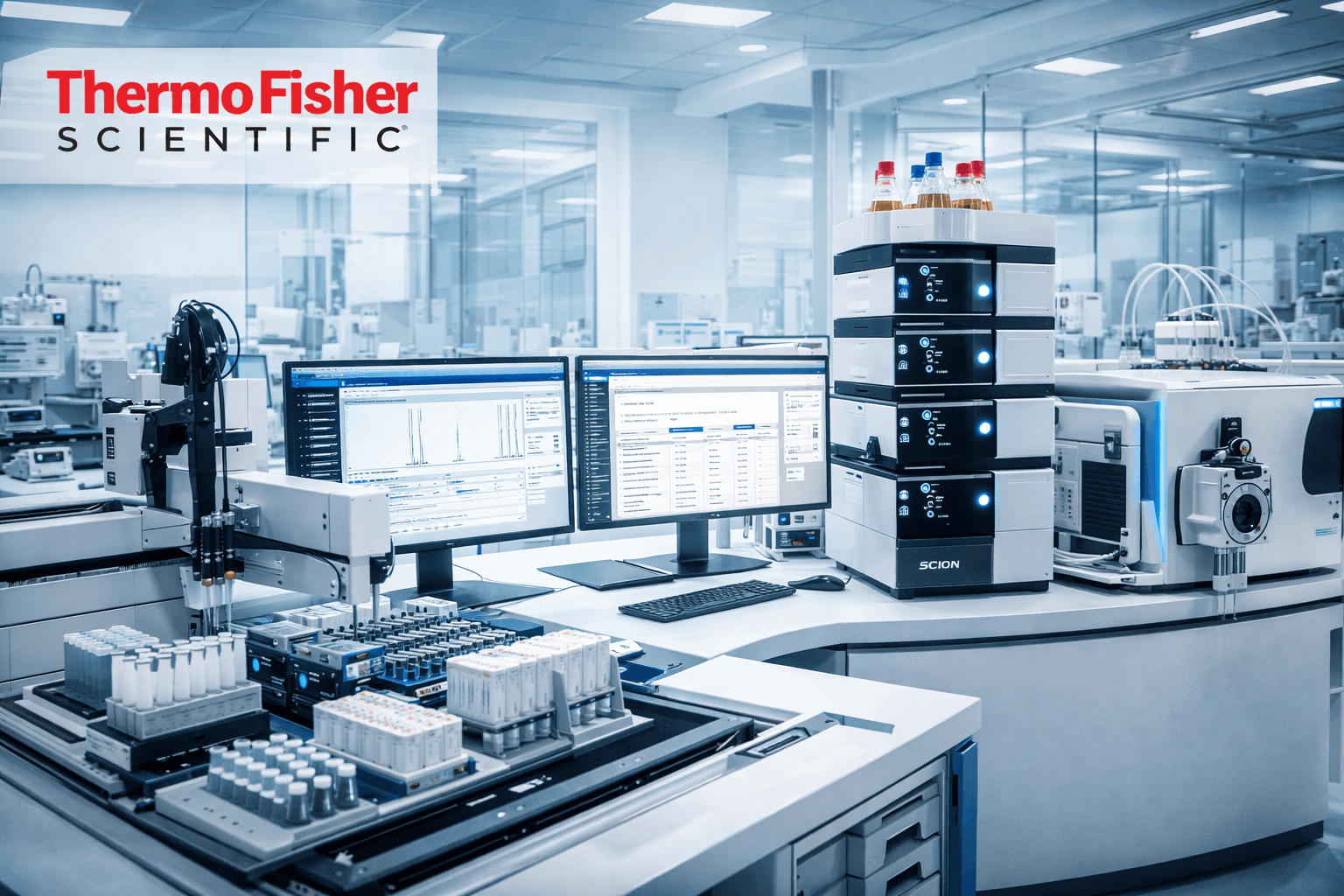
The company is a primary supplier of sophisticated instrumentation that allows researchers to characterize molecules at the atomic level. This includes its extensive line of Orbitrap mass spectrometers, which have become the industry standard for proteomics and metabolomics research. These tools allow for the high-resolution identification of proteins and small molecules, which is critical for identifying biomarkers in disease states.
2. Consumables and Laboratory Reagents
While high-end instruments generate the most headlines, the company’s strength lies in its dominance of the laboratory supply chain. Brands such as Gibco (cell culture media) and Invitrogen (molecular biology reagents) are ubiquitous in almost every molecular biology laboratory. By ensuring a consistent, global supply of these critical, high-turnover items, Thermo Fisher Scientific has built significant brand loyalty among bench scientists.
3. Clinical Research and Manufacturing Services
The 2021 acquisition of PPD (Pharmaceutical Product Development) and the earlier purchase of Patheon transformed the company into a Contract Development and Manufacturing Organization (CDMO). This allows the company to participate in the entire life cycle of a drug—from the initial target identification in a laboratory to the clinical trial management and final large-scale manufacturing of the therapy.
Comparative Landscape of Research Service Providers
To understand the scope of the company’s footprint, it is useful to view how it balances high-volume supply with high-stakes research support.
| Service Segment | Primary Market Role | Impact on Biomedical Research |
|---|---|---|
| Analytical Instruments | Infrastructure/Hardware | Provides the data foundation for drug discovery and proteomics. |
| Lab Consumables | Operational Support | Enables daily experiments; critical for workflow standardization. |
| Clinical Services (CDMO) | Strategic Outsourcing | Accelerates time-to-market for pharmaceutical innovations. |
| Digital/Software | Data Management | Connects laboratory equipment to LIMS for automated analysis. |
Operational Challenges and Strategic Risks
Despite its industry leadership, the company faces significant challenges that are inherent to the scale of its operations. As a global supplier, it is subject to the volatility of global logistics and the complex regulatory environments of the pharmaceutical industry.
One primary concern for users is "vendor lock-in." Because the company’s software, reagents, and instruments are designed to work together within a proprietary ecosystem, researchers may find it difficult to transition to competing platforms once their laboratory workflows are optimized around Thermo Fisher hardware. This creates a high barrier to entry for smaller, specialized competitors, but it also places a significant cost burden on labs when upgrading or maintaining integrated systems.
Furthermore, as the company has grown, its reliance on inorganic growth (acquisitions) means that it must continuously integrate diverse product lines, corporate cultures, and IT infrastructures. The success of its model depends on the ability to maintain the high quality of its "legacy" products while scaling the complex service-oriented units like PPD.
The Role of Digital Integration
As of 2026, the rise of the company has shifted from hardware-centric dominance to data-centric integration. Modern biomedical research generates massive datasets that require sophisticated bioinformatics software. The company has invested heavily in digital ecosystems, such as the Thermo Fisher Cloud and various Laboratory Information Management Systems (LIMS).
This digital strategy addresses a critical "bottleneck" in modern research: data reproducibility. By integrating sensors, IoT-enabled instruments, and automated reagents tracking into a unified software environment, the company allows laboratories to maintain stricter quality control and compliance with regulatory standards (such as GLP/GMP). This is particularly vital for researchers moving through the phases of clinical trial submission, where data integrity is the primary hurdle for regulatory approval.
Future Outlook and Scientific Impact
The influence of Thermo Fisher Scientific on biomedical research is unlikely to wane in the near term. Its strategy for the remainder of the decade is focused on three areas:
- Bioprocessing: Expanding the capacity for manufacturing biologics, such as mRNA therapies and viral vectors, which have become central to new vaccine and oncology treatments.
- Point-of-Care Diagnostics: Bringing advanced diagnostic capabilities closer to the patient, reducing the time required for sample analysis and clinical decision-making.
- Artificial Intelligence Integration: Leveraging the massive amounts of historical data generated by its instruments to provide predictive insights for researchers, potentially shortening the R&D cycle for new pharmaceutical candidates.
Frequently Asked Questions
How does the company maintain a competitive edge over smaller suppliers? The company maintains an edge through vertical integration. While a smaller competitor may excel in one niche (e.g., a specific enzyme or a specialized sensor), Thermo Fisher provides the entire workflow, simplifying procurement and ensuring that all components of an experiment are validated to work together.
Is it necessary for an academic lab to use only Thermo Fisher products? No, most academic labs utilize a mix of suppliers. However, the prevalence of the company's equipment means that many research protocols are written specifically using its reagents and instruments, which can influence purchasing decisions to ensure reproducibility.
What is the significance of the company’s CDMO services? These services allow pharmaceutical companies to outsource the complex manufacturing process of drugs. By using an established partner, pharmaceutical firms can focus on research and development while relying on the company’s existing regulatory expertise and manufacturing scale.
How does the company handle laboratory compliance? The company provides "qualification services" (IQ/OQ/PQ) for its instruments, ensuring that they meet the regulatory standards required for clinical and pharmaceutical research, which helps labs remain compliant with governing health authorities.
Next Steps for Research Facilities
For facilities evaluating their reliance on these systems, the best course of action is to conduct a periodic "workflow audit." Map your laboratory’s core activities from the raw reagent stage to data analysis. Identify which steps are highly dependent on proprietary workflows and assess the cost of potential disruptions in the supply chain for those specific items. Diversifying your supplier base for commodity items while maintaining deep integration for high-complexity analytical tasks remains the most sustainable strategy for modern research organizations.
Image Gallery