Stefon Diggs RAS: The Complete Athletic Profile and Scouting Analysis
Stefon Diggs earned a Relative Athletic Score (RAS) of 5.66 out of 10.00 during the 2015 NFL Draft cycle. This score categorized him as having "average" athleticism compared to other wide receiver prospects since 1987. Despite this mid...
Stefon Diggs earned a Relative Athletic Score (RAS) of 5.66 out of 10.00 during the 2015 NFL Draft cycle. This score categorized him as having "average" athleticism compared to other wide receiver prospects since 1987. Despite this middling grade, Diggs evolved into one of the NFL's premier route runners, illustrating the limitations of raw athletic testing in predicting professional success.
Contents
Understanding the Relative Athletic Score (RAS)
The Relative Athletic Score, developed by Kent Lee Platte, is a metric used to aggregate a player's NFL Scouting Combine or Pro Day results into a single number ranging from 0 to 10. This score is adjusted for the player’s position and size, providing context for how a specific athlete compares to peers historically. A score of 5.00 represents the median (50th percentile), while a 10.00 represents a perfect athletic specimen.
In the world of 2026 sports analytics, RAS remains a cornerstone for scouts and front offices, though it is increasingly used alongside GPS tracking data. For a player like Stefon Diggs, his 5.66 RAS serves as a case study in the "Tape vs. Testing" debate. While his raw numbers did not scream "elite," his functional football speed and technical mastery allowed him to surpass prospects with much higher RAS scores.
The RAS system breaks down testing into four primary categories:
- Size: Height and weight relative to the position.
- Speed: The 40-yard dash, including the 10-yard and 20-yard splits.
- Explosion: Vertical leap and broad jump.
- Agility: The 20-yard shuttle and 3-cone drill.
Stefon Diggs’ 2015 Combine Breakdown
When Stefon Diggs arrived at the 2015 NFL Combine, he was coming off a productive but injury-marred career at the University of Maryland. Scouts were wary of his durability and his slight frame. His testing results reflected a player who was competent in most areas but lacked a "trump card" in terms of physical measurements.
Size Metrics
Diggs measured in at 6'0" and weighed 195 pounds. In the context of NFL wide receivers, this is considered "average" to "below average" size. His height earned him a moderate grade, but his weight was a significant detractor in his overall RAS. At 195 pounds, he lacked the "big-bodied" frame that scouts typically looked for in an "X" receiver (split end). This lack of mass contributed to his lower RAS, as the formula penalizes lighter players who do not produce elite speed to compensate.
Speed and Splits
The most favorable part of Diggs' athletic profile was his straight-line speed. He clocked a 4.46-second 40-yard dash. While a 4.46 is objectively fast, in the high-stakes environment of the NFL Combine, it ranked in the 68th percentile for wide receivers.
His splits were equally revealing:
- 10-Yard Split: 1.53 seconds. This indicates "good" initial burst off the line of scrimmage.
- 20-Yard Split: 2.58 seconds. This showed he could maintain that acceleration through the first half of the sprint.
Explosiveness and Agility
This is where Diggs' RAS took its biggest hit. His vertical jump was 35.0 inches, and his broad jump was 9'7" (115 inches). For a player of his size, these numbers were considered "poor" to "mediocre" by RAS standards. Explosiveness metrics are often correlated with a receiver's ability to "climb the ladder" for contested catches or burst out of a stagnant stance.
However, his agility testing was surprisingly solid. He recorded a 4.11-second 20-yard shuttle and a 7.03-second 3-cone drill. While the 3-cone was only "average," his shuttle time hinted at the lateral quickness that would eventually make him a legendary route runner in the NFL.
| Metric | Measurement | RAS Grade | Percentile |
|---|---|---|---|
| Height | 6'0" | 5.28 | 52nd |
| Weight | 195 lbs | 3.51 | 35th |
| 40-Yard Dash | 4.46s | 7.42 | 74th |
| 10-Yard Split | 1.53s | 8.21 | 82nd |
| 20-Yard Split | 2.58s | 7.63 | 76th |
| Vertical Jump | 35.0" | 5.37 | 53rd |
| Broad Jump | 9'7" | 3.57 | 35th |
| 20-Yard Shuttle | 4.11s | 7.41 | 74th |
| 3-Cone Drill | 7.03s | 4.98 | 49th |
| Total RAS | 5.66 | Average | 56th |
Why the 5.66 RAS Was Misleading
Looking back from the perspective of 2026, it is clear that Diggs' RAS did not capture his "functional athleticism." There is a distinct difference between track athleticism (testing in shorts and a t-shirt) and football athleticism (playing in pads with a defender in your face).
The Route Running Exception
Stefon Diggs is widely regarded as one of the most technical route runners of his generation. RAS cannot measure things like deceleration, shoulder-sway, or ankle flexion. Diggs possesses an elite ability to stop on a dime, which allows him to create separation even if he isn't the fastest player on the field. His 5.66 RAS suggested he might struggle to create space against elite NFL cornerbacks, but his film showed a player who could manipulate a defender’s hips with ease.
Injury Context at Maryland
Part of the reason Diggs’ testing was merely "average" may have been his collegiate injury history. At Maryland, he suffered a broken leg in 2013 and a lacerated kidney in 2014. These injuries likely hampered his off-season training leading up to the 2015 Combine. Scouts who focused strictly on the RAS missed the fact that Diggs was a five-star recruit coming out of high school—the type of athlete who typically tests in the 8.00 to 9.00 range when fully healthy and peaked.
Comparing Diggs to Other Elite Receivers
Diggs is not the only elite wide receiver to succeed with a middling or poor RAS. In fact, many of the best "technicians" in the game have testing profiles that are surprisingly pedestrian.
- Davante Adams: Adams earned a 6.53 RAS. Much like Diggs, he was knocked for his 40-yard dash (4.56s) and vertical leap. Yet, he became the league’s standard for release packages and route precision.
- Cooper Kupp: Kupp’s RAS was a 5.10. His 40-yard dash was a sluggish 4.62 seconds. However, his agility metrics (the shuttle and 3-cone) were elite, which mirrored Diggs' profile of lateral movement over straight-line speed.
- Justin Jefferson: For comparison, Diggs’ former teammate in Minnesota had a much higher RAS of 9.69. This shows that while a high RAS can predict success, a lower RAS does not preclude it.
The common thread among these players is that they win with their minds and their feet, not just their raw "twitch." Diggs' 5.66 RAS made him a 5th-round pick (146th overall), which remains one of the greatest draft bargains in Minnesota Vikings history.
The Evolution of Diggs: From "Average" Athlete to All-Pro
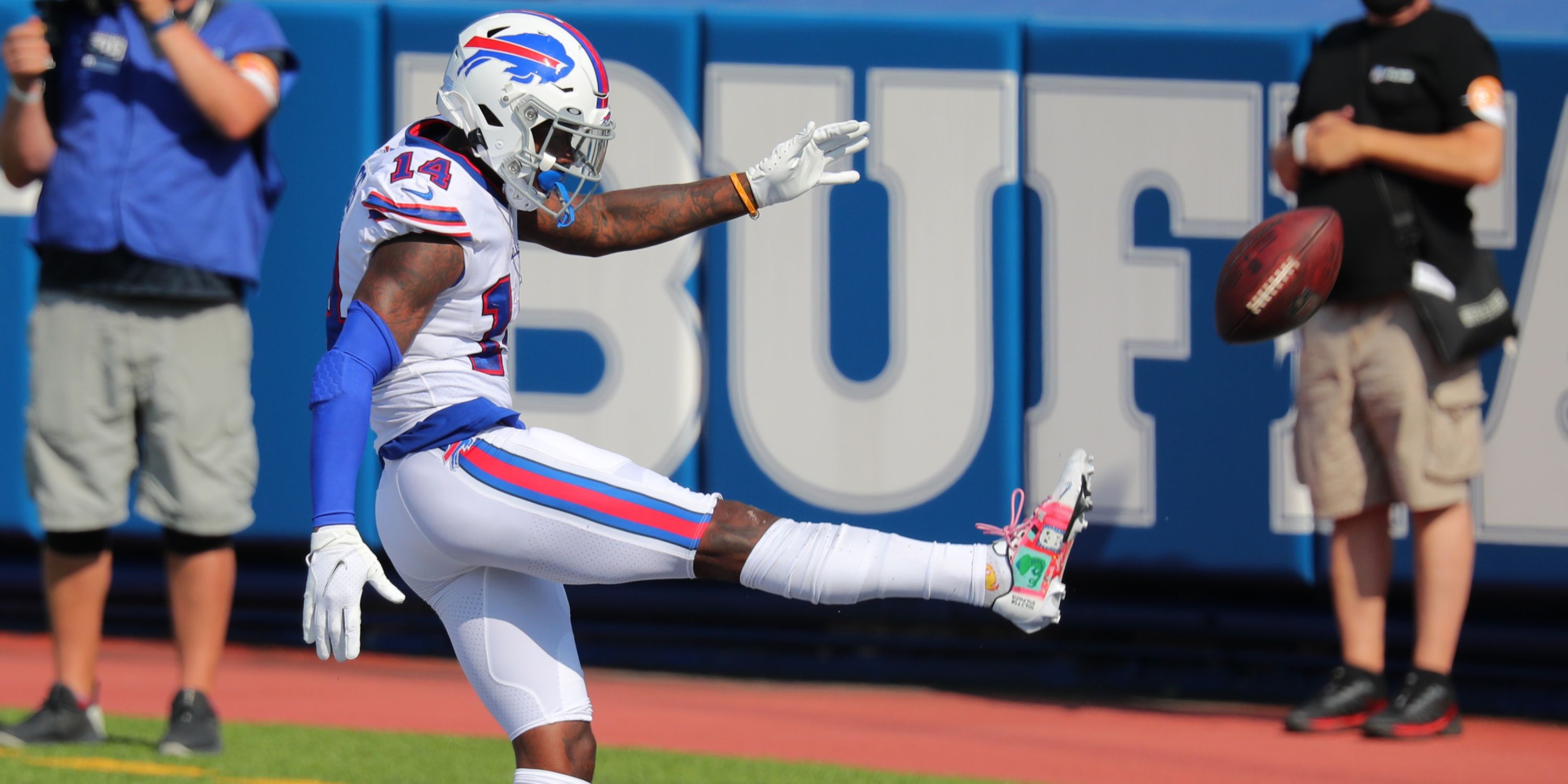
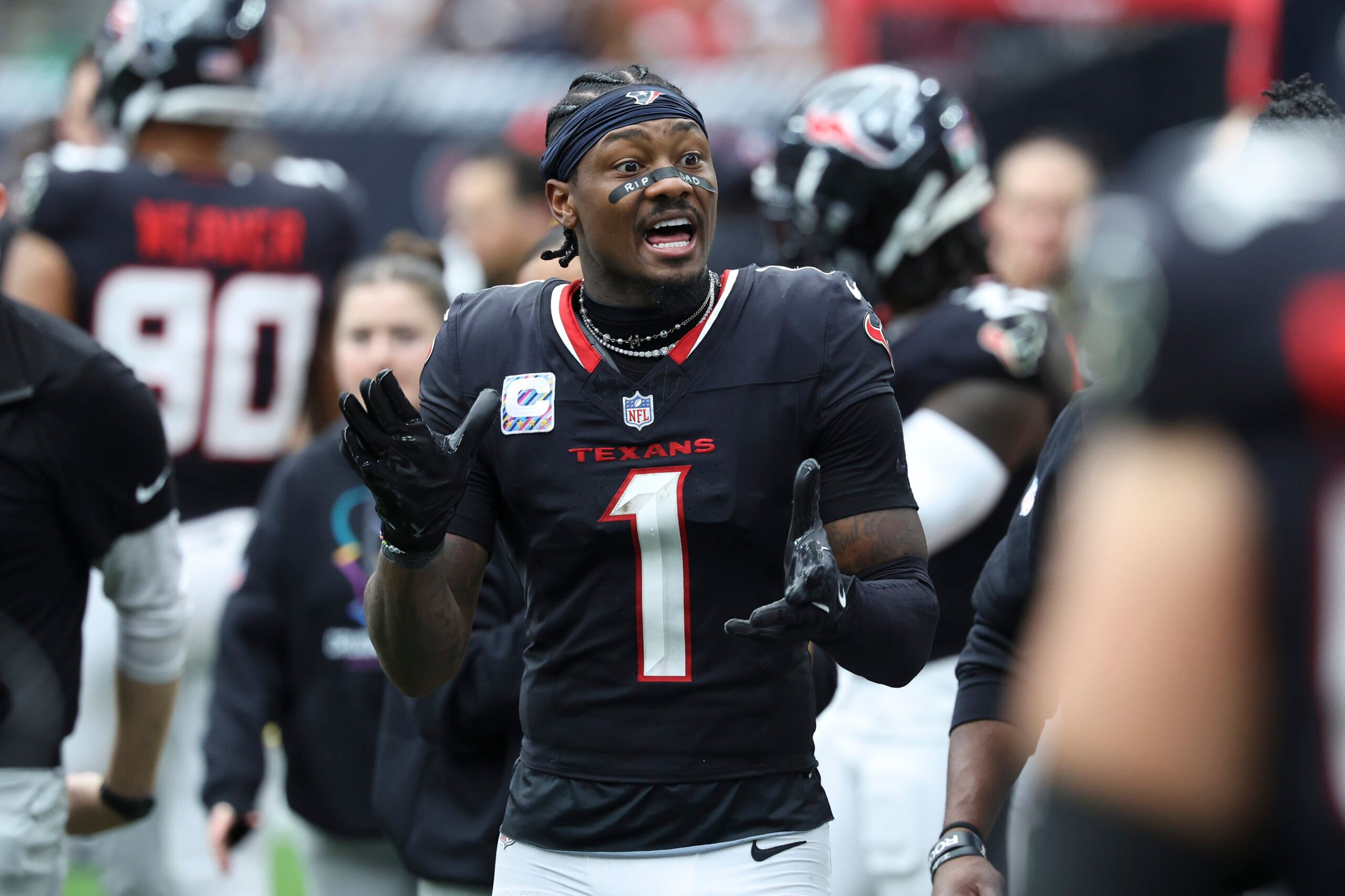
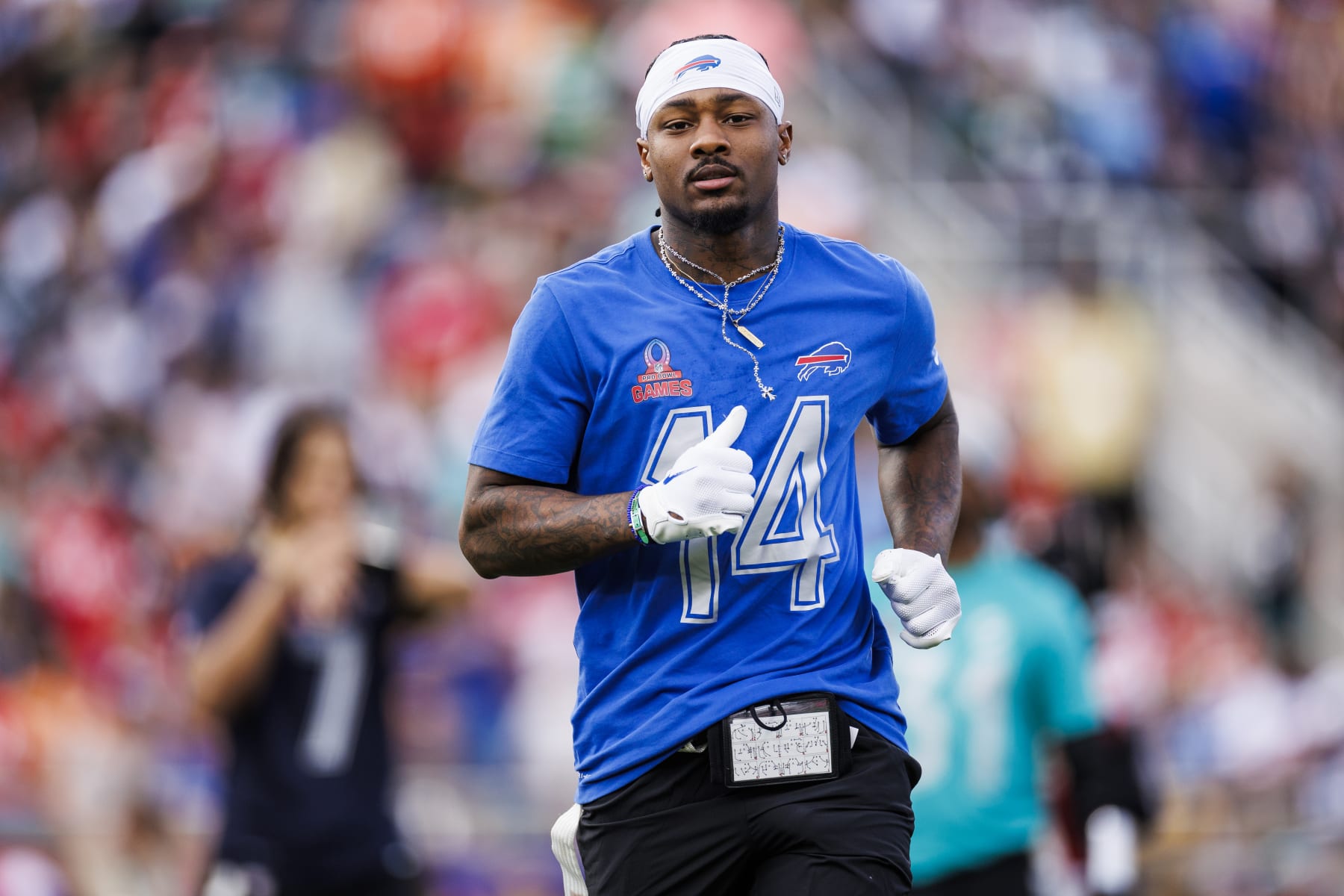
By 2026, Diggs' career trajectory has been well-documented through three different NFL franchises: the Vikings, the Buffalo Bills, and the Houston Texans. In each stop, he proved that his RAS was a floor, not a ceiling.
The Minnesota Years (2015–2019)
Diggs broke out almost immediately. Despite being a late-round pick with an average athletic score, he showed an uncanny ability to win deep. This is a crucial point: his 4.46 speed was "average" for a prospect, but his tracking ability and ball skills made that speed play faster on the field. The "Minneapolis Miracle" was not a feat of raw athleticism, but of concentration, body control, and situational awareness.
The Buffalo Ascension (2020–2023)
In Buffalo, Diggs became a volume monster. He led the league in receptions and yards in 2020. This period of his career highlighted his stamina and his ability to win at all three levels of the field (short, intermediate, and deep). A 5.66 RAS player isn't supposed to be able to outwork entire secondaries for 17 games a year, but Diggs' conditioning and technical proficiency allowed him to dominate.
The Houston Transition (2024–2026)
As Diggs entered the veteran stage of his career, his reliance on technique over raw athleticism became even more apparent. Even as his physical speed naturally declined with age, his efficiency remained high. In 2026, he is often cited as the model for younger receivers on how to "win with the feet" rather than relying on a high RAS.
Common Pitfalls in Using RAS for Wide Receivers
When evaluating players like Diggs, it is important to avoid over-relying on the final RAS number. There are several factors that the score can miss:
- Hand Size and Catch Radius: Diggs has 10-inch hands, which is large for his frame. RAS does not heavily weigh hand size, but for a receiver, it is the difference between a drop and a highlight-reel catch.
- Football IQ: Understanding zone voids and leverage is an "athletic" trait in its own right. Diggs knows when to speed up and when to slow down to confuse a defender.
- The "Competitive Toughness" Factor: Diggs plays with a chip on his shoulder that was fueled by his low draft position. RAS cannot measure the "dog" in a player.
FAQs
What was Stefon Diggs' 40-yard dash time?
Stefon Diggs ran a 4.46-second 40-yard dash at the 2015 NFL Combine. While this was a solid time, it only ranked in the 74th percentile for wide receivers at that time, contributing to his "average" overall RAS.
Does a low RAS mean a player will fail in the NFL?
No. While there is a correlation between high RAS scores and NFL success, many elite players (like Stefon Diggs, Cooper Kupp, and Antonio Brown) have succeeded with average or even poor athletic scores. RAS is a tool for context, not a definitive prediction of a player's career.
How did Stefon Diggs' RAS affect his draft stock?
Diggs' 5.66 RAS, combined with his injury history at Maryland and his smaller weight (195 lbs), caused him to slide to the 5th round of the 2015 NFL Draft. Teams prioritized "bigger, faster" prospects in the earlier rounds, many of whom did not have Diggs' technical skill set.
Is Stefon Diggs considered fast for an NFL receiver?
In the context of the NFL, Diggs is considered to have "good" speed but not "elite" speed. His primary strength is his "play speed"—the ability to maintain his speed while making cuts or tracking the ball—which often makes him appear faster than his 4.46-second 40-yard dash would suggest.
Who created the RAS metric?
The Relative Athletic Score (RAS) was created by Kent Lee Platte. It has become a popular metric among NFL fans and analysts for comparing the raw physical tools of draft prospects across different eras.
Final Recommendation for Analysts and Fans
When evaluating wide receivers using RAS, it is vital to look beyond the composite score. For a prospect with a score similar to Stefon Diggs' 5.66, look specifically at the agility and split times. A player who tests "average" but has a fast 10-yard split (like Diggs' 1.53s) often possesses the initial burst necessary to succeed in a modern NFL offense. Diggs serves as a perpetual reminder that while athleticism provides the foundation, it is the technical mastery of the position that builds the skyscraper. For those tracking prospects in the 2026 and 2027 cycles, always cross-reference a player's RAS with their "success rate vs. press coverage" to find the next undervalued gem.
Image Gallery