Navigating Mumbai Airport International to Domestic Transfers: A Comprehensive Guide
Transferring from an international flight to a domestic connection at Chhatrapati Shivaji Maharaj International Airport (CSMIA) in Mumbai requires navigating between the dedicated terminals—Terminal 2 (T2) and Terminal 1 (T1). Most int...
Transferring from an international flight to a domestic connection at Chhatrapati Shivaji Maharaj International Airport (CSMIA) in Mumbai requires navigating between the dedicated terminals—Terminal 2 (T2) and Terminal 1 (T1). Most international arrivals land at T2, while domestic operations are split across T2 and T1, necessitating a clear understanding of your specific airline’s operating hub to ensure a seamless transit experience.
Contents
Understanding the Terminal Layout
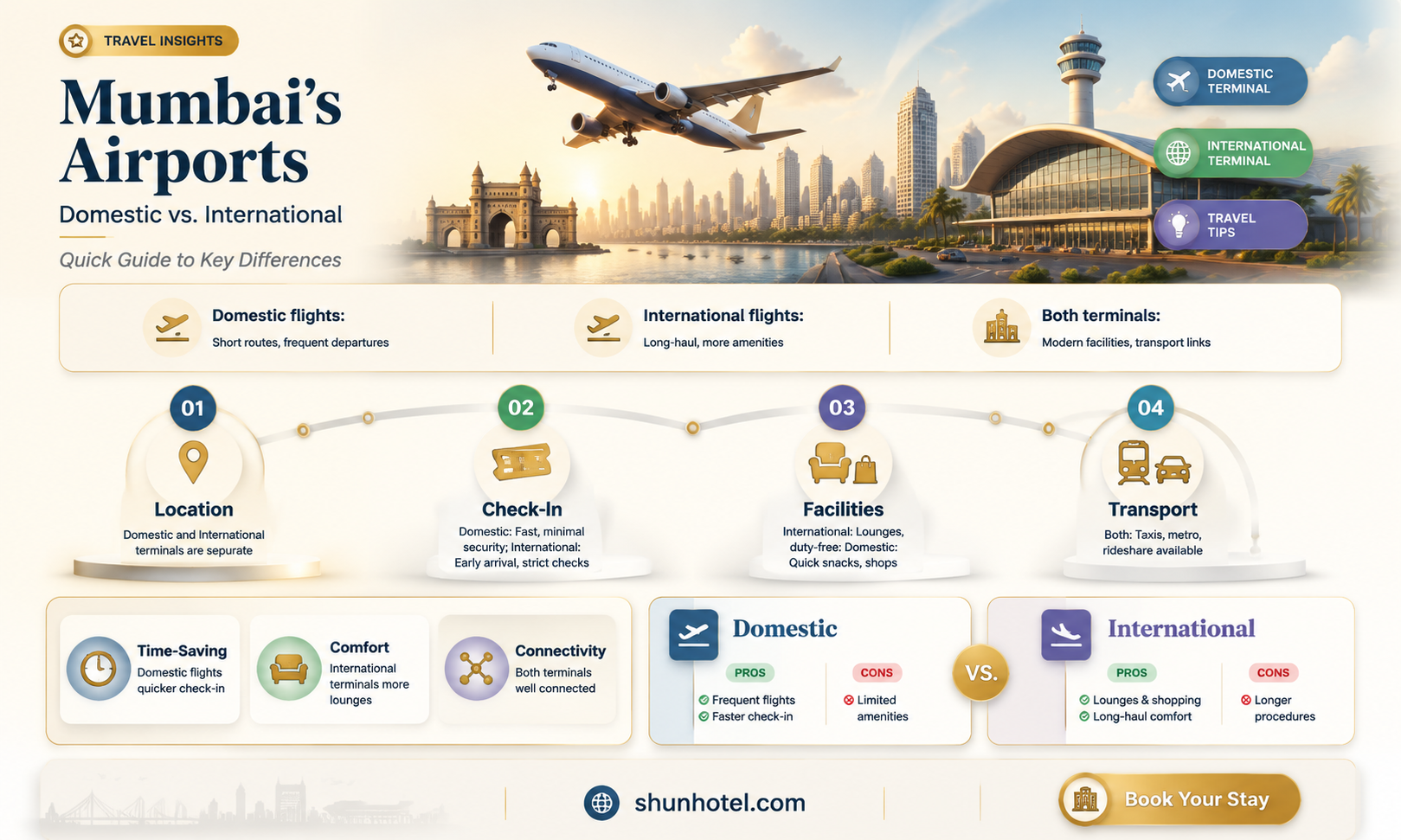
The Chhatrapati Shivaji Maharaj International Airport is structured into two primary terminals: Terminal 2 (T2) and Terminal 1 (T1). Terminal 2 is the architectural centerpiece of the airport, handling all international traffic and select domestic operations (primarily for full-service carriers like Vistara and Air India). Terminal 1, located approximately 4 to 5 kilometers away from T2, serves specific domestic carriers such as IndiGo, Akasa Air, and SpiceJet.
When planning your transfer, your primary concern is identifying which terminal your domestic flight departs from. If your flight is listed as departing from Terminal 2, your transfer is internal, and you will not need to leave the secure area if your baggage is checked through. If your departure is from Terminal 1, you must clear immigration, collect your baggage, exit the international arrivals area, and transit to the other terminal.
The Transit Process: Requirements and Prerequisites
Your transfer experience is heavily dictated by whether your journey is booked on a single "through-ticket" (interline or codeshare) or as separate point-to-point tickets.
Scenario 1: Through-Booked Tickets (Same Terminal/Carrier)
If your international flight arrives at T2 and your domestic connection is also from T2, the process is streamlined. You will follow the "International Transfer" signage. You may be required to clear security at a dedicated transfer desk if your baggage has not been tagged through to your final destination.
Scenario 2: Separate Tickets or Terminal Changes
If you have purchased separate tickets, you are treated as an arriving passenger. This entails:
- Immigration: You must clear India’s immigration formalities at T2.
- Baggage Claim: You must proceed to the baggage reclaim hall, collect your checked luggage, and clear customs.
- Landside Transit: Once you exit into the arrival hall, you must travel to your departure terminal.
- Check-in: You must proceed to the departures level of the next terminal to check in for your domestic flight, as the airline will not have your details in their outbound system yet.
Navigating Between Terminals
For passengers who must transit from T2 to T1, Mumbai Airport provides specific transportation options. As of 2026, the transit between terminals is managed via airport-authorized shuttle buses and prepaid taxi services.
- Airport Shuttle: The airport operates a shuttle service between T2 and T1. Passengers should follow the "Inter-Terminal Shuttle" signs in the arrivals area. This is the most cost-effective method.
- Prepaid Taxis: Authorized black-and-yellow or cool-cab services are available at the airport’s prepaid taxi counters located outside the arrival halls. These are highly recommended over unofficial transport for safety and standardized pricing.
- Travel Time: You should account for significant buffer time. Even though the physical distance is only a few kilometers, Mumbai traffic can be unpredictable. During peak hours, the road transit between terminals can take anywhere from 20 to 45 minutes.
Essential Comparison: Transfer Scenarios
| Feature | T2 to T2 (Same PNR) | T2 to T1 (Separate PNR) |
|---|---|---|
| Immigration | Within Transit Area | Required at T2 Arrival |
| Baggage | Transferred by Airline | Collected/Re-checked |
| Customs | None | Required at T2 |
| Transit Method | Walking/Internal Transfer | Airport Shuttle/Taxi |
| Minimum Time | 90 Minutes | 4 Hours Recommended |
Documentation and Verification
Before your departure, ensure you have your passport, valid Indian visa (or OCI card), and your printed domestic flight itinerary. Even if you hold a digital boarding pass, security personnel at the entry gates of the domestic terminal often require a printed version or a clearly displayed digital copy to verify your entry.
For international travelers, remember that the Customs Green Channel is for those with nothing to declare. If you are carrying high-value electronics, excess currency, or commercial goods exceeding the duty-free allowance, you must use the Red Channel. Failure to declare goods can lead to significant delays and potential fines, which will jeopardize your domestic connection time.
Managing Connectivity and Delays
Mumbai traffic is a variable that cannot be controlled. If your international flight is delayed, the impact on your domestic connection depends entirely on your ticket type.
- Through-Ticket Protection: If your connection is protected under a single booking, the airline is generally responsible for rebooking you on the next available flight if your arrival is delayed.
- Self-Transfer Risk: If you have booked two separate tickets, the airline is not obligated to accommodate you for a missed flight due to a late international arrival. In such cases, ensure your travel insurance includes "Missed Connection" coverage.
Common Mistakes to Avoid
- Underestimating Transit Time: Attempting to book a transfer with less than three hours between separate tickets is high-risk. Always aim for a four-hour buffer.
- Ignoring Terminal Indicators: Do not assume all domestic flights leave from the terminal you arrived at. Always check the airport’s official website or your airline’s mobile application 24 hours prior to your flight.
- Misplacing Customs Forms: Ensure your immigration documents are readily available. Fumbling for documents at the immigration counter slows down the entire line and increases your stress levels.
Frequently Asked Questions
1. Do I need to re-check my bags if I have a through-booked ticket? Generally, no. If your ticket is a through-booking (single PNR), the airline will handle your baggage transfer. However, verify this at the international check-in counter at your origin airport to be certain.
2. Can I use the airport shuttle for free? The inter-terminal shuttle service for transit passengers is typically integrated into the airport operations, but usage policies can change. Always check the information desk in the arrivals hall for the most current ticketing or boarding pass requirements.
3. What if my flight is delayed and I miss my domestic connection? If you are on a single ticket, report to your airline’s transit desk immediately upon arrival at T2. If you are on separate tickets, proceed to the airline’s check-in counter at the departure terminal to request assistance, though they are not contractually bound to provide a free seat on the next flight.
4. Is there a lounge for transit passengers? Yes, T2 features several transit lounges. If your layover is long, these lounges offer amenities such as showers, sleeping pods, and food service, which can be paid for on an hourly basis.
5. Do I have to pay for a visa to enter India just to transit? If your transit remains within the sterile transit area (and you do not need to collect bags or change terminals), you generally do not need an Indian visa. However, if you must exit the secure area to collect bags or change terminals, you must possess a valid Indian visa or e-Visa.
Final Recommendation
For the smoothest transition at Mumbai Airport, prioritize booking your international and domestic flights under a single PNR (same booking reference). If your itinerary necessitates a change between T2 and T1, allow for a minimum of four hours between your scheduled arrival and your domestic departure to account for immigration, customs, and Mumbai’s variable traffic. Always keep your flight itinerary, visa, and passport in an easily accessible pouch to expedite your movement through security checkpoints.
Image Gallery