How to Read a Scientific Article Effectively: A Systematic Approach
Reading a scientific article effectively involves a non-linear, critical process that prioritizes understanding methodology and data over simply accepting the author's conclusions. Instead of reading from start to finish, readers shoul...
Reading a scientific article effectively involves a non-linear, critical process that prioritizes understanding methodology and data over simply accepting the author's conclusions. Instead of reading from start to finish, readers should first evaluate the abstract and figures, then scrutinize the methods and results to verify the study’s validity and relevance.
Contents
The volume of scientific literature published annually continues to accelerate, with millions of papers added to repositories like PubMed and ScienceDirect every year. For researchers, students, and professionals in 2026, the challenge is no longer just accessing information, but filtering and synthesizing it without succumbing to cognitive overload. Scientific papers are not designed to be read like novels; they are dense, highly structured technical documents intended to communicate specific findings within a rigid framework. Mastering the art of reading them effectively saves time and prevents the adoption of flawed or misinterpreted data.
Understanding the Anatomy of a Scientific Paper
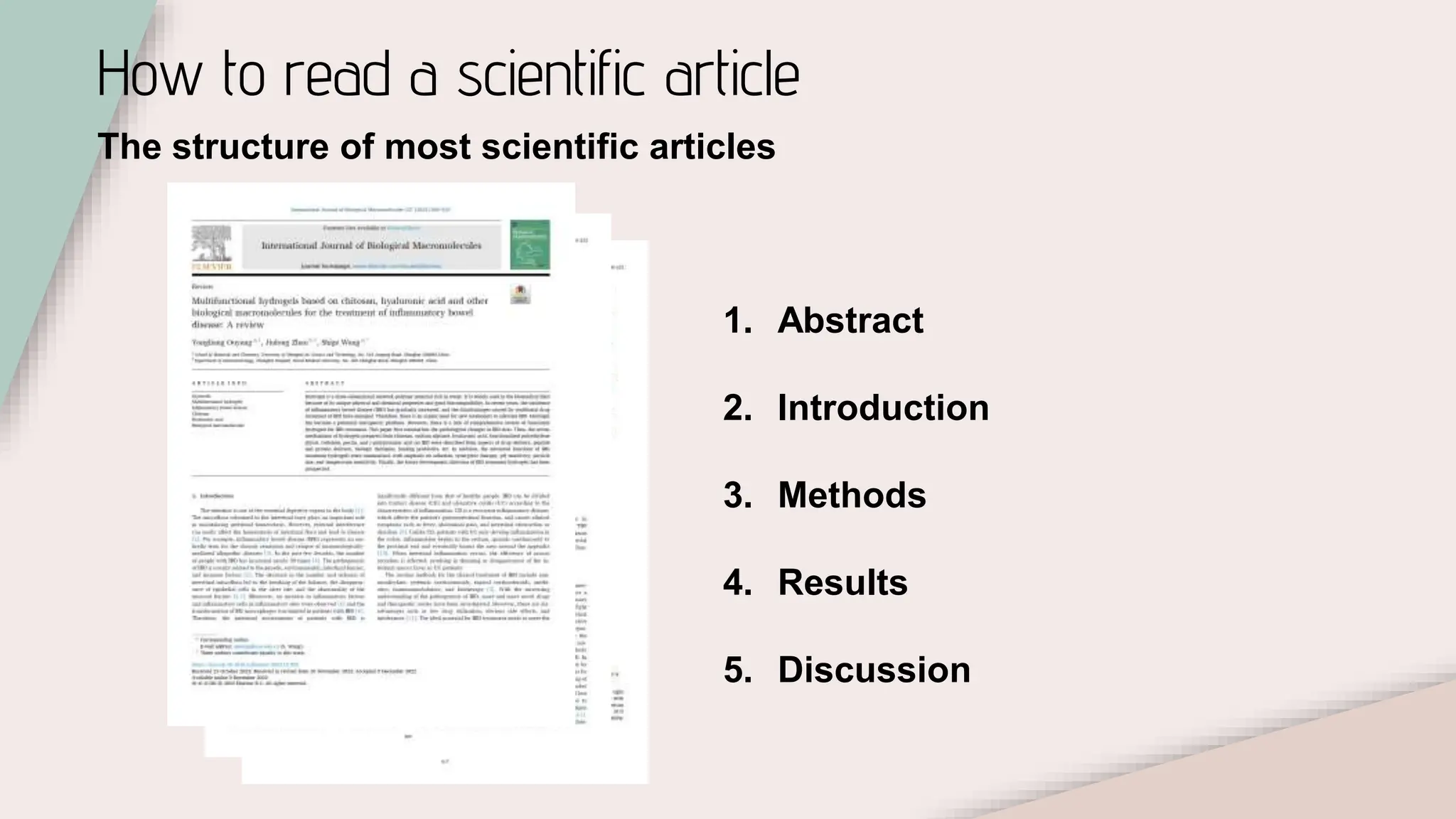
Before implementing a reading strategy, one must understand the standardized architecture of most peer-reviewed articles, often referred to as the IMRaD format. This structure is designed to promote clarity and reproducibility, yet it often presents a barrier to the uninitiated.
The Abstract and Introduction
The Abstract serves as a high-level summary, providing the research question, basic methodology, and primary findings. While useful for initial filtering, it is often written to highlight the most "marketable" aspects of the study and should never be the sole source of information. The Introduction follows, providing the necessary context. It outlines the current state of the field, identifies the gap in knowledge the study aims to fill, and explicitly states the hypothesis or objective.
Methods and Materials
This is the most critical section for verifying the study's integrity. It details exactly how the research was conducted, including the subjects, experimental design, equipment used, and statistical analysis. In 2026, high-impact journals increasingly require detailed "Open Science" documentation in this section to ensure that other researchers can replicate the findings.
Results and Discussion
The Results section presents the data objectively, often through text, tables, and figures, without interpretation. This is where the "evidence" resides. The Discussion then interprets these results, explaining what they mean in the broader context of the field, acknowledging limitations, and suggesting future research directions. Finally, the References provide a map of the intellectual lineage of the work.
The Three-Pass Strategic Reading Method
To maximize efficiency, experts often employ a "three-pass" approach. This method prevents the reader from getting bogged down in technical minutiae before determining if the paper is actually worth a deep dive.
The First Pass: The Bird's-Eye View
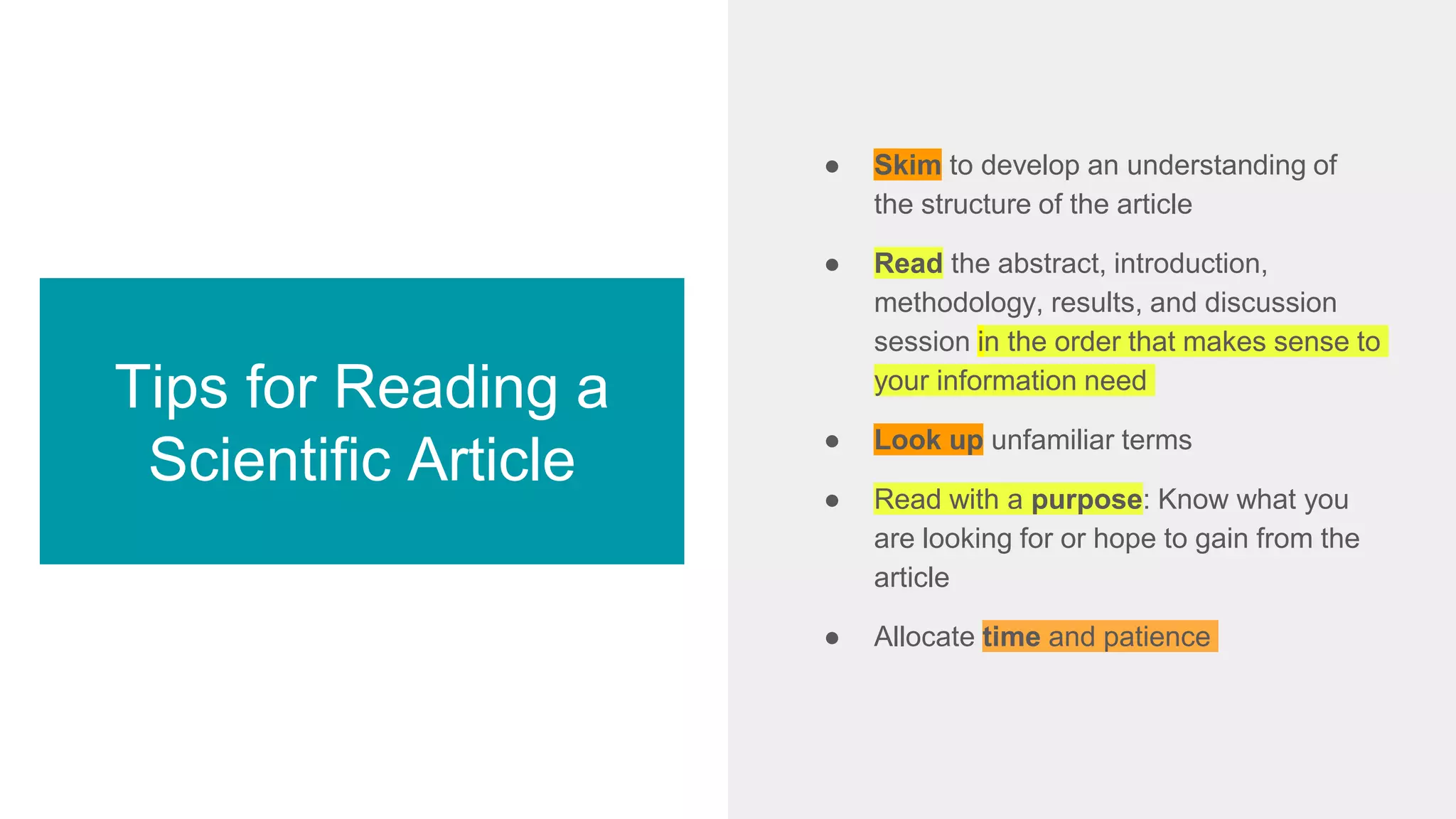
Spend five to ten minutes scanning the article. Read the title, abstract, and the introduction's concluding paragraph. Look at the headings to understand the logical flow and glance at the references to see if you recognize foundational papers in the field. By the end of this pass, you should be able to answer:
- What type of paper is this (e.g., original research, meta-analysis, case study)?
- What is the core problem being addressed?
- Are the conclusions relevant to my current needs?
The Second Pass: Grasping the Content
If the paper passes the first check, read with more focus, but ignore highly technical details like specific chemical concentrations or complex mathematical proofs unless they are central to your work. Pay close attention to Figures and Tables. In well-constructed papers, the primary findings are often visible in the data visualizations. Read the captions carefully; they should contain enough information to understand the graphic without referring back to the main text. Note any key terms or citations you don't understand for later lookup.
The Third Pass: Critical Appraisal and Deep Understanding
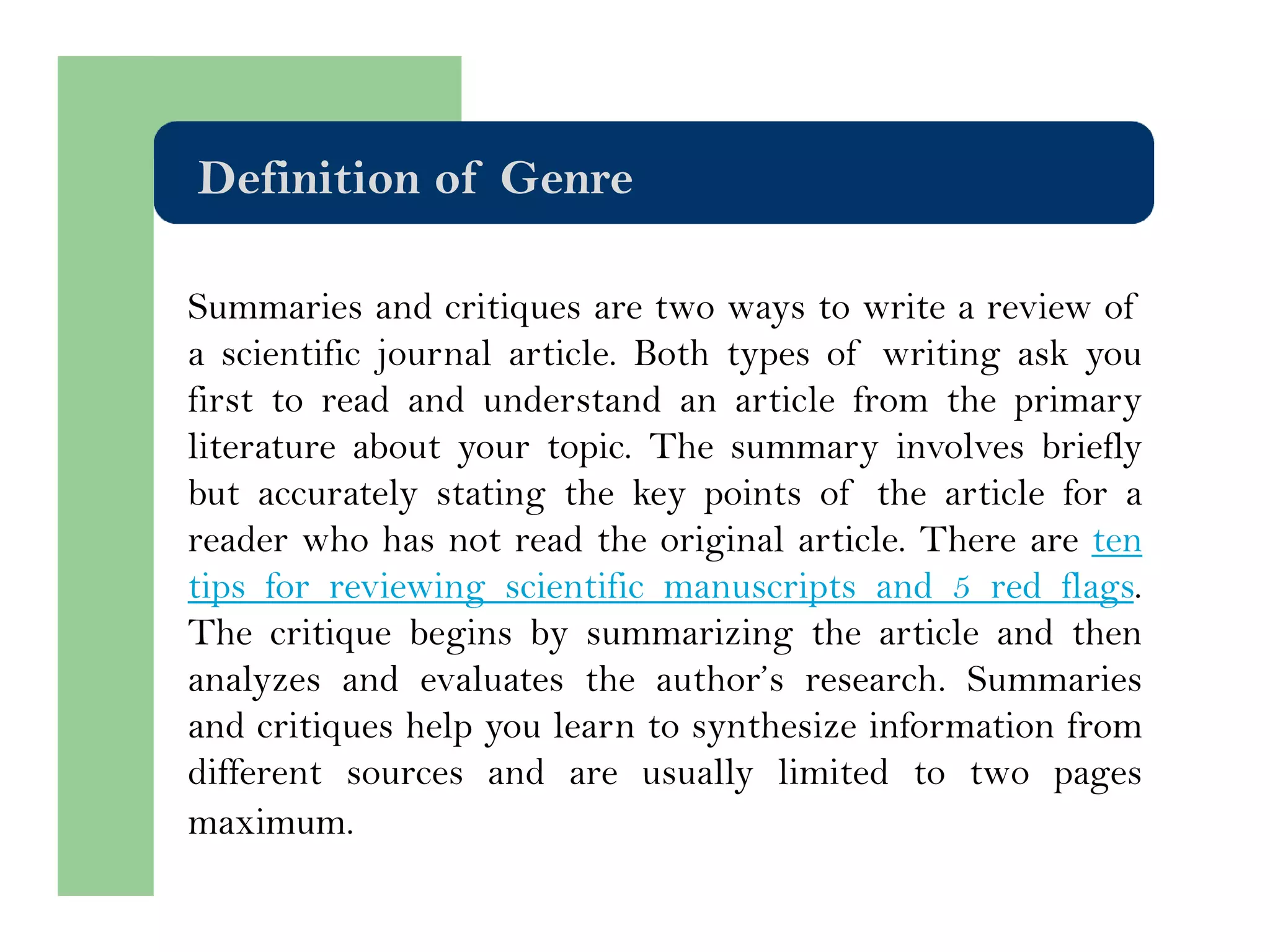
The final pass requires "reading with suspicion." This is where you attempt to virtually replicate the study in your mind. Focus heavily on the Methods and Results. Look for potential biases, such as small sample sizes, lack of control groups, or inappropriate statistical tests. In the discussion, check if the authors’ claims are actually supported by the data presented in the results. Are they overreaching? Did they ignore contradictory evidence?
Evaluating Evidence and Identifying Bias
A critical component of effective reading is the ability to distinguish between high-quality evidence and weak correlations. In 2026, with the prevalence of pre-print servers and rapid-response publishing, the peer-review process is a baseline, not a guarantee of absolute truth.
| Aspect of Study | Indicators of High Quality | Red Flags/Warnings |
|---|---|---|
| Study Design | Randomized controlled trials (RCTs), double-blind, large sample sizes. | Anecdotal evidence, case reports with no controls, non-randomized groups. |
| Statistical Power | Low p-values (where appropriate), narrow confidence intervals, large effect sizes. | P-hacking (testing multiple variables until one is significant), very small cohorts. |
| Funding/Conflicts | Disclosed independent funding (e.g., government grants, non-profit foundations). | Studies funded entirely by a corporation with a direct financial stake in the outcome. |
| Reproducibility | Data and code are made available in public repositories (e.g., GitHub, OSF). | Proprietary data that cannot be verified by outside parties. |
| Journal Reputation | Indexed in Web of Science or Scopus; established peer-review history. | Predatory journals with "pay-to-publish" models and no rigorous review. |
Analyzing the Statistical Framework
Effective readers look beyond the "p < 0.05" threshold. They look for the Effect Size, which tells you how much of a difference the intervention actually made. A result can be statistically significant but clinically or practically meaningless. Additionally, check the Confidence Intervals (CIs). If the CI is extremely wide, the estimate of the effect is imprecise, suggesting that the results might not hold up in a different population.
Essential Tools for Managing Scientific Literature
Reading effectively also means managing what you have read so that it remains accessible for future use. In 2026, manual filing is obsolete; digital ecosystems are the standard for research efficiency.
- Reference Managers: Tools like Zotero, Mendeley, or EndNote are essential. They do more than just format bibliographies; they allow you to tag, annotate, and search the full text of your library. Most offer browser extensions that can save a paper and its metadata with a single click.
- AI-Assisted Summarization: While AI tools can help explain complex jargon or provide a 200-word summary of a 5,000-word paper, they should be used as supplements, not replacements. Use them to clarify a difficult paragraph in the methods, but never rely on an AI summary to form a final judgment on a paper's validity.
- Annotation Software: Active reading—highlighting, commenting, and questioning—is proven to improve retention. Digital PDF annotators allow you to embed these notes directly into the file, which can then be synced across your devices.
Common Mistakes to Avoid
Even experienced researchers fall into traps that hinder their understanding. Avoiding these common pitfalls is essential for maintaining scientific rigor.
- Reading the Discussion First: The discussion is the author's interpretation. By reading it first, you prime your brain to see the data through their lens. Always look at the results and figures independently before reading the author’s take on them.
- Ignoring the Limitations Section: Most reputable authors include a section near the end of the discussion detailing where their study might have fallen short. If an article lacks a limitations section, or if the limitations seem trivial compared to the study's scope, proceed with extreme caution.
- Over-reliance on the Title: Titles are often designed to be "catchy" or provocative to increase citations. The actual data in the paper may be far more nuanced or even slightly contradictory to the bold claim in the title.
- Neglecting the Supplemental Material: Often, the most detailed methodology and raw data tables are relegated to the supplemental files. If you are serious about understanding the study's mechanics, you must check these documents.
Frequently Asked Questions
How long should it take to read a scientific paper?
A thorough reading of a relevant paper typically takes between one and three hours, depending on its complexity and your familiarity with the subject. A first-pass filter should take no more than 10 minutes. If you find yourself spending six hours on one paper without clarity, you may need to pause and look up foundational concepts in a textbook or review article first.
What should I do if I don't understand the jargon?
Keep a side tab open with a technical dictionary or a resource like the Cochrane Library’s glossary. However, don't stop for every word. If the jargon is specific to a method you aren't critiquing, keep moving. If the jargon is central to the hypothesis, you must resolve it before proceeding.
Are pre-prints reliable sources of information?
Pre-prints (found on sites like bioRxiv or arXiv) are versions of manuscripts that have not yet undergone formal peer review. In 2026, they are vital for rapid information sharing, but they must be read with much higher skepticism than peer-reviewed articles. Treat them as "work in progress" rather than established fact.
How do I know if a study's sample size is sufficient?
Check if the authors performed a Power Analysis in their methods section. This is a statistical calculation used to determine the minimum number of participants needed to detect an effect. If they didn't do one, and the sample size is small (e.g., fewer than 30 people for a clinical trial), the results may be due to chance.
Can I trust a study if it contradicts previous research?
Science is iterative. A single study that contradicts a decade of research is rarely "the new truth"; it is more likely an outlier or a result of different methodology. Look for Systematic Reviews or Meta-analyses on the topic, as these synthesize dozens of studies to provide a more stable conclusion.
Next Steps for Improving Research Skills
To move from a passive reader to a critical evaluator, start by participating in or starting a journal club. Discussing a paper with peers forces you to articulate your understanding and exposes you to different interpretations of the same data. Additionally, practice writing short, three-paragraph summaries of papers you read: one paragraph for the "Why," one for the "How," and one for the "So What." This practice hardwires the IMRaD logic into your own thinking process.
Image Gallery