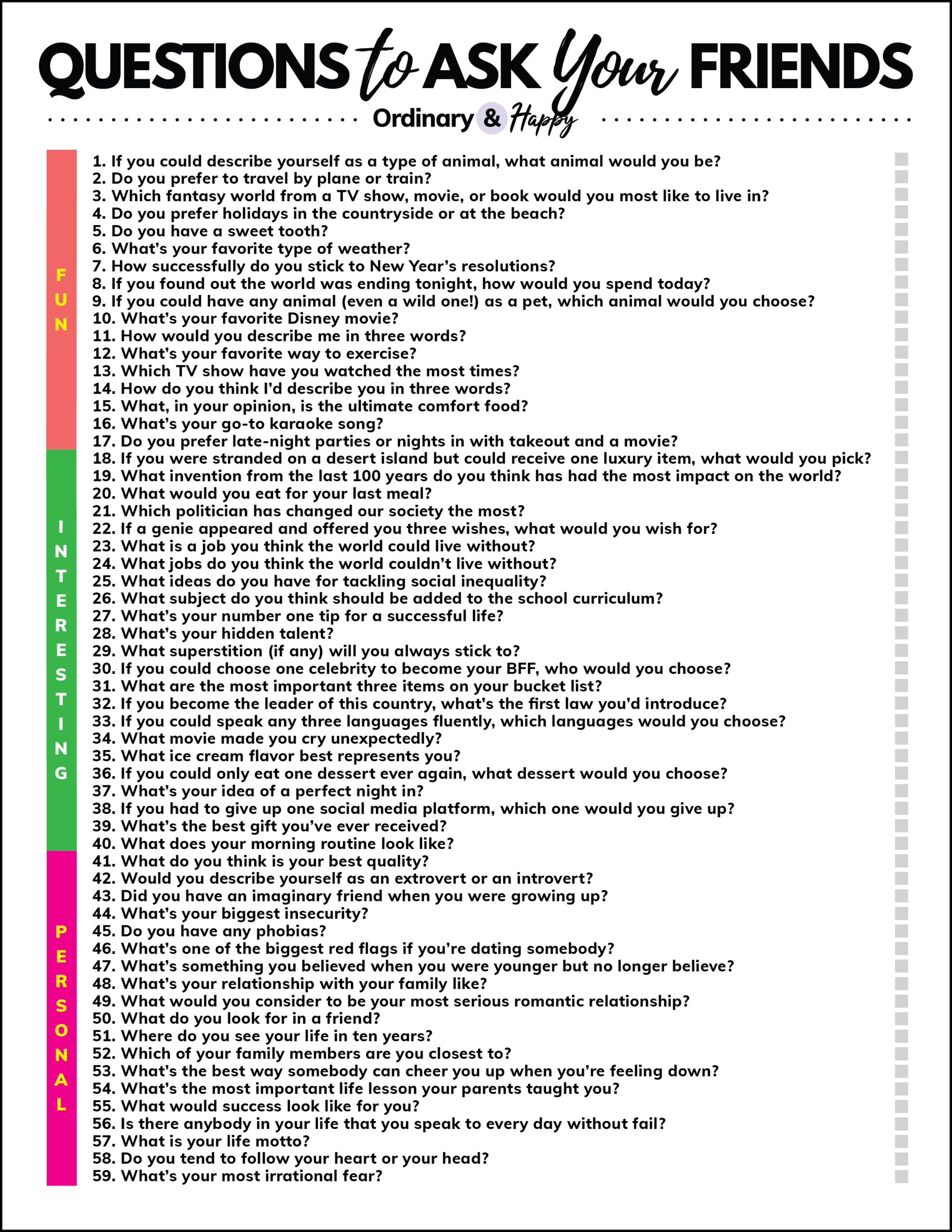
Best Interview Questions for Friends: Deep, Fun, and Engaging Prompts
Interviewing friends is a powerful way to deepen emotional bonds, generate entertaining media content, or add memorable structure to social gatherings. The best interview questions for friends combine playful curiosity with meaningful...
Interviewing friends is a powerful way to deepen emotional bonds, generate entertaining media content, or add memorable structure to social gatherings. The best interview questions for friends combine playful curiosity with meaningful reflection, encouraging your companion to share hidden stories, personal core values, and fresh perspectives that rarely surface during casual, everyday conversations.
Contents
While daily chats often focus on routine updates about work, weather, or recent events, a structured interview format gives both people permission to explore topics with intention. Whether you are hosting a podcast, launching a joint video project, planning a dinner party activity, or simply wanting to get to know a long-time companion on a deeper level, choosing the right prompts makes all the difference.
Why Structured Questions Strengthen Friendships
Human relationships naturally fall into predictable patterns of communication. Over time, close friends tend to talk about the same recurring subjects—shared acquaintances, ongoing projects, household updates, or popular culture. While these routine exchanges build comfort, they can inadvertently cause people to miss how their friends are growing, changing, or struggling beneath the surface.
Using curated interview questions breaks routine conversation patterns by creating a dedicated space for intentional listening. It shifts the dynamic from a rapid-fire exchange of status updates to an active exploration of individual identity.
Psychological research into interpersonal closeness consistently demonstrates that mutual, escalating self-disclosure builds intimacy and trust. When you ask a friend thoughtful questions and listen without judgment, you signal that their internal world remains interesting to you, regardless of how many years you have known each other.
Lighthearted Icebreaker Questions
Icebreaker prompts are ideal for kicking off an interview, easing into a recorded podcast segment, or keeping the mood energetic during a casual hangout. These questions require low emotional risk, making them accessible while still revealing personality traits, humorous quirks, and personal preferences.
- What is a minor inconvenience that completely ruins your day?
- Why it works: It reveals small pet peeves and daily routines in a humorous, relatable way without feeling overly negative or heavy.
- If you were forced to open a niche themed restaurant, what would the concept and menu look like?
- Why it works: Creative scenarios tap into imagination and humor, offering insight into their favorite comfort foods and aesthetic preferences.
- What song immediately transports you back to your teenage years every time you hear it?
- Why it works: Music triggers strong nostalgic connections, often opening the door to funny stories about past phases, fashions, or adolescent crushes.
- What is the most bizarre rabbit hole you have fallen down on the internet recently?
- Why it works: Highlights current niche interests, intellectual curiosity, or random late-night entertainment choices.
- If you could instantly become an expert in one obscure skill overnight, what would you choose?
- Why it works: Uncovers hidden aspirations or hobbies they admire from afar without the pressure of serious career goals.
- What product under $50 has genuinely improved your quality of life over the past year?
- Why it works: Yields practical, real-world recommendations while highlighting their daily habits and practical values.
- What is a popular movie or television show that everyone loves, but you secretly cannot stand?
- Why it works: Invites playful debate and allows your friend to express an unconventional opinion in a safe, fun context.
Nostalgic and Shared-History Questions
Reflecting on past experiences helps friends celebrate their journey together. These prompts examine origin stories, shared milestones, and mutual growth, reinforcing the unique history that links two people.
- Shared Memory
- Original Impression
- Personal Growth
- Current Friendship
- Forgotten Moments
- Current Friendship
- Personal Growth
- Original Impression
- What was your genuine first impression of me when we first met, and how has that changed?
- Why it works: Comparing early perceptions with current reality highlights how much trust and understanding have grown over time.
- What is your favorite memory of us together that you think I might have forgotten?
- Why it works: Uncovers small, meaningful details from the past that you might not realize made a lasting impact on your friend.
- Looking back at who we were when we first met, what is the biggest way our friendship has evolved?
- Why it works: Encourages direct reflection on relational maturity, shared resilience, and mutual adaptability over time.
- If we could re-live one specific day or trip from our past together, which one would you pick and why?
- Why it works: Focuses on peak experiences of joy, adventure, or bonding, reminding both of you why the connection is valuable.
- What was a moment in your life where you felt completely out of your comfort zone, and how did you navigate it?
- Why it works: Honors past resilience while shedding light on personal milestones that shaped who they are today.
- What piece of advice would you give to the version of yourself from five years ago?
- Why it works: Shows self-awareness and highlights recent life lessons without requiring painful vulnerability.
Deep and Reflective Questions
When the environment is quiet and both participants feel comfortable, deep reflective questions foster meaningful vulnerability. These prompts examine personal identity, emotional health, relationship values, and future vision.
- What is a personal boundary or value you have recently established that has changed your life?
- Why it works: Demonstrates maturity and self-respect, giving insight into how your friend manages their energy and priorities.
- What is something you are currently struggling with that you haven't talked about much?
- Why it works: Opens a supportive door for emotional expression, showing that you are ready to listen without offering unsolicited advice.
- What does feeling truly supported in a friendship look like to you right now?
- Why it works: Directly improves your relationship by clarifying their current emotional needs, which change as life circumstances evolve.
- What is a hard truth about yourself that you have had to accept as you have gotten older?
- Why it works: Encourages high self-awareness and humility, moving past defensive posturing into honest reflection.
- What is one dream or goal you have put on hold, and what is keeping you from pursuing it?
- Why it works: Explores internal motivations, fears, and logistical barriers, giving you a chance to offer encouragement.
- When in your life have you felt the most proud of who you were becoming?
- Why it works: Focuses on internal pride rather than external accomplishments, validating their personal growth journey.
Questions for Podcasts, Shows, and Content Creation
Interviewing a friend for a podcast, YouTube channel, or live stream requires a specific balance. You must draw out interesting stories for an outside audience while preserving your authentic personal dynamic. Avoid excessive inside jokes that isolate listeners, and focus instead on clear, engaging narratives.
- How would you explain our dynamic to a total stranger who has never seen us interact?
- Why it works: Quickly sets the stage for new listeners by defining the roles and energy each person brings to the show.
- What is one belief you used to hold strongly that you completely changed your mind about?
- Why it works: Provides a strong narrative arc (before, catalyst, after) that makes for compelling audio or video content.
- What is a common myth or misconception about your profession that drives you crazy?
- Why it works: Establishes your friend's practical expertise while offering actionable or educational value to your audience.
- What was the biggest turning point in your life that shaped your current path?
- Why it works: Gives the guest a structured platform to share their core story, making the episode memorable for listeners.
- If you could host a masterclass on any topic—serious or silly—what would you teach?
- Why it works: Lets the guest speak passionately about an area of confidence, resulting in high energy on camera or microphone.
Comparative Matrix: Matching Questions to the Setting
Selecting the right question depends heavily on your environment, the comfort level of your friend, and the medium being used.
| Question Category | Ideal Setting | Primary Objective | Risk / Depth Level | Recommended Group Size |
|---|---|---|---|---|
| Icebreakers & Fun | Casual hangouts, game nights, dinner parties | Warm up conversation, generate laughs | Low | Any size (3+ people) |
| Nostalgic & Historical | Anniversaries, reunions, long road trips | Celebrate shared past, reflect on growth | Low to Medium | 2 to 4 close friends |
| Deep & Reflective | One-on-one walks, late-night chats, firesides | Build intimate emotional connection | High | 2 people (One-on-one) |
| Content Creation | Podcasts, recorded video, public stages | Entertain and educate an outside audience | Medium | 2 to 3 recorded hosts |
| Hypothetical Scenarios | Parties, group dinners, casual gatherings | Stimulate debate and creative thinking | Low | 4+ people |
How to Conduct a Great Interview with a Friend
Having a list of great questions is only half the equation; the way you manage the conversation dictates how open and comfortable your friend will feel.
1. Set the Intent and Stage
Before diving into deep or personal prompts, clarify the context. If you are recording for a public podcast, inform your friend ahead of time about the general topics so they aren’t caught off guard. If you are having a private conversation, ensure the setting offers privacy, minimal distractions, and plenty of time so the chat doesn't feel rushed.
2. Practice Active Listening over Script Reading
It is easy to get caught up reading the next prompt on your list. Instead, listen carefully to their response. Use follow-up prompts based on their actual words:
- "What did that feel like at the time?"
- "Why do you think that specific moment stuck with you?"
- "How did that change what you did next?"
3. Avoid Hijacking the Story
When a friend shares a story, a natural impulse is to interject with your own similar experience to show empathy. In an interview format, however, constant interjections can derail their narrative. Acknowledge their point briefly, validate their perspective, and keep the spotlight on their experience.
4. Respect Boundaries and Comfort Levels
If a friend hesitates or gives a brief response to a sensitive topic, do not force the issue. Offer an easy exit route: "We can skip this one if you'd prefer," or transition smoothly to a lighter topic. Emotional safety is essential for genuine self-disclosure.
Frequently Asked Questions
How do I transition a casual hangout into a deeper interview format without making it feel weird?
Frame the activity clearly and lightheartedly before you begin. You can say, "I found a list of fun and deep conversation prompts I wanted to try together," or introduce it as a structured game night activity. Giving the conversation a clear starting point prevents it from feeling like an unexpected interrogation.
What are the best interview questions for a friend's birthday or milestone event?
Focus on memory-lane and future-oriented prompts. Questions like "What was your personal favorite moment from this past year?", "What is one thing you're proud of accomplishing recently?", and "What are you most excited to build in this next chapter?" strike an uplifting, celebratory balance.
How can content creators avoid sounding too inside-joke heavy when interviewing friends on a podcast?
Always provide context for your audience. If an inside joke or past event comes up organically, take 10 to 15 seconds to explain the background to the listener. Frame your questions so that your friend answers with full narratives rather than brief references that only the two of you understand.
What should I do if a friend becomes emotional during a deep interview?
Pause the conversation immediately, offer physical comfort or a break, and check in with them off-stage or off-record. Prioritize their emotional well-being over continuing the exercise. Ask if they would like to change the subject, take a rest, or keep talking through what came up.
Next Steps for your Conversation
To put these questions into practice effectively, start small:
- Select your medium and venue: Decide whether this will be a private one-on-one conversation, a group dinner game, or a recorded audio/video project.
- Curate a list of 5 to 10 questions: Mix 2–3 light icebreakers, 3–4 reflective or nostalgic core questions, and 1 positive forward-looking wrap-up question.
- Set the environment: Minimize digital notifications, create a comfortable seating area, and give yourself enough uninterrupted time to let answers breathe naturally.
Image Gallery