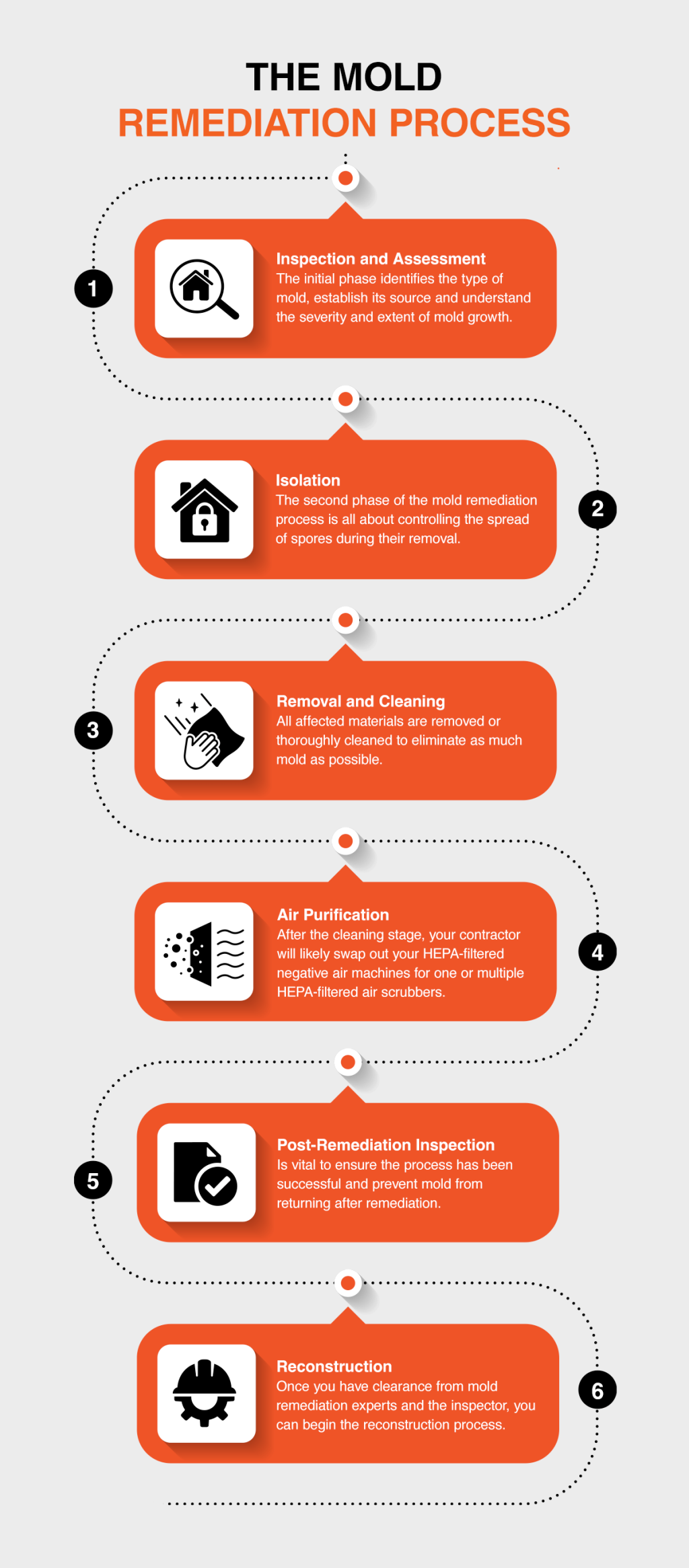
How Mold Remediation in Winter Park Homes Works
Mold remediation in Winter Park homes involves a systematic process of moisture control, containment, and fungal removal designed to restore indoor air quality. Following IICRC S520 standards, professionals isolate affected areas using...
Mold remediation in Winter Park homes involves a systematic process of moisture control, containment, and fungal removal designed to restore indoor air quality. Following IICRC S520 standards, professionals isolate affected areas using HEPA filtration and negative air pressure, physically removing contaminated materials and treating surfaces to prevent recurrence in Florida’s high-humidity environment.
Contents
Understanding the Mold Remediation Framework in Winter Park
Winter Park, Florida, is characterized by its lush landscapes, chain of lakes, and historical architecture. However, the same environment that makes the city desirable—specifically the high humidity and proximity to water bodies like Lake Osceola and Lake Maitland—creates an ideal breeding ground for mold. In 2026, mold remediation is no longer viewed as a simple cleaning task but as a specialized environmental discipline governed by strict Florida state regulations and industry standards.
The goal of remediation is not to achieve a "mold-free" environment, as mold spores are a natural part of the outdoor ecosystem and will always exist in some capacity. Instead, the objective is to return the indoor fungal ecology to a "Normal Fungal Ecology" (Condition 1), as defined by the Institute of Inspection Cleaning and Restoration Certification (IICRC). For Winter Park residents, this means addressing the underlying moisture issues unique to the region, such as high water tables and aging infrastructure in historic homes.
The Assessment and Inspection Phase
Before any physical work begins, a comprehensive assessment is required. In the state of Florida, legislation (Chapter 468, Part XVI, Florida Statutes) requires a clear separation between the individual who performs the mold assessment and the individual who performs the remediation if the project exceeds a specific size (typically 10 square feet). This prevents conflicts of interest and ensures the homeowner receives an unbiased evaluation.
During a 2026-standard inspection, professionals utilize several diagnostic tools:
- Infrared Thermography: Thermal imaging cameras detect temperature differentials behind walls, which often indicate hidden moisture pockets or insulation failures common in older Winter Park estates.
- Moisture Meters: These devices measure the moisture content of various building materials, including drywall, wood, and masonry.
- Hygrometers: These assess the relative humidity and dew point within the home. If indoor humidity consistently exceeds 60%, mold growth is almost inevitable.
- Air and Surface Sampling: Samples are collected and sent to an AI-augmented laboratory to identify specific fungal genera, such as Stachybotrys (black mold) or Aspergillus/Penicillium, and to quantify spore counts.
Establishing Containment and Air Management
Once the scope of work is defined, the remediation team must prevent the cross-contamination of clean areas. This is the most critical phase of the process. In a typical Winter Park bungalow or modern lakefront home, the HVAC system can inadvertently spread spores throughout the entire structure if not properly isolated.
Physical Barriers
Technicians install critical barriers using 6-mil fire-retardant polyethylene sheeting. In larger projects, "zip-poles" are used to create temporary walls. For high-traffic areas, decontamination chambers (airlocks) are established where workers can change personal protective equipment (PPE) to ensure they do not track spores out of the work zone.
Negative Air Pressure
To ensure that air only flows into the contained area and never out, professionals use High-Efficiency Particulate Air (HEPA) air scrubbers. These machines create a vacuum effect, known as negative pressure. The exhausted air is usually vented outside the home. By 2026, most air scrubbers are equipped with sensors that provide real-time data on air exchange rates, ensuring that the containment maintains at least four to six air changes per hour (ACH).
The Physical Remediation Process
With containment established, the physical removal of mold begins. The approach varies significantly depending on whether the material is porous, semi-porous, or non-porous.
Porous Material Removal
Materials like drywall, insulation, and carpeting act as "sinks" for mold. Once the mycelia (the root-like structures of mold) penetrate these materials, they cannot be fully cleaned. These items are carefully removed, double-bagged in 6-mil plastic bags, and the exterior of the bags is wiped down before they are transported through the home.
Semi-Porous and Non-Porous Cleaning
Structural elements like wood framing are semi-porous. These are typically cleaned using a combination of methods:
- HEPA Vacuuming: Dry-vacuuming surfaces to remove the bulk of fungal spores.
- Media Blasting: In 2026, dry ice blasting is a preferred method for cleaning historic Winter Park wood framing. It is abrasive enough to remove mold but leaves no secondary waste and does not introduce additional moisture.
- Antimicrobial Application: Professional-grade, EPA-registered antimicrobials are applied to kill remaining spores and inhibit future growth. These solutions are often botanically based (such as thymol) to ensure the safety of residents and pets.
| Step | Action | Objective |
|---|---|---|
| 1. Source Control | Fix leaks or humidity issues | Prevent mold from returning after cleanup |
| 2. Isolation | Seal vents and doorways | Prevent cross-contamination to unaffected rooms |
| 3. HEPA Scrubbing | Continuous air filtration | Remove microscopic spores from the atmosphere |
| 4. Extraction | Remove drywall and debris | Eliminate the primary food source for mold |
| 5. Detail Cleaning | HEPA vacuum and damp wipe | Remove settled dust and spores from surfaces |
| 6. Encapsulation | Apply antimicrobial sealants | Protect remaining structural wood from moisture |
Drying and Structural Stabilization
The most common reason for remediation failure is the failure to dry the structure properly before "rebuilding." If new drywall is installed over damp studs, mold will return within 48 to 72 hours.
In Winter Park’s humid climate, standard air conditioning is rarely enough to dry a home after a leak. Remediation professionals deploy LGR (Low Grain Refrigerant) dehumidifiers, which are capable of pulling moisture from the air even in low-humidity environments. They also use axial air movers to promote evaporation. The drying process is monitored daily until building materials reach "dry standards," which are typically determined by comparing the affected materials to a known dry "control" area of the home.
Post-Remediation Verification (PRV)
The final step in the "how it works" sequence is the Post-Remediation Verification, often called "clearance testing." To ensure total transparency, a third-party environmental consultant—not the remediation company—should perform this check.
The PRV includes a visual inspection to ensure all dust and debris have been removed and a series of air samples. The project is considered successful when the indoor spore counts are lower than or statistically similar to the outdoor spore counts, and no "target" molds (highly moisture-dependent molds like Stachybotrys) are present. Only after receiving a passing clearance report should the containment barriers be removed and the build-back (reconstruction) begin.
Cost Considerations for Winter Park Homeowners
In 2026, the cost of mold remediation in Winter Park is influenced by several factors. Historic homes in the downtown district often require more delicate handling, which can increase labor costs.
- Scope of Damage: A small bathroom leak might cost between $1,500 and $3,500, while a whole-house remediation following a major pipe burst or flood can exceed $20,000.
- Accessibility: Mold in crawl spaces or tight attics requires specialized equipment and more labor hours.
- Material Costs: The price of 2026-compliant eco-friendly antimicrobials and specialized HEPA filters impacts the final quote.
- Reconstruction: It is important to remember that remediation quotes usually cover the removal of mold, not the replacement of drywall and flooring.
Common Pitfalls to Avoid
Many homeowners attempt to address mold using bleach. However, the Environmental Protection Agency (EPA) explicitly advises against using bleach as a routine practice for mold cleanup. Bleach contains a high percentage of water, which can soak into porous materials and actually encourage the growth of mold roots deeper into the surface while only changing the color of the mold on the surface.
Another common mistake is failing to address the source of the moisture. Whether it is a pinhole leak in a copper pipe, a failed window seal during a Central Florida thunderstorm, or a malfunctioning HVAC system, the mold will return if the water source remains active. In Winter Park, rising dampness from the high water table is a frequent culprit in older homes with pier-and-beam foundations.
FAQs About Winter Park Mold Remediation
Can I stay in my home during the remediation process?
Whether you can remain in the home depends on the location and size of the containment area. If the remediation is isolated to a single room with a dedicated airlock, you can often stay. However, if the HVAC system is contaminated or if the mold covers a large percentage of the living space, professional consultants typically recommend temporary relocation to avoid exposure to disturbed spores and VOCs from cleaning agents.
Does homeowners insurance cover mold remediation in Florida?
Insurance coverage in 2026 depends heavily on the "cause of loss." Most Florida policies cover mold if it resulted from a "sudden and accidental" discharge of water, such as a burst pipe. However, mold resulting from long-term seepage, lack of maintenance, or high humidity is often excluded or capped at a low limit (frequently $10,000). Always review your policy’s "Mold and Fungi" endorsement.
How long does the average remediation project take?
For a standard residential project in Winter Park, the process usually takes between 3 and 7 days. This includes 1 day for setup and containment, 1-3 days for physical removal and cleaning, and 2-3 days for structural drying and clearance testing. Complex cases involving historic materials or extensive structural drying may take longer.
Is "Black Mold" more dangerous than other types?
The term "black mold" usually refers to Stachybotrys chartarum. While it produces mycotoxins that can cause respiratory issues and other health symptoms, other molds like Aspergillus can be equally problematic for individuals with allergies or compromised immune systems. The remediation process is essentially the same regardless of the color or species; the priority is always safe removal and moisture control.
How do I find a licensed remediator in Winter Park?
Residents should verify licenses through the Florida Department of Business and Professional Regulation (DBPR). A legitimate contractor should hold a Mold Remediator license and carry specific environmental insurance (Pollution Liability), which is different from standard General Liability insurance.
Final Recommendations for Homeowners
If you suspect mold in your Winter Park home, the first step is to stop the water source. Once the leak is contained, consult with a licensed mold assessor to determine the extent of the growth. Do not disturb the mold yourself, as this can release millions of spores into your air handling system. By following a structured remediation plan that emphasizes containment and HEPA-level filtration, you can protect both your property's value and your family’s health.
Image Gallery