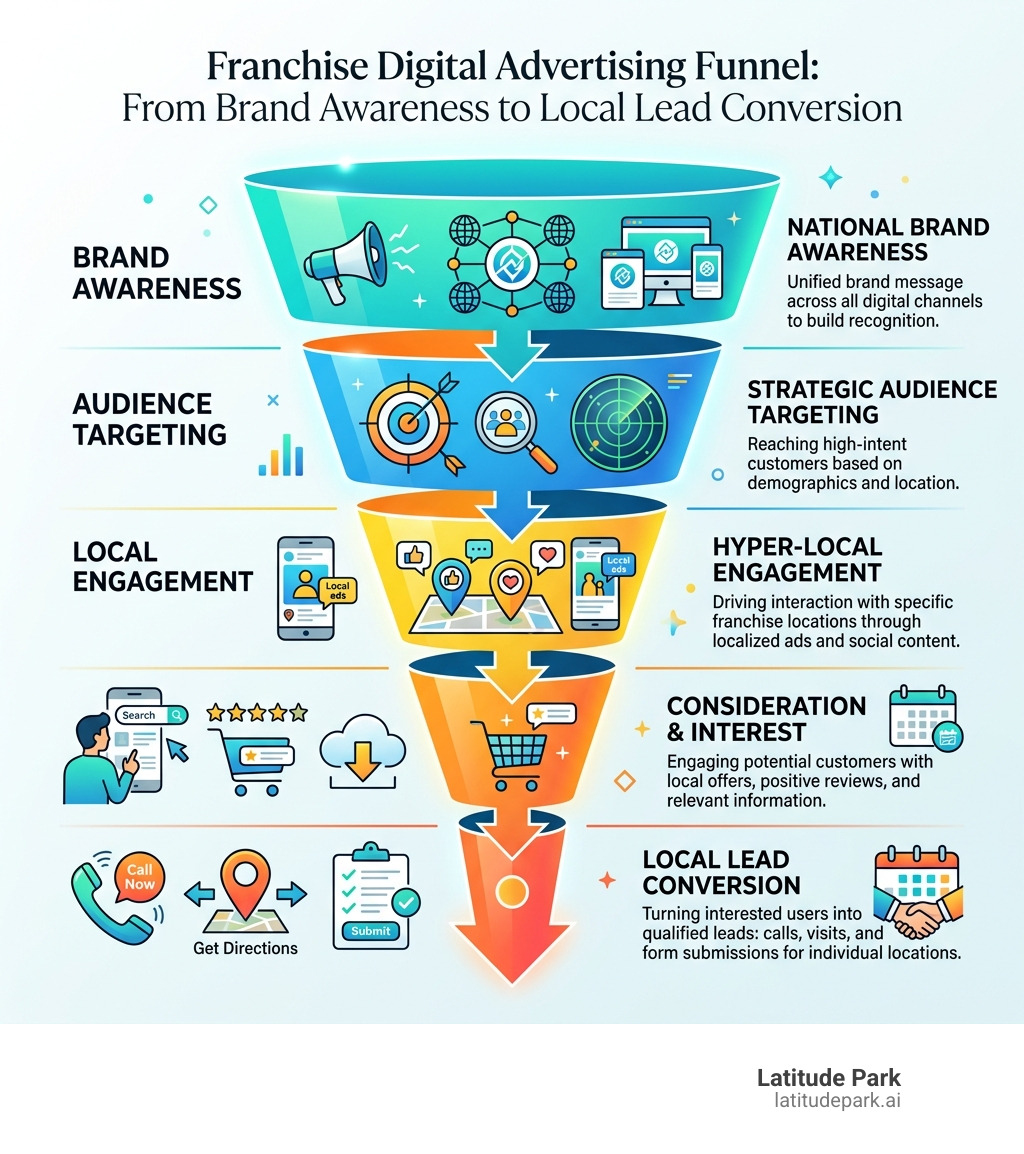
Navigating Franchise Digital Marketing in Transition: Strategies for Systemic Growth
Franchise digital marketing is currently undergoing a structural transition as systems shift from legacy, fragmented local advertising to integrated, data-sovereign ecosystems. This movement prioritizes brand-wide data collection, loca...
Franchise digital marketing is currently undergoing a structural transition as systems shift from legacy, fragmented local advertising to integrated, data-sovereign ecosystems. This movement prioritizes brand-wide data collection, local SEO precision, and regulatory compliance, requiring franchisors and franchisees to align digital assets, marketing technology (MarTech) stacks, and customer acquisition protocols to ensure unified performance across all territories.
Contents
The Drivers of Structural Transition
In 2026, the digital marketing landscape for franchises is defined by the tension between centralized brand control and the autonomy required for local market relevance. Historically, franchisors operated with disconnected systems where the corporate office managed national brand awareness, while franchisees managed individual social media pages and local search profiles with little oversight or data integration.
This transition is primarily driven by three factors: the deprecation of third-party tracking signals, the necessity for hyper-local search visibility (Local SEO), and the increasing legal and operational complexity of customer data privacy. Franchisors are now moving toward "system-wide data ecosystems" where local performance is visible to corporate leadership in real-time. This allows for the reallocation of marketing budgets to underperforming territories, creating a more agile, responsive franchise unit.
Prerequisites for a Unified Marketing Architecture
Transitioning to a modern marketing model requires more than just new software; it requires a foundational change in the franchise agreement and operational guidelines. Before implementing centralized marketing tools, franchisors must establish clear governance regarding data ownership and digital access.
Establishing Data Sovereignty
The most significant hurdle in this transition is the legal and technical demarcation of data. Are customer leads owned by the franchisee, the franchisor, or both? In 2026, successful systems typically define in their Operations Manual that all lead data generated through approved digital channels constitutes proprietary system intelligence. This ensures the franchisor can utilize historical customer data to improve automated ad targeting for the entire network.
The Role of Technology Integration
A robust transition relies on a centralized MarTech stack. This typically includes:
- Customer Relationship Management (CRM) Integration: Connecting local unit inquiries directly to a centralized database.
- Local SEO Management Platforms: Automated synchronization of Google Business Profiles, ensuring that store hours, location services, and local citations remain consistent regardless of franchisee technical literacy.
- Unified Paid Media Platforms: Utilizing "Co-op" digital advertising funds that are managed via a central dashboard, allowing the franchisor to deploy localized campaigns that leverage the national brand's purchasing power.
Key Challenges in Execution
Transitioning a legacy franchise system introduces significant friction, particularly regarding cultural resistance and technical debt. Franchisees may view corporate involvement as an infringement on their autonomy, while established units may struggle to abandon legacy vendors for the corporate-mandated platform.
Managing Internal Resistance
To mitigate pushback, the transition must be positioned as a profit-generation tool rather than an administrative burden. Providing franchisees with an automated dashboard that demonstrates their Return on Ad Spend (ROAS) is critical. When franchisees see transparent evidence that a centralized digital marketing strategy yields lower cost-per-acquisition (CPA) than their independent efforts, adoption rates naturally increase.
Maintaining Local Relevancy
A common risk in centralized marketing is the "generic content trap." If all franchise units post identical national content, local search intent—which relies on geographic proximity and neighborhood nuance—suffers. The successful transition model uses an "80/20 rule": 80% of digital marketing assets (creative, high-level messaging) are produced and pushed from the corporate level, while 20% is reserved for franchisee-generated local content, such as community involvement or unit-specific promotions.
Comparative Framework: Legacy vs. Transitioned Marketing
The following table outlines the fundamental shift in operational management within franchise systems during this transitional phase.
| Feature | Legacy Approach | Transitioned Model |
|---|---|---|
| Budget Allocation | Decentralized, unit-based | Pooled, performance-based |
| Data Visibility | Fragmented, inaccessible | Centralized, real-time |
| Local SEO Control | Franchisee-managed | Corporate-supervised/Automated |
| Ad Targeting | Generic, national | Hyper-local, data-informed |
| Compliance | Minimal oversight | Automated audit systems |
Technical Implementation and Operational Compliance
For franchisors, the shift to a modern digital architecture requires strict attention to the 2026 standards for digital infrastructure. This includes ensuring all local digital landing pages are mobile-responsive and adhere to the latest Web Content Accessibility Guidelines (WCAG).
Furthermore, legal compliance is paramount. With varying regional regulations concerning automated marketing and unsolicited digital communication, a centralized platform allows the legal team to update compliance disclaimers or data collection notices globally in one click, rather than relying on individual franchisees to manually update their websites. This reduces the risk of systemic litigation and ensures a unified brand posture regarding user privacy.
Frequently Asked Questions
Why is data ownership a central issue in this marketing transition?
Data ownership defines who has the legal right to use, store, and analyze customer information. In a transition, defining ownership ensures the franchise system can build a unified consumer database to improve retargeting and lifetime value analysis across all locations without violating individual franchisee contracts.
How can franchisors incentivize franchisees to adopt new digital tools?
The best incentive is demonstrable performance data. By showing a franchisee that the new system reduces their individual marketing spend while increasing qualified lead flow, you shift the conversation from "loss of control" to "operational efficiency."
What happens if a franchisee refuses to integrate their digital assets?
Most franchise agreements contain provisions for "Brand Standards." If digital marketing platforms are deemed part of the brand's operational infrastructure, they can be enforced similarly to physical signage or supply chain requirements. Always consult with legal counsel to ensure the franchise agreement supports these digital mandates.
Does centralized digital marketing kill local engagement?
Not if managed correctly. The transition should empower the local unit by removing the administrative burden of running ads. This frees up the franchisee to focus on community-level engagement, which is then amplified by the corporate-managed digital reach.
What is the primary risk of delaying a digital transition?
The primary risk is the loss of competitive edge. In 2026, consumer search patterns are heavily localized and algorithm-driven. Systems that do not have consistent, optimized local digital presences will be systematically deprioritized by search engines and discovery platforms in favor of systems that do.
Next Actions for Franchise Leadership
To initiate or refine this transition, leadership should conduct a comprehensive audit of their current marketing technology stack to identify gaps between corporate visibility and local execution.
- Perform an Audit: Evaluate existing digital touchpoints, including all local social media pages and Google Business Profiles, to identify inconsistent data.
- Standardize the Stack: Select a unified platform that allows for global control with local customization capabilities.
- Update Agreements: Work with legal council to revise the Digital Standards section of the franchise agreement to reflect current data handling and platform usage expectations.
- Commence Pilot Program: Roll out the new architecture to a small, high-performing group of franchisees to gather data and feedback before a system-wide rollout.
Image Gallery