Best Spots for Solar Panels in Avra Valley: Optimal Locations and Placement Guide
The best spots for solar panels in Avra Valley are unshaded south- or southwest-facing roof planes with a 25° to 32° tilt, or open, elevated ground-mounted sites on rural acreage situated outside designated floodplains. Proper placemen...
The best spots for solar panels in Avra Valley are unshaded south- or southwest-facing roof planes with a 25° to 32° tilt, or open, elevated ground-mounted sites on rural acreage situated outside designated floodplains. Proper placement must account for high summer thermal conditions, desert dust accumulation, and local Trico Electric Cooperative interconnection guidelines.
Contents
Solar Potential and Climate Profile in Avra Valley
Avra Valley, situated in unincorporated Pima County west of the Tucson Mountains and extending toward Marana, possesses one of the highest solar irradiance levels in North America. The region receives an average of 6.0 to 6.5 peak sun hours per day, providing exceptional yield potential for photovoltaic (PV) solar systems. However, translating this solar resource into reliable kilowatt-hours (kWh) requires understanding how the local microclimate affects system performance.
| Feature | Detail |
|---|---|
| Solar Resource | 6.0 – 6.5 Peak Sun Hours / Day |
| Primary Utility | Trico Electric Cooperative |
| Permitting Body | Pima County Development Services |
| Key Challenges | Extreme Summer Heat & Brawley Wash Flooding |
High ambient summer temperatures in the Sonoran Desert create thermal stress on solar modules. Photovoltaic cells experience a reduction in efficiency as cell temperature rises above 25°C (77°F), a standard test condition known as the temperature coefficient of Pmax. High-end monocrystalline panels typically have a temperature coefficient between -0.30% and -0.40% per degree Celsius. On a summer afternoon in Avra Valley, when ambient temperatures reach 105°F to 110°F (40°C to 43°C), panel temperatures can surpass 65°C (149°F), resulting in an operational power loss of 12% to 16%.
To mitigate thermal degradation, the physical location of solar panels must allow continuous airflow underneath the module frame. Roof-mounted systems require a minimum 4- to 6-inch air gap between the roof deck and the modules, while ground-mounted systems naturally benefit from ambient breezes across open land.
Rooftop Placement: Optimizing Azimuth, Tilt, and Structure
Rooftop solar remains the most common installation method for residential properties in Avra Valley. Finding the ideal location on a roof requires balancing directional orientation (azimuth), roof slope (tilt), structural integrity, and architectural constraints.
- Orientation Angles:
- North: 0°
- East: 90°
- South: 180° (Best Azimuth)
- West: 270°
- Peak TOU Yield: 210°–240° (SW/West)
Azimuth and Directional Orientation
- South-Facing (180° Azimuth): Orienting panels directly south maximizes cumulative annual energy production (kWh). This orientation captures the maximum quantity of solar photons throughout the day.
- Southwest to West-Facing (210° to 240° Azimuth): Orienting panels toward the southwest or west shifts peak energy generation later into the afternoon. Because air conditioning units run at maximum capacity during late afternoon heat, a west-leaning orientation can align generation directly with home consumption patterns and time-of-use (TOU) rate schedules offered by local electric utilities.
- East-Facing (90° Azimuth): East-facing arrays produce high energy yields during morning hours but drop off significantly by mid-afternoon. They are best utilized as secondary array locations when south or west roof surfaces are constrained.
- North-Facing (0° Azimuth): North-facing roof planes should generally be avoided in the Southern Hemisphere-adjacent latitudes of Arizona due to high incidence angles and low energy output.
Tilt Angles for Desert Latitudes
Avra Valley sits at approximately 32.3° N latitude. The optimal tilt angle for fixed, year-round solar generation is equal to or slightly less than the latitude, typically between 25° and 32°.
- Pitched Roofs: Standard pitched roofs in Avra Valley (typically 18° to 26°, or 4:12 to 5:12 pitch) allow panels to lie flush with the roof plane using standard mounting rails. This aesthetic integration provides acceptable efficiency losses (less than 3% compared to the true optimum angle).
- Flat Roofs: Many Southwestern-style homes feature flat roof decks (parapet roofs). Placing panels flat (0° tilt) is discouraged because rainwater collects in module frames, resulting in severe dust retention and accelerated cell soiling. Flat roofs require tilted tilt-leg racking sets at 15° to 20° to facilitate natural self-cleaning during monsoon rains while minimizing wind uplift loads.
Structural Considerations and Manufactured Homes
A significant portion of housing stock in Avra Valley consists of manufactured, mobile, or modular homes. Standard manufactured home trusses are engineered to strict weight limits and often cannot support the additional dead load (typically 3 to 4 lbs per square foot) and wind uplift forces of a roof-mounted PV system without custom engineering modifications.
Before placing panels on a manufactured home roof, homeowners must secure structural engineering verification. If the roof structure cannot be reinforced economically, shifting the installation spot to a ground-mounted array or a separate shade structure (such as a steel carport or patio cover) is the preferred technical solution.
Ground-Mounted Solar Arrays on Avra Valley Acreage
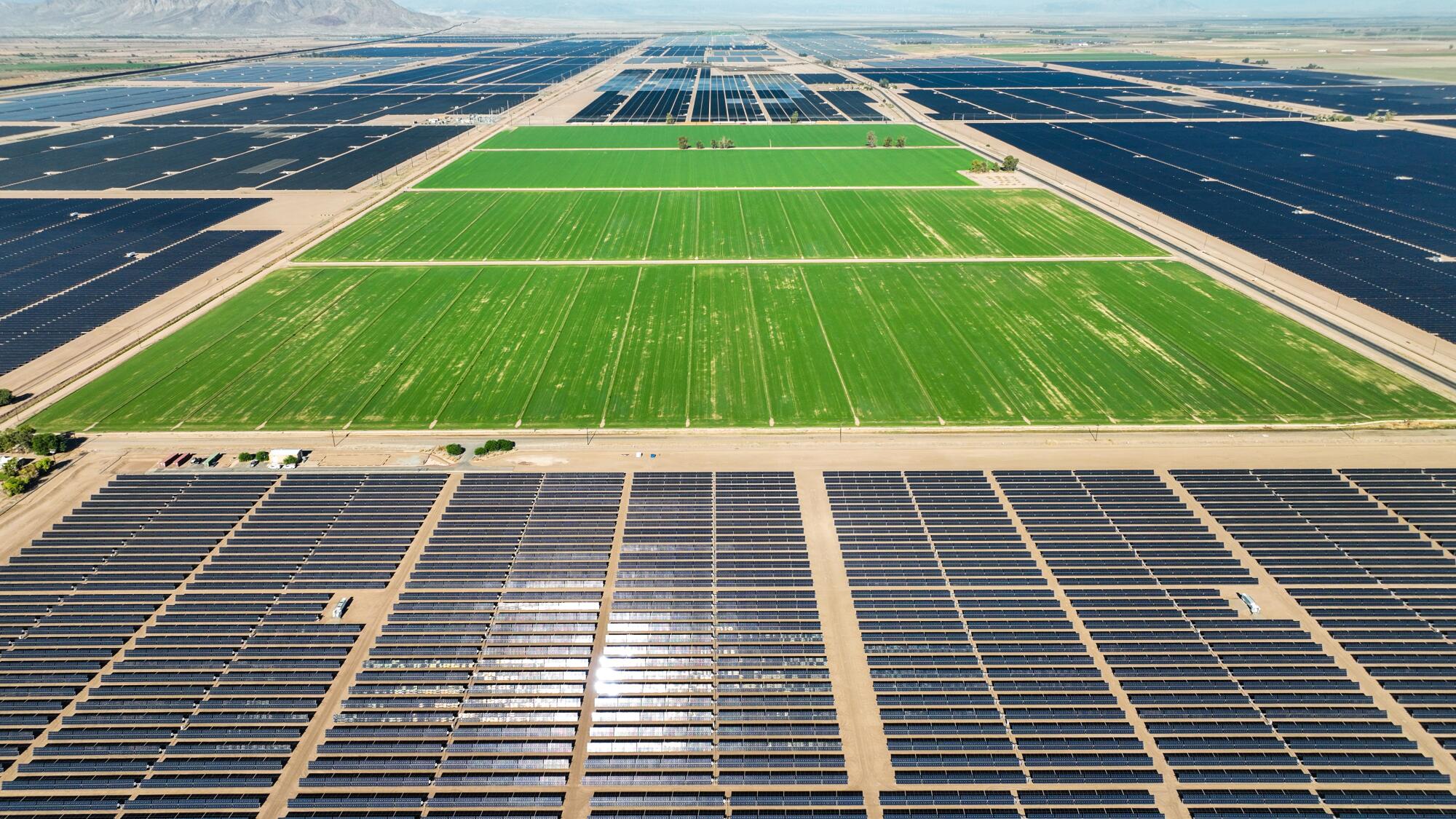
For properties featuring open acreage, ground-mounted solar systems frequently outperform rooftop installations. Avra Valley's open terrain allows ground mounts to be positioned without directional or structural compromises.
- Solar Rays
- Solar Panels
- Air Flow (Superior bottom-side cooling reduces thermal loss)
- Ground Level
Micro-Siting for Ground Mounts
Selecting the exact spot on a rural parcel requires analyzing several physical factors:
- Soil Composition and Anchoring: Ground mounts rely on concrete piers, helical screw piles, or driven steel posts. Avra Valley soil contains varying depths of caliche—a hardened natural layer of calcium carbonate. Installing ground-mount posts in dense caliche requires heavy machinery, such as hydraulic earth augers or pneumatic hammers. A soil site assessment determines whether concrete footings or screw anchors are more cost-effective.
- Distance to the Main Electrical Panel: Ground arrays should be placed as close to the main service panel (MSP) as practical. Running long direct-burial AC or DC underground conduits introduces voltage drop. To maintain voltage drop below the National Electrical Code (NEC) recommended maximum of 3%, long runs (exceeding 150 feet) require larger aluminum or copper wire gauges, increasing installation costs.
- Vegetation and Animal Protection: Ground-mounted arrays must be sited clear of tall brush and fenced to prevent damage from native wildlife, such as javelinas, rodents, and coyotes, which can chew exposed wiring or nest beneath modules. Utilizing metallic conduit and wire mesh barriers protects low-lying array equipment.
Navigating Environmental Hazards, Shading, and Topography
Even in an area with abundant sun, micro-environmental variables can degrade solar performance if the site selection process overlooks localized shading or topography.
- Tucson Mountains
- Morning Shadow: Foothills Zone (Delayed Sunrise)
- Mid-Valley: Unobstructed Sun
Topographical Shading from the Tucson Mountains
Properties located along the eastern margin of Avra Valley near the base of the Tucson Mountains or Saguaro National Park West experience morning solar obstruction. The elevated mountain ridge delays direct sun exposure by 30 to 90 minutes after calendar sunrise.
Arrays located in these foothill zones should prioritize southwest and west orientations to capture unobstructed afternoon irradiance, rather than relying on early morning light.
Vegetative Shading
Native Sonoran Desert trees—such as Palo Verde, Velvet Mesquite, and Ironwood—have thin leaves that cast dappled shadow patterns. Micro-shading across even a small portion of a single solar module can reduce output across an entire series string if standard central string inverters are used.
To counteract localized vegetative shading:
- Siting must maintain a 1:2 distance-to-height clearance ratio from mature trees (e.g., stay 30 feet away from a 15-foot tree).
- Systems exposed to intermittent shading should utilize Module-Level Power Electronics (MLPE), such as microinverters or DC power optimizers. MLPE allows each panel to operate independently, preventing a shaded panel from reducing the current of unshaded panels in the circuit.
Soiling and Agricultural Dust
Avra Valley contains active agricultural acreage and unpaved rural roads. Tilling activities and seasonal wind events generate airborne particulate matter that deposits on panel glass. Heavy dust soiling can reduce solar yield by 5% to 15% annually.
Placing panels near unpaved access driveways or active farm fields exacerbates soiling. Panels should be positioned upwind of primary dust sources where possible and set at a minimum tilt angle of 15° to allow monsoon precipitation to wash away surface dust.
Utility Integration, Permitting, and Floodplain Rules
Siting solar panels requires compliance with local utility regulations, electrical safety standards, and regional land-use rules.
- Site Selection
- Pima County Floodplain Check: Sited outside Brawley Wash Risk
- Pima County Building Permit: Structural & NEC Compliance
- Trico Interconnection Approval: DG Tariff / Meter Installation
Utility Rules: Trico Electric Cooperative vs. Tucson Electric Power
The majority of Avra Valley falls within the service territory of Trico Electric Cooperative, an electric co-op serving rural Pima County, with select fringe areas served by Tucson Electric Power (TEP).
- Trico Interconnection Requirements: Trico mandates that grid-tied solar systems undergo an interconnection approval process before installation. Trico utilizes Distributed Generation (DG) tariffs that establish rules for net billing or export compensation.
- Main Service Panel (MSP) Capacity: Siting an array requires examining the main electrical service panel. Older rural properties may have 100-amp or 150-amp electrical panels. The NEC 120% rule limits the amount of solar power that can be fed into an electrical panel based on the busbar rating and main breaker size. Installing larger solar arrays frequently requires a Main Panel Upgrade (MPU) to 200 amps or 400 amps at the service point.
Permitting and Code Compliance
Unincorporated Avra Valley properties fall under the jurisdiction of Pima County Development Services, while properties within incorporated boundaries fall under the Town of Marana.
Permitting mandates compliance with current national electrical and structural building codes:
- Rapid Shutdown Compliance: NEC rules mandate that rooftop PV systems feature rapid shutdown capabilities to reduce high-voltage DC electricity within the array boundary to safe levels within 30 seconds of activation, protecting emergency first responders.
- Setback Requirements: Pima County fire codes require specific rooftop pathways (typically 3-foot clearance margins along roof ridges and edges) to allow firefighter ventilation access. Panels cannot cover 100% of a roof surface.
Floodplain Regulations: Brawley Wash Constraints
Avra Valley contains the Brawley Wash, a large alluvial drainage network that carries surface runoff northward toward the Santa Cruz River during heavy monsoon storms. Large portions of low-lying land in Avra Valley lie within designated FEMA or Pima County Regional Flood Control District (PCRFCD) floodplains.
| High-Velocity Floodplain | Unshaded High Ground |
|---|---|
| ❌ Submerged Conduit Risk | ✔ Secure Footings |
| ❌ Foundation Erosion Risk | ✔ Elevated Inverters |
| ❌ Permit Restrictions | ✔ Full Code Compliance |
Installing ground-mounted solar panels inside a designated floodplain requires strict adherence to flood control ordinances:
- Base Flood Elevation (BFE): All sensitive electrical components, including inverters, disconnect switches, and junction boxes, must be elevated above the calculated Base Flood Elevation.
- Structural Anchoring: Ground-mount footings must be engineered to withstand hydro-dynamic forces and potential soil scour caused by moving floodwaters.
- Siting ground arrays on elevated, non-floodplain portions of the parcel avoids expensive hydrologic engineering studies and complex permitting requirements.
Comparison: Rooftop vs. Ground-Mounted Placement
Choosing between a rooftop or ground-mounted spot in Avra Valley depends on budget, land availability, and home construction.
| Placement Factor | Rooftop Solar Installation | Ground-Mounted Solar Array |
|---|---|---|
| Ideal Azimuth Control | Constrained by existing roof structure | 100% customizable to exact South/Southwest angle |
| Optimal Tilt Angle | Dependent on roof pitch (usually 18°–26°) | Fully customizable (25°–32° fixed or seasonal tilt) |
| Thermal Performance | Lower (limited air gap causes heat buildup) | Higher (open ambient air flow improves cooling) |
| Impact of Soiling / Dust | Harder to clean safely on high roofs | Easy access for routine washing and maintenance |
| Installation Cost | Lower initial cost (uses existing structure) | Higher initial cost (requires trenching and concrete/posts) |
| Shading Vulnerability | Subject to structural vents and chimneys | Easily placed away from buildings and high trees |
| Manufactured Home Compatibility | Requires structural engineering verification | Preferred choice; circumvents roof load limitations |
| Permitting Complexity | Standard building permit & fire setbacks | Standard electrical permit + floodplain clearance checks |
Step-by-Step Site Assessment Checklist
To determine the precise installation spot on an Avra Valley property, complete the following step-by-step assessment:
Step 1: Determine Parcel Boundaries & Floodplain Status
Step 2: Inspect Main Electrical Service Panel (Amperage & Busbar)
Step 3: Conduct Roof Structural & Azimuth Analysis
Step 4: Analyze Shading Profile (Sun Path & Vegetation)
Step 5: Verify Utility Interconnection & Permitting Constraints
Verify Floodplain Status: Access the Pima County Geographic Information System (GIS) portal to check if ground-mount locations fall within the Brawley Wash floodplain zone.
Evaluate Roof Condition and Capacity: Inspect the roof covering. Shingle or tile roofs older than 15 years should be repaired or replaced prior to solar installation, as removing panels for roof replacement later adds significant labor costs.
Perform Sun Path and Shade Analysis: Use a solar pathfinder or digital shade analysis tool to measure shade impact throughout the year. Ensure zero shade occlusion between 9:00 AM and 3:00 PM MST.
Inspect Main Electrical Panel: Locate the main breaker panel. Verify that the busbar rating can accommodate the proposed solar inverter output under the NEC 120% rule.
Calculate Wire Run Lengths: If choosing a ground mount, measure the linear distance from the array location to the service panel. Ensure voltage drop remains under 3% by selecting appropriate wire gauges.
Submit Utility Interconnection Applications: Coordinate with Trico Electric Cooperative (or TEP) to submit system single-line diagrams (SLD) and gain conditional approval before mounting equipment.
Frequently Asked Questions
What is the single best direction for solar panels in Avra Valley?
Directly south (180° azimuth) yields the highest overall kilowatt-hours on an annual basis. However, a southwest orientation (210° to 240° azimuth) is often optimal for homeowners on time-of-use utility rates because it aligns solar generation with high afternoon air conditioning usage.
Are ground-mounted panels better than roof panels for rural Avra Valley properties?
Ground-mounted panels are superior if you have clear land, as they allow exact tilt and orientation, operate cooler, and are easier to clean. However, they carry higher initial installation costs due to excavation, trenching, and ground-anchoring requirements compared to rooftop systems.
Can I install solar panels on a manufactured home in Avra Valley?
Yes, but roof-mounted installations require structural verification to ensure the roof trusses can handle the added weight and wind load. Many manufactured homeowners opt for ground-mounted systems or shade structures (like detached carports) to avoid structural retrofits.
How does desert heat affect solar panel output in Avra Valley?
Extreme summer heat increases internal electrical resistance within solar cells. When temperatures exceed 25°C (77°F), panel output drops by roughly 0.3% to 0.4% per degree Celsius. Selecting panels with a low temperature coefficient and ensuring adequate ventilation beneath the array mitigates this loss.
Do I need special permits to install ground-mount solar near Brawley Wash?
Yes. If your ground-mount location falls within a Pima County Regional Flood Control District floodplain, you must obtain a floodplain use permit. Equipment like inverters and disconnect switches must be elevated above the Base Flood Elevation, and structural posts must withstand water flow.
Practical Recommendation for Homeowners
To achieve maximum solar energy production in Avra Valley, prioritize an unshaded south-to-southwest roof plane set at a 25° to 30° tilt. If your home is a manufactured structure, features a complex roof layout, or lies in a heavy dust zone, select an elevated ground-mounted array on clear ground. Ensure any ground site is situated outside the Brawley Wash floodplain, uses microinverters or optimizers to manage heat and dust effects, and receives pre-approval through Trico Electric Cooperative and Pima County Development Services prior to installation.
Image Gallery