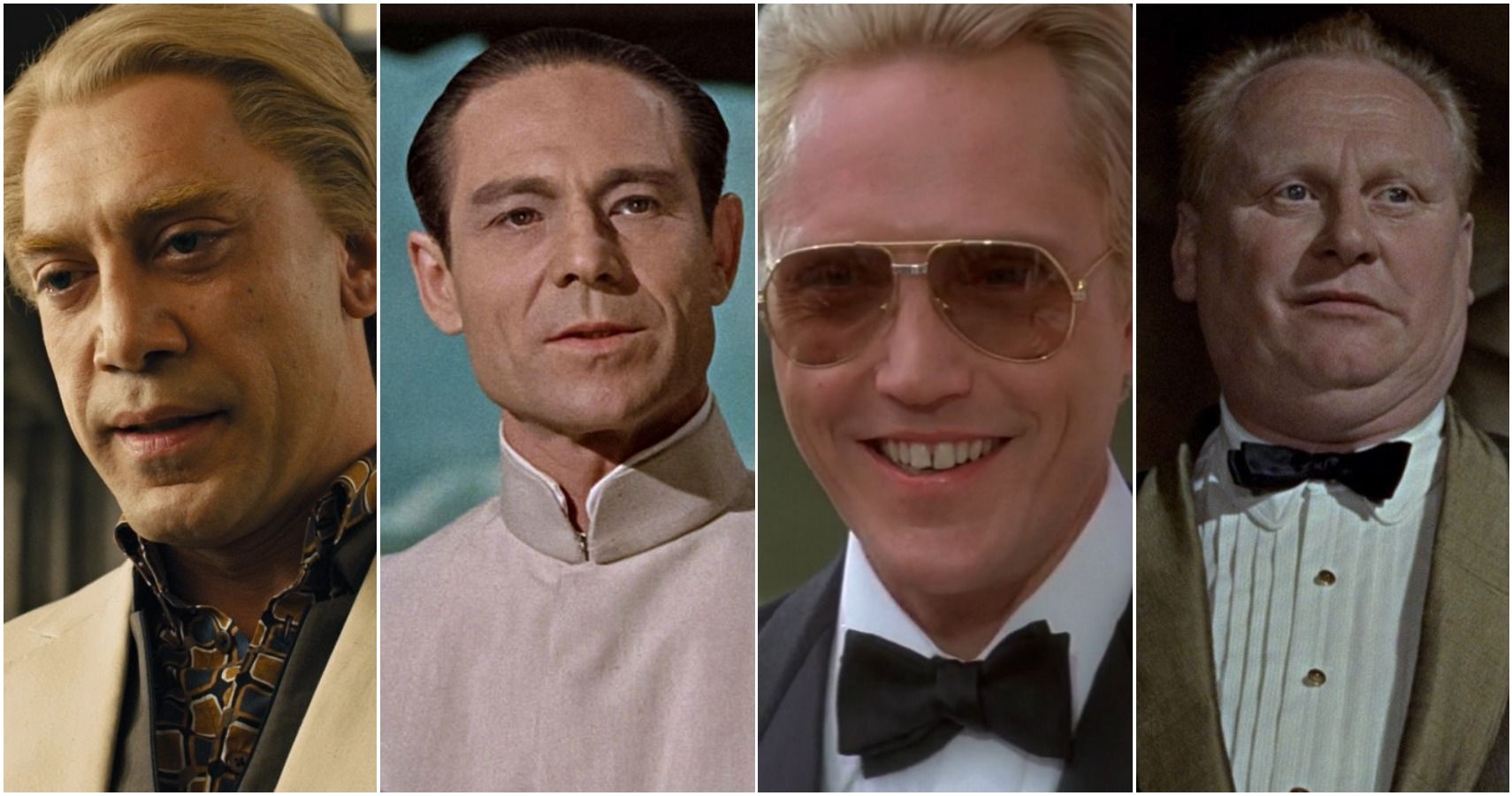
The Bond Villain: Defining the Antagonist in the James Bond Franchise
The archetypal Bond villain serves as the definitive mirror to James Bond, providing a necessary contrast that elevates 007 from a mere operative to a heroic figure. These antagonists are defined by their grandiosity, physical or psych...
The archetypal Bond villain serves as the definitive mirror to James Bond, providing a necessary contrast that elevates 007 from a mere operative to a heroic figure. These antagonists are defined by their grandiosity, physical or psychological deformities, desire for global hegemony, and a sophisticated obsession with Bond himself, creating a high-stakes tension that has anchored the franchise since 1962.
Contents
The Evolution of the Archetype
The "Bond villain" is not a monolith; it is a fluid archetype that has evolved alongside the geopolitical climate and the changing nature of the James Bond character. In the early Eon Productions era, starting with Dr. No (1962), the villain was often a member of the shadowy organization SPECTRE (Special Executive for Counter-intelligence, Terrorism, Revenge and Extortion). These figures, such as Ernst Stavro Blofeld, were characterized by their detachment and desire for order through total control.
As the decades progressed, the portrayal shifted to reflect contemporary anxieties. During the Cold War, the threat was often ideological, pitting British intelligence against state-sponsored or rogue elements of the Soviet apparatus. By the 1990s and 2000s, the archetype transitioned toward the "megalomaniacal industrialist"—figures like Elliot Carver in Tomorrow Never Dies—who utilized media or technology to manipulate global power structures. This evolution demonstrates that the primary function of a Bond villain is to represent the specific existential threat of the era.
Core Characteristics of a Bond Villain
To qualify as a quintessential Bond villain, an antagonist typically possesses several distinct, recurring traits. These elements are designed to create a sense of scale and danger that warrants the intervention of a secret agent.
1. The Grandiose Ambition
Unlike typical criminal underworld figures who seek simple financial gain, the Bond villain usually harbors an ambition that threatens international stability or the human population at large. Whether through nuclear extortion, environmental collapse, or technological dominance, the villain’s plan must be grand enough to justify Bond's lethal countermeasures.
2. The Lair as an Extension of Self
The villain’s base of operations is a staple of the franchise. From the volcanic fortress in You Only Live Twice to the high-tech bunkers of later entries, these environments are designed to isolate the villain from society and project power. These locations are not merely sets; they serve as symbolic displays of the villain's hubris and their separation from the morality of the common person.
3. The Physical or Symbolic "Mark"
Many iconic Bond villains possess a distinctive physical feature, often interpreted as a mark of their "otherness." This can range from Goldfinger’s obsession with gold to Le Chiffre’s ocular scar or Blofeld’s missing earlobe. These marks act as visual shorthand for the villain’s history and internal trauma, distinguishing them visually from the polished, suit-wearing 007.
Comparative Framework: Classic vs. Modern Antagonists
The role of the antagonist has changed in terms of complexity and motivation. The following table highlights the differences between the foundational era and the modern iteration of the franchise.
| Feature | Classic Era (1962–1979) | Modern Era (2006–2026) |
|---|---|---|
| Primary Motivation | World domination or revenge | Personal vendetta or ideological destabilization |
| Methods | Overt, high-tech schemes | Information warfare and systemic subversion |
| Relationship to Bond | Impersonal/Professional rivalry | Deeply personal/Psychological torment |
| Resource Base | Secret island/Volcano lair | Global corporations/Deep-state networks |
| Primary Goal | Power projection | Philosophical justification of chaos |
The Psychological Mirror: Bond and His Shadow
The most effective Bond villains are those who act as a shadow self to James Bond. This is most evident in the dynamic between Bond and his antagonists. While Bond is an agent of the state, disciplined and restrained, the villain is often a personification of unbridled ego and lack of moral restraint.
This "mirror effect" serves a technical narrative purpose: it forces Bond to confront the outcome of his own lifestyle. When a villain talks to Bond about their shared similarities—as seen in the dialogues between Bond and figures like Alec Trevelyan or Raoul Silva—the narrative is highlighting the thin line between a licensed killer and a terrorist. This psychological depth transforms the antagonist from a hurdle to be cleared into a character study that defines who James Bond is by showing who he could become.
Casting and Performance Expectations
The casting of a Bond villain is as critical as the casting of Bond himself. Historical patterns show a preference for classically trained actors, often from Europe, who can deliver dialogue with a sense of refined menace. The performance must balance "camp" with "threat." An antagonist who is too realistic may feel jarring in the stylized universe of Bond, while one who is too cartoonish risks undermining the stakes of the film. The gold standard involves an actor who can maintain an air of polite sociability while projecting the ability to commit atrocities.
Common Tropes and Their Narrative Utility
- The Monologue: Contrary to popular parody, the "monologue" serves the narrative function of exposition. It allows the audience to understand the villain's rationale, which is essential to making the plot stakes feel grounded in a coherent, if twisted, logic.
- The Henchman: The primary antagonist rarely engages in physical combat with Bond until the final act. Instead, they employ specialized henchmen—characters like Oddjob or Jaws—to serve as physical roadblocks. This allows the villain to maintain an aura of untouchability for the majority of the film.
- The Deception: The villain often begins the film as an ally or a neutral party. This trope tests Bond's investigative skills and reinforces the theme that in the world of international espionage, trust is a liability.
Strategic Role in Franchise Longevity
The durability of the James Bond franchise is inextricably linked to its villains. Because the character of Bond is static—he rarely undergoes profound character growth—the villain provides the necessary variation that keeps the audience engaged. By consistently providing a "threat of the moment" that challenges Bond's methods, the franchise manages to remain relevant across generations. As of 2026, the challenge for the creative teams behind the franchise remains: how to craft an antagonist that feels as dangerous as a nuclear launch in an era defined by decentralized digital threats.
Frequently Asked Questions
What makes a "great" Bond villain?
A great Bond villain requires a perfect balance of intellectual parity with Bond and a distinct, memorable aesthetic. They must be intelligent enough to pose a global threat while maintaining a personal obsession that draws Bond into their private world.
Why do Bond villains always have elaborate lairs?
The lair serves as a visual manifestation of the villain’s power and detachment. In cinema, it acts as a "theatre of operations" that allows the production to showcase massive scale and high-production-value set design, which is a hallmark of the Bond brand.
How does the henchman serve the villain’s narrative?
The henchman functions as an extension of the villain’s reach. They allow the antagonist to maintain a presence in the action sequences without compromising the villain's status as a mastermind, effectively preserving the "boss battle" for the final act.
Is SPECTRE still the most iconic organization?
Yes, SPECTRE remains the most iconic because it represents the concept of the "total enemy"—an organization that is everywhere and nowhere at once. It provides a structural anchor for the franchise that independent villains struggle to replicate in terms of long-term legacy.
Do modern Bond villains differ significantly from earlier ones?
Yes. Modern antagonists are often less focused on global domination through hardware and more focused on exploiting personal, psychological, or digital vulnerabilities. They are frequently designed to challenge Bond’s personal history rather than just his professional mission.
Recommendations for Further Analysis
To fully understand the evolution of the antagonist, viewers should compare the structural simplicity of Goldfinger with the psychological complexity of Skyfall. By analyzing how these films use their respective villains to pressure Bond, one gains a clearer understanding of the "Bond formula." If you are writing about or researching the franchise, focus on the pivot point around the late 1990s, where the transition from "Cold War relic" to "post-modern disruptor" occurred in the writing room.
Image Gallery