How Many Cubic Inches is a 4.6L Engine? (281 CID Explained)
A 4.6-liter engine has a displacement of approximately 281 cubic inches (specifically 280.7 to 281.2 cubic inches, depending on the manufacturer’s exact bore and stroke measurements). While the automotive industry transitioned to the m...
A 4.6-liter engine has a displacement of approximately 281 cubic inches (specifically 280.7 to 281.2 cubic inches, depending on the manufacturer’s exact bore and stroke measurements). While the automotive industry transitioned to the metric "liter" system decades ago, the "281" designation remains a point of pride and technical reference for enthusiasts of the Ford Modular V8 and other similar powerplants.
Contents
Understanding the Conversion: Liters to Cubic Inches
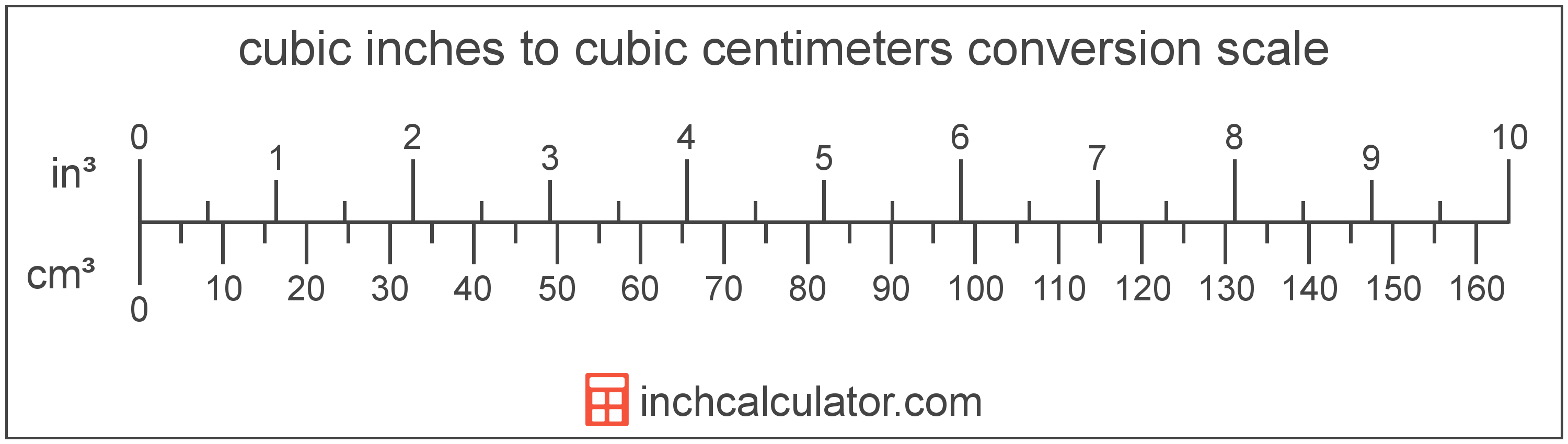
To understand why a 4.6L engine equates to 281 cubic inches, one must look at the mathematical relationship between metric and imperial units of volume. In the scientific and automotive worlds, the conversion factor is standardized: 1 liter is equal to approximately 61.0237 cubic inches.
When you multiply 4.6 by 61.0237, the result is 280.709. In marketing and general conversation, automotive manufacturers often round this figure to the nearest whole number. For the most famous 4.6L engine—the Ford Modular V8—the actual displacement is often cited as 280.7 cubic inches based on its specific internal dimensions. However, if you are calculating displacement for a Toyota or Cadillac 4.6L, the exact cubic inch count may fluctuate slightly because "4.6L" is often a rounded label for engines that might actually be 4,601cc or 4,608cc.
The Displacement Formula
Engine displacement is the total volume of all the cylinders in an engine as the pistons move from Top Dead Center (TDC) to Bottom Dead Center (BDC). To calculate this manually in cubic inches (CID), you use the following formula:
CID = 0.7854 x Bore² x Stroke x Number of Cylinders
For a standard Ford 4.6L V8 with a bore of 3.552 inches and a stroke of 3.543 inches:
- Bore squared: 3.552 x 3.552 = 12.6167
- Multiply by 0.7854: 12.6167 x 0.7854 = 9.909
- Multiply by stroke: 9.909 x 3.543 = 35.107 (volume of one cylinder)
- Multiply by number of cylinders: 35.107 x 8 = 280.856 cubic inches.
The Legacy of the 4.6L Displacement
In the United States, the 4.6L engine gained legendary status primarily through the Ford Motor Company. In the early 1990s, Ford made the controversial decision to replace its venerable 5.0L (302 cubic inch) "Windsor" V8 with a new, technologically advanced "Modular" 4.6L V8.
At the time, traditionalists were skeptical. The 4.6L was physically larger than the 5.0L due to its Overhead Cam (OHC) design, yet it had a smaller displacement. However, the 4.6L (281 CID) proved to be an incredibly versatile platform. It powered everything from the Ford Mustang and F-150 to the Lincoln Town Car and the iconic Ford Crown Victoria police interceptor. As of 2026, these engines are still highly regarded in the secondary market for their durability, often exceeding 300,000 miles with routine maintenance.
The Shift from CID to Liters
The transition from cubic inches to liters in the U.S. began in the late 1970s and early 1980s as part of a broader (though ultimately incomplete) push toward the metric system. For example, Ford’s 302 cubic inch engine became the "5.0," and Chevrolet’s 350 cubic inch engine became the "5.7." By the time the 4.6L was introduced in 1991, the metric designation was the industry standard. Despite this, performance enthusiasts still use cubic inches to compare the "size" of an engine's lungs, as CID provides a more granular view of an engine's potential for air and fuel intake.
Comparison of Notable 4.6L Engines
Not all 4.6L engines are created equal. Different manufacturers use different bore and stroke configurations to reach that approximate volume, which results in varying performance characteristics.
| Manufacturer | Engine Name | Configuration | Exact Displacement | Common Applications |
|---|---|---|---|---|
| Ford | Modular V8 (2V/3V) | SOHC V8 | 280.7 CID (4,601cc) | Mustang GT, F-150, Crown Vic |
| Ford | Modular V8 (4V) | DOHC V8 | 280.8 CID (4,605cc) | Mustang Cobra, Mach 1 |
| Toyota | 1UR-FE | DOHC V8 | 281.2 CID (4,608cc) | Tundra, Sequoia, Lexus LS460 |
| Cadillac | Northstar L37 | DOHC V8 | 279.0 CID (4,565cc) | DeVille, Eldorado, STS |
| Hyundai | Tau V8 | DOHC V8 | 282.4 CID (4,627cc) | Genesis, Equus |
The Ford 4.6L "Modular" Family
The Ford 4.6L is actually three distinct engines depending on the cylinder head design:
- 2-Valve (SOHC): The workhorse version. It focused on low-end torque and extreme reliability. This is the engine that made the Crown Victoria a staple of taxi and police fleets.
- 3-Valve (SOHC): Introduced in the mid-2000s (notably the 2005-2010 Mustang GT), this version used variable camshaft timing (VCT) to improve breathing and efficiency.
- 4-Valve (DOHC): The high-performance variant found in the SVT Cobra and Lincoln InTech models. With two intake and two exhaust valves per cylinder, this version was capable of much higher RPM and horsepower levels.
The Toyota 1UR-FE 4.6L
While Ford dominated the 4.6L conversation in the West, Toyota’s 1UR-FE is a masterpiece of engineering found in the Tundra and various Lexus models. It features Dual VVT-i (Variable Valve Timing with intelligence) and is often cited by mechanics in 2026 as one of the most reliable V8 engines ever built. Its displacement is slightly higher than the Ford at 4,608cc, which rounds to roughly 281.2 cubic inches.
Performance: Small Displacement vs. Large Displacement
When comparing a 281 CID (4.6L) engine to a larger engine like a 350 CID (5.7L) or a 427 CID (7.0L), the differences usually come down to torque production. In the world of internal combustion, "there is no substitute for cubic inches" when it comes to naturally aspirated torque.
A 4.6L engine generally has a smaller bore and a relatively long stroke compared to its overall size. This setup allows for good "undersquare" or "square" geometry, which helps with fuel atomization and efficiency. However, to make significant power, a 4.6L engine must usually rev higher or utilize forced induction (turbocharging or supercharging). This is why the "Terminator" Cobra (which used a supercharged 4.6L 4V) became a giant-killer in the early 2000s; it used technology to overcome its displacement deficit against larger engines.
Boring and Stroking a 4.6L
For enthusiasts who want more than 281 cubic inches without swapping the entire engine block, there are two primary methods to increase displacement:
Boring
Boring involves machining the cylinder walls to increase their diameter. In the Ford Modular 4.6L, the cylinder walls are relatively thin because of the water jacket design. Therefore, you cannot "bore out" a 4.6L as much as you could an old-school 350 Chevy. Typically, a .020 or .030 overbore is the limit for a standard rebuild, which adds only a few cubic inches.
Stroking
Stroking involves replacing the crankshaft with one that has a longer "throw," pushing the pistons further up and down. "Stroker kits" are popular for the 4.6L platform, often increasing the displacement to 5.0L or 5.3L (roughly 302 to 323 cubic inches). This significantly increases torque and is a common modification for those seeking to maximize the 281 CID block's potential.
Maintenance and Long-Term Value in 2026
In 2026, the 4.6L engine remains a viable and sought-after platform for several reasons:
- Parts Availability: Because millions of these engines were produced over two decades, parts remain affordable and easy to find.
- Durability: The cast iron versions of the 4.6L block are nearly indestructible under normal operating conditions.
- Modularity: As the name suggests, many parts are interchangeable across different year models, making them a favorite for project car builders.
Common issues to watch for include spark plug ejection (on early 2-valve Ford models) and timing chain guide wear on high-mileage units. However, compared to modern, highly-stressed small-displacement turbocharged engines, the 4.6L V8 is considered a "low-stress" engine that offers a linear power delivery many drivers still prefer.
FAQ: Common Questions About 4.6L Displacement
Is a 4.6L engine considered a "Small Block"? Yes. In the context of American V8s, any engine under 400 cubic inches is generally categorized as a small block. The 4.6L is significantly smaller than the "Big Blocks" of the 1960s and 70s, which often exceeded 450 cubic inches (7.4L+).
How much horsepower does a 4.6L engine have? It varies wildly by application. A 1990s 2-valve 4.6L might produce only 190–210 horsepower, while the 4-valve supercharged versions (like the 2003-2004 Cobra) produced 390 horsepower from the factory. Modern 4.6L Toyota engines typically produce around 310 horsepower.
Which is bigger: a 4.6L or a 289? The 289 cubic inch V8 (famous in the 1960s Mustang) is larger than the 4.6L. The 4.6L is approximately 281 cubic inches, making the 289 roughly 8 cubic inches larger in total volume.
Can a 4.6L engine run on E85? While some late-model 4.6L engines were "Flex Fuel" capable from the factory, most older versions require an upgraded fuel system (injectors, pump, and tune) to safely handle the corrosive nature and different stoichiometric requirements of E85 ethanol.
Why is my 4.6L called a "Modular" engine? A common misconception is that "Modular" refers to the engine's parts being easily swappable. In reality, the name refers to the manufacturing process. Ford designed the tooling and assembly line to be modular, allowing the factory to quickly switch between producing V8 and V10 versions of the engine with minimal downtime.
Final Recommendation
If you are calculating displacement for a replacement part, custom tune, or performance upgrade, treat the 4.6L as a 281 cubic inch engine. For Ford owners specifically, this "281" figure is the key to identifying the correct piston sets and gasket kits. When shopping for a vehicle in 2026, the 4.6L remains one of the best balances of traditional V8 sound, moderate fuel economy, and exceptional long-term reliability.
Image Gallery