Choosing a Change Agent for Your Design Project: A Strategic Framework
Selecting the right change agent for a design project requires aligning technical design fluency with organizational psychology, stakeholder management, and strategic facilitation. The ideal candidate—whether an internal design operati...
Selecting the right change agent for a design project requires aligning technical design fluency with organizational psychology, stakeholder management, and strategic facilitation. The ideal candidate—whether an internal design operations lead or an external consultant—bridges the gap between creative vision and cross-functional adoption, ensuring new design systems, processes, and workflows are successfully integrated across departments.
Contents
The Role of a Change Agent in Design Transformations
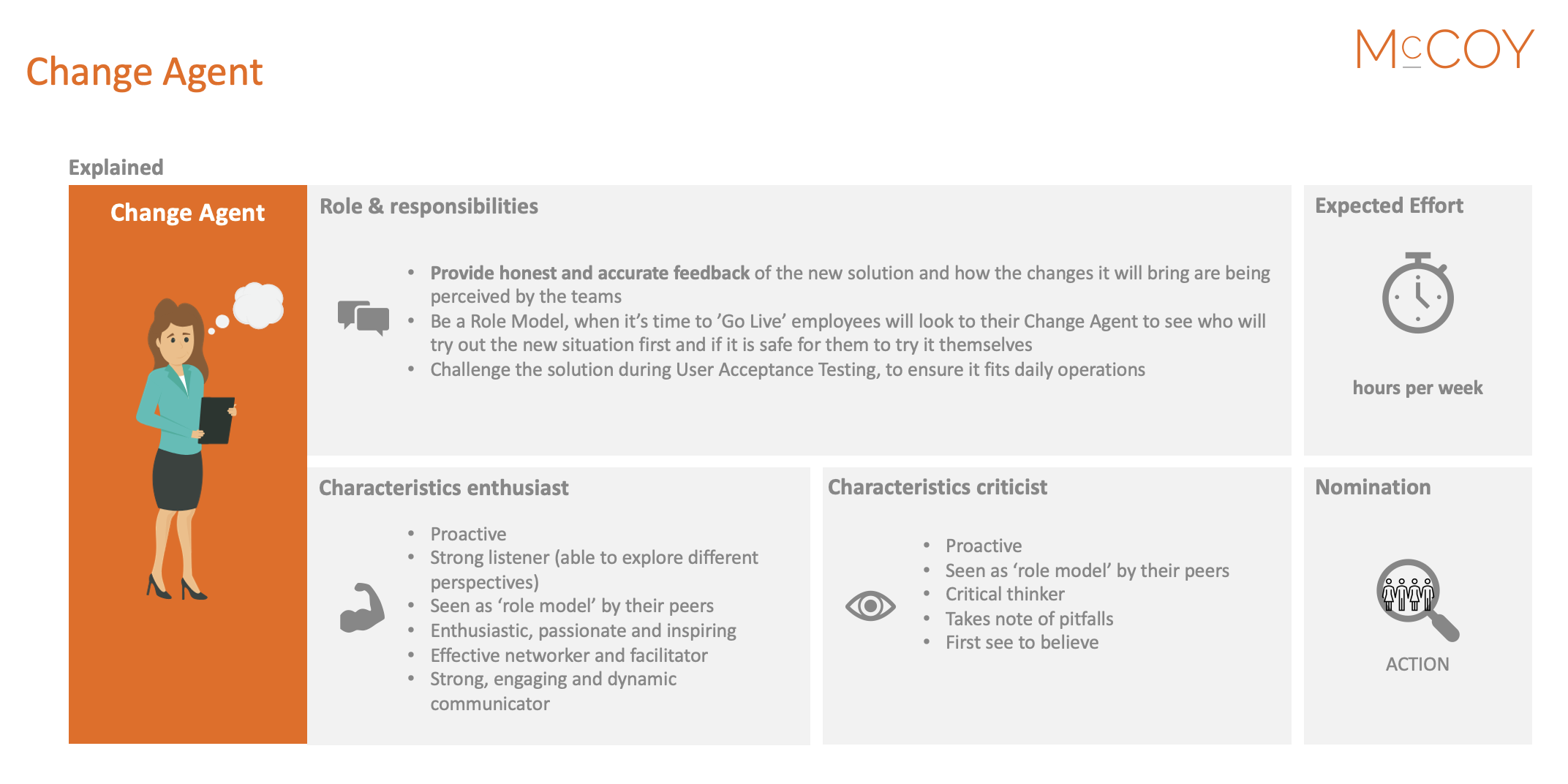
Design transformations represent more than cosmetic updates or platform migrations. Whether an organization is implementing an enterprise-wide design system, transitioning to a service design methodology, or restructuring cross-functional product teams, design projects inherently alter how people work. A change agent serves as the catalyst, facilitator, and stabilizing force throughout this transition.
In design-driven initiatives, change agents operate at the intersection of creative execution, technical operations, and organizational culture. Unlike traditional project managers who focus primarily on timelines, budgets, and deliverable schedules, a change agent focuses on human adoption, psychological safety, behavioral change, and alignment across disparate business units.
- STRATEGIC GOAL (Design System, Enterprise UX, Operational Shift)
- CHANGE AGENT
- Facilitates cross-functional alignment
- Mitigates friction & creative pushback
- Establishes adoption metrics
- DESIGN & DEVOPS
- Tooling Adoption
- Standard Workflows
- BUSINESS STAKEHOLDERS
- Executive Buy-In
- ROI & Velocity
- CHANGE AGENT
Without dedicated change leadership, design projects frequently encounter systemic obstacles:
- Tool and Process Rejection: Creative and engineering teams often default to legacy tools and unstandardized workflows if new systems feel imposed rather than integrated.
- Friction Between Product, Engineering, and Design: Misaligned expectations regarding handoff protocols, component ownership, and tokenization can cause friction between departments.
- Loss of Momentum Post-Launch: Without governance and champion networks, initial design transformation efforts lose traction once primary consulting engagements or project phases conclude.
Key Competencies and Evaluation Criteria
When evaluating candidates for a change agent role within a design context, leadership must look beyond standard project management certifications. A successful change agent requires a balanced mix of domain-specific design literacy, organizational empathy, and analytical governance skills.
Technical and Methodological Design Literacy
A change agent does not need to be a senior UI/UX designer or principal architect, but they must possess deep operational literacy regarding design workflows. They must understand the practical realities of modern design practices, including tokenized design systems, component libraries, accessibility compliance (WCAG 2.2 standards), and agile design integration.
Without basic design literacy, a change agent risks proposing theoretical frameworks that conflict with daily creative production or engineering handoffs. They must speak the language of both design leaders and software engineers to bridge communication gaps effectively.
Organizational Psychology and Stakeholder Management
Design changes frequently trigger defensive responses from creative professionals and product teams who may feel their autonomy or established rhythms are threatened. A qualified change agent leverages frameworks such as Prosci’s ADKAR model (Awareness, Desire, Knowledge, Ability, Reinforcement) or Kotter’s 8-Step Process, tailoring these methodologies specifically to creative work cultures.
Key interpersonal capabilities include:
- Empathy Mapping for Operations: Analyzing the daily pain points of individual contributors (designers, developers, product managers) to position process shifts as solutions rather than mandates.
- Executive Translation: Articulating design transformation outcomes—such as design debt reduction, time-to-market acceleration, and brand consistency—in terms of business metrics that resonate with executive sponsors.
- Conflict Mediation: Resolving ideological disputes between brand teams favoring creative flexibility and platform teams demanding strict component standardization.
Measurement and Data-Driven Facilitation
Qualitative enthusiasm is insufficient for measuring transformation success. Effective change agents establish concrete baseline metrics prior to implementation and track adoption continuously. They rely on quantifiable operational data to demonstrate value, refine training programs, and identify teams requiring additional support.
Internal vs. External Change Agents: A Comparative Analysis
Organizations facing a design transformation must decide whether to appoint an internal leader (such as a Design Operations Manager or Senior UX Lead) or hire an external change management consultant. Both approaches offer distinct advantages depending on organizational maturity, project complexity, and institutional culture.
| Dimension | Internal Change Champion | External Change Consultant |
|---|---|---|
| Organizational Context | Deep understanding of institutional history, politics, and unwritten cultural norms. | Neutral perspective; free from historical internal politics and organizational bias. |
| Authority & Perception | Leverages established trust, but may face peer skepticism or role ambiguity. | Brings authoritative external expertise; often commands immediate executive attention. |
| Ramp-Up Time | Zero onboarding required for business context and organizational structure. | Requires time to map internal networks, team dynamics, and legacy systems. |
| Domain Specialization | May have deep product knowledge, but limited exposure to alternative industry frameworks. | Brings broad cross-industry benchmarks and proven playbook patterns. |
| Financial Commitment | Lower incremental cost if reallocating existing headcount; risk of role burnout. | Higher upfront cost; defined engagement period with predictable end dates. |
| Long-Term Governance | Positions the organization for permanent ownership and ongoing process maintenance. | Requires structured knowledge transfer to internal teams before contract termination. |
The Hybrid Approach
For enterprise-scale design transformations, organizations often achieve optimal results by pairing an external consultant with an internal design operations champion. In this model, the external expert provides objective assessment frameworks, methodology design, and executive coaching, while the internal lead drives daily cross-functional execution and maintains long-term governance after the external contract ends.
Step-by-Step Selection Process for Your Design Project
Appointing the right change agent requires a structured selection pipeline. Following a standardized process prevents mismatched expectations and ensures the selected leader possesses both the soft skills and structural authority needed to succeed.
- STEP 1: Define Scope & Identify Organizational Friction
- STEP 2: Establish the Ideal Competency & Seniority Profile
- STEP 3: Conduct Scenario-Based Behavioral Interviews
- STEP 4: Assess Cross-Functional Alignment (Design, Dev, Product)
- STEP 5: Draft Charter & Define Explicit Decision Rights
Step 1: Define the Scope and Friction Points
Before interviewing candidates, audit the specific operational challenges driving the design transformation. Is the primary issue developer handoff efficiency, inconsistent brand application across product lines, slow feature delivery, or low adoption of a newly launched design system? Documenting these friction points establishes clear criteria for evaluating a change agent's past accomplishments.
Step 2: Establish the Ideal Profile
Determine whether the project requires an operational practitioner, a high-level strategist, or an executive coach.
- For tactical system rollouts, prioritize candidates with background in DesignOps, front-end architecture, or Agile coaching.
- For rebranding and cultural shifts, prioritize candidates with backgrounds in organizational development, design strategy, and corporate communication.
Step 3: Conduct Scenario-Based Behavioral Interviews
Avoid generic questions about project management tools. Instead, present candidates with realistic operational scenarios specific to design environments.
Example evaluation scenarios include:
- "The senior engineering team refuses to adopt the new design token architecture, claiming it slows down their sprint output. How do you approach this resistance?"
- "A core brand team continuously breaks design system guidelines to create custom visual assets for localized campaigns. How do you balance brand compliance with creative flexibility?"
- "Executive leadership demands a 40% reduction in time-to-market within three months of deploying the new design operations framework. How do you manage expectations while keeping metrics grounded?"
Step 4: Evaluate Alignment with Design Operations (DesignOps)
If your organization has an established DesignOps function, clarify how the change agent will collaborate with existing leads. The change agent should complement DesignOps by focusing on the human adoption, change strategy, and behavioral alignment, allowing DesignOps leads to focus on infrastructure, tooling contracts, and resource scheduling.
Step 5: Draft the Charter and Decision Rights
A common cause of change agent failure is lack of explicit authority. Before formalizing an appointment, draft a clear charter defining the change agent's decision rights. Specify their authority regarding workflow approvals, governance enforcement, mandatory training compliance, and budget allocation for change enablement.
Overcoming Common Pitfalls When Appointing Change Champions
Even well-funded design transformations can falter if structural traps are not addressed early in the selection process.
Appointing "Evangelists" Without Authority
Organizations often select enthusiastic junior designers to act as change champions because of their passion for new tools or methodologies. However, passion alone cannot overcome organizational inertia. Without formal authority, cross-departmental access, and executive backing, enthusiastic champions quickly face burnout when encountering resistance from senior stakeholders in product management or engineering.
Misaligning Incentives Across Departments
If design teams are evaluated on innovation and user satisfaction, engineering teams on velocity and stability, and product managers on feature volume, a design transformation project will face built-in friction. A skilled change agent must have the authority to work with executive leadership to align performance incentives across all participating departments.
Underestimating the Shadow Workflow
When new design processes or design systems feel overly rigid, creative and development teams often create hidden workarounds—maintaining undocumented UI kits, skipping design reviews, or overriding standard code components. A qualified change agent identifies and addresses these shadow workflows through user research and workflow adaptation rather than relying solely on compliance enforcement.
Framework for Measuring Change Agent Effectiveness
Evaluating a change agent's performance requires monitoring leading adoption indicators alongside lagging business outcomes. The following framework outlines key metrics across four primary evaluation tiers.
MEASUREMENT FRAMEWORK
- ADOPTION METRICS
- Design System Component Coverage (% of UI using system)
- Tool Migration Completion Rates
- EFFICIENCY METRICS
- Handoff Error Rate (Reduction in design QA tickets)
- Time-to-Market for Standardized Features
- QUALITY & ACCESSIBILITY METRICS
- WCAG 2.2 Compliance Rate Across Digital Touchpoints
- Design Debt Index (Reduction in detached/custom components)
- CULTURAL & SENTIMENT METRICS
- Cross-Functional eNPS (Designer & Developer Satisfaction)
- Training Completion and Competency Checkpoints
By tracking these dimensions, leadership can quantify the business value delivered by the change agent and refine organizational strategies across future project phases.
Frequently Asked Questions
What is the difference between a DesignOps Lead and a Change Agent?
A DesignOps Lead focuses on building and maintaining the infrastructure, workflows, tools, and operational budgets that support a design organization. A Change Agent focuses on the human element of organizational shifts—managing stakeholder alignment, facilitating behavioral adoption, overcoming resistance, and leading teams through transitions brought on by new systems or strategic shifts.
Should a change agent for a design project come from a design background?
While a formal design background is not mandatory, the change agent must possess strong operational design literacy. They must understand design workflows, system architecture, developer handoff challenges, and agile frameworks to communicate effectively with designers, developers, and product leaders.
How early in a design project should a change agent be involved?
A change agent should be appointed during the project discovery phase, prior to rollout or implementation. Early involvement allows the agent to conduct stakeholder impact analyses, map organizational friction points, and build change strategies directly into the project roadmap.
How do you measure the ROI of a change agent in design transformations?
ROI is measured by tracking operational efficiency gains and risk reduction. Key metrics include reduced design QA rework tickets, faster sprint output, increased design system component coverage, higher cross-functional team retention, and accelerated time-to-market for new features.
How should a change agent handle persistent resistance from senior engineering or product leads?
A skilled change agent addresses resistance by identifying underlying operational concerns rather than forcing compliance. They conduct root-cause discovery, run controlled pilot programs to demonstrate measurable workflow improvements, involve key skeptics directly in process co-design, and leverage executive sponsorship to align cross-functional performance incentives.
Next Actions for Implementation
To select and onboard the right change agent for your upcoming design transformation:
- Conduct a Readiness Assessment: Audit your organization's current design ops maturity, document key operational bottlenecks, and pinpoint team friction points.
- Draft a Purpose-Built Role Charter: Define the specific scope, reporting lines, executive support structures, and decision rights for the change agent position.
- Deploy Scenario-Based Selection: Interview internal and external candidates using real-world operational design challenges that test both strategic facilitation and technical fluency.
- Establish Baseline Metrics: Document baseline measurements for component usage, handoff error rates, and team satisfaction scores before introducing new design processes or tools.
Image Gallery