The Richest Family in the US and Its Legacy
The Walmart-founding Walton family is widely recognized as the richest family in the United States, commanding a multi-hundred-billion-dollar fortune rooted in the retail empire established by Sam and Bud Walton in 1962. Their enduring...
The Walmart-founding Walton family is widely recognized as the richest family in the United States, commanding a multi-hundred-billion-dollar fortune rooted in the retail empire established by Sam and Bud Walton in 1962. Their enduring legacy spans corporate governance models, modern supply chain logistics, institutional philanthropy, and the complexities of multi-generational wealth preservation.
Contents
The Origins of the Walton Fortune: From a Single Store to Retail Dominance
The story of the Walton family fortune begins with Sam Walton, a visionary retail entrepreneur who opened the first Walmart store in Rogers, Arkansas, in July 1962. Alongside his brother, James "Bud" Walton, Sam pioneered a discount retailing model that focused heavily on underserved rural communities. By offering brand-name merchandise at everyday low prices, the brothers rapidly scaled their operations across the American South and Midwest.
Unlike many of their contemporaries who targeted densely populated metropolitan areas, the Waltons capitalized on small towns where competition was sparse. This deliberate strategy allowed them to build regional monopolies before expanding outward into larger markets. The company's corporate philosophy emphasized extreme operational efficiency, decentralized management, and an intense dedication to customer service. When Walmart went public in 1970, it laid the permanent financial foundation for what would become the wealthiest private family dynasty in modern economic history.
Structure of Wealth: Walmart Equity and Diversified Holdings
The vast majority of the Walton family’s wealth is tied directly to their equity stake in Walmart Inc. (NYSE: WMT), which remains the world’s largest corporation by revenue. Through a holding company named Walton Enterprises LLC, as well as various individual and trust accounts, the family controls roughly half of the retail giant's total outstanding shares.
Key Vehicles of Family Wealth Management
- Walton Enterprises LLC: The primary private holding entity used by family members to consolidate voting power and manage company shares.
- Individual Trusts: Established across multiple generations to optimize tax efficiency, streamline estate planning, and protect principal assets from sudden market volatility.
- Walton Family Holdings Trust: A specialized trust vehicle designed to manage stock sales systematically, funding personal philanthropic initiatives without destabilizing public share prices.
Managing a fortune of this magnitude requires sophisticated legal and financial engineering. Rather than relying on a single family office, the Waltons utilize a network of wealth advisors, tax attorneys, and institutional asset managers to oversee their multi-asset portfolios, which increasingly include private equity, venture capital, and fixed-income securities.
Comparing the Waltons to Other Prominent US Dynasties
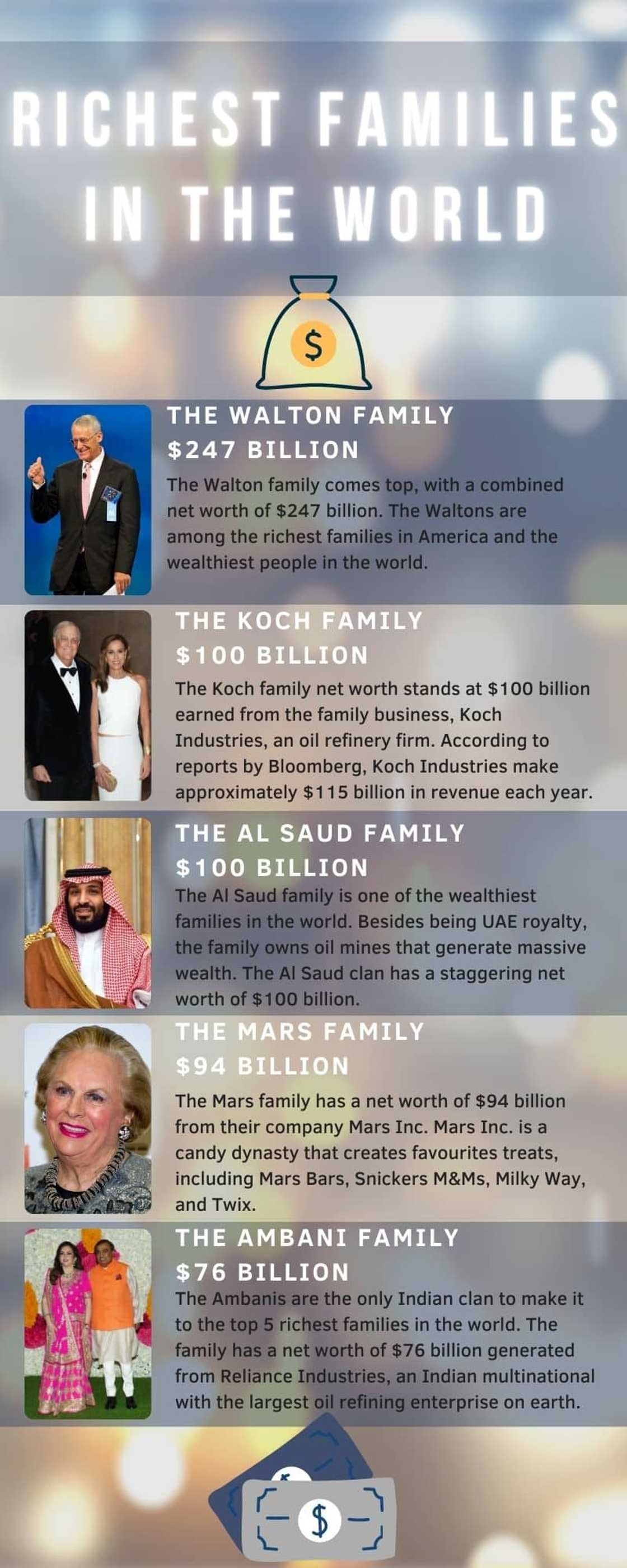
While wealth rankings fluctuate based on public market valuations, the Walton family consistently occupies the top tier of American wealth metrics. The table below illustrates how their scale compares with other notable business families in the United States.
| Family Name | Primary Business Source | Estimated Aggregate Wealth | Core Legacy Focus |
|---|---|---|---|
| Walton | Walmart Inc. | $250B+ | Discount retail, supply chain logistics, mass consumer access |
| Mars | Mars, Incorporated | $120B+ | Confectionery manufacturing, pet care, food brands |
| Koch | Koch Industries | $120B+ | Industrial manufacturing, oil refining, chemical processing |
| Bloomberg | Bloomberg L.P. | $100B+ | Financial data services, media publishing, civic tech |
Note: Net worth figures are estimates based on publicly tracked stock holdings, real estate portfolios, and disclosed private assets. Values fluctuate continuously with equity markets.
Philanthropic Impact and Institutional Giving
Beyond their commercial footprint, the Walton family exerts significant influence through organized philanthropy. The Walton Family Foundation, established in 1987, disburses hundreds of millions of dollars annually across three primary pillars: K-12 education reform, freshwater conservation, and the economic vitality of America's heartland regions.
In education, the foundation has been a leading advocate for charter schools, school choice programs, and alternative teacher preparation initiatives. In environmental conservation, their grant-making focuses heavily on protecting major river basins, such as the Colorado River and the Mississippi River watershed, balancing ecological health with agricultural demands. Critics and supporters alike analyze these philanthropic investments closely, as the scale of the foundation's capital allows it to shape public policy and institutional practices nationwide.
Multi-Generational Wealth Preservation and Succession
Sustaining a massive fortune across multiple generations presents acute structural challenges. The Walton family has navigated this transition from first-generation founders to second- and third-generation heirs by maintaining tight-knit family governance structures and professionalizing corporate leadership.
While Sam Walton’s children—Rob, Jim, and Alice Walton—held active leadership roles within the company for decades, the family eventually transitioned day-to-day executive management to professional operators outside the bloodline. This separation of ownership from management has protected Walmart from the operational pitfalls that often plague family-run enterprises. Furthermore, disciplined estate planning strategies have minimized estate tax liabilities, ensuring that ownership dilution remains controlled across generations.
Frequently Asked Questions
How did the Walton family accumulate their wealth?
The family accumulated its wealth primarily through the founding and expansion of Walmart. Sam and Bud Walton utilized a discount retail strategy focused on rural markets, keeping overhead low and passing savings directly to consumers, which fueled rapid nationwide growth and massive equity appreciation.
What percentage of Walmart does the Walton family own?
The family collectively owns approximately 45% to 50% of Walmart Inc. through a combination of individual holdings, trusts, and Walton Enterprises LLC. This substantial stake ensures they retain significant voting power and influence over corporate governance.
How does the Walton family manage their estate and taxes?
The family utilizes complex legal structures, including family-limited partnerships, charitable remainder trusts, and systematic stock-selling plans. These mechanisms allow them to manage liquidity, fund philanthropic ventures, and minimize capital gains and estate tax burdens legally.
What are the primary areas of focus for the Walton Family Foundation?
The foundation directs its capital primarily toward three areas: K-12 education reform (including charter schools and school choice), environmental conservation (focusing on freshwater and ocean ecosystems), and community development in Arkansas and the American mid-south.
Are members of the Walton family still involved in Walmart's operations?
While family members have stepped back from day-to-day executive management, descendants of Sam Walton continue to serve on Walmart's Board of Directors, ensuring direct oversight and continuity in the company's long-term strategic vision.
Conclusion and Next Actions
Understanding the richest family in the US and its legacy requires looking beyond sheer net worth to examine the structural foundations of modern retail, corporate governance, and dynastic wealth management. For researchers, business analysts, and students of economic history, analyzing the Walton model offers valuable insights into how disciplined scaling, supply chain innovation, and rigorous estate planning intersect to build and preserve generational power. To explore this topic further, review public SEC filings for Walmart Inc., examine annual reports published by the Walton Family Foundation, or study academic literature regarding multi-generational family enterprise governance.
Image Gallery