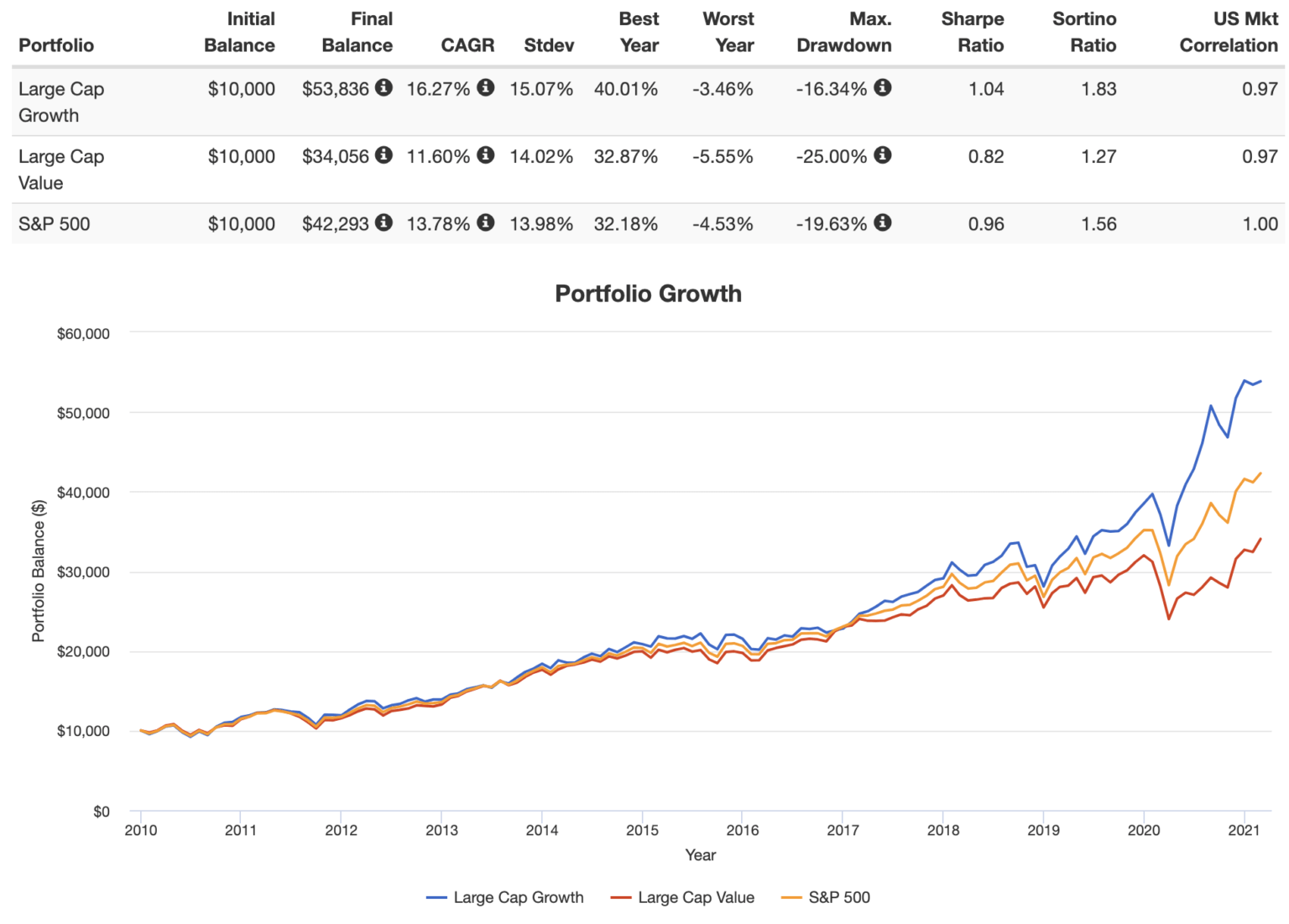
Evaluating the Best Performing Large Cap Growth Stock: A Verdict for Investors
Determining the single best performing large cap growth stock requires balancing historical momentum, earnings quality, balance sheet strength, and valuation multiples. Rather than looking for a fleeting single-year champion, long-term...
Determining the single best performing large cap growth stock requires balancing historical momentum, earnings quality, balance sheet strength, and valuation multiples. Rather than looking for a fleeting single-year champion, long-term investors must evaluate which mega-cap enterprise consistently converts secular technological tailwinds into durable, compounding free cash flow.
Contents
Navigating the landscape of large-cap equities demands a structured analytical approach. The market constantly fluctuates between cyclical rallies and defensive rotations, making it essential to strip away short-term price noise. This analysis examines the foundational principles, financial metrics, and strategic methodologies required to render a robust verdict for investors seeking optimal growth exposure in their portfolios.
Defining Large Cap Growth Stocks in Modern Markets
Large-cap growth stocks represent publicly traded corporations with massive market capitalizations—typically exceeding $10 billion, though modern market leaders frequently surpass $1 trillion—that exhibit growth rates in revenue and earnings significantly higher than the broader market average. These enterprises are typically anchored in sectors like technology, consumer discretionary, communication services, and healthcare innovation.
Unlike value stocks, which trade at lower multiples relative to their book value or earnings and often pay substantial dividends, growth stocks reinvest their capital heavily into research and development, infrastructure expansion, market acquisition, and operational scaling. Investors purchase these equities primarily for capital appreciation rather than immediate income generation.
Understanding the mechanics of large-cap growth requires recognizing the concept of operating leverage. As these massive corporations scale, their fixed costs remain relatively stable while revenues expand, leading to expanding profit margins. This phenomenon allows industry titans to generate extraordinary amounts of cash, reinforcing their competitive moats through aggressive capital expenditure that smaller competitors cannot match.
Core Financial Metrics for Evaluating Growth Performance
Evaluating the performance of a large-cap growth stock requires going beyond simple trailing twelve-month returns. Intelligent capital allocation decisions rely on a rigorous examination of fundamental financial statements to separate sustainable growth from speculative momentum.
Revenue and Earnings Trajectory
A premier growth stock must demonstrate top-line expansion that outpaces inflation and GDP growth by a wide margin, ideally maintaining double-digit compound annual growth rates (CAGR) over multi-year cycles. However, top-line growth without disciplined cost controls is unsustainable. Bottom-line earnings per share (EPS) growth must corroborate revenue gains, proving that the enterprise is capturing profitable market share rather than simply buying revenue through discounting or excessive marketing.
Free Cash Flow and Return on Invested Capital
Net income can be subject to accounting adjustments, but free cash flow represents actual cash generated after accounting for capital expenditures. The best performing large-cap growth stocks boast robust, growing free cash flow conversions. Furthermore, Return on Invested Capital (ROIC) measures how efficiently a company allocates capital to profitable investments. High ROIC combined with strong reinvestment rates signals an exceptional economic moat.
Valuation Realities
Growth investors frequently grapple with high valuation multiples, such as the Price-to-Earnings (P/E) ratio or the Price/Earnings-to-Growth (PEG) ratio. A high P/E ratio is acceptable if the underlying growth rate justifies the premium. The PEG ratio, which divides the P/E ratio by the projected earnings growth rate, helps contextualize whether a stock is overvalued or reasonably priced relative to its expansion speed.
| Metric Category | Standard Benchmark | Significance for Growth Investors |
|---|---|---|
| Revenue CAGR (3-Year) | > 15% | Demonstrates sustained market demand and expansion capacity. |
| Free Cash Flow Margin | > 20% | Confirms pricing power and cash conversion efficiency. |
| Return on Invested Capital (ROIC) | > 15% | Measures management's efficiency in deploying capital for growth. |
| Debt-to-Equity Ratio | < 1.0 | Ensures financial stability and resilience against high interest rates. |
Macroeconomic Headwinds and Tailwinds Impacting Growth Equities
The performance of large-cap growth stocks is heavily influenced by macroeconomic conditions, particularly monetary policy, inflation trends, and global supply chain dynamics. Because growth stocks derive a significant portion of their theoretical value from future cash flows, macroeconomic shifts alter the discount rate applied to those projections.
Interest Rates and the Discount Rate Effect
When central banks maintain elevated interest rates, the discount rate applied to future earnings rises. This disproportionately compresses the valuation multiples of long-duration growth assets compared to near-term cash-generative value stocks. Conversely, a declining interest rate environment typically triggers multiple expansions across the large-cap growth sector, rewarding companies with predictable forward earnings acceleration.
Secular Growth Drivers
Despite macroeconomic friction, large-cap growth stocks are often propelled by unstoppable secular trends. Artificial intelligence integration, cloud computing migration, digital advertising optimization, cyber security enhancement, and biotechnology breakthroughs provide multi-trillion-dollar addressable markets. Corporations that dominate these structural shifts maintain pricing power that insulates them from ordinary economic slowdowns.
Comparative Analysis of Market Leaders
When assessing the current landscape, several mega-cap titans continually vie for the title of best performing large cap growth stock. Rather than identifying a single permanent winner, market leadership rotates based on execution speed and innovation cycles.
Enterprise Technology and Cloud Infrastructure
Companies leading the cloud computing and enterprise software space benefit from high switching costs and sticky ecosystems. Once a Fortune 500 company integrates its data pipelines and developer tools into a specific cloud platform, migration becomes cost-prohibitive. This dynamic secures high-margin, recurring subscription revenues that weather macroeconomic turbulence.
Hardware, Consumer Devices, and Semiconductors
Semiconductor designers and hardware manufacturers powering advanced computing workloads capture immense value during tech infrastructure upgrades. Their performance depends on cyclical demand shifts, pricing discipline, and manufacturing supply chain resilience. The most successful names maintain proprietary architecture that establishes multi-year technological leads over competitors.
Strategic Framework: Determining Your Personal Investment Verdict
Arriving at a definitive verdict for your portfolio requires aligning stock selection with your risk tolerance, time horizon, and asset allocation strategy. There is no universal "best" stock; there is only the stock that best fits your financial objectives.
- Define Your Time Horizon: Long-term investors with a horizon exceeding five to ten years can absorb short-term valuation volatility and focus purely on underlying business execution.
- Assess Concentration Risk: Mega-cap growth stocks often dominate major market indices like the S&P 500. Ensure your portfolio is not overly exposed to a handful of correlated equities.
- Monitor Execution Risks: Continuously evaluate regulatory pressures, antitrust investigations, and competitive threats that could erode profit margins.
- Implement Periodic Rebalancing: Lock in gains from runaway winners to maintain your target asset allocation without abandoning core long-term holdings.
Disclaimer: This article is for informational and educational purposes only and does not constitute financial, legal, or tax advice. Stock investing carries inherent risks, including the complete loss of principal. Consult a qualified financial advisor before making significant investment decisions.
Frequently Asked Questions
What defines a large-cap growth stock?
A large-cap growth stock is a share in a corporation with a massive market capitalization—typically over $10 billion—that exhibits revenue and earnings growth rates significantly higher than the broader market average. These companies prioritize reinvesting earnings into expansion over paying immediate dividends.
Why are valuation multiples higher for growth stocks than value stocks?
Valuation multiples like the P/E ratio are higher because investors are paying a premium for future earnings potential. Market participants expect these companies to expand their market share and earnings at an accelerated pace compared to slow-growing, mature enterprises.
How do rising interest rates impact large-cap growth stocks?
Rising interest rates increase the discount rate used to calculate the present value of future cash flows. Because growth stocks derive most of their valuation from expected earnings far into the future, higher rates disproportionately reduce their present theoretical valuations.
What is the difference between revenue growth and free cash flow generation?
Revenue growth measures the total top-line increase in sales over a given period, while free cash flow measures the actual cash remaining after operating expenses and capital expenditures are paid. Strong free cash flow proves that revenue expansion is genuinely profitable and sustainable.
Should I invest in a single top-performing growth stock or a growth ETF?
Investing in a single stock exposes you to company-specific risks, whereas a growth exchange-traded fund (ETF) provides diversified exposure across an entire basket of leading growth enterprises, reducing single-stock volatility while capturing sector-wide upside.
Conclusion
The verdict on the best performing large cap growth stock is ultimately tied to fundamental business quality rather than short-term price momentum. Investors must prioritize enterprises with dominant economic moats, exceptional return on invested capital, resilient balance sheets, and exposure to powerful secular trends. By maintaining a disciplined, long-term perspective and avoiding emotional reactions to macroeconomic cycles, investors can effectively harness the wealth-generating power of premier large-cap growth equities.
Image Gallery