Understanding the Difference Between Classical Economics and Keynesian Economics
The primary difference between Classical and Keynesian economics lies in their view of market self-regulation. Classical economics posits that free markets are inherently self-correcting and reach equilibrium through flexible prices an...
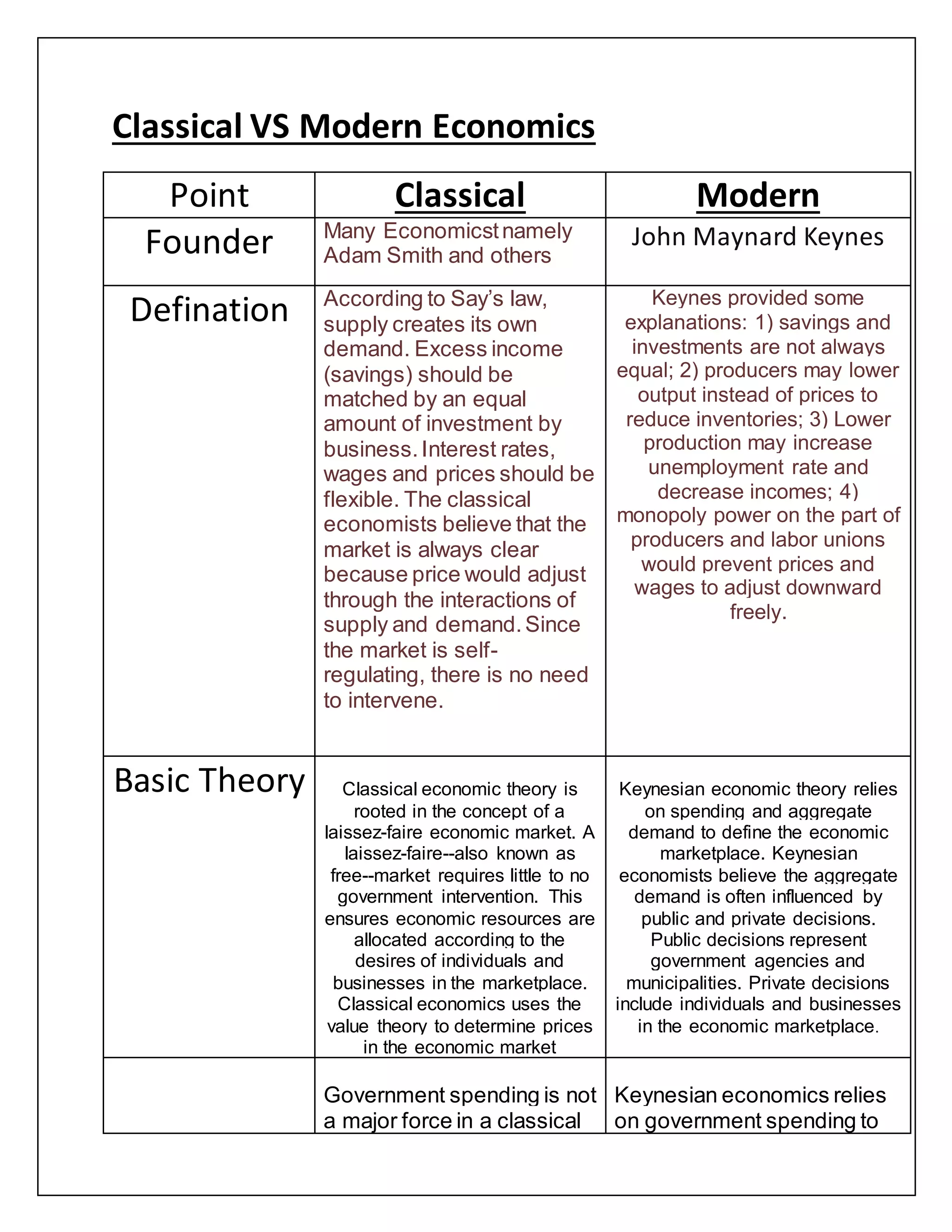
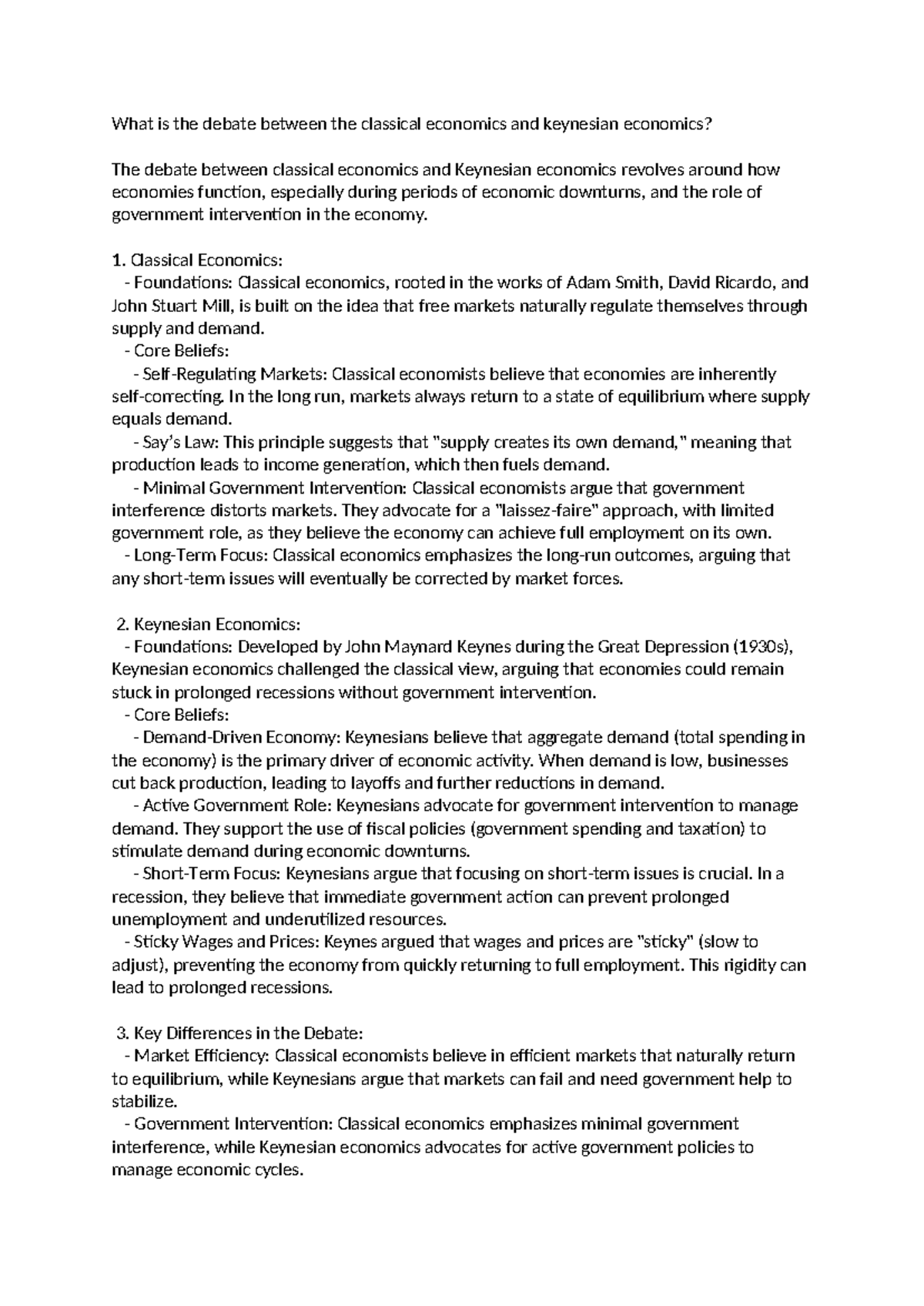
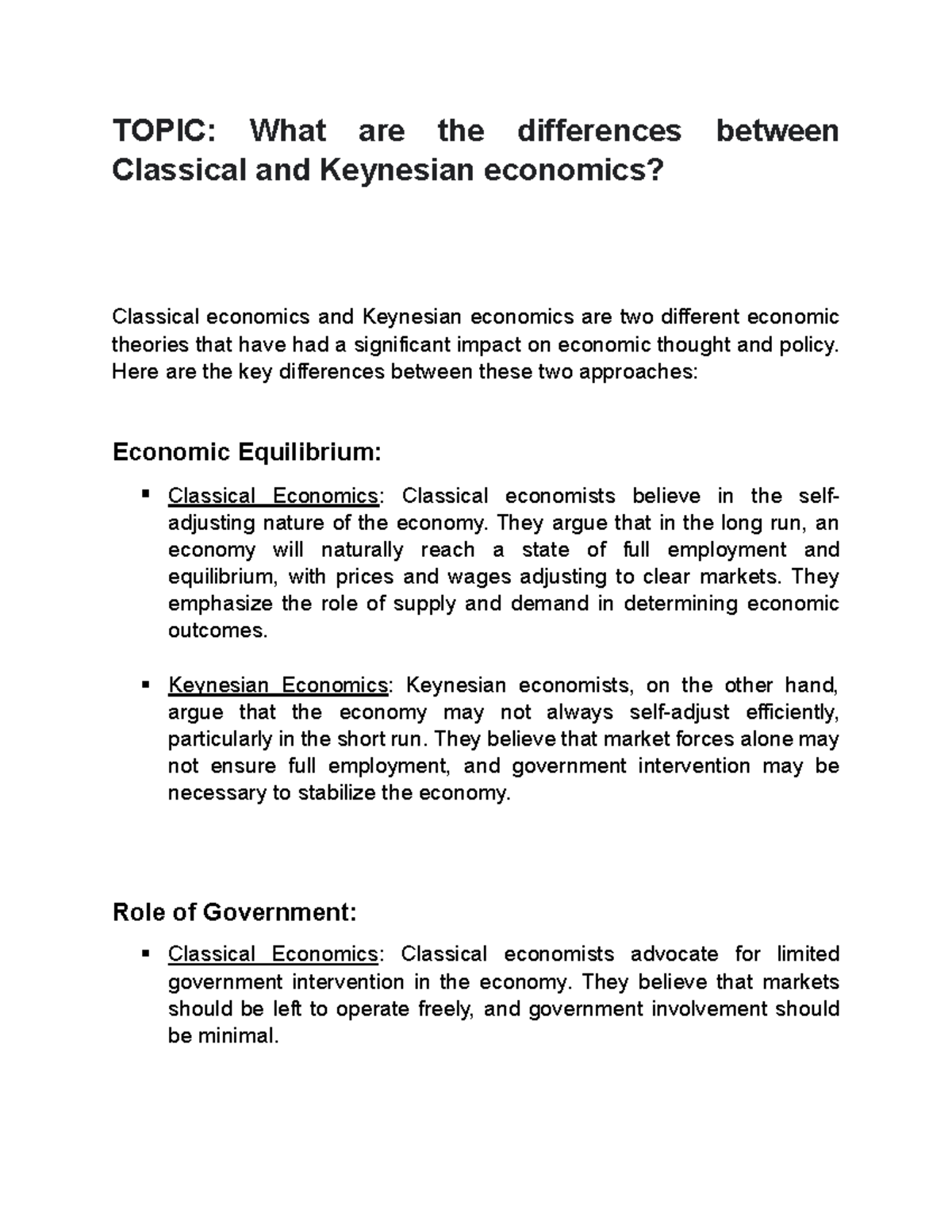
The primary difference between Classical and Keynesian economics lies in their view of market self-regulation. Classical economics posits that free markets are inherently self-correcting and reach equilibrium through flexible prices and wages. In contrast, Keynesian economics argues that markets are prone to inefficiencies and sticky wages, necessitating government intervention through fiscal policy to manage aggregate demand and stabilize the economy.
Contents
The Foundations of Classical Economic Thought
Classical economics, which emerged in the late 18th century with the publication of Adam Smith’s The Wealth of Nations in 1776, serves as the bedrock of modern free-market theory. The school of thought, later expanded by thinkers such as David Ricardo and Jean-Baptiste Say, is predicated on the belief that the economy operates most efficiently when left to its own devices.
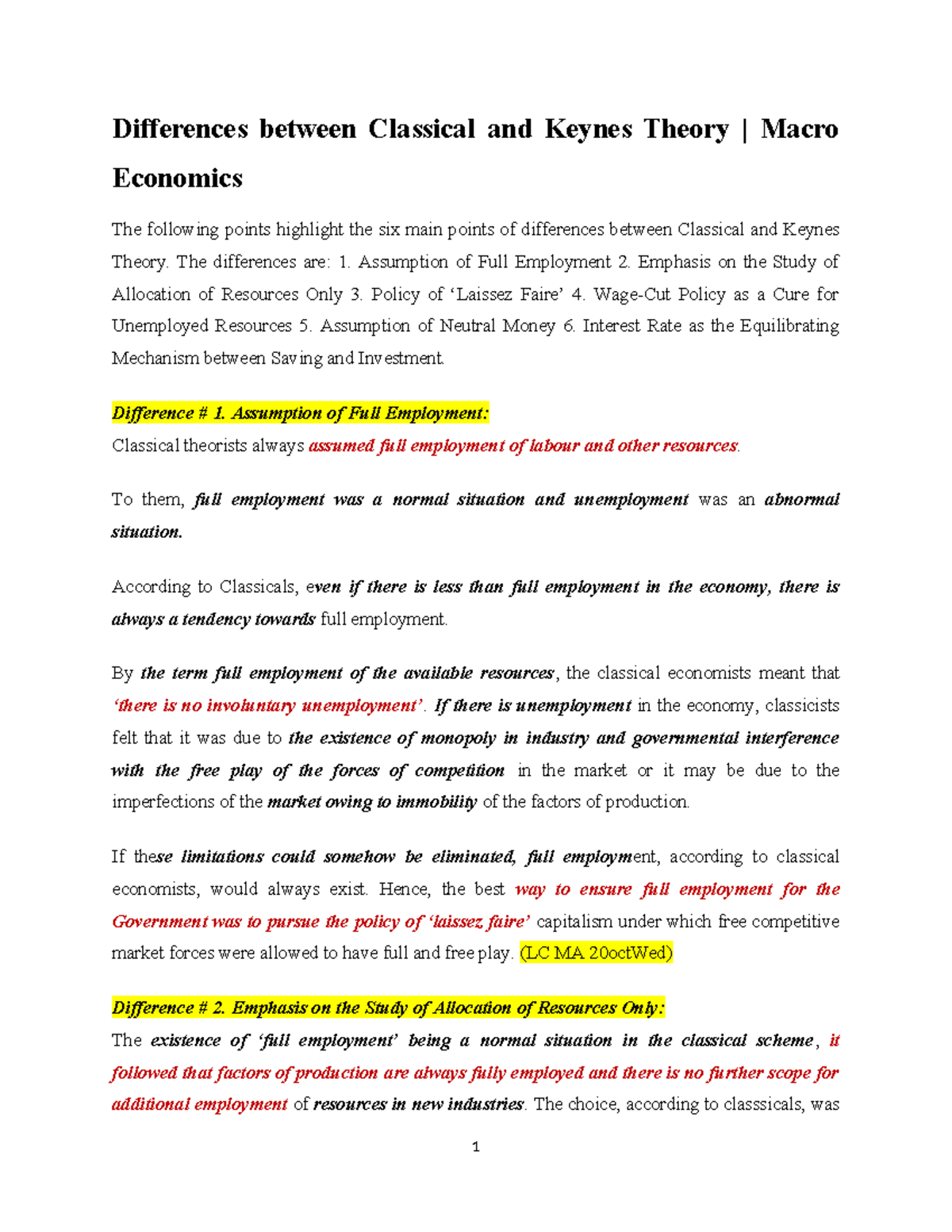
At the core of this philosophy is Say’s Law, which suggests that "supply creates its own demand." In a classical framework, the act of producing goods creates the income necessary to purchase those goods. Because the system is assumed to be self-regulating, classical economists argue that any temporary imbalances—such as a surplus of goods or unemployment—will be corrected by market forces. If unemployment exists, workers will accept lower wages, incentivizing employers to hire more staff until full employment is restored.
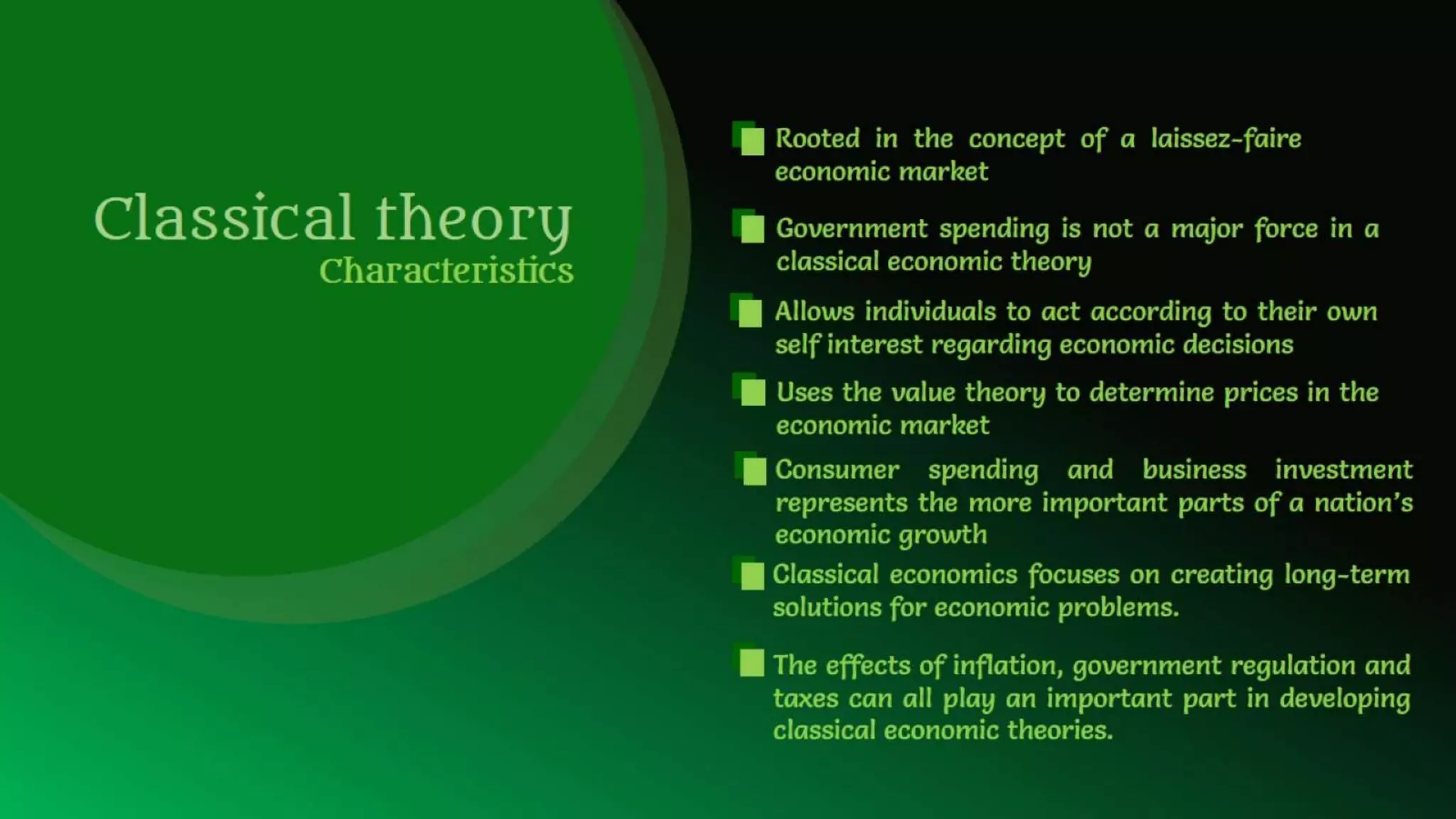
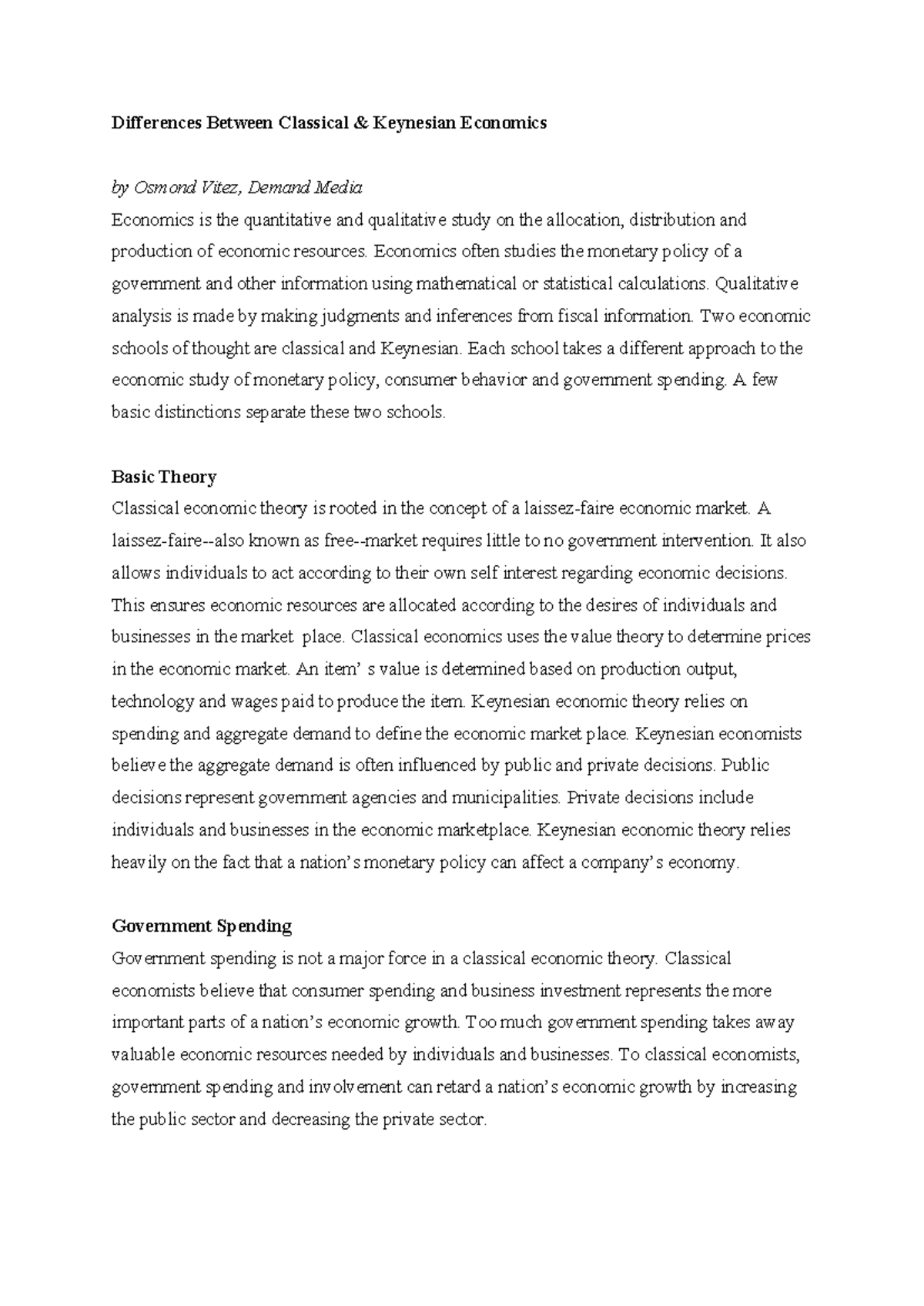
Furthermore, classical economists advocate for laissez-faire policies. They believe that government intervention, such as price controls or excessive spending, introduces distortions that impede the natural flow of capital. By maintaining a focus on supply-side efficiency, competitive markets, and minimal interference, classical theory holds that long-term economic growth is maximized.
The Keynesian Revolution and Aggregate Demand
The Great Depression of the 1930s challenged the classical consensus, as economies worldwide remained trapped in high unemployment for years rather than self-correcting. John Maynard Keynes, in his seminal 1936 work, The General Theory of Employment, Interest and Money, provided a new framework that argued the classical view was insufficient for managing severe economic downturns.
Keynes shifted the focus from supply to aggregate demand—the total spending by households, businesses, and the government. He argued that if aggregate demand is insufficient, businesses will not produce at full capacity, leading to persistent unemployment. Crucially, Keynes identified "sticky wages and prices," meaning that wages do not always drop quickly during a recession due to contracts, unions, and social norms. Because prices and wages are slow to adjust, the economy cannot rely on the "invisible hand" to snap back to full employment during a crisis.
To remedy this, Keynes advocated for active government intervention. During periods of recession, he proposed that the government should engage in deficit spending to stimulate demand, effectively acting as the spender of last resort. This interventionist approach redefined the role of central banks and national treasuries in the 20th and 21st centuries.
Comparative Framework: Key Distinctions
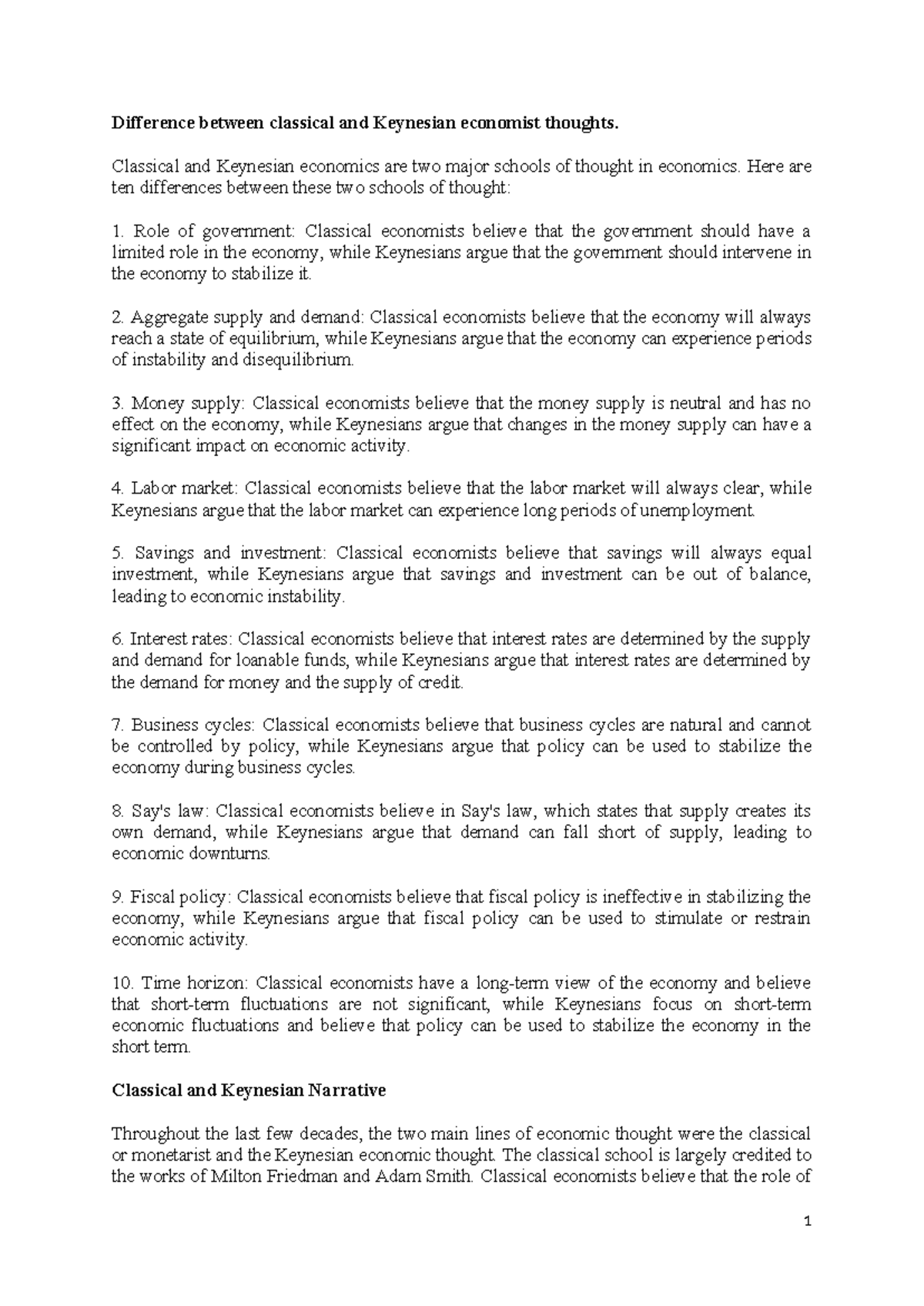
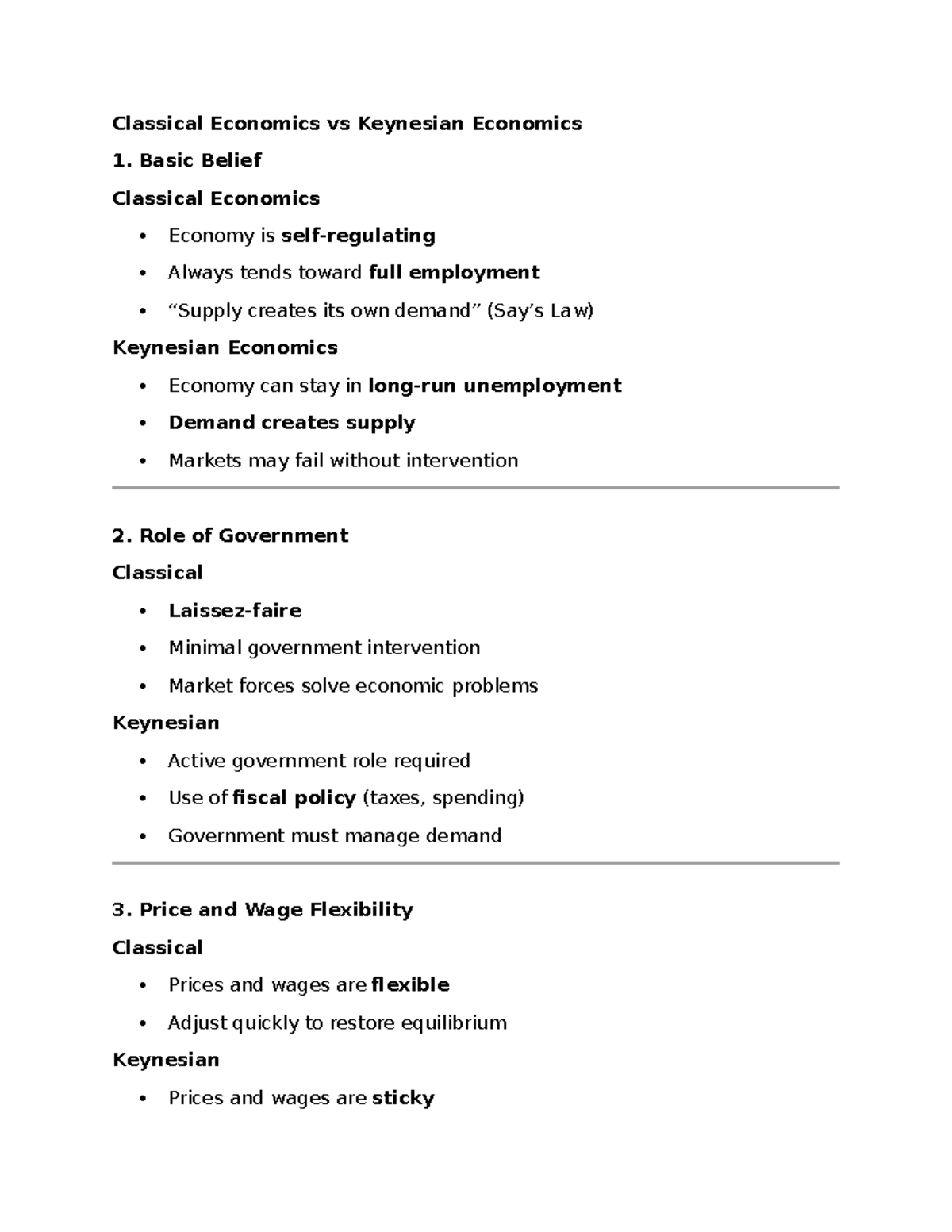
Understanding the divide between these two schools requires looking at how they view the timeline of economic adjustment and the role of the state. The following table highlights the fundamental divergences:
| Feature | Classical Economics | Keynesian Economics |
|---|---|---|
| Market View | Self-correcting and efficient | Prone to failure and instability |
| Primary Driver | Aggregate Supply | Aggregate Demand |
| Price/Wage Flexibility | Highly flexible | Sticky (slow to adjust) |
| Government Role | Laissez-faire (minimal) | Active intervention (fiscal policy) |
| Time Horizon | Long-term equilibrium | Short-term focus ("In the long run we are all dead") |
| Savings/Investment | Interest rates balance them | Animal spirits and uncertainty drive them |
The Role of Fiscal Policy and Monetary Strategy
The most visible difference in the practical application of these theories occurs during economic crises.
Classical proponents argue that government spending often results in "crowding out," a phenomenon where increased government borrowing drives up interest rates, thereby reducing private investment. To a classical economist, the government should focus on maintaining a stable money supply and reducing regulations to ensure that businesses can operate with maximum efficiency.
Conversely, Keynesians prioritize fiscal policy as a tool for stabilization. During a contraction, Keynesian theory calls for expansionary fiscal policy—lowering taxes or increasing public expenditure—to jump-start the "multiplier effect." This effect suggests that an initial injection of government spending leads to a larger overall increase in national income as money circulates through the economy. While this may increase the national debt, Keynesians argue that the cost of inaction (prolonged unemployment and lost production) outweighs the cost of borrowing.
Limitations and Modern Synthesis
No modern economy operates strictly on either theory. Classical economics, particularly in its evolved form known as Monetarism (associated with Milton Friedman), informs much of modern central bank policy regarding inflation control and interest rates. It emphasizes the importance of the money supply and supply-side incentives.
Keynesianism remains the standard framework for managing recessions, as seen in the various stimulus packages implemented globally during the 2008 financial crisis and the 2020 pandemic era. However, the limitation of pure Keynesianism is the risk of inflation if the economy is stimulated when it is already at full capacity.
Many economists today adhere to a "New Neoclassical Synthesis." This approach combines the classical focus on long-term growth and microeconomic foundations with the Keynesian recognition that, in the short term, prices can be sticky and aggregate demand management is necessary to avoid deep economic depressions.
Frequently Asked Questions
Why do classical economists believe government intervention is harmful?
Classical economists argue that government intervention creates distortions in market signals. For instance, if the government subsidizes a specific industry or artificially keeps wages high, it prevents the efficient allocation of labor and capital, ultimately slowing down innovation and economic growth.
What does "sticky wages" mean in Keynesian theory?
"Sticky wages" refers to the observation that wages do not fall easily during an economic downturn. Factors like minimum wage laws, labor union contracts, and the psychological resistance of workers to pay cuts prevent wages from dropping, which traps the economy in a state of high unemployment rather than allowing it to reset at a lower, "market-clearing" wage level.
Can an economy be both Classical and Keynesian?
Yes. Most modern governments employ a hybrid approach. They use classical principles to promote long-term growth through deregulation and trade, but switch to Keynesian tools—such as interest rate cuts and government spending—when faced with short-term cyclical volatility or recessions.
Why is the long term vs. short term distinction important?
Keynes famously dismissed the "long run" by saying, "In the long run we are all dead," implying that focusing only on long-term equilibrium ignores the human suffering caused by short-term unemployment. Classical economists argue that by focusing too much on the short term, governments create policies that harm the long-term health and stability of the economy.
Practical Next Steps for Economic Analysis
When assessing whether a specific policy is more "Classical" or "Keynesian," look at the intent of the legislation. If the policy aims to reduce corporate tax rates, deregulate industries, or limit government spending, it is rooted in Classical/Supply-side logic. If the policy involves infrastructure spending, direct stimulus payments to households, or expanding social safety nets to boost consumption, it is fundamentally Keynesian.
To deepen your understanding, consider reviewing the annual economic reports issued by your country's central bank or treasury department; these documents often explicitly reference the trade-offs between supply-side growth and demand-side management as they justify fiscal and monetary decisions.
Image Gallery