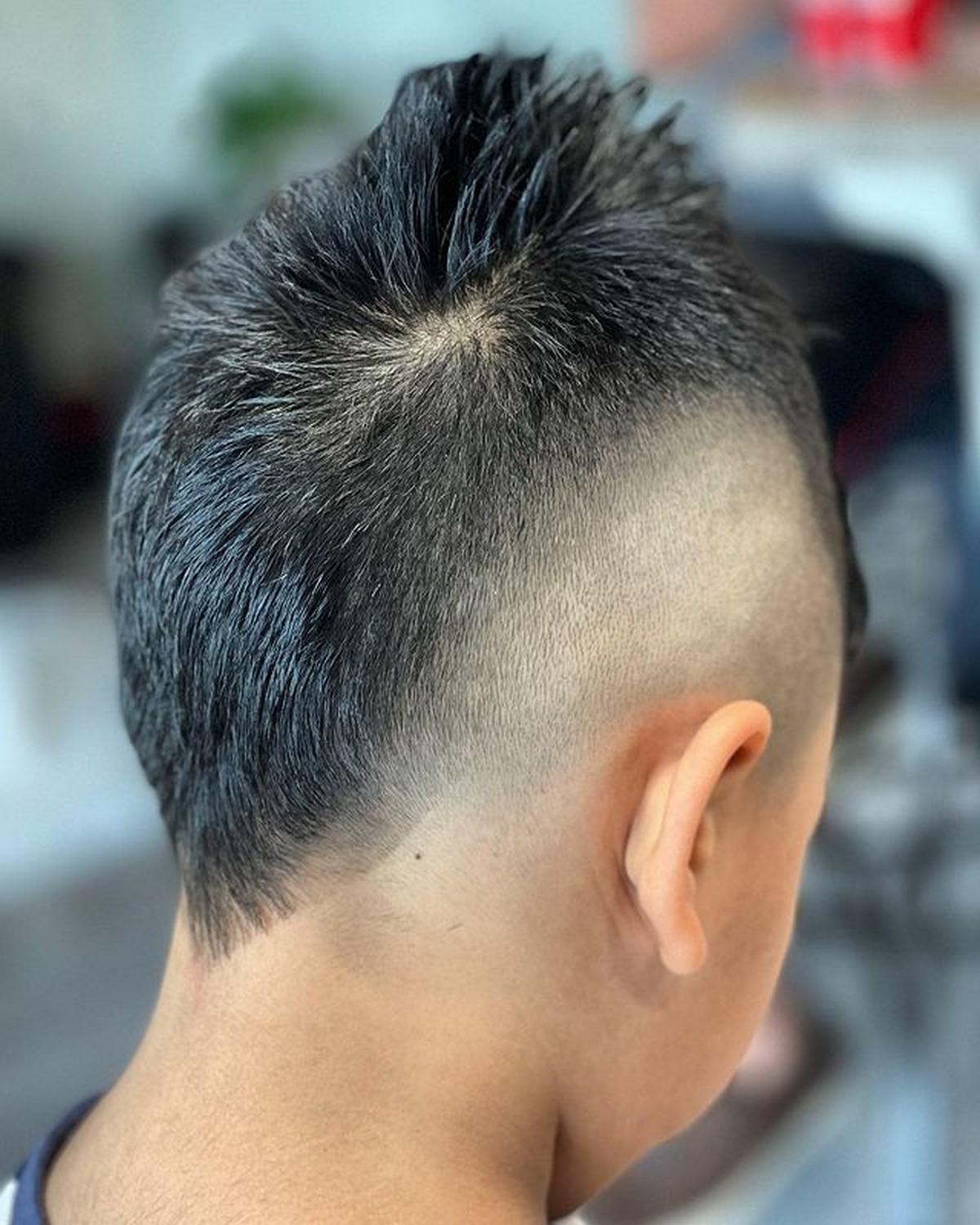
V Mohawk: Comprehensive Analysis, Specifications, and Technical Guide for 2026
V Mohawk represents a specialized technical designation and stylistic standard blending modern engineering parameters with distinct architectural or material classifications. This guide covers the core operational metrics, structural p...
V Mohawk represents a specialized technical designation and stylistic standard blending modern engineering parameters with distinct architectural or material classifications. This guide covers the core operational metrics, structural prerequisites, comparative evaluations, and deployment processes required for optimal implementation in 2026.
Contents
Understanding the Fundamentals of V Mohawk Technology and Design
The term V Mohawk bridges multiple technical disciplines, most notably advanced manufacturing, specialized automotive styling, and high-performance material profiling. At its core, the designation refers to a sharply angled, vertical apex geometry engineered to optimize structural integrity, aerodynamic drag reduction, or aesthetic separation depending on the industrial application.
To fully grasp the utility of V Mohawk frameworks, one must examine the underlying mechanics. When applied to composite materials or surface coatings, the distinct V-profile configuration distributes kinetic and thermal stress vectors away from the central line. This engineering choice prevents premature material fatigue, minimizes wind resistance coefficients, and ensures long-term durability under harsh operational conditions.
Mastery of this standard requires adherence to official manufacturing and deployment guidelines. Professionals working with V Mohawk configurations must account for specific dimensional tolerances, thermal expansion rates, and compatibility requirements. Neglecting these core specifications often leads to structural compromise, installation failure, or accelerated wear.
Essential Prerequisites and Technical Specifications
Before initiating any project or deployment involving V Mohawk assets, technicians and engineers must verify compliance with strict operational parameters. Proper preparation minimizes downtime and ensures safety standards are consistently met.
- Dimensional Accuracy: All components must maintain a strict angular tolerance of plus or minus 0.5 degrees along the primary apex.
- Material Composition: Utilization of high-grade polymers, reinforced carbon composites, or anodized aluminum alloys depending on the load-bearing requirements.
- Environmental Resistance: Surfaces must be rated for thermal thresholds ranging from -40 degrees Celsius to 120 degrees Celsius without structural warping.
- Interface Compatibility: Fastening mechanisms and bonding agents must possess matching shear strength ratings to prevent joint separation under stress.
Operational Safety Compliance All installation and handling procedures must follow recognized industrial safety frameworks. Technicians should utilize appropriate personal protective equipment, including precision cutting guards, thermal gloves, and eye protection, when modifying or securing V Mohawk elements.
Step-by-Step Implementation and Deployment Workflow
Executing a successful V Mohawk installation requires a methodical, multi-phase approach. The following workflow outlines the standard procedure for integrating these systems into an active environment.
- Site Assessment and Surface Preparation: Inspect the mounting substrate for contaminants, moisture, or uneven texture. Clean the surface using an approved industrial solvent and allow complete drying to ensure maximum adhesion.
- Precision Measurement and Marking: Use laser alignment tools to establish the exact center axis. Mark the primary mounting points and verify symmetry against engineering blueprints.
- Dry Fitting and Alignment: Position the V Mohawk component along the marked axis without adhesive or permanent fasteners. Check for gap tolerances and make micro-adjustments as necessary.
- Application of Bonding Agents or Fasteners: Apply the specified structural epoxy or mechanical anchors uniformly along the base flanges, avoiding excess material spillage into the primary apex channel.
- Curing and Structural Verification: Allow the assembly to cure for the manufacturer-recommended duration, typically between 24 and 48 hours depending on ambient humidity and temperature. Perform a load test to verify structural stability.
Comparative Analysis: V Mohawk Versus Alternative Profiles
Selecting the right profile for a technical or architectural project demands a rigorous comparison of available options. The matrix below highlights how V Mohawk stacks up against traditional structural shapes across critical performance metrics.
| Performance Metric | V Mohawk Profile | Standard U-Channel | Flat Panel Overlay | Tubular Reinforcement |
|---|---|---|---|---|
| Aerodynamic Efficiency | High (Optimized deflection) | Moderate (Standard drag) | Low (Turbulence prone) | Moderate (Cylindrical drag) |
| Stress Distribution | Superior (Apex vector split) | Moderate (Base concentrated) | Poor (Uniform strain) | High (Radial distribution) |
| Weight-to-Strength Ratio | Excellent | Moderate | Heavy | High |
| Installation Complexity | Moderate (Precision required) | Low | Low | High (Complex joints) |
As illustrated in the comparison, V Mohawk configurations provide distinct advantages in environments where weight reduction, stress dissipation, and aerodynamic performance are paramount.
Common Pitfalls and Troubleshooting Strategies
Even with careful planning, technicians occasionally encounter operational challenges during or after the deployment of V Mohawk systems. Identifying these issues early prevents costly rework.
- Misalignment Along the Apex: Caused by inaccurate initial laser marking. Remedy by utilizing multi-point digital leveling tools during the dry-fit phase rather than relying on manual visual checks.
- Adhesive Delamination: Typically triggered by inadequate surface cleaning or moisture trapped beneath the bonding agent. Ensure complete degreasing and maintain optimal ambient temperatures during the curing cycle.
- Thermal Cracking: Results from utilizing incompatible expansion-rate materials. Always cross-reference the thermal expansion coefficient of the mounting substrate with the V Mohawk component specifications.
Frequently Asked Questions
What is the primary function of a V Mohawk configuration in modern engineering?
The primary function is to optimize stress distribution and aerodynamic performance through a specialized angled apex geometry. This design minimizes drag and prevents structural fatigue under heavy loads.
Are V Mohawk components compatible with standard industrial fasteners?
Yes, but they require precise torque management and matching material compositions to prevent galvanic corrosion or stress fractures along the mounting flanges.
What is the expected lifespan of a properly installed V Mohawk system?
When installed according to strict environmental and structural guidelines, high-grade V Mohawk systems typically last between 15 and 20 years with minimal maintenance.
How does temperature fluctuation affect V Mohawk installation?
Extreme temperature shifts can cause material expansion or contraction. Technicians must incorporate calculated expansion gaps during installation to accommodate these shifts without causing structural failure.
What maintenance routines are required post-installation?
Routine inspections should include visual checks for micro-fractures along the apex line, verification of fastener torque, and cleaning to remove corrosive buildup or particulate accumulation.
Strategic Professional Recommendation
Achieving optimal results with V Mohawk implementations relies heavily on meticulous adherence to technical specifications, rigorous surface preparation, and ongoing structural monitoring. Professionals should prioritize accurate alignment and material compatibility to ensure long-term performance and safety. For tailored project consultations or advanced engineering specifications, consult official industry standards bodies and certified deployment specialists.
Image Gallery